Jacob Fenston
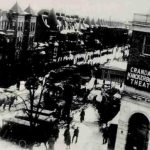
More than two feet of snow had fallen on the District of Columbia, as movie-goers settled into their seats in the warmth of the Knickerbocker Theater on January 28, 1922. The theatre in Adams Morgan was the largest in the city, with seating for more than 1,500, but on this cold, snowy night, just 300 people showed up — mostly those who lived within walking distance and could trudge through the snow to the grand movie palace at the corner of 18th St. and Columbia Rd. NW.
“This was the titanic of theaters,” says Kevin Ambrose, who has written two books about the Knickerbocker, and writes about weather as a freelancer for the Washington Post.
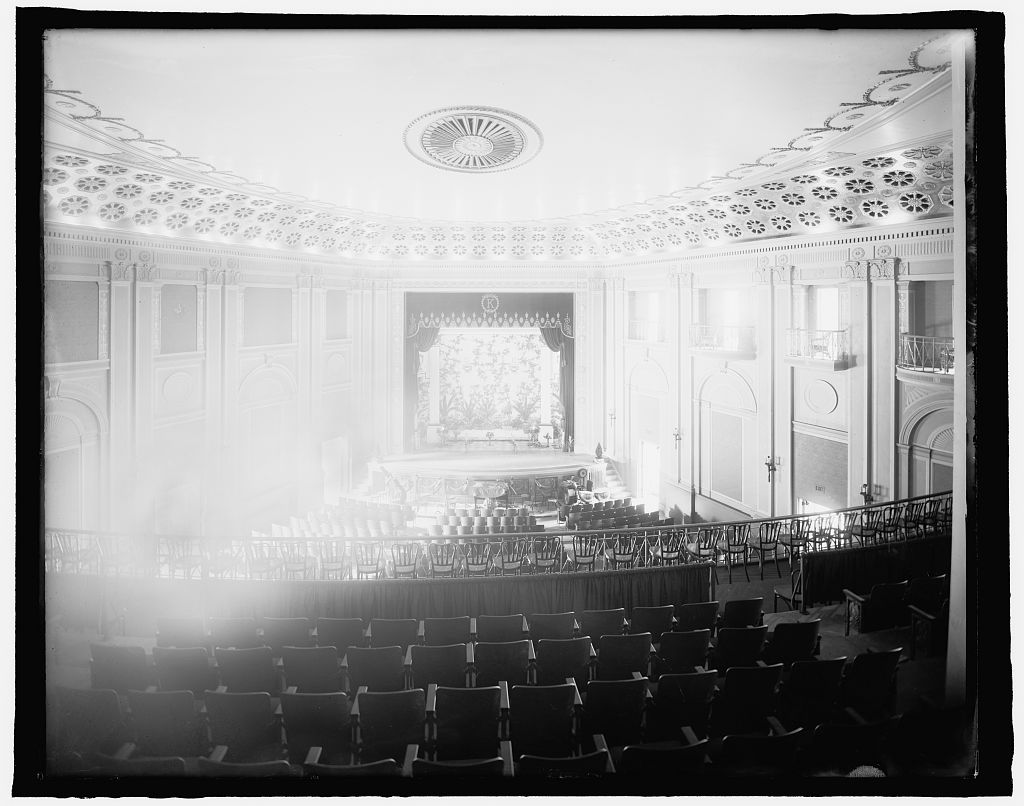
It wasn’t just the audience who had trouble getting to the show — management had a tough time getting enough musicians to play in the orchestra during the silent film that was showing that night.
“The movie, it turns out, is a movie that was called Get-Rich-Quick Wallingford, which was apparently a comedy,” says Josh Gibson, an Adams Morgan resident and D.C. history buff. “The movie’s been lost since, so no one can watch it online, unfortunately.”
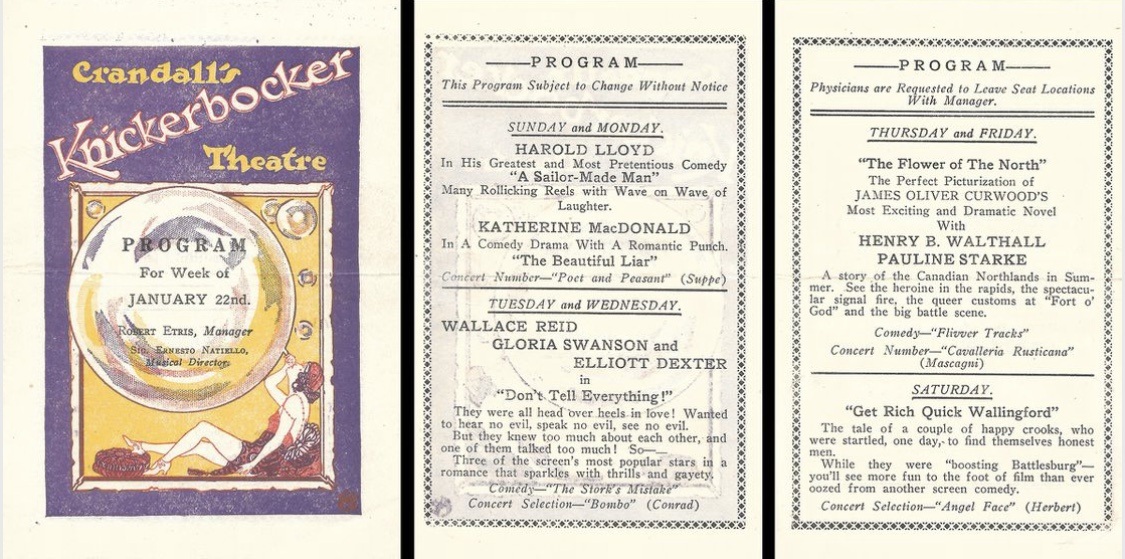
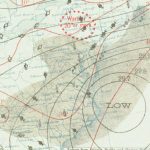
As the music swelled and the film started rolling, snow continued to fall. Unbeknownst to the audience, the roof was beginning to sag under the weight of accumulated snow. To this day, what came to be known as the Knickerbocker Storm is still the largest snowstorm in D.C. since modern record-keeping began.
“The steel beams and trusses weren’t breaking, they were just bending,” says Ambrose.
Shortly after the 9pm show began, a crack opened in the ceiling. Chunks of plaster started falling on the audience and orchestra. “The orchestra played on,” says Ambrose.
Most people in the audience were oblivious to the structural failure unfolding above them as they stared at the silver screen. “There was apparently a particularly funny joke, people were laughing,” says Gibson. Over the laughter, some people heard a loud crack. “People have said it sounded like a tearing sheet,” says Gibson.
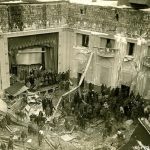
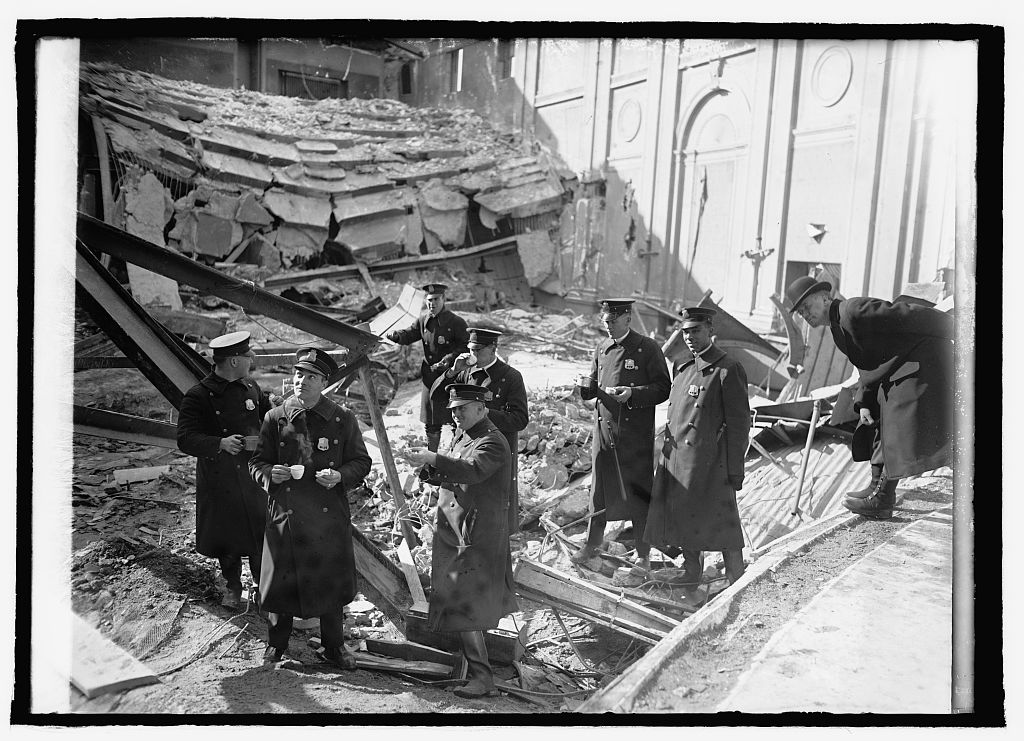
“In one split second, the entire roof fell, broke free from the walls, and crashed down, wall to wall, as one piece,” says Ambrose.
The ceiling took out the balcony level as it came hurtling down on the orchestra level.
“The combined mass of the ceiling and balcony hit the floor with so much force, it created a wind gust that blew people off their feet and some out the door into the lobby. Those people were the lucky ones — they survived,” Ambrose says.
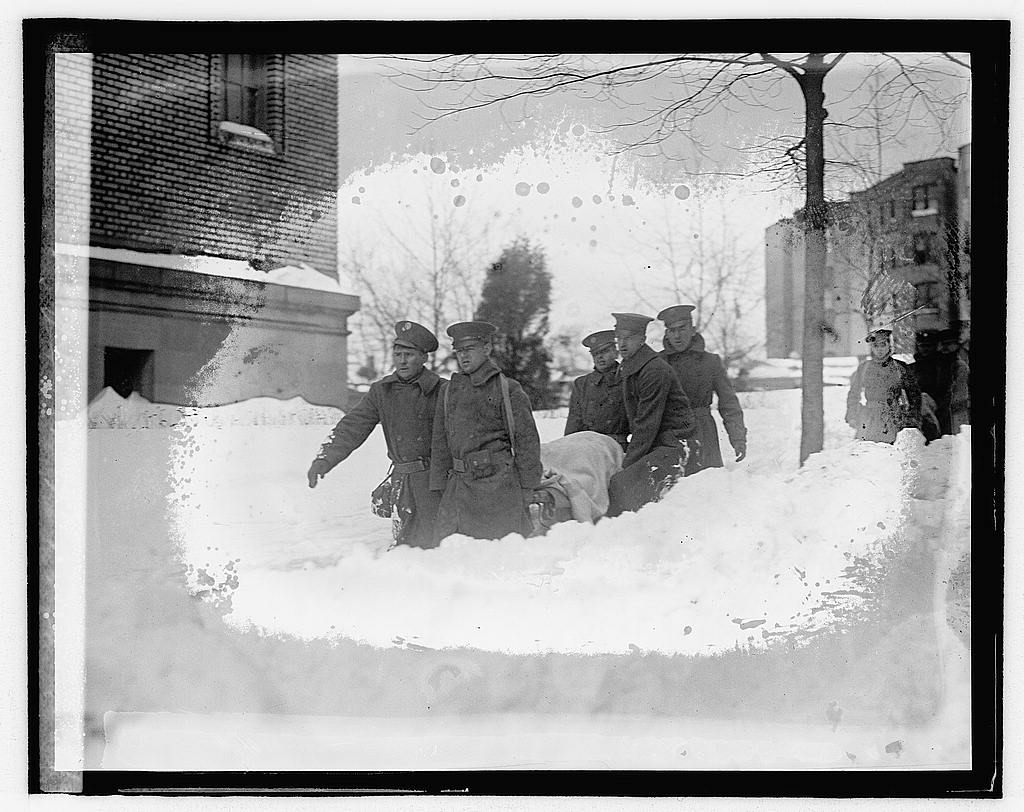
The disaster killed 98 people, and injured 133 — the largest death toll in D.C. outside of the Civil War. There were hundreds of deaths in the Battle of Fort Stevens in 1864, near what is now Georgia Ave., NW. In 2001, there were 184 people killed in the 9/11 attack on the Pentagon, across the Potomac in Virginia.
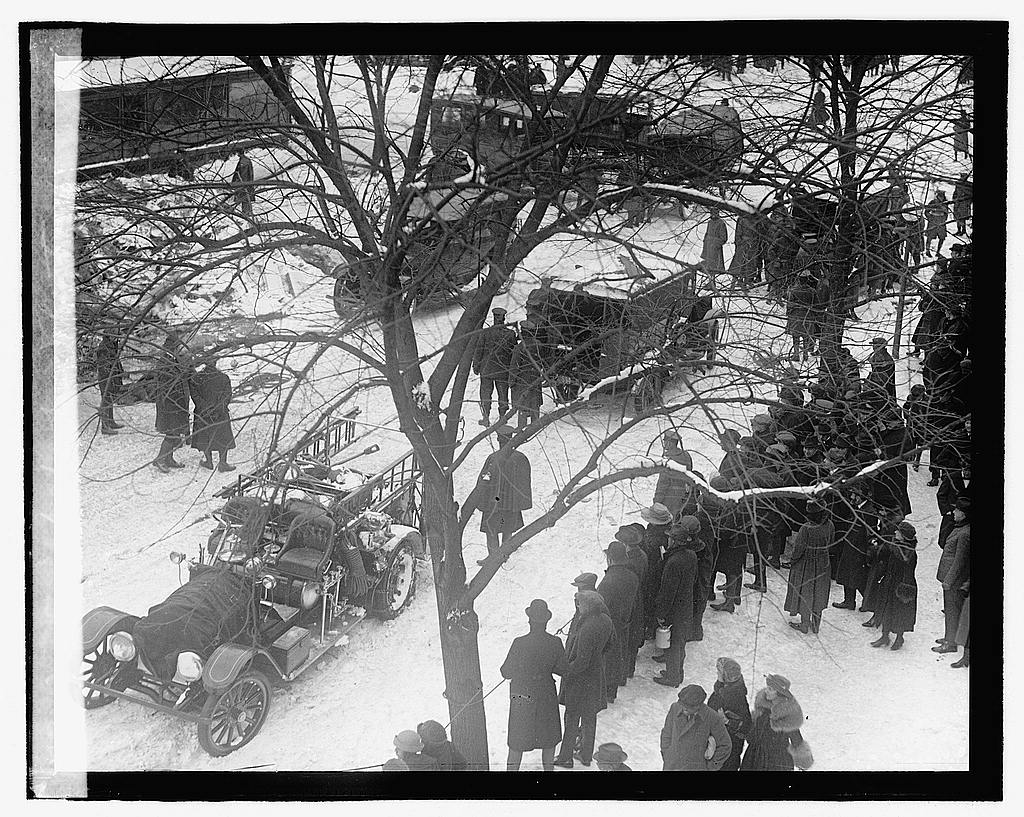
It took more than 24 hours to recover the injured and dead from the wreckage. A temporary morgue was set up at the nearby First Church of Christ, Scientist (now The Line DC hotel). Some of the victims were crushed so badly they were unrecognizable, and had to be identified based on clothing and personal affects.

There were amazing stories of survival, too, says Ambrose. Some people in the middle of the theater were unscathed — the roof folded as it fell, creating some pockets of safety amid the wreckage. Others were just quick or lucky. A Washington Post drama critic was in attendance to review the movie, and was saved by his habit of sitting in an aisle seat near an exit door. “He liked to move around during the show,” says Ambrose. “He was able to step out into the lobby just in time and missed the crash.”
The critic, John Jay Daly, rushed across the street to a drugstore to call in the news to his editors, then returned to the theater to help with the rescue. Later that night, he walked through the snowy streets to the Washington Post headquarters downtown to file his story — a dramatic 5,000-word account that was published in the Sunday paper the next morning.
“Crandall’s Knickerbocker theater, previously the temple of mirth, had been transformed into a tomb,” wrote Daly.
There was a congressional inquiry into the cause of the collapse, the building’s architect was charged with manslaughter, and families sued the theater owner. However, the building had been built to code, and the owner and architect were cleared of charges.
“As a result of the disaster, building codes were dramatically improved, so that wouldn’t happen again,” says Ambrose.
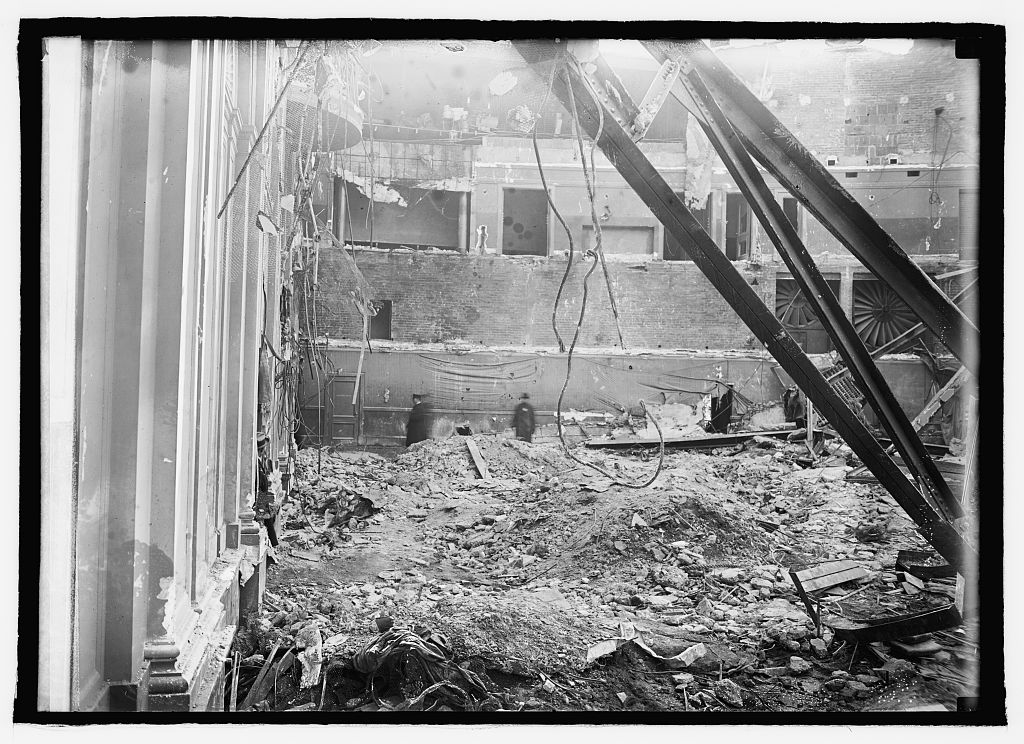
The theater was rebuilt, using the same walls but with a stronger roof, and reopened as the Ambassador Theater, which showed movies for a time and later became a live performance venue.
Gibson notes that the Ambassador has its own rich history. Jimi Hendrix played there in 1967 and lit his guitar on fire. “It’s one of the only places he ever put his guitar on fire,” says Gibson.
Also in 1967, Norman Mailer gave a famous anti-war speech at the Ambassador, before joining a march to “levitate the Pentagon.”
“It’s just such a rich, interesting historical spot that so many people pass by every day,” says Gibson.
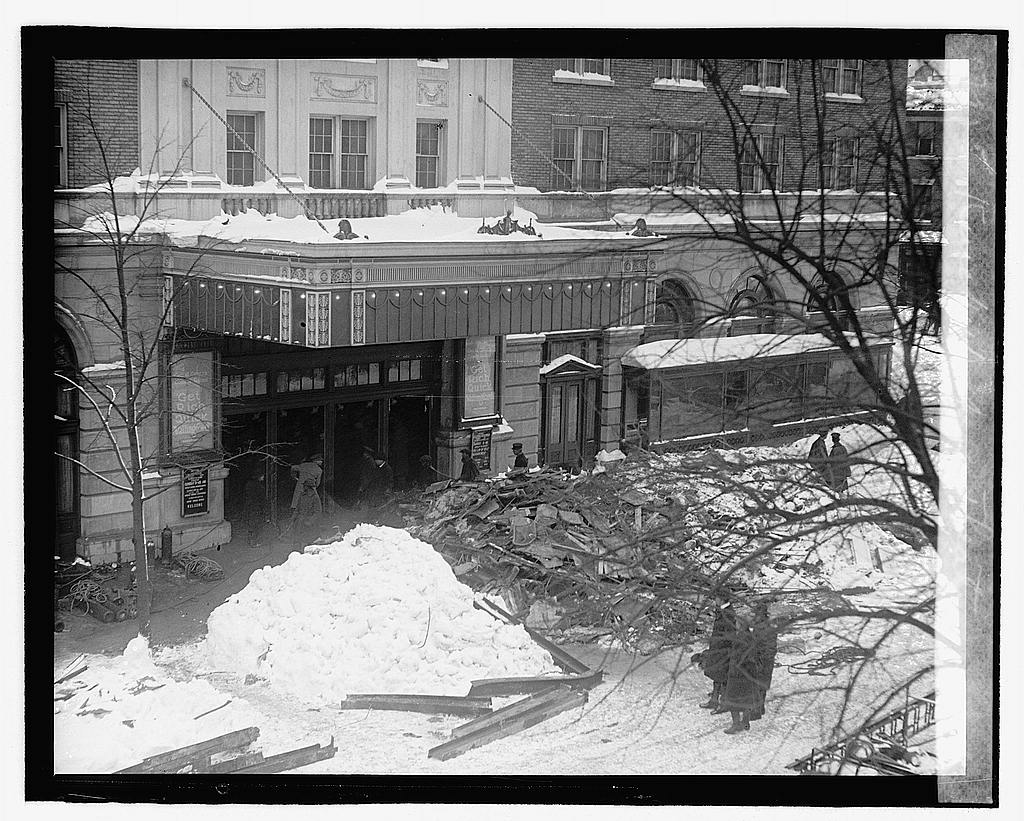
The Ambassador was torn down in 1969 to make way for the low-slung brick SunTrust bank and plaza. The property is currently at the heart of a neighborhood battle, with some residents fighting a proposed development, and pushing for the creation of a memorial to the Knickerbocker disaster.
On Friday evening, on the 100-year anniversary of the disaster, Gibson and Ambrose are holding a memorial at 6pm, in the Adams Morgan public plaza, across the street from where the Knickerbocker once stood. Another event is being held on Saturday from 12-3pm.