Ally Schweitzer
 Amanda Michelle Gomez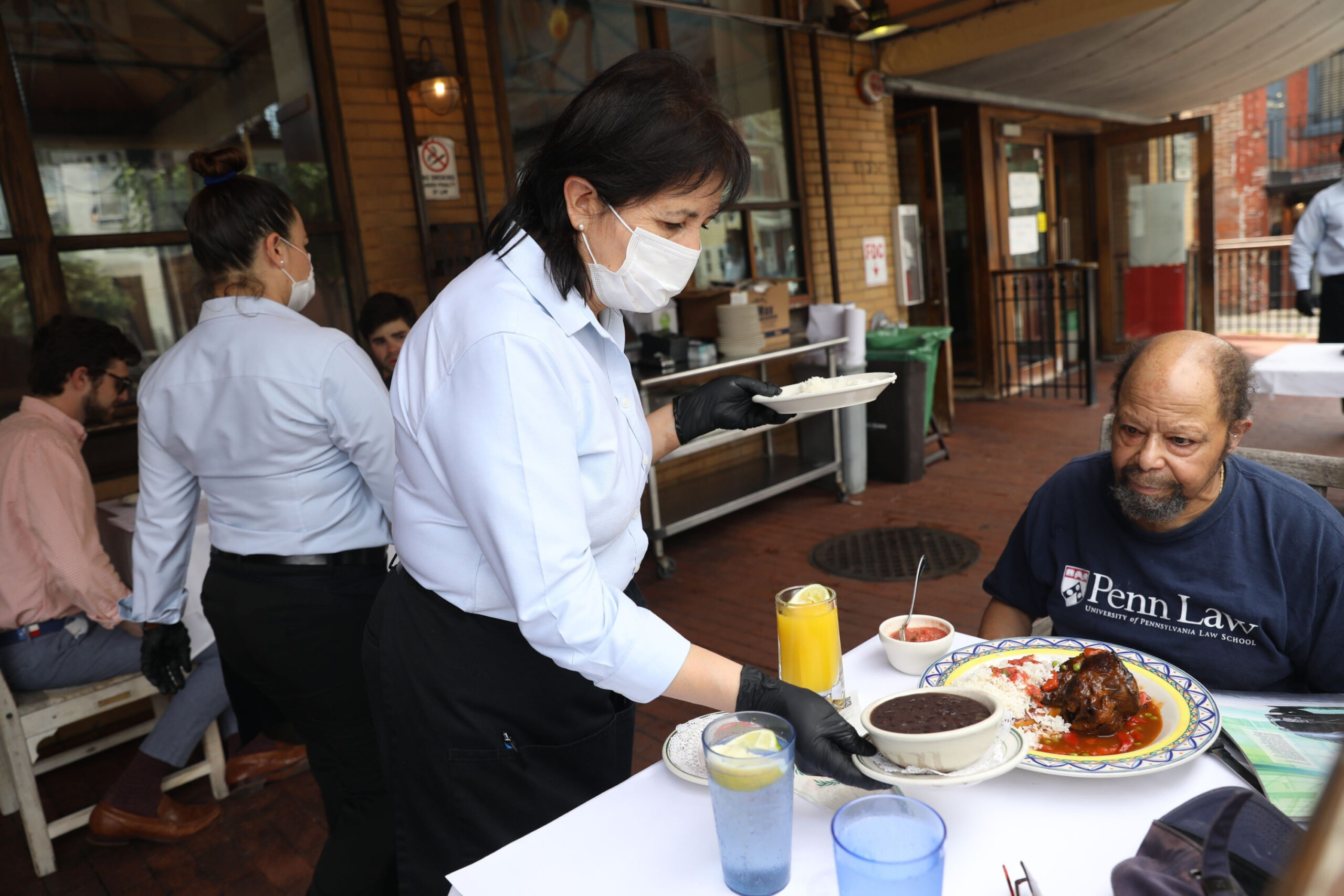
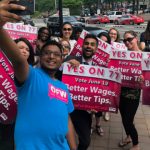
Organizers of the latest campaign to increase D.C.’s tipped minimum wage met a crucial goal this week: With more than 26,000 petition signatures gathered, they’ve rallied enough public support to possibly bring the tipped wage measure — also known as Initiative 82 — to a vote in June.
Now, city residents can look forward to another ugly, expensive battle between the restaurant industry and progressive activists, in a flashback to the Initiative 77 wars of 2018.
Or can they?
Four years ago, D.C.’s hospitality industry spent more than $400,000 on an ultimately successful effort to defeat Initiative 77, a ballot measure that would have phased out what’s known as the tip credit — the portion of a worker’s minimum wage that employers are allowed to cover with customers’ tips. Voters approved the referendum with 55% of the vote in 2018, but the Council overturned it four months later, saying the ballot language was misleading. Now, a very similar measure is back on the table, and if voters approve it, today’s left-leaning Council is unlikely to toss it out — and D.C.’s hospitality industry isn’t doing much to fight it, at least not yet.
People on both sides of the debate say there’s one obvious reason why: The pandemic has badly wounded the hospitality industry, to the point where most small business owners don’t have the money or energy to wage a costly political battle.
“Fighting is time-consuming and expensive,” says Zac Hoffman, a former bartender who was a leading voice against Initiative 77 four years ago. “Stickers, signs, radio commercials, whatever you can muster — none of that is free. And this is not the time that restaurants and bars and hospitality operators need to be wasting money on that kind of thing, because they can barely keep their businesses open.”
Some operators have also accepted that the initiative is likely to pass, and they don’t want to waste resources pushing back.
“I think our fight was fought in [Initiative] 77, and I don’t think we’re going to win this fight, so I think it’s a bit of a moot point to battle it,” says Andrew Markert, chef at Beuchert’s Saloon. “It’s more now, do our best to absorb it and do our best to navigate the situation ahead.”
Public records show that the local restaurant industry’s top lobbyist, the Restaurant Association of Metropolitan Washington, has not formed an official committee to raise or spend money on an anti-82 campaign, though that could still happen at a later date. In 2018, opponents to Initiative 77 did not begin fundraising until after activists filed signatures to get the referendum on the ballot.
But supporters of the measure say they’re surprised the industry hasn’t even put forward a compromise bill that could soften the blow of Initiative 82. According to Saru Jayaraman, president of One Fair Wage, the advocacy organization backing the measure, the restaurant association’s Kathy Hollinger approached her with a legislative alternative last year.
“She had reached out to me, we started drafting, we were in discussions. There’s definitely a bill that could be moved that has both what we need and what we understood restaurant owners wanted,” Jayaraman says.
But negotiations stalled when the trade group’s membership couldn’t agree on a bill, Jayaraman says. She also suspects outside pressure from the National Restaurant Association played a role.
Mike Whatley, the national trade group’s vice president of state affairs and grassroots advocacy, did not directly respond to a question about whether it put pressure on RAMW, but he says in a statement that the restaurant association “was included in the stakeholder engagement and supports decisions made by RAMW.”
Hollinger confirms that her organization considered working with One Fair Wage on legislation.
“We were absolutely thinking about all paths as we deal with this issue, and one path was possibly a legislative path,” Hollinger tells WAMU/DCist. “But we recognize that for more and more of our operators, it was so important that, at a time when their capacity is so thin … to communicate how timing of this ballot initiative seemed incredibly insensitive and tone-deaf.”
Markert at Beuchert’s Saloon agrees. “Trying to pass this in D.C. is almost just like a slap in the face after everything we’ve already been through,” the chef says.
There are no signs that D.C. Council members are willing to overturn another tipped wage referendum, says John Zottoli, who was hired by Initiative 82 supporters last year to lobby lawmakers on phasing out the tip credit. But most Council members don’t seem interested in introducing a compromise on the tipped wage, either, he says.
“I asked, ‘Well, gee, if you wouldn’t overturn it, why don’t you just go ahead and pass the damn thing? And that’s where I started getting resistance,” Zottoli says.
While the hospitality industry continues to struggle during the pandemic, activists have been steadily gathering petitions. Organizers met their goal three weeks ahead of schedule, and now they’re collecting more signatures than they need to ward off potential challenges from opponents, says Adam Eidinger, a civic activist who has been leading the petition process. (Organizers collected enough signatures to qualify for the ballot, but the D.C. Board of Elections still must review their petitions before the measure can be officially approved.)
On the street, reaction to the initiative has been largely positive, Eidinger says — unlike several years ago, when petitioners sometimes had to confront angry opposition from restaurant workers who believed Initiative 77 would devastate their industry.
“We didn’t even have anybody out there protesting against us while we were collecting signatures, and that helped us a lot,” he says. “We are still getting about 30 to 50 signatures in the mail daily.”
But there is still time for a fight. Lawmakers can always take up the issue later, and there’s nothing stopping the restaurant industry from jumping into the fray as the primary election draws nearer.
“The proponents of 82 clearly have a whole lot of money,” Hollinger says. “But [RAMW] will have everything [business owners] need, as we need to preserve operator choice.”
This story was updated to clarify that petitions gathered in support of Initiative 82 still must be reviewed and approved by the D.C. Board of Elections before the measure can appear on the ballot.