Ally Schweitzer
More businesses in Montgomery County would be required to provide gender-inclusive bathrooms under new legislation brought by two county Council members.
The bill, sponsored by Council Vice President Evan Glass (D-At Large) and Council member Sidney Katz (D-District 3) and up for introduction today, would allow anyone, of any gender identity, to use single-occupancy bathrooms in county-owned buildings and places of public accommodation.
“We want everyone in Montgomery County to feel welcome here,” said Glass, the Council’s first openly LGBTQ+ legislator, in a statement. “Members of our trans, nonbinary and disability communities often feel anxious and ignored by the choices of restrooms in commercial spaces. This legislation will help provide ease and comfort to them and everyone.”
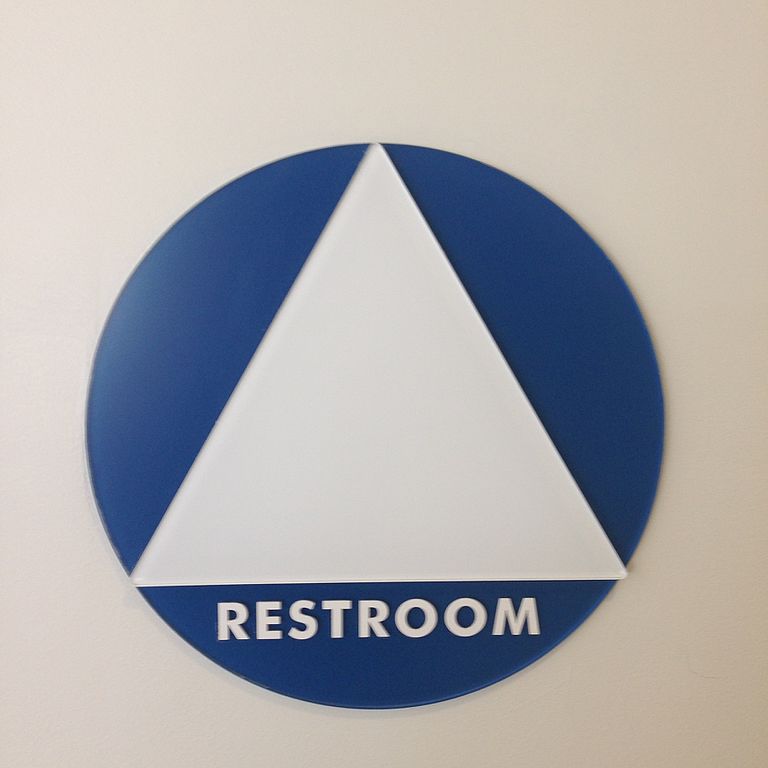
Supporters of gender-inclusive bathrooms say they also benefit gender-conforming people, including parents helping different-gender children use the restroom, caretakers assisting different-gender family members or clients — and anyone who is simply tired of waiting for a single-gender bathroom to free up, when a restroom for another gender is alluringly available.
“We’ve all waited outside an occupied bathroom while the bathroom for the gender we don’t identify with was empty. Gender-neutral bathrooms are more efficient, allowing you to avoid that unnecessary wait,” says the website for Safe Bathrooms DC, an initiative in the District that allows people to report single-user restrooms that are not gender-inclusive. D.C. has mandated gender-inclusive signage on single-user bathrooms since 2006.
Gender identity is a protected class in Montgomery County, meaning it’s illegal to deny anyone a job, housing, a taxi, or access to public accommodations — such as service at a restaurant — based on their gender presentation. But the law doesn’t prohibit public places from separating single-occupancy bathrooms by biological sex, according to a legislative staff report.
“Therefore, restrooms in places of public accommodations [can] still separate facilities based on biological gender without violating the law,” the report says.
Under Glass’ and Katz’s bill, single-user restrooms in public places would have to feature gender-inclusive signage. The law would not apply to multiple-user bathrooms, and it wouldn’t require businesses to add bathrooms they don’t already have, but businesses that have one or more single-occupancy restrooms would have to make at least one of them gender-inclusive. Businesses or landlords who break the law could be subject to an initial fine up to $500.
The requirement would not apply to hospitals, hotels, or restrooms that are only accessible from a private room or office.
Baltimore City approved similar legislation in 2019, with Howard County following suit in 2021. Advocates for the bill in Howard County called it a “no-brainer.”
“It can be dangerous for transgender and gender nonbinary individuals in some instances to use the restroom if there are not gender-neutral restrooms,” Max Crownover with the Howard County chapter of Parents, Families and Friends of Lesbians and Gays, testified last year.
A public hearing for the bill in Montgomery County is tentatively scheduled for March 8.