Jacob Fenston
If you’ve ever walked down the street in D.C. and thought you smelled natural gas, you’re not imagining things. A new study by a coalition of environmental and religious groups found 389 gas leaks in neighborhoods across the city — more than a dozen of which had gas levels high enough to cause an explosion.
“We have found leaks almost everywhere that we went,” says Barbara Briggs, a Quaker climate activist who worked on the study.
Natural gas is mostly methane, a potent greenhouse gas with 80 times more warming power than carbon dioxide, when measured over 20 years. Burning natural gas on your stove or furnace releases greenhouse gas emissions, but natural gas can also contribute to climate change by leaking directly from pipes on the way to your home — or even from appliances within your home.
Natural gas accounts for 23% of greenhouse gas emissions in D.C., according to the District Department of Energy and Environment. But natural gas emissions are likely much higher when leaks are accounted for, activists say. Leaks from natural gas infrastructure is no small problem — in fact, on a national level, one recent study found that gas leaks caused enough global warming to negate the emissions reductions of transitioning from coal to natural gas.
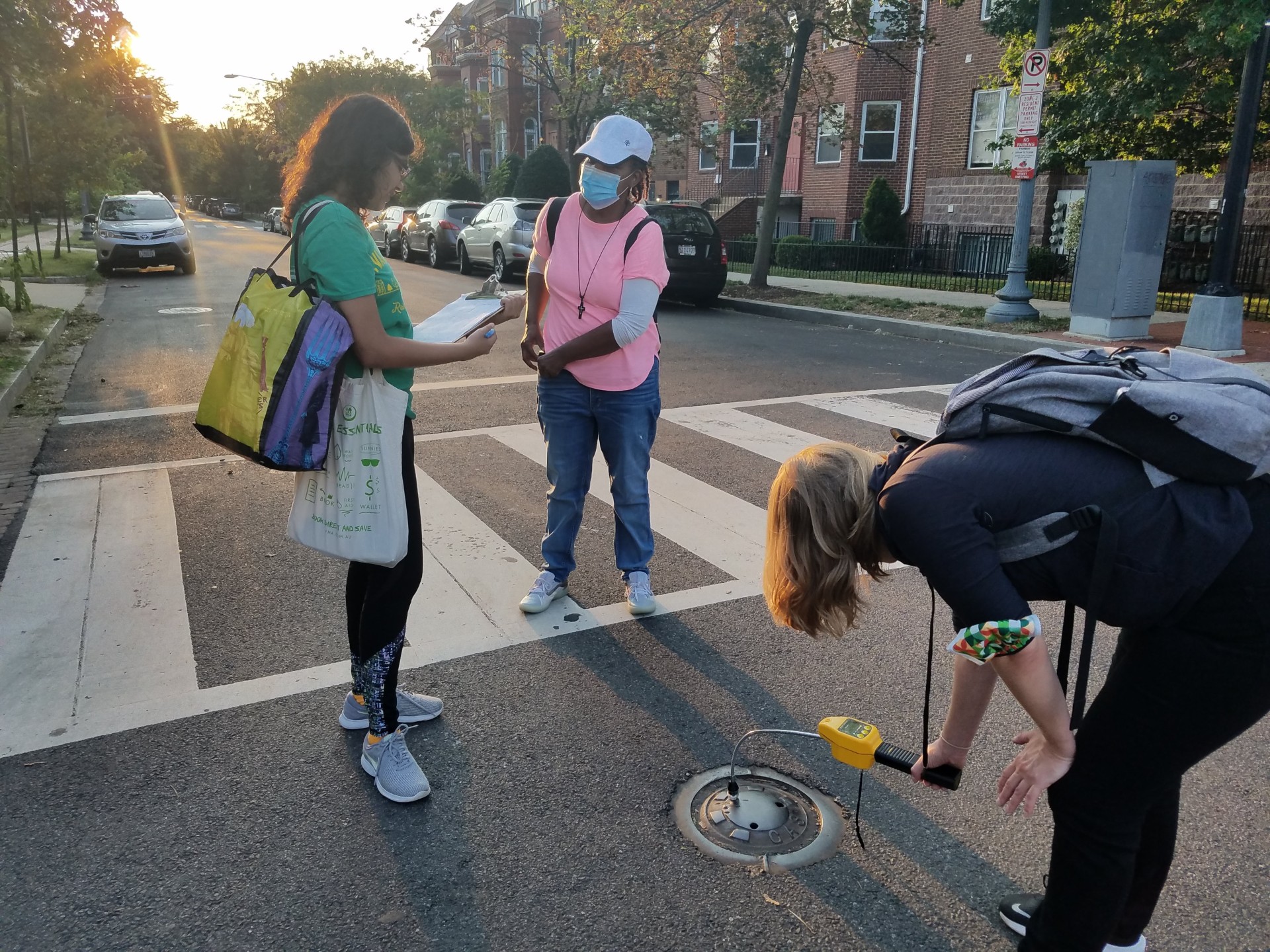
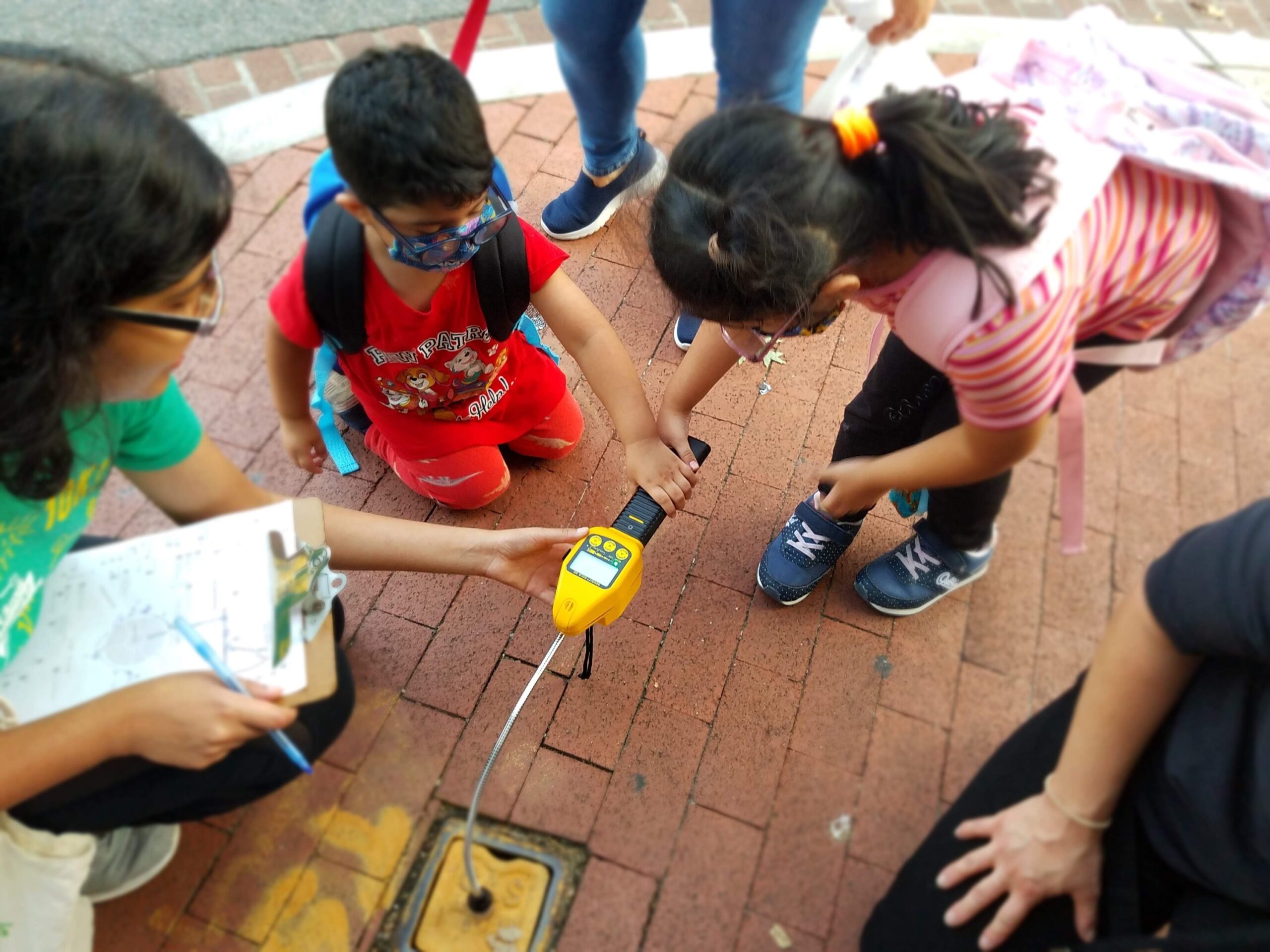
For the study in D.C., volunteers with the Sierra Club, Washington Interfaith Network, Friends Meeting of Washington, and other houses of worship teamed up to test for leaks at gas access caps and other utility manholes around the city. Over the past year, they fanned out to 21 locations across all eight wards in the District, using a handheld industry-grade gas detection meter to check for leaks.
Altogether volunteers spent 25 hours sampling for leaks. The area sampled represents a tiny fraction of the city — meaning the actual number of gas leaks is likely “orders of magnitude higher than the leaks found by the neighborhood researchers,” according to the study.
Volunteers found 14 places had methane levels exceeding 5% air volume — the minimum level at which gas can ignite.
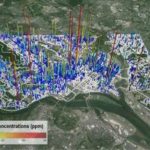
A map showing locations where natural gas was detected during sampling. Yellow circles indicate smaller leaks and red circles indicate larger leaks. Map courtesy of the Sierra Club.
The findings echo the results of a larger study commissioned by DOEE last year, in which researchers surveyed 713 miles of D.C. streets with mobile methane monitors, and found more than 3,000 locations with elevated methane levels.
“We have to get off fossil fuels, including gas, and this to our mind, should be a signal,” says Briggs. “It’s time to really make a move and speed up our transition to clean, renewable energy.”
Briggs says D.C. is already on the path toward clean electricity — the District has a law in place requiring 100% of the electricity used in the city come from clean sources by 2032.
“We have no such pathway for gas,” Briggs says.
Washington Gas would beg to differ; the company has a climate business plan that shows a trajectory toward carbon neutrality by 2050 — in line with the District’s climate goals. The company — whose business model currently relies on selling planet-warming fossil fuels — will get to zero greenhouse gas emissions through a combination of energy efficiency programs, pipe replacement, and transitioning to low-carbon or carbon free gases, such as renewable natural gas, according to the plan.
Washington Gas wants to spend as much as $4.5 billion over the next three decades upgrading its gas infrastructure through a project called PROJECTpipes, which would help address the leak problem.
“Washington Gas is committed to delivering a safe, reliable, and sustainable system,” said Bernie Taylor, a Washington Gas spokesperson, said in a statement to DCist touting the companies infrastructure investments and climate plan. Taylor urged residents to immediately report any gas smells at 844-WASHGAS (844-927-4427) or by calling 911.
“We respond to odor calls 24/7 to ensure the safety of our customers and communities. We take reports and concerns from the community seriously and will continue doing our part to build a clean, low carbon future,” Taylor said.
Climate activists are not buying the gas company’s carbon-neutrality promises, and say renewable natural gas — methane sourced from biomass and waste — is not a viable solution. And they say rather than spending billions on fossil fuel infrastructure that may soon be obsolete, the money should be spent transitioning to clean electricity, and helping to subsidize that switch for low-and-moderate income residents.
Briggs and other activists plan to testify today at a D.C. Council oversight hearing, urging lawmakers to require the Public Service Commission, which regulates Washington Gas, to develop and implement a plan to end the use of natural gas in the District.
This story was updated because a previous version incorrectly said a Washington Gas spokesperson declined to comment.