Martin Austermuhle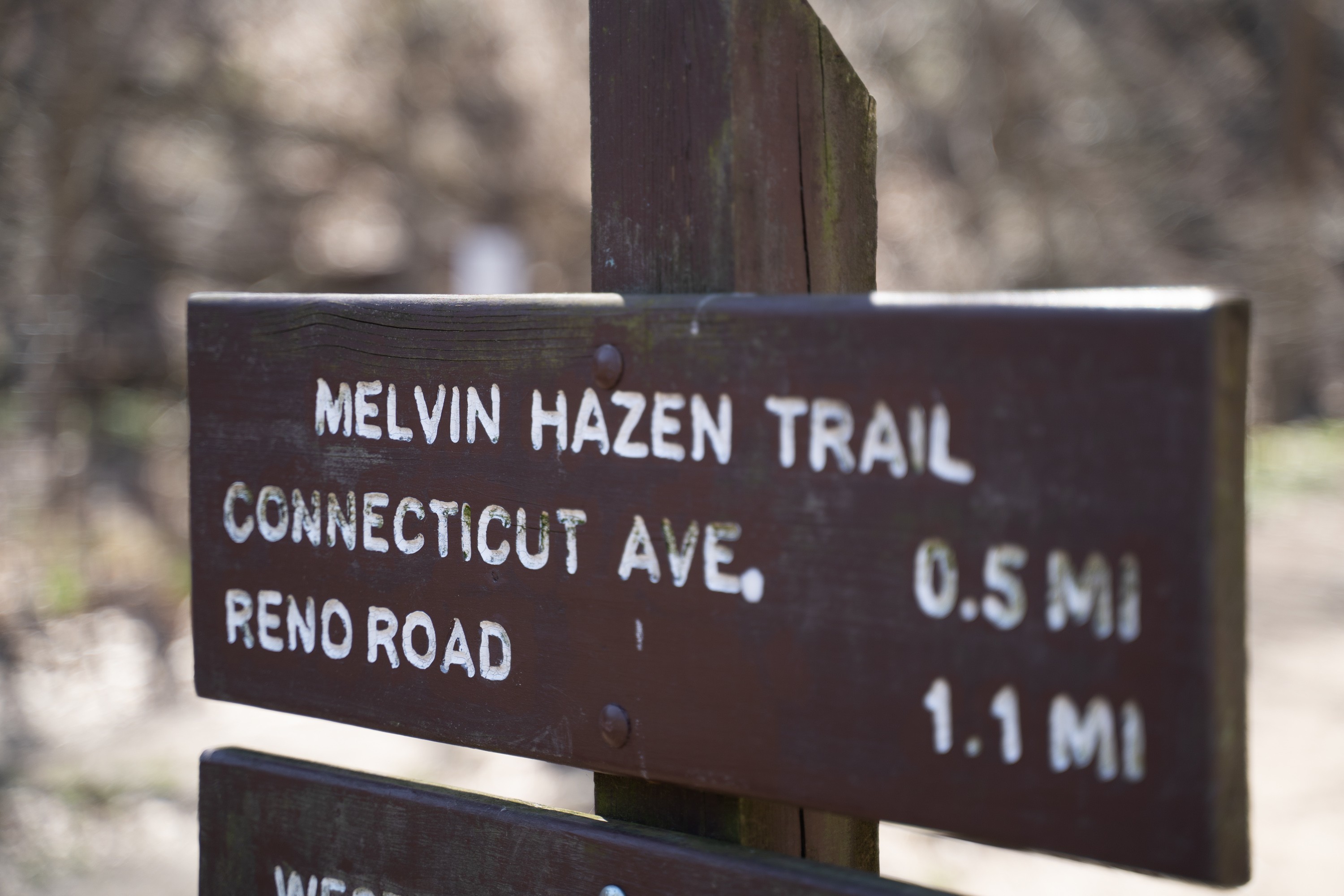
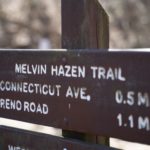
The National Park Service says it will remove Melvin Hazen’s name from a park and trail in Northwest D.C., a decision prompted by revelations that the former D.C. commissioner razed and displaced one of the only Black communities west of Rock Creek Park to make way for what is now Fort Reno Park.
The existing park — sandwiched between Rodman and Tilden streets just west of Connecticut Avenue NW — will instead be referred to by its official name, Reservation 630. Hazen’s name, which was added to the park in 1942, will also be removed from the hiking trail that runs east towards Rock Creek Park.
“Melvin Hazen was a leading force in the systematic dismantling of Reno City in Northwest Washington during the 1930s and 1940s. As president of the District of Columbia Board of Commissioners from 1933 to 1941, Melvin Hazen was instrumental in the displacement of Black residents from this area to create what is now Fort Reno Park,” said NPS in a press release.
Pressure to remove Hazen’s name started building in late 2020, when a Ward 3 Advisory Neighborhood Commission passed a resolution calling on NPS to act. That was followed by a similar request from D.C. Del. Eleanor Holmes Norton in early 2021, who asked that the park service “work with the local community to find a name that is more suitable for the park.”
Much of the advocacy was built upon historical research conducted by Neil Flanagan, a local historian and writer who in 2017 penned a story for the Washington City Paper on the history of the Black community that was cleared to make way for Fort Reno Park. “It’s a story that explains a lot about why D.C. looks the way it does. Why Black people live on one side of Rock Creek Park and why white people live on the other,” he told DCist/WAMU last year.
The name change comes amidst a broader rethinking of the places and spaces that were named long ago and largely after historical figures who held racist views or acted in a discriminatory manner.
Earlier this year local Democratic officials renewed a push to remove the name of former developer and member of congress Francis Newlands from a federal circle on the border of D.C. and Maryland, largely because his developments purposely excluded non-white families. And in 2021, D.C. changed the name of the nearby Lafayette Park and recreation center to commemorate Captain George Pointer, whose family owned the land the park now sits on before it was taken by eminent domain for the benefit of the all-white Chevy Chase neighborhood that was developing around it.
Late last year the D.C. Council signed off on the renaming of Wilson High School in Tenleytown as Jackson-Reed High School (after two Black educators with links to the school), and West Elementary in 16th Street Heights was renamed John Lewis Elementary after the late civil rights icon and member of Congress. A committee set up by Mayor Muriel Bowser in 2020 similarly recommended dozens of other buildings and sites that could be renamed.
Similar steps are being taken in Virginia, where earlier this month Fairfax County officials recommended that Lee Highway and Lee-Jackson Highway be renamed. Arlington County has already named a stretch of Lee Highway after abolitionist John M. Langston.
“I very much appreciate that the National Park Service is using its administrative authority to remove the name of Melvin Hazen from Rock Creek Park,” said Norton in a statement. “As the President of the D.C. Board of Commissioners, Hazen chose to wield his power by promoting segregation, prioritizing all-white communities and marginalizing African-American residents. Labeling the majority African-American community in Reno City a ‘blight’ that was out of ‘harmony with the general plan for the District,’ Hazen orchestrated the demolition of this neighborhood, pushing African-American families out of the homes they owned in the District. The removal of his name from Rock Creek Park is long overdue.”