 Jordan Pascale
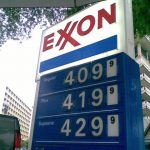
Gas prices in the D.C. region hit their highest level in a decade, averaging $4.19 a gallon — a number that’s risen by about 45 cents in the last week alone, according to data from GasBuddy.com.
Prices are up nationwide as well, setting a historical record today when the cost hit $4.10 and eclipsed the 2008 record. Gas prices are spiking as a result of the Russian attack on Ukraine.
“Americans have never seen gasoline prices this high, nor have we seen the pace of increases so fast and furious,” said Patrick De Haan, head of petroleum analysis at GasBuddy in a statement. “That combination makes this situation all the more remarkable and intense, with crippling sanctions on Russia curbing their flow of oil, leading to the massive spike in the price of all fuels.”
De Haan says the situation is unlikely improve any time soon, with high prices expected to last for months.
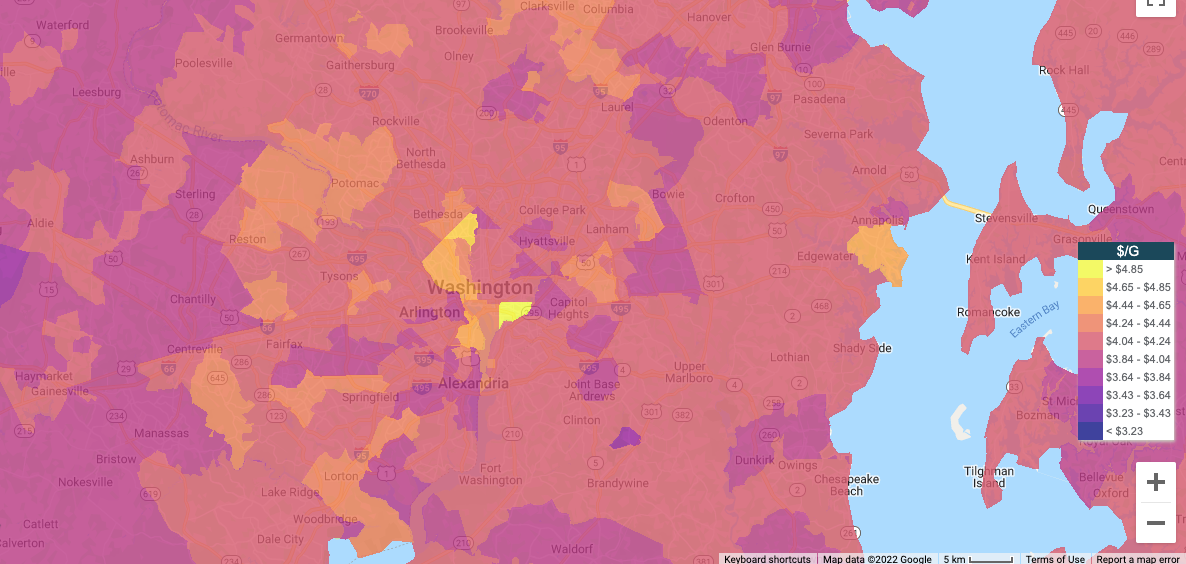
Regionally, the cost of a gallon of gas currently ranges from $3.80 to $4.20, according to the app, but analysts at GasBuddy say prices will likely continue to climb given that demand typically increases during warmer months as travel season kicks off.
NPR reports that Russian oil has not yet been sanctioned directly because the United States and Europe are attempting to minimize the impact on their markets. Crude oil prices have still increased, however, as markets respond to fears of more direct sanctions. Russia exports about 7% of the world’s oil products.
During the State of the Union, President Joe Biden said he was working with dozens of other countries to release 60 million barrels of oil stocked in global reserves in an attempt to temper gas prices.
White House Press Secretary Jen Psaki outlined the government’s plan for energy security in light of current events in a Twitter thread, saying that the United States plans to increase its own oil production, including by taking advantage of thousands of unused drilling permits.
“Domestic production has not insulated us from the price volatility of fossil fuels or the whims of those who control them, such as President Putin. Americans know that,” Psaki wrote. “The only way to protect the US over the long term is to become energy independent. That is why the President is so focused on deploying clean energy technologies that don’t require fossil fuels bought and sold on the global market, which will always be vulnerable to bad actors.”
Psaki’s comments drew the ire of climate change activists, who called for reductions in oil and gas consumption instead of increased production.
Demand could already be reduced in comparison to previous crises, given the pandemic-induced transition to telework for many commuters in the D.C. area. While the exact number of people still working from home is unknown, it’s estimated that nearly 50% of the region’s jobs could be done remotely.
While some activists hope high gas prices could trigger a transition away from personal vehicle use, Metro found in 2014 that gas prices — high or low — had little correlation with ridership. Only one-third of riders said gas prices had any influence on their decision to ride.
De Haan of GasBuddy says Americans need to band together to cut fuel consumption.
“That is really the only thing that we can do at this moment,” he said in a video.