Jacob Fenston
For less than the price of a small, monthly Starbucks latte for each residential power customer, the Regional Greenhouse Gas Initiative promises to cut emissions from power plants by 30% over the next decade, putting the Commonwealth on track to meet its zero-carbon goals by 2045. Additionally, the proceeds go towards mitigating flooding and other impacts of global warming in Virginia.
That might sound like a bargain, if you’re looking to invest in a planet with a “livable and sustainable future for all,” in the words of the U.N. climate panel.
But a new report from Gov. Glenn Youngkin’s Department of Environmental Quality argues that the cost to consumers isn’t worth it. The report also questions whether RGGI (pronounced “Reggie”) will really lead to reduced emissions, dismissing as insignificant the reductions already made in the first year of Virginia’s participation in the program.
“Participation in RGGI is in effect a direct carbon tax on all households and businesses,” reads the report, which Youngkin requested in a first-day-in-office executive order. “RGGI is a bad construct that taxes consumers without providing incentives for change to the electricity producers.”
RGGI was created more than a decade ago as a collaborative effort among East Coast states to cut carbon pollution from power plants in the region. After years of back-and-forth among lawmakers, Virginia joined the initiative on Jan. 1, 2021.
In participating RGGI states, emissions have dropped by 50% since the program’s inception, according to program administrators — twice the national rate of emissions reductions.
Youngkin campaigned against RGGI, promising to exit the program if he was elected. But because Virginia joined RGGI through state legislation, the governor does not appear to have the power to reverse that decision via executive order. Legislative efforts to leave RGGI during the 2022 General Assembly session have failed.
However, the report may pave the way for a regulatory exit. It includes a draft of emergency regulation to leave RGGI and a letter notifying RGGI administrators of the governor’s intent to withdraw.
“This report is being used to justify Glenn Youngkin’s push to pull us out of RGGI, even if that goes against constitutional grounds by sidestepping action at the General Assembly,” says Lee Francis, deputy director of the Virginia League of Conservation Voters.
If the governor’s concern is about rising utility rates, Francis says, he’d welcome a conversation about electricity rate reforms. “Dominion has been overcharging its captive ratepayers for years. It’s not a result of RGGI.”
Francis adds that while the report claims to re-examine the costs and benefits of RGGI participation, it only focuses on the costs, with little mention of the benefits.
RGGI is a cap and trade system, where power companies must purchase allowances for carbon emissions above a certain level. That cap decreases over time, incentivizing utilities to cut emissions.
The proceeds of sales of emissions allowances are split between the Virginia Community Flood Preparedness Fund, which provides grants to make flood-prone areas more resilient, and the Housing Innovations in Energy Efficiency program, which funds efficiency upgrades for low-income residents. So far, the allowances auctions in Virginia have netted $301 million.
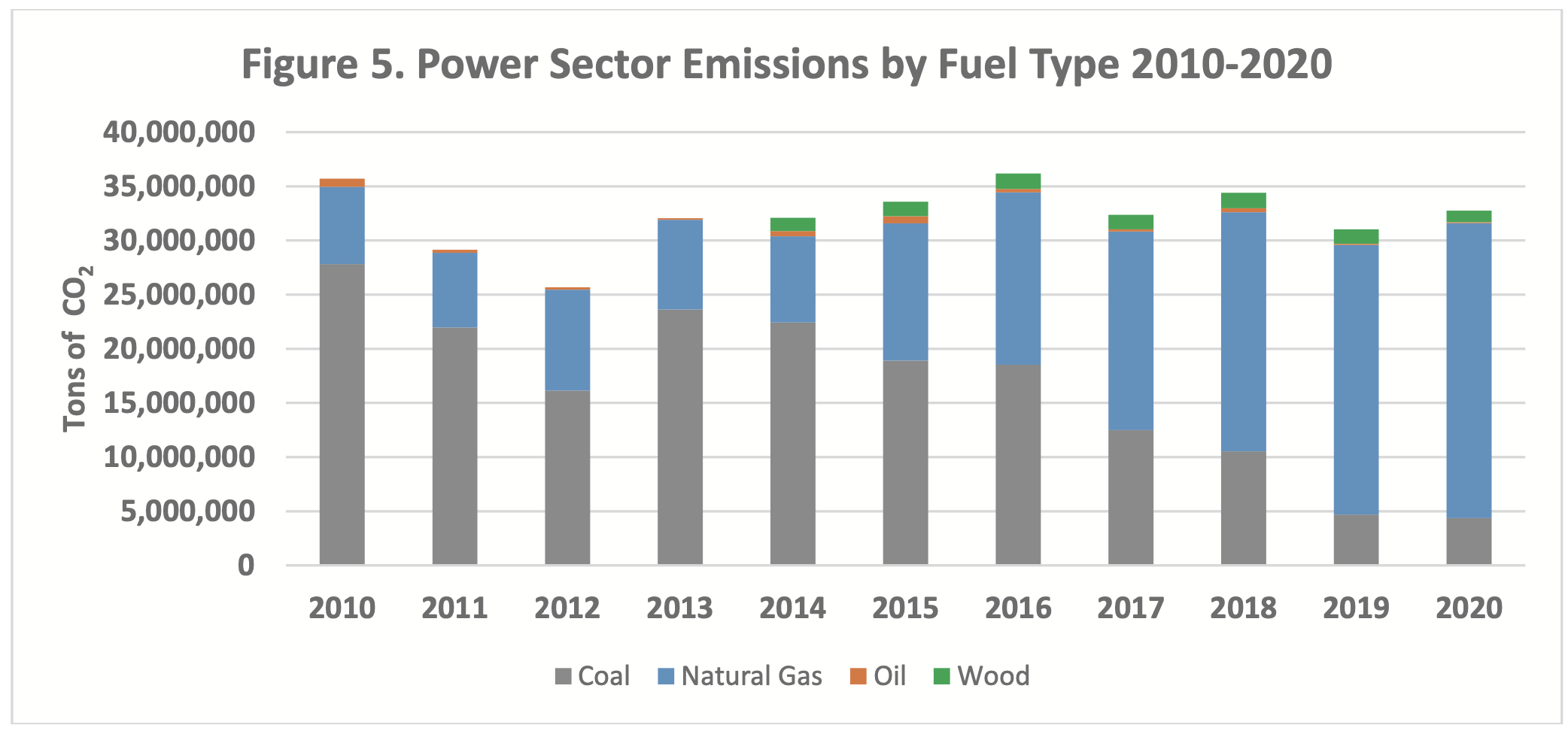
The report does acknowledge that emissions in Virginia have dropped since the Commonwealth joined RGGI, but asserts without further explanation that “this cannot be directly or solely attributed to RGGI participation.”
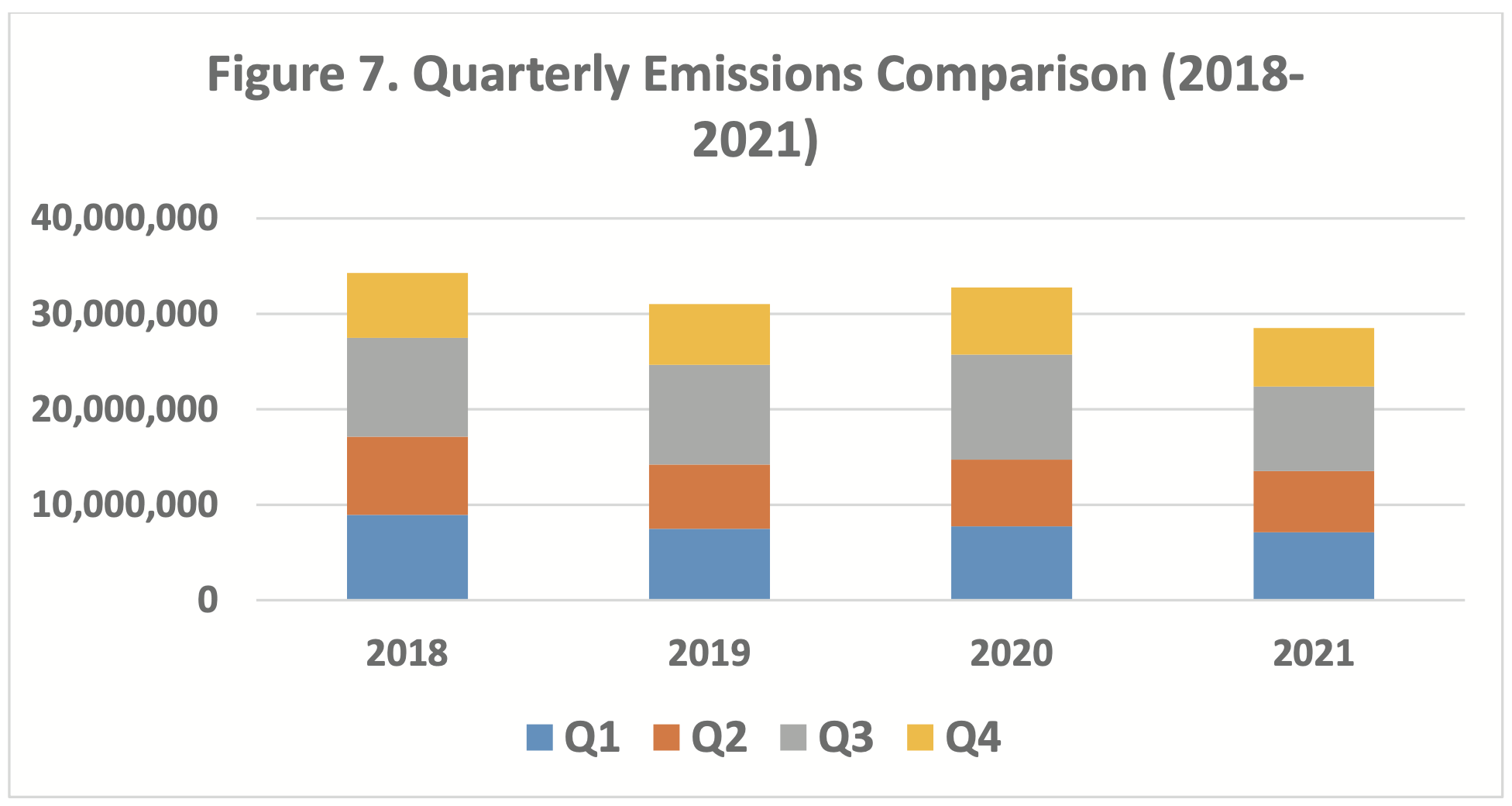
The report also acknowledges that over the past decade, RGGI states have seen large emissions reductions while Virginia’s have remained flat. However, the report asserts that because Virginia is producing more power now than it was a decade ago, while emitting the same amount of carbon dioxide, the emissions rate has declined.
“Without and prior to RGGI, electricity generation has increased while CO2 per MWh has almost been cut in half in Virginia over the last ten years,” the report reads.
The argument appears to be that emissions are dropping anyway, making a greenhouse gas reduction program unnecessary.
But RGGI supporters dispute that idea.
“RGGI works,” says Nate Benforado, a senior attorney with the Southern Environmental Law Center. “Not only does RGGI work, but that we actually need it — we need it in Virginia if we are going to hit our climate requirements, if we’re going to hit our carbon-free electricity requirements that are required by statute.”
Benforado says the Youngkin administration’s attempt to withdraw from RGGI through emergency regulation doesn’t square with state law.
“They simply cannot repeal this program through regulation alone. The program is actually required by 2020 law that the General Assembly passed, and if the governor wants to make changes, the law needs to change. It can’t be repealed through regulation alone.”