Jacob Fenston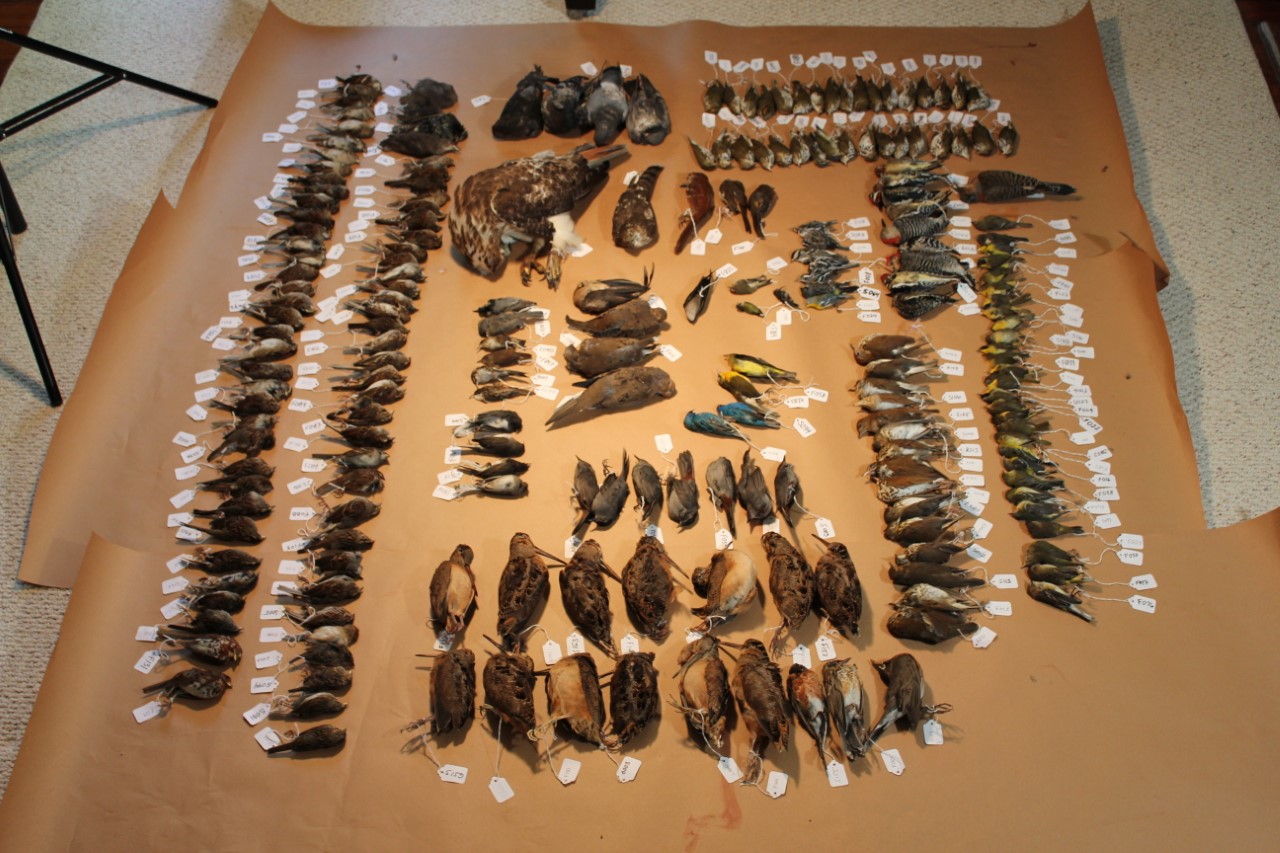
Each year since 2012, volunteers with the nonprofit City Wildlife have canvassed a roughly 13-block area between Union Station and China Town. They’ve found a total 4,500 dead or injured birds — victims of the gleaming glass buildings lining the streets.
New legislation introduced in the D.C. Council aims to cut down on these bird deaths by requiring new buildings to use “bird-friendly” materials. This can include things as simple as screens or decals on glass so birds see the windows and don’t collide, or special coatings or films that make glass less reflective.
The Migratory Local Wildlife Protection Act was introduced by Councilmembers Mary Cheh, Charles Allen, Anita Bonds, Brooke Pinto and Janeese Lewis George. It would apply to commercial buildings, multi-unit residential buildings, institutional facilities, and city-owned buildings; it would not apply to single family homes. Only new buildings and existing buildings undergoing substantial renovations would be affected. Under the legislation, buildings would need to use materials rated by the American Bird Conservancy, which as developed a “threat factor” rating system, and which operates a database of bird-friendly products.
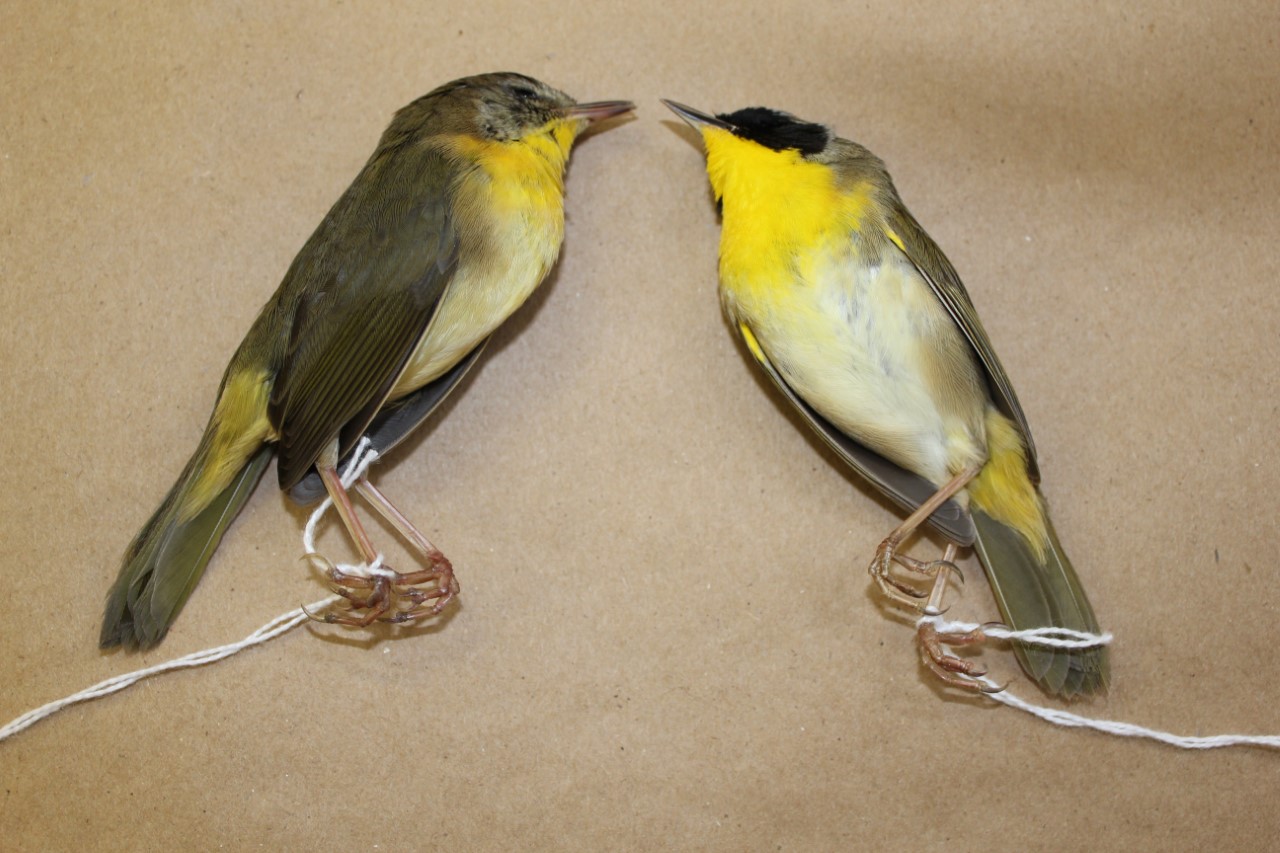
“We know that universal mandates that bird-friendly glass be used in construction could prevent the needless death and injury of millions, if not billions, of birds,” reads the introduction to the legislation. “The District can do its part by prohibiting the use of unsafe building materials that put birds and other migratory wildlife at greatest risk.”
According to the legislation, making buildings bird-friendly adds little to the overall construction cost, and can also provide other benefits, such as increased energy efficiency.
Anne Lewis, president of City Wildlife, says there are two things that make glass hazardous to birds. “The first is that it’s clear and the birds don’t see it, so they think they can fly through it. And the other is that the glass can act as a mirror and is reflective, and in that case, very often they see trees reflected in glass and they try to fly into the trees.”
Lewis says most birds that collide with buildings in D.C. are migratory birds, flying north or south along the Atlantic Flyway, the major pathway for birds along the east coast of the Americas.
“They fly at night and they come down and land in our cities, and they’re not used to these urban canyons — these glass canyons — that we have for them,” Lewis says. “They don’t see the glass, so they crash into it.”
The most common birds killed in collisions with D.C. buildings are white-throated sparrows, ovenbirds, common yellowthroats and woodcocks, Lewis says.
“In other words, we don’t find too many pigeons and starlings,” says Lewis, referring to two invasive birds that are among the most common in D.C. and other North American cities.
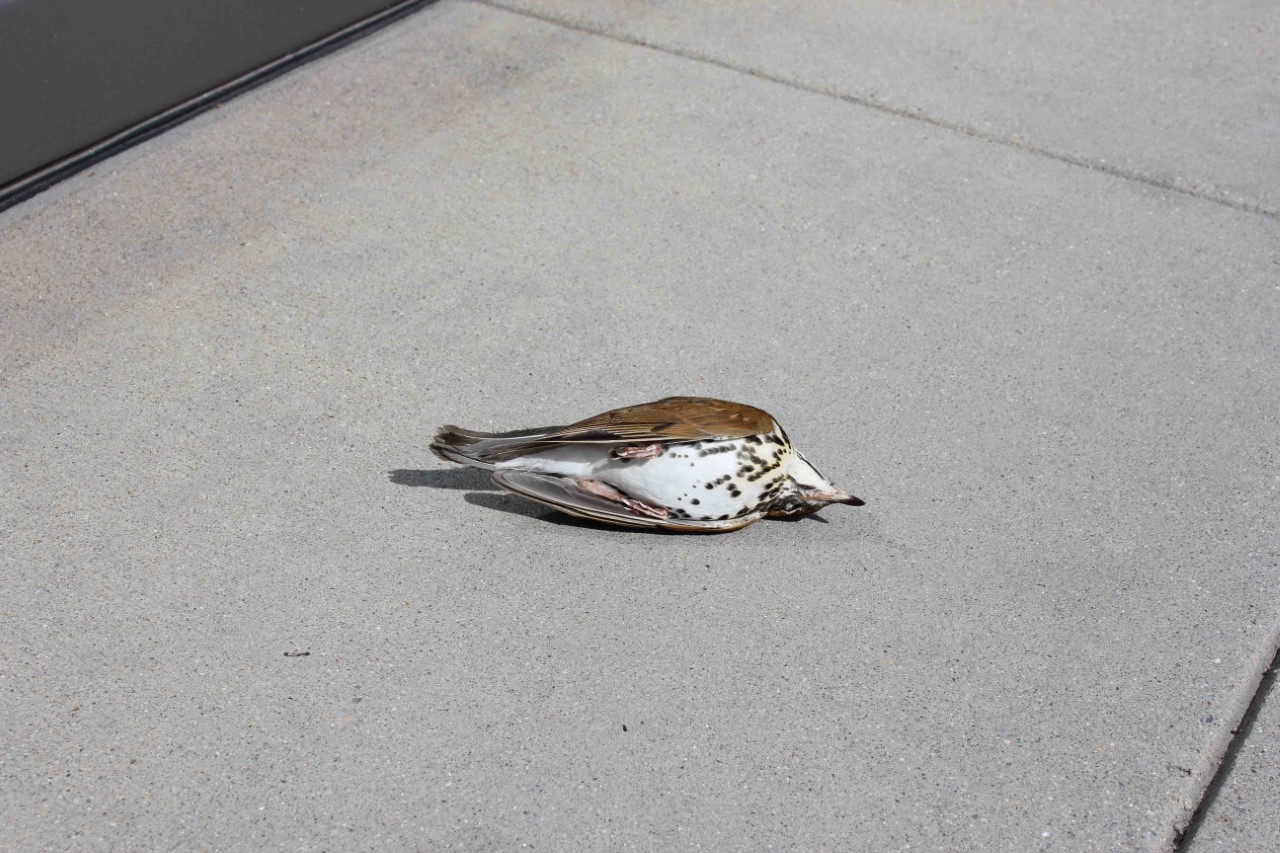
Nationally, bird-building collisions are one of the top human-related threats to birds. Such collisions kill an estimated 365 million to 988 million birds in the U.S. each year, according to research by the Smithsonian Institution and U.S. Fish and Wildlife Service.
Numerous cities already have bird friendly building policies in place, including New York and Portland, as do at least two states, Minnesota and Illinois. In Maryland, legislation that would require bird friendly design has passed the house and is making its way through the senate.
Lewis says the D.C. law would make a big difference in saving birds, even though it would only apply to new construction. She says with all the new buildings going up in the District, there has been a dramatic increase in deaths; the first year volunteers looked for dead birds, in 2012, they found about 200; now they find about 700 a year.