Jacob Fenston
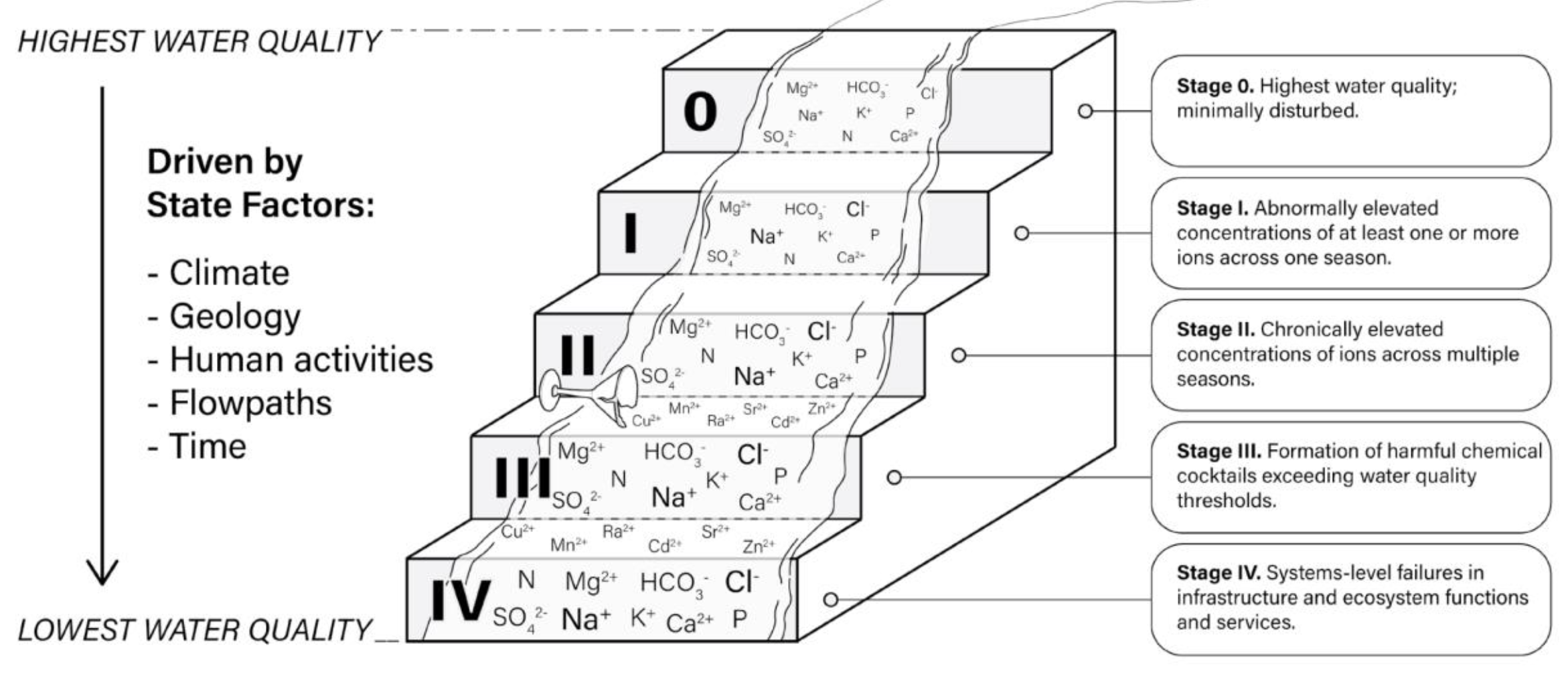
Road salt, while helping to keep streets and sidewalks safe during winter weather, can have a big negative impact on streams and rivers and the freshwater creatures that inhabit them. New research from the University of Maryland posits stages of freshwater salinization, modeled after the stages of cancer. In the final stage, Stage IV, waterways suffer “system-level failures,” posing a threat to human health and aquatic life.
Sujay Kaushal, the UMD professor who led the study, says tracking the health of a body of water is similar to tracking the health of a human body. “If you don’t know where you are on the scale of your blood sugar or your cholesterol, you don’t know whether you have a problem or not,” Kaushal says. “When we have risk factors, guidelines and stages, we can effectively manage things.”
Unlike other pollutants, salt is not currently regulated at the federal or local level, though many jurisdictions have made efforts in recent years to cut back.
Currently, Kaushal says, D.C.-area waterways including the Potomac River and Anacostia River are in Stage 3. “But if we manage them and we look at the risk factors, hopefully we can that to lower stages,” he says.
Salt levels in waterways spike after snowstorms, especially in highly urbanized areas, as melting snow carries road salt into storm drains, dumping into creeks and rivers.
Salty environments affect living creatures by causing water to leave their cells through osmosis. Think about eating a bag of salty potato chips, Kaushal says. It leaves you feeling thirsty. “When you eat salty food, you need more water because basically the water and your cells is moving towards the salt,” he says.
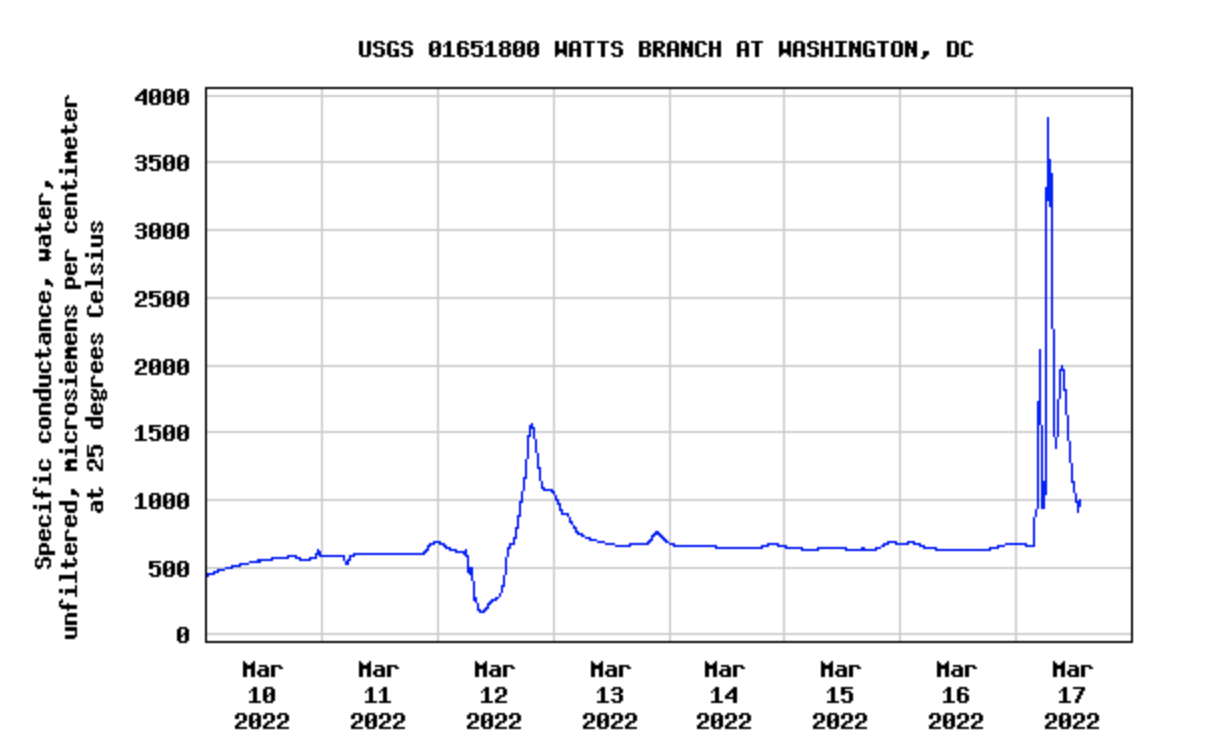
The same thing happens to freshwater creatures in salty streams. “If you have an amphibian — a frog or salamander — and there’s salt in the environment, it dries out the skin of the amphibian,” Kaushal says.
Road salt also affects humans — it erodes our infrastructure, both roads and bridges, as well as drinking water pipes, causing some $5 billion in damages a year in the U.S., according to the Environmental Protection Agency. Salt also leaches chemicals from pipes, contaminating drinking water.
And the problems is getting worse: there has been a 230% increase in salt concentration in drinking water sourced from the Potomac River over the past 30 years, according to the Washington Suburban Sanitary Commission.
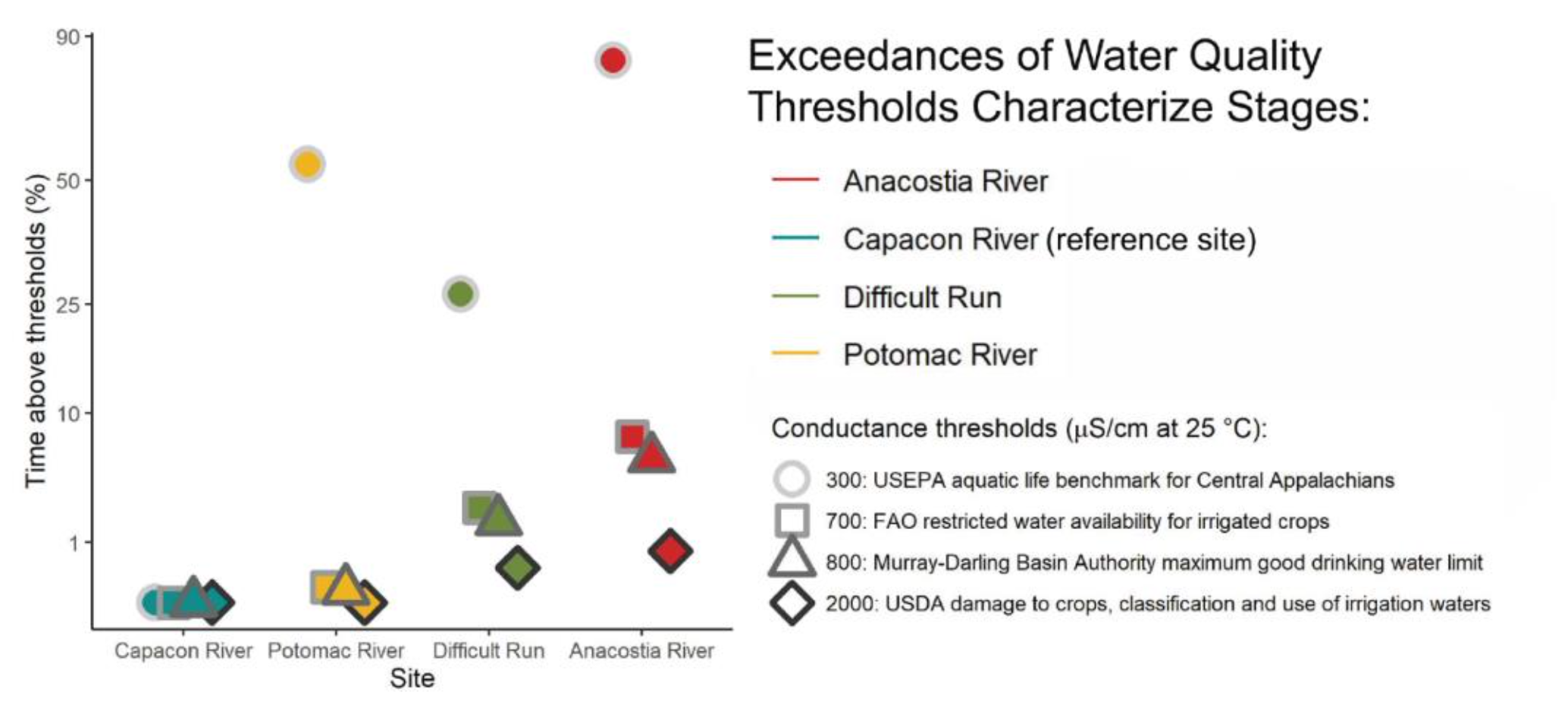
Salt in the environment can have ripple effects, so it’s not just salt that is harming plants and animals. The salt can also mobilize other contaminants, Kaushal says.
Under Kaushal’s framework, in Stage 3 waterways, salt ions begin to interact with compounds in the environment, creating harmful “chemical cocktails.” As Kashaul explains, salt ions displace metals, nutrients and even radioactive elements, releasing them into the water.
In Stage 4 waterways, salt begins to wreak havoc, potentially leading to crop failures and loss of fertility in farmland, as well as the contamination of drinking water, as salt corrodes pipes and releases heavy metals.
“At the end stage, what happens is salinization leads to system-level failures where sometimes it leads to irreversible damage,” Kaushal says.