 Milagros Meléndez
This story was produced by El Tiempo Latino. La puedes leer en español aquí.
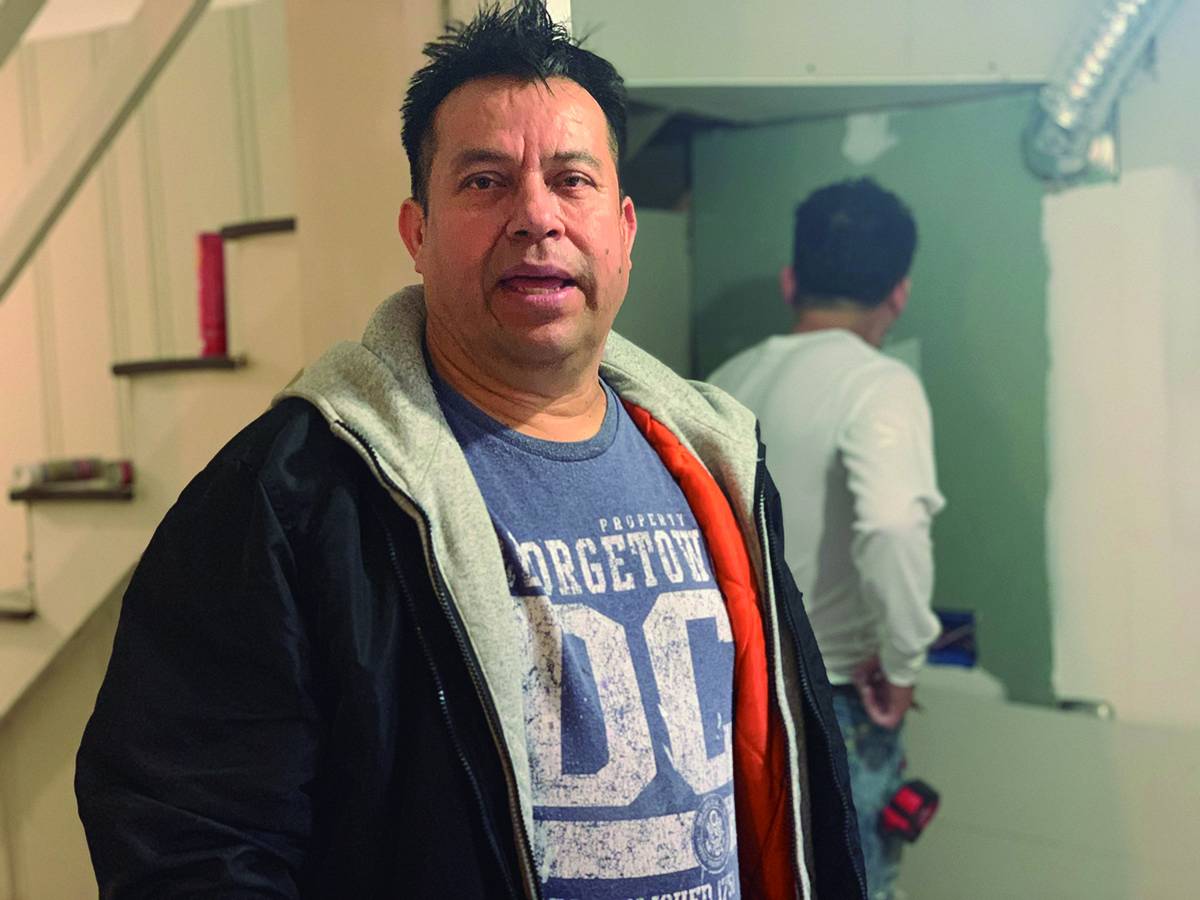
Antonio Chávez never imagined that he and his three employees would be robbed in broad daylight inside the house they were remodeling in Washington, D.C. Chávez has worked in construction for more than two decades and owns a small company.
“I felt the gun in my back and a voice told me ‘Don’t move’. I broke out in a cold sweat,” he recently told El Tiempo Latino. “I’ve never had a gun pointed at me before. Not even when I was in my country.”
The thief took their wallets and cell phones, which he then threw away in the street to avoid being traced.
Chávez and his workers are just some of the Hispanic individuals who have been targeted by robberies at construction sites in the District, say authorities and activists.
“This is a situation that had been seen before, but in recent months it has gotten worse. It’s very common,” explained José González, an officer with the D.C. Metropolitan Police Department .
In January, MPD arrested an individual accused of stealing from more than 40 Latino workers at 20 construction sites over a three-month period.
The 26-year-old was arrested for a specific case in which one of the victims was injured. “We were able to arrest the suspect and upon investigation we linked him to 19 other cases,” González said.
Chávez and his workers were robbed on a Saturday in February, at 9:15 a.m. in Northeast D.C. They were remodeling an empty house.
The garden fence facing the street was broken. “That’s where the man came in,” Chávez said.
The first person the gunman encountered was Almícar Romero.
“I was working on the stairs at the back entrance when suddenly I looked up and he was already pointing [the gun] at me,” Romero said. “He asked for my wallet and phone. And I gave them to him, then he came in and when he heard my boss on the second floor, he signaled us to be quiet. And he went up.”
The intruder held up Chávez on the second floor. After stealing his wallet and phone, the robber escaped through a door and jumped into the garden.
One of the employees’ wives was working with them and the thief did not take her phone, so they were able to call the police. “The police told us that there had been several similar robberies in that area,” Chávez said.
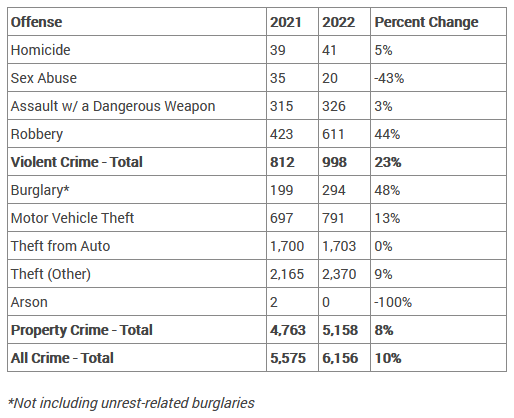
Construction site robberies are part of an increase in robberies across the city.
In 2021, MPD recorded 2,040 robberies, according to the department’s website. This year, 292 robberies had been reported as of March 28 — 50% more than this time last year.
González, the MPD officer, said thieves target Latino workers for a variety of reasons. “They know that a Latino immigrant probably won’t call the police to report a crime, for fear of their immigration status,” he said. “And they usually carry cash, lots of cash on them, because [some] can’t open bank accounts.”
Chávez wasn’t carrying much money in his wallet, but Romero was. “They took $600 from me,” he said.
What’s being done?
As a result of these cases, the Mayor’s Office on Latino Affairs (MOLA), along with the D.C. Hispanic Contractors Association and MPD’s Latino Liaison Unit developed an awareness campaign to counteract these thefts.
“We started visiting construction sites, alerting people and encouraging them to report these crimes,” said MOLA’s interim director, Eduardo Perdomo.
Perdomo said that since last year’s visits they have also encouraged workers to open bank accounts to avoid carrying cash.
At a community meeting with law enforcement, the leader of the D.C. Hispanic Contractors Association, Joshua López, told officials it is “unacceptable that people keep getting robbed like this.”
He called for more police surveillance. “We are concerned that this will become more violent and that people will possibly be killed,” Lopez said.
That’s what Chávez feared the day he was assaulted, too. “If my son had been with me, I might have confronted the thief and that was going to end very badly,” he said.
In the January case that led to the arrest of the man accused of robbing more than 40 Hispanic workers at 20 construction sites, a worker struggled with the thief and was shot in the hand. During the scuffle, the other employees managed to detain the gunman until officers arrived.
Victims could legalize their immigration status
Upon making their report to MPD about the case, Chávez and his coworkers were informed that if any of the employees were undocumented or only had temporary status, such as TPS or DACA, they could obtain permanent residency through a visa given to crime victims. This is the U Visa, which is specifically for victims of crime.
“People can legalize their immigration status and we can help them,” Perdomo, the Mayor’s Office on Latino Affairs director, said.
The Bowser administration also funds community organizations to provide legal assistance and civil rights education through the $3.5 million Immigrant Justice Legal Services grant program. “We work with dozens of agencies to serve our community,” Perdomo said.
When it comes to preventing robberies, MPD says educating people and calling attention to these crimes in the media has been helping.
Meanwhile, Chávez and his team remain alert and take extra precautions to avoid future robberies. The impact is not only economic, but also psychological. “You have nightmares and you work in fear,” he said.
To connect with the Mayor’s Office on Latino Affairs, call (202) 671-2825, email ola@dc.gov, or visit the Frank D. Reeves Center of Municipal Affairs Government Building located at 2000 14th St NW, Washington, DC 20009.