Héctor Alejandro Arzate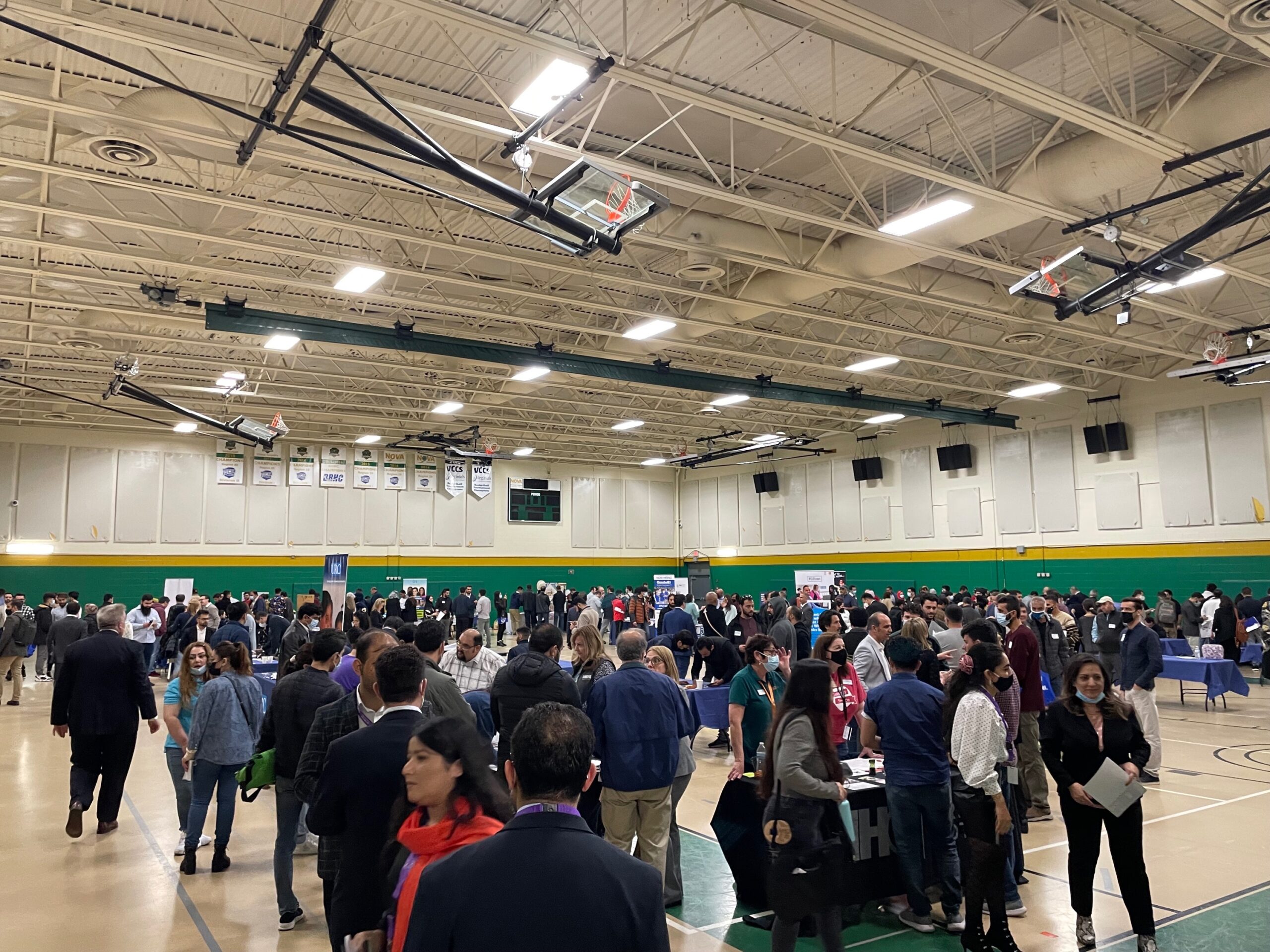
Before he was a cashier in Alexandria, Mustafa Osmani was a student of the arts in Kabul, Afghanistan. He was an actor with a national theater. When the Taliban took control of the country, however, he says he had no choice but to leave.
“Sometimes you’re obligated to do something,” said Osmani, 24, who arrived in the United States in September. “At first when we get here, it was very difficult for us.”
Along with Osmani, thousands of Afghans have made their way to Northern Virginia to build new lives – and careers – for themselves. Although many have found jobs locally, it can be challenging to find work in line with their previous skill sets or chosen fields.
Osmani misses acting, but he’s doing what he can to earn a living. He currently shares an apartment with his two cousins, who are also refugees. All three are cashiers, hired at the same business.
“I am looking for new opportunities,” said Osmani. “After that, I can continue my studies too.”
Ahmad Nawid Amiry is a case manager at the Lutheran Immigration and Refugee Service (LIRS) office based in Alexandria. He also had to change careers once he arrived in the U.S. from Kabul in August. His previous work was in procurement services, and now he’s working with people like Osmani who are starting new lives in countries other than the one they once called home.
“They need our help,” said Amiry, who was evacuated by the U.S. Air Force with his wife and small children. “Without [a] job, without hard work, it’s impossible.”
Osmani says he’s on the hunt for a more fulfilling job, and he’s not alone. Last week, the LIRS and other resettlement organizations hosted a hiring fair with more than 40 local employers in the area. According to a spokesperson for LIRS, more than 500 recently arrived Afghans attended the event.
“One major concern is skills matching,” said Krish O’Mara Vignarajah, the president and CEO of LIRS. “There are many Afghan refugees who are doctors, lawyers, engineers by training but who are unable to work in their desired field because of professional certification requirements.”
Among those who’ve faced similar challenges are Bahara Anwari, who was a science and mathematics teacher in Afghanistan. She hasn’t been able to find a job in her field because she doesn’t speak English.
“It is very important for us to find work, especially for people like me,” said Anwari, who lives in Alexandria with her husband and two children. She spoke to DCist/WAMU through a translator.
To help Afghans navigate the job search, O’Mara Vignarajah says the LIRS is providing refugee clients with case managers like Amiry to develop resumes and fill out job applications. She also says they’re helping people find suitable work opportunities and adjust to American work culture.
“We’re coming at employment from every angle because we know how essential it is to plant roots and be self-sufficient,” said O’Mara Vignarajah.
Mursal Qaderyn was a web and graphic designer in Afghanistan but is now working as a behavioral therapist for children with disabilities. She says although she enjoys helping others, she knows it might be a while before she finds her ideal job.
“I want to try and find a job that’s related to my field,” said Qaderyn, 20, who now lives in Alexandria in a home with her siblings and parents.
For potential employers like Jordan Stark of Loudoun County Public Schools, the arrival of new Afghan neighbors is a welcome addition to a district in need of staff.
“We’re happy to communicate with all of these refugees,” said Stark, who was recruiting bus drivers, substitute teachers, and nutrition workers. “To see how I can, and how our county can assist them, as well as [how] they can assist with our county.”
In the meantime, people like Osmani, Qaderyn, and Anwari are taking advantage of hiring fairs and other professional development opportunities as they start their careers from scratch.