Amanda Michelle Gomez
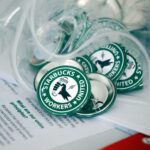
Over 200 Starbucks locations across the country are seeking to unionize for better pay and working conditions, including a handful in the D.C. area. Organized workers have won the vast majority of union elections held so far, but suffered a loss this week at a store in Springfield, Virginia.
The vote among workers at the Springfield location at the Huntsman Square shopping center was 10 to 8 against the union, with one ballot voided, according to NPR, which first reported the news. This is the latest setback in the movement since December, according to Huff Post labor reporter Dave Jameson, when workers at a location in Buffalo also failed to secure enough votes to form a union.
A few workers — or “partners,” as Starbucks calls them — at the Springfield location started organizing in mid-January, according to one of the lead organizers, 18-year-old Starbucks barista Tim Swicord. He told DCist/WAMU last month that a majority of store workers wanted to unionize, so they filed for an election through the National Labor Relations Board in late February. “Our current ‘voice’ is given to us by corporate partners that we feel don’t share our interests. We cannot have that culture of belonging if we do not make decisions on our own behalf,” said a letter signed by nine named workers to CEO Kevin Johnson, who has since retired.
DCist/WAMU caught up with Swicord the day after the union election. He says the experience ultimately cemented his dedication to the labor movement. This interview has been lightly edited for length and clarity:
How did you end up working at the Starbucks in Springfield?
I decided to apply last summer, and really fell in love with what I thought the values of the company were, and what I saw on social media and even in the store — how everyone acted with each other seemed very laid back. And it’s an interesting job to do and I really enjoyed what I thought the company meant through its mission and values.
How did management respond to your union drive?
Initially, we didn’t really hear anything at all from anyone. It was kind of the calm before the storm.
Our district manager came in a few times and reduced the hours on our schedule, but we were told that was just for the low season. And actually, right now, there is a national unfair labor practice charge being filed against Starbucks for that very reason. They’re alleged to have been cutting the hours across stores nationwide as a union-busting tactic.
Our district manager started coming in and we had these scheduled “connects,” which is what corporate called them. But they are really the same kind of one-on-ones … except ours were more frequently than not two-on-ones with our store manager and our district manager. They were saying things like, “you could lose your ability to transfer stores. You could lose some benefits.”
From what I heard, the things that were being said in these one-on-ones were definitely influencing people’s votes. And at least in my mind, I definitely felt that that two-on-one aspect was very kind of intimidating. And I really think it’s unfair. And what we found out is that they weren’t technically mandatory, but they were understood as mandatory because they were put on our schedule. And if you don’t show up for a scheduled shift, you get in trouble for that.
[Note: National Labor Relations Board General Counsel Jennifer Abruzzo is currently seeking to designate these types of meetings as a violation of federal labor law.
The manager of the Huntsman Square Starbucks was not immediately available for comment.
A Starbucks national spokesperson told DCist/WAMU that while they respect the right of their workers to organize, the meetings were meant to offer the company’s response to the union effort. “The union gave theirs, we have the right to give our perspective,” she said. “Partners heard what we had to say and the results speak for themselves.” The spokesperson declined to comment on specific allegations.]
What did you think your chances of unionizing were ahead of the vote?
Personally from the discussions that I was having and what I thought prior to the vote, I definitely thought we had a pretty high chance of becoming a unionized store. I thought we were going to win the vote. But it turned out that some of the tactics that we didn’t think were going to reach everybody did actually reach a large percentage of our partners.
It was definitely disappointing. It was not a result that I expected. In fact, my worst case was I thought we were going to get 12 “yes” votes at a minimum.
You alluded to this already, but what do you think led to the “no” vote this week?
I really think just the presence of my district manager was a big influencing factor for a lot of my partners. If she wasn’t having a conversation, she would sit in the café, or in the back of the house. Somebody that I don’t know at all, but I know their power, sitting in the front of house or in the back of house can be a really intimidating thing. I definitely did not like her presence there because I think she should not really try to influence us.
When we spoke a majority supported the union effort … so I’m wondering whether you believe people changed their minds because of some of these tactics, or whether some people just left the store?
Very much so loss of support but there was also some of the partners who left. And we had a lot of very new partners just coming out of training as we were getting into it. In a new environment, it’s harder to have those connections, and that’s a failure on our part, I would say. And we could have done a better job.
What did you learn from the experience?
As a person in high school, definitely a lot about communication. And I learned I did not want to run for elected office — that’s my go-to joke there.
Truly, I think that this is just an incredible experience for me to have. It’s definitely going to help me because I’m not going to leave the labor movement after one loss. I plan to work with the union and hopefully work with more Starbucks stores to continue this awesome movement that’s going to spread like wildfire … Despite it being disappointing, we can take what we learned here and apply it to so many other stores and truly win overall.
This was definitely a big step in framing how I can tell people that they might be getting gaslit by somebody from corporate. A lot of the reason that I think we didn’t push harder at the very end to get our “yes” votes is because we were confident that we had the “yes” votes from our conversations. We did not realize that we were going to lose and have those votes flip. So it’s about understanding where people are coming from, trying to empathize. How can I show I think we should have a union in this case and how it will help this person?
What’s next for you and your coworkers? What are the conversations you’re having today like?
I am sitting outside my store right now, so I don’t quite know. After the vote yesterday, we all had our solemn hugs — somber hugs I think is a better way to describe it. And we all were chatting about what the future might look like. But ultimately, I don’t think this will change anything. We are still all the same. It might be a little awkward initially. That’s what we were joking about today via text, me with some of my partners. But I think in the long run, we will still be Huntsman [Square], we will still be our Starbucks. And you’re not going to see the last of us. We’re definitely going to continue the labor movement, us on the organizing committee here at Huntsman.
Previously:
Starbucks Employees At Three Northern Virginia Stores Move To Unionize