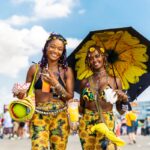
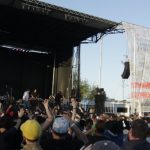
The National Cannabis Festival is gearing up for its biggest year to date, with a projected 20,000 people expected to descend on the RFK Festival Grounds this Saturday. But repeat festival-goers will notice something new this year: a dedicated culinary pavilion headlined by some of the region’s biggest names in the food and beverage industry.
“We realized a couple of years in that food was more than just an amenity on site,” says Caroline Phillips, the festival’s founder. “We wanted to be sure there was an experience on site that celebrates the overlap between cannabis and the culinary arts and looks at the future of cannabis in our city.”
The culinary pavilion experience aims to foster discourse around the current realities and future possibilities for cannabis in food and beverage locally and beyond. (There are also less serious events, such as a pizza-eating contest sponsored by DC Slices and an ice cream-eating contest sponsored by Ben & Jerry’s.)
The festival doesn’t allow on-site marijuana sales or samples given D.C.’s current regulations — which use a murky “gifting” model for businesses, though that’s also recently come under attack by the D.C. Council — so the pavilion won’t have any edibles on offer.
Instead, expect panel conversations around the intersection and future of food, drink, and cannabis. D.C.-area chefs, including Maydan’s Darnell Thomas, Muchas Gracias’ Christian Irabién, and Moon Rabbit’s Kevin Tien, will discuss the future of cannabis in D.C. hospitality; Mark Nagib of lifestyle brand Pink Fox will share tips for home cooking with weed; and DC Brau’s Jeff Hancock, Mor-Hemp & Co’s Maurice Morton, and Maria Bastasch, who recently closed down the pop-up bar Disco Mary inside the former Columbia Room, will host a conversation about the benefits of apothecary cocktails.

Drinking the benefits
Bastasch has been at the forefront of incorporating cannabis-derived products into her work. The alcohol-optional Disco Mary ventured into a menu of nonalcoholic cocktails incorporating plants and herbs. Some drinks came garnished with cannabis leaves; others used hemp oil and damiana, another medicinal herb grown in parts of the U.S. and Mexico.
“It’s just an example of one of the thousands of herbs that can be incorporated into food or beverage and has a lovely physiological impact on the body as an alternative to alcohol,” Bastasch says. “The hope was to be able to use Disco Mary as a platform to have a larger discussion not only around all forms of plant medicine but also drug policy.”
Bastasch understands why bars have legality concerns around entering into the cannabis space: D.C.’s gifting model is heavily regulated. And though CBD — another chemical in the cannabis plant that can be used topically or ingested — is federally legal, there is still trepidation around using it in the restaurant community because of its proximity to illegal forms of cannabis.
Yet Bastasch argues the D.C. laws around cannabis limit not only creativity in offerings, but also mean patrons who don’t imbibe or don’t want the negative effects of drinking have fewer choices to unwind.
“From their earliest stages, bars have been places where people gather to have discussions about ways that they could to make the world better place and enact social change,” says Bastasch. “I’m hopeful that as we edge closer to federal legalization, we will see a wider offering from beverages. The questions is, what can we be doing as businesses to use our voices to push the policy in the direction we would like to see it?”
Unlike Bastasch, Chef Kevin Tien doesn’t work cannabis into his restaurants Moon Rabbit or Hot Lola’s, but he says he signed on to the culinary pavilion because he didn’t want to miss an event that is both “diverse and representative of local culinarians,” he said. Because chefs have a lot to think about with regard to adding cannabis to their menus — including the logistics of purchasing from suppliers — Tien sees events like this one as an important step to expanding a national conversation about weed and the restaurant industry with more chefs’ voices at the table.
“Anything that involves legislation is never easy,” Tien says, “but I think cannabis will be in restaurants within two years.”
When Phillips, the founder of events production company The High Street, put together the first National Cannabis festival in 2016 — soon after D.C. legalized weed for recreation — her hope for attendees was to not only have fun, but to increase their knowledge around the importance of representation, diversity, decriminalization, and other key issues in the cannabis industry.
Grassroots event continues to grow
Festival organizer Phillips, a Black woman, says it is the biggest ticketed cannabis event on the East Coast, and she uses the platform (as well as her organization Supernova Women) to focus on Black and Brown cannabis providers and businesses, to reclaim space, and advance policy in an industry that continues to be incredibly racially inequitable. Despite the fact that legal U.S. cannabis sales are projected to reach $33 billion in 2022, up 22% from last year, most cannabis companies are are owned by white men.
“A lot of folks were talking about the ‘Green Rush,’ but they weren’t really talking about the road to get there or the work that still needs to be done,” says Phillips, who grew up in D.C. and saw firsthand how the War on Drugs affected the community. “Drug policy reform is not just a business issue or a matter of allowing people to open dispensaries, but a human rights issue and a criminal justice reform issue. It seemed important to create a program that would be affordable and accessible and talked about the challenges that still lie ahead with policy reform.”
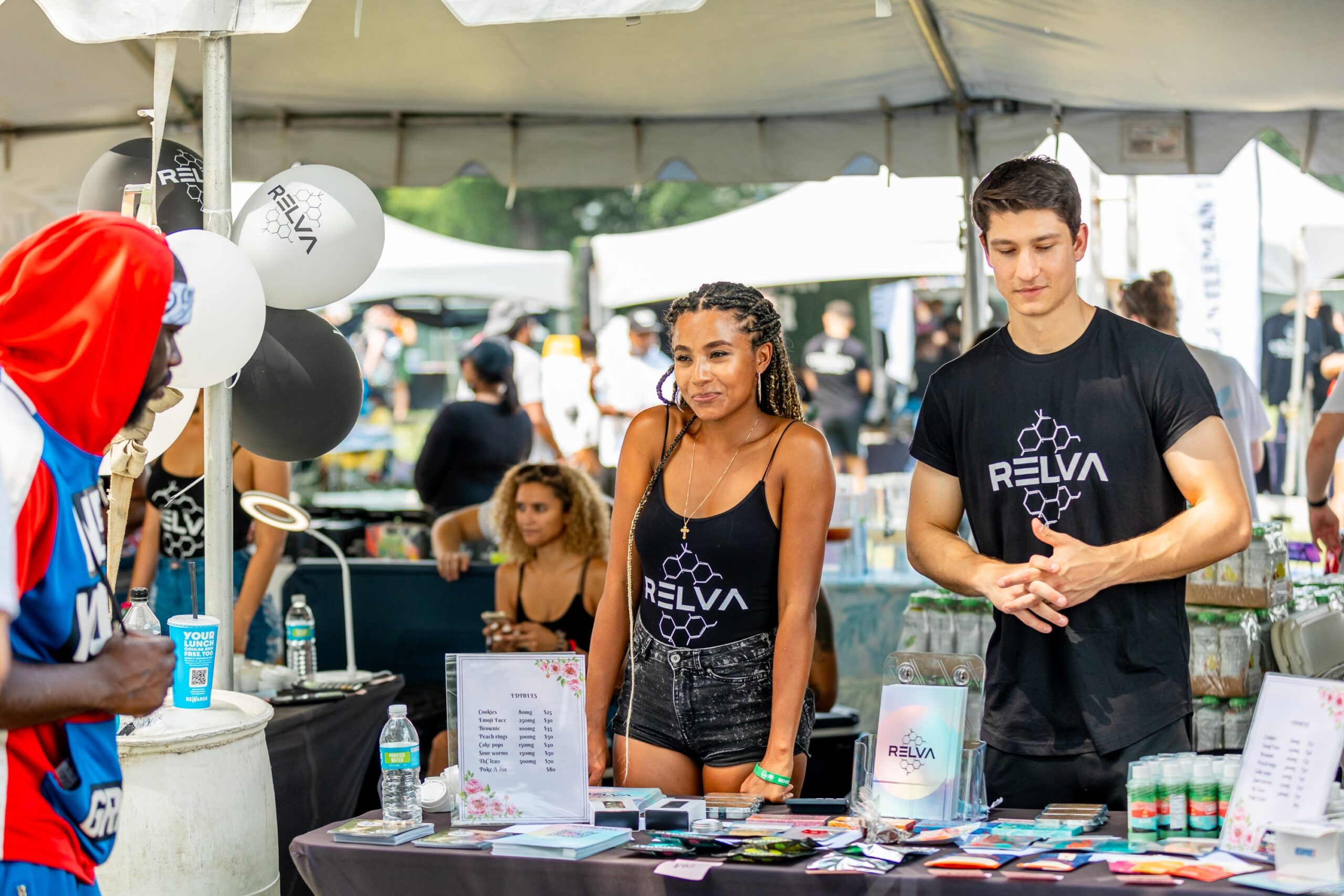
The sixth annual event — NCF was canceled in 2020 due to COVID — includes concerts by Wiz Khalifa and Ghostface Killah, education panels, advocacy, exhibitors, and contests. Though the festival doesn’t allow on-site marijuana sales, it does plan for the potential that attendees might get hungry. Separate from the pavilion, the “Munchies Zone” returns this year, including more than 75 local food trucks and vendors. The lineup puts an emphasis on Black- and women-owned businesses, including past festival favorites like The Tender Rib, Reba’s Funnel Cakes, and southern seafood from Pearl and Da Girls.
Another option for good eats at the festival is a “Stop AAPI Hate Night Market,” hosted by Tien and Maketto’s Erik Bruner-Yang as part of their advocacy work through Chefs Stopping AAPI Hate. To kick off Asian American and Pacific Islander Heritage Month in May, their pop-up on Saturday in the Munchies Zone will serve “food that’s fun but also promotes a good cause,” says Tien, including Hot Lola’s famed fried chicken sandwiches, a Sichuan twist on Nashville hot chicken; Vietnamese coffee made vegan with coconut cream; and Moon Rabbit cook Marco Saldierno’s version of birria tacos braised in Vietnamese spicy beef stock. A portion of the sales will go to further fund programming for their cause.
What else is on?
The bulk of the festival takes place on Saturday, but activities stretch all weekend, including a policy summit on Friday at the Ronald Reagan Building and International Trade Center that’s free and open to the public and a championship competition for D.C.-area growers and products at Echostage on Sunday judged by local cannabis blog the Gentleman Toker, with music by Slick Rick and Footwerk.
Pearl and the Da Girls cofounder Shavone Lattimore-Dunn, who has served up her fried fish combos and other dishes at the festival since 2017, is especially excited to be back after a lapse because of the pandemic. “With so much going on in the world, we’ve all be affected by so much these past few years. The festival gives a chance for people to enjoy life again, be out there without being judged. You can relax — it’s a safe, mellow event. We all need that.”
The National Cannabis Festival will take place on Saturday, April 23—Sunday April 24 at the RFK Festival Grounds, 2400 E. Capitol Street SE. Tickets (starting at $65+ for general admission) are required.