Amanda Michelle Gomez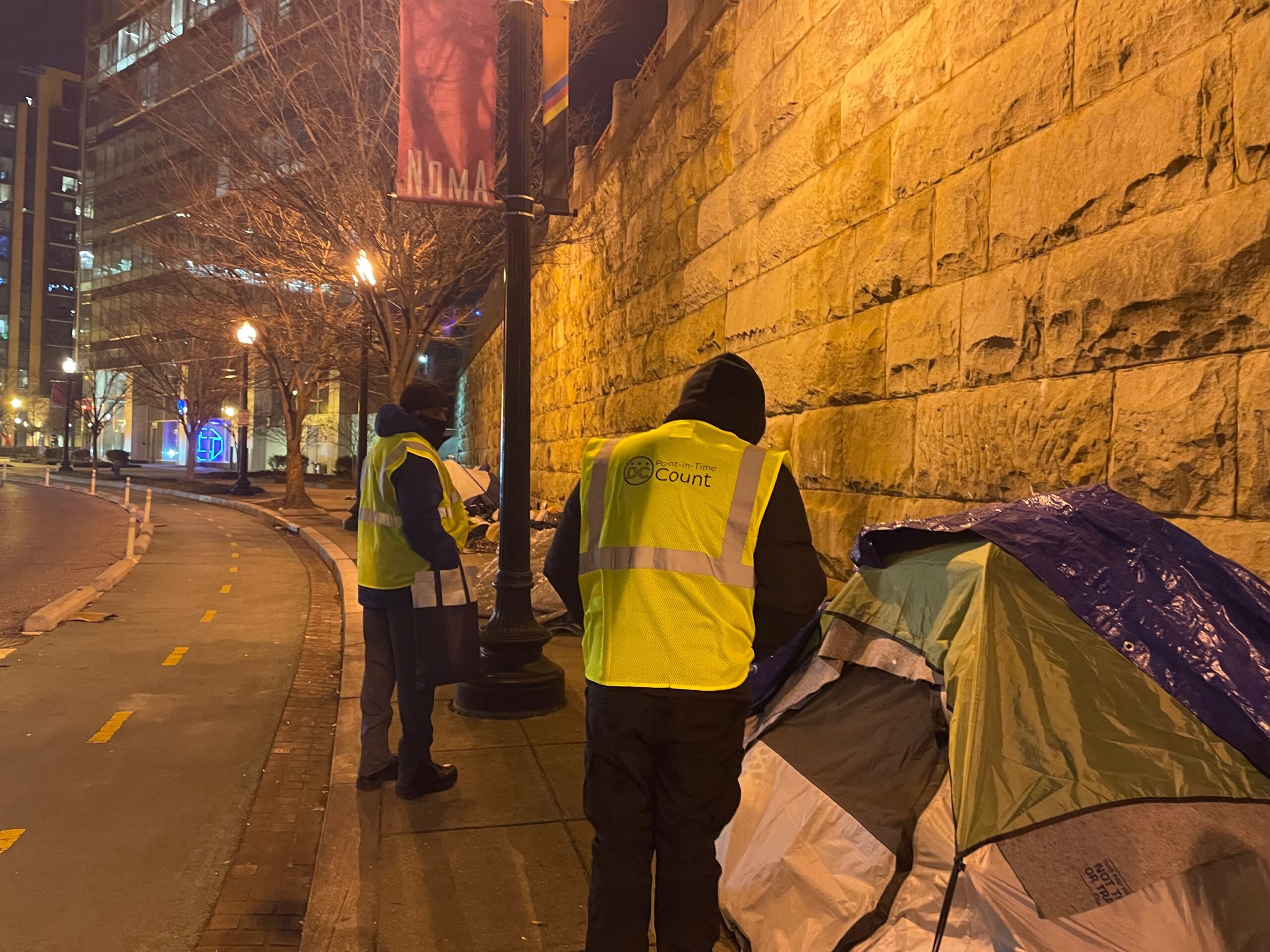
D.C. reported the lowest number of people living on the street or in a shelter in 17 years, counting 4,410 persons experiencing homelessness in the annual point-in-time count. Mayor Muriel Bowser said the overall number of people experiencing homelessness decreased 13.7% over the previous year, declining for the sixth year in a row.
“You’ll remember in 2016, we laid out a plan – the Homeward DC plan – and the goal was to make homelessness to be rare, brief, and non-recurring,” said Bowser at a press conference, where she announced the survey results. “I’m proud to say – and we have the data to back it up – we are making good progress.”
The mayor, her team, and advocates for the homeless credit unprecedented investments in housing and wrap-around services, particularly ones that are long-term or permanent, for the progress. Notably, D.C. ended its pandemic eviction moratorium over unpaid rent at the end of 2021, allowing landlords to begin providing 60-day notices in October. The D.C. government also had paused the termination of a time-limited rental subsidy program for families called rapid rehousing during the pandemic, which some have criticized as contributing to housing insecurity because of temporary nature of the program.
Advocates and academics have questioned the accuracy of the survey mandated by the federal government, some arguing the official measurement undercounts homelessness because only individuals living on the streets or in the shelter system on a single day are considered. Meaning, people who live in their car, couch surfing, or in “doubled-up” crowded households don’t count.
In a July 2020 report, the U.S. Government Accountability Office questioned the effectiveness of the survey’s methodology. “The data likely underestimate the size of the homeless population because identifying people experiencing homelessness is inherently difficult,” says the report. While offering recommendations, the GAO noted the count’s data are “critical sources” because the information informs federal and local government responses, including dedicated funding for homeless services.
D.C.’s count was conducted by local volunteers on a bitterly cold day in January. Albert Townsend, who runs outreach for Pathways to Housing D.C., says the survey not only informs policy but helps groups like theirs make connections with people experiencing homelessness.“We got to figure out how to help them. We got to figure out how to connect them to services and get them just the essential things and make it through today,” he told DCist at the time.
Temitope Ibijemilusi, who’s unhoused and lives around Union Station, seems to agree with Townsend. “Y’all coming out here to talk to people and hear their story, hear where they’re at, that’s probably a good thing. Because a lot of people got a lot on their mind and they’re trying to get it out,” Ibijemilusi told DCist.
Local volunteers recorded fewer unhoused people in 2021 and 2020 as well. The 2021 count showed a 19.9% overall decrease in homelessness compared to the year prior, largely driven by the reduction in families experiencing homelessness. The 2020 count recorded a 2% drop in homelessness, marking the fourth consecutive year D.C. reported a decline in point-in-time counts.
At the press conference, Bowser announced homelessness among families and single adults had significantly decreased compared to years past. She noted family homelessness is down 14%, while homelessness among single adults, which the city has historically struggled to address, is down 12%.
Chronic homelessness, which includes people with the longest history of being unhoused, also saw decreases: families saw a decrease of 26%, and single adults saw a 22% decrease. Department of Human Services Director Laura Green Zeilinger said youth homelessness increased by 8%, although she suspects that’s because of improved surveying or “ability to see those folks.” She also noted 17 families whom were counted by volunteers in January are either housed or working on housing.
“We have effectively created an end to chronic homelessness among families in the District of Columbia,” said Zeilinger at the press conference. “While these numbers are great, we understand that behind every number there is a person with a unique set of experiences who is someone’s son or daughter, or brother or sister, and is worthy and deserves support that we can offer as a community to help them to have the dignity and safety that a place that is home.”
Zeilinger credited permanent supportive housing for these improvements. Advocates would agree with her. “This proves what we’ve been saying for years: ending chronic homelessness in DC is possible,” says Jesse Rabinowitz, senior manager for policy and advocacy at Miriam’s Kitchen. Regarding the data on chronic homelessness, he noted the significant cut happened largely before roughly 2,800 permanent supportive housing vouchers for single adults funded in fiscal years 2022 and 2023 budgets took effect. “It is my deep hope that, by next year at this time, we will see an even larger decrease in chronic homelessness, and that D.C. will be well on our way to ending chronic homelessness,” he adds. “To ensure continued progress, all stakeholders must work together and pick up the pace to translate historic funding from line items in a budget into the housing that ends homelessness.”
Bowser has stated that ending homelessness is one of her main priorities while in office. She’s been credited for shuttering the discredited D.C. General shelter and opening smaller homeless shelters across the city. With support, Bowser and her team opened several new family shelters, the most recent one in Ward 1. However, other programs initiated under her watch have been criticized by people experiencing homelessness and their advocates. Residents who rely on the rapid rehousing program, which offers subsidized housing for a limited time (generally 12 to 18 months), have been known to struggle – living with the worst housing code violations. Some residents face eviction after their subsidy runs out because they cannot afford market rent.
Subsidy terminations are set to start again, after being paused at the height of the pandemic. In a new budget report to the Committee on Human Services, the Department of Human Services said a reported 913 families will receive termination notices, notifying them that their subsidy ends by September. The agency said the program needs more funding to extend stays, and also called on the D.C. Council to identify more funding for the city’s Emergency Rental Assistance Program, a program aimed to stave off eviction and prevent further homelessness.
More recently, the mayor and her team have come under scrutiny for their program addressing the city’s growing encampments. The pilot program, which launched in August, aims to move encamped residents into permanent housing. But some people have criticized the program’s approach, setting fast deadlines for when encampments are cleared and then establishing these areas as no-tent zones afterwards. “I worry this rush to remove and bar neighbors from the streets comes at a cost of rupturing trust in government further and signals the wrong priorities of erasing and harming our unhoused neighbors versus caring for them,” said Ward 4 Councilmember Janeese Lewis George during a hearing on the program.
According to a budget report to the Committee on Health, 91 of the 139 people who live in select encampments and are part of the pilot program are now housed, 74 are in “leased housing”, and 17 are in “bridge housing.” The Office of the Deputy Mayor for Health and Human Services said in the budget that the overall program has a 64% success rate, adding “This has ended homelessness for many people.”