Ally Schweitzer
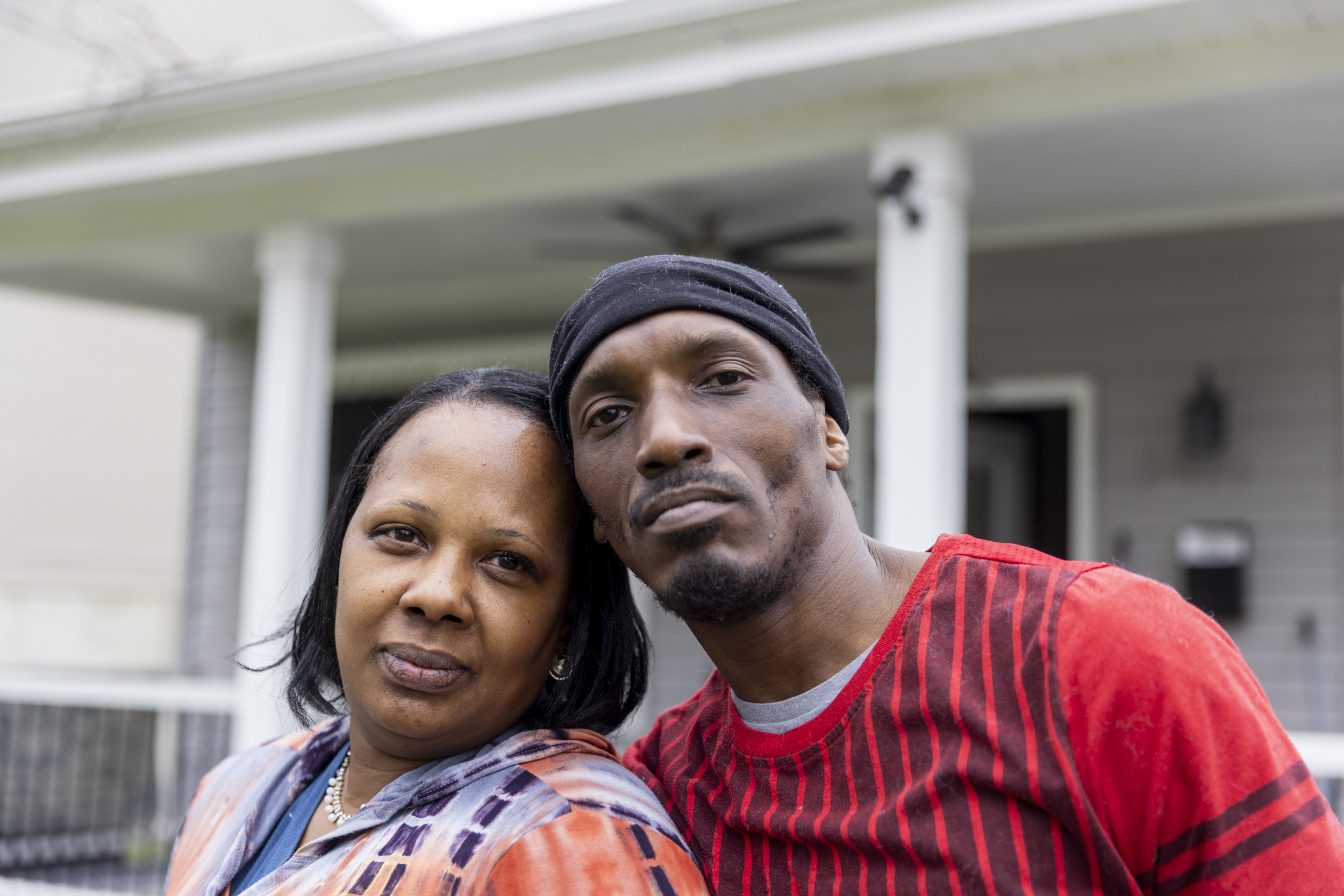
The little house on First Street SE was supposed to fulfill a lifelong goal for Tasharn Richardson.
The mother of 10 bought the three-bedroom bungalow in Congress Heights last summer — her first home purchase, after living in public housing her entire life. When her family unloaded the moving truck on a bright day in June, an NPR reporter was there to document the big day. Richardson’s kids ran through the house squealing with excitement, taking in the shiny kitchen backsplash and gleaming bathrooms.
The excitement didn’t last.
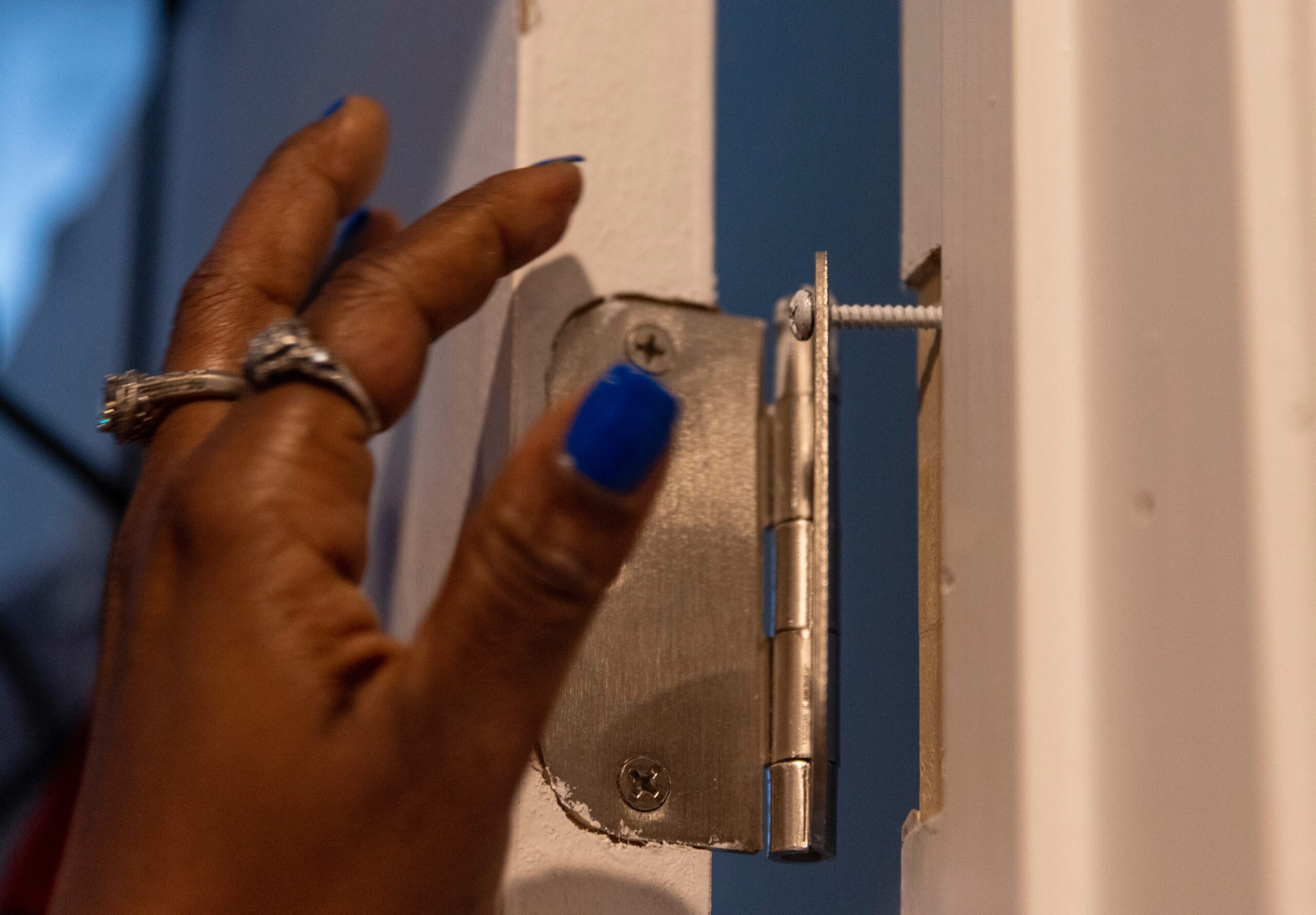
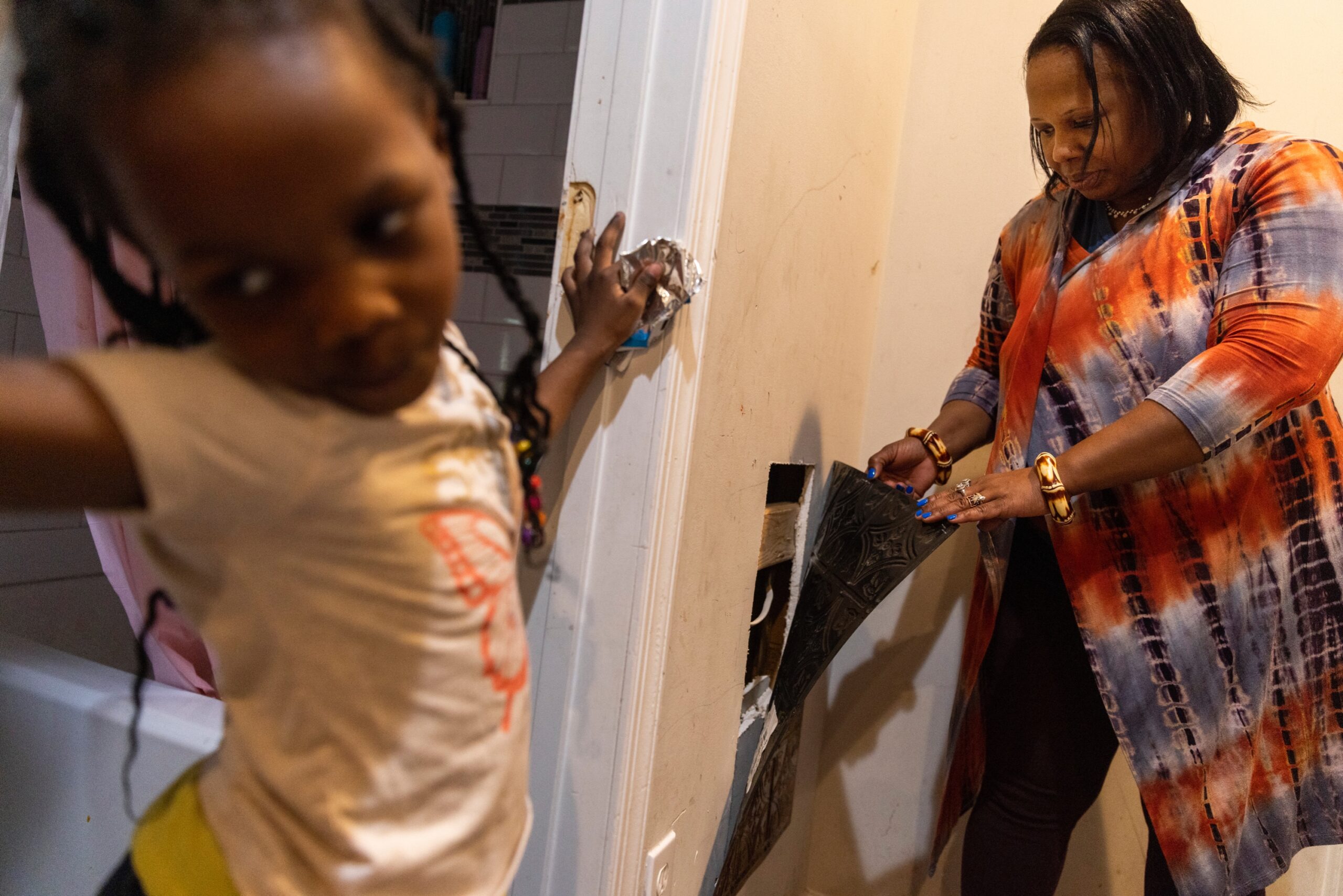
Richardson began to notice problems with the house weeks after her family moved in. The air conditioning wouldn’t turn on. The dishwasher didn’t work. Her kids’ bedroom doors hung precariously from loose hinges. Electrical outlets caught on fire. Mice streamed in, finding their way inside through holes in the exterior. Water pooled on the kitchen and basement floors. Black mold sprouted in the walls.
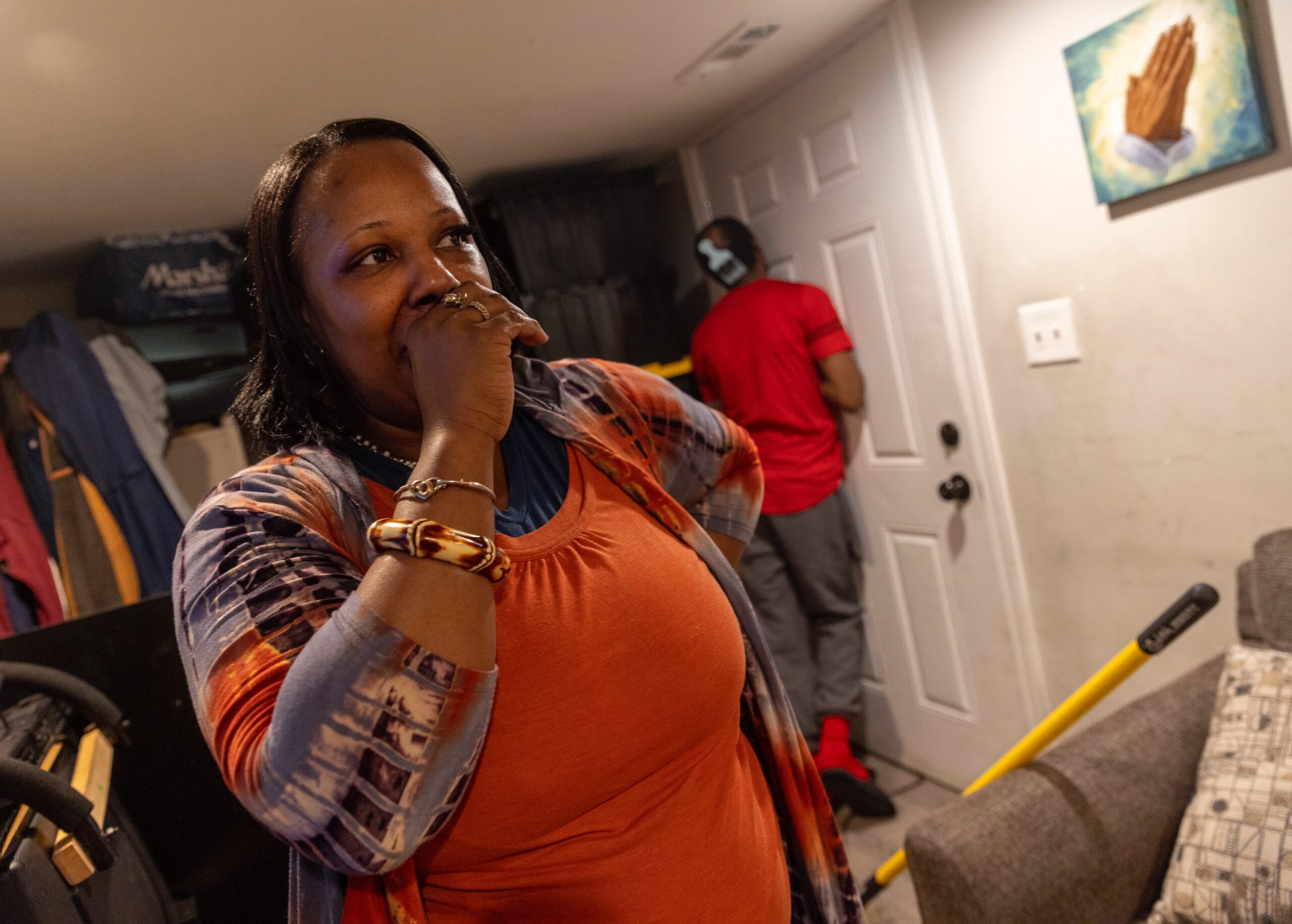
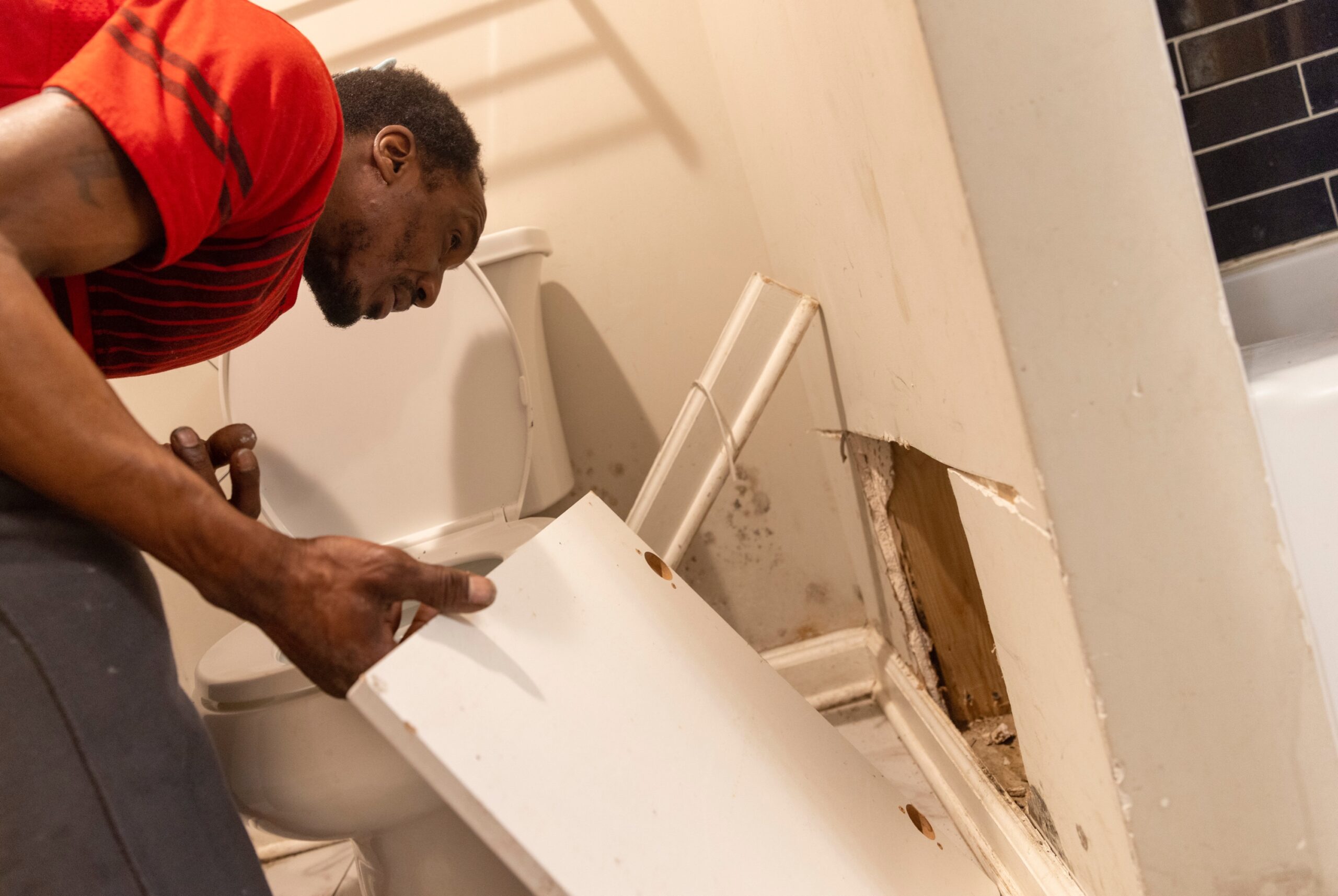
The 100-year-old property sat vacant for seven years before Richardson purchased it, and her home inspection report revealed a long list of issues. But she says the seller and her realtor assured her that the problems had been fixed before she closed on the $475,000 property.
Less than one year later, the D.C. government employee says she’s spent thousands of dollars on contractors and exterminators. Her husband Lionel traps mice in the basement and conceals mold splotches with plyboard. Richardson says she regularly sends the kids to stay at her mother’s apartment so they can breathe without coughing. She feels heartbroken, frightened — and ashamed.
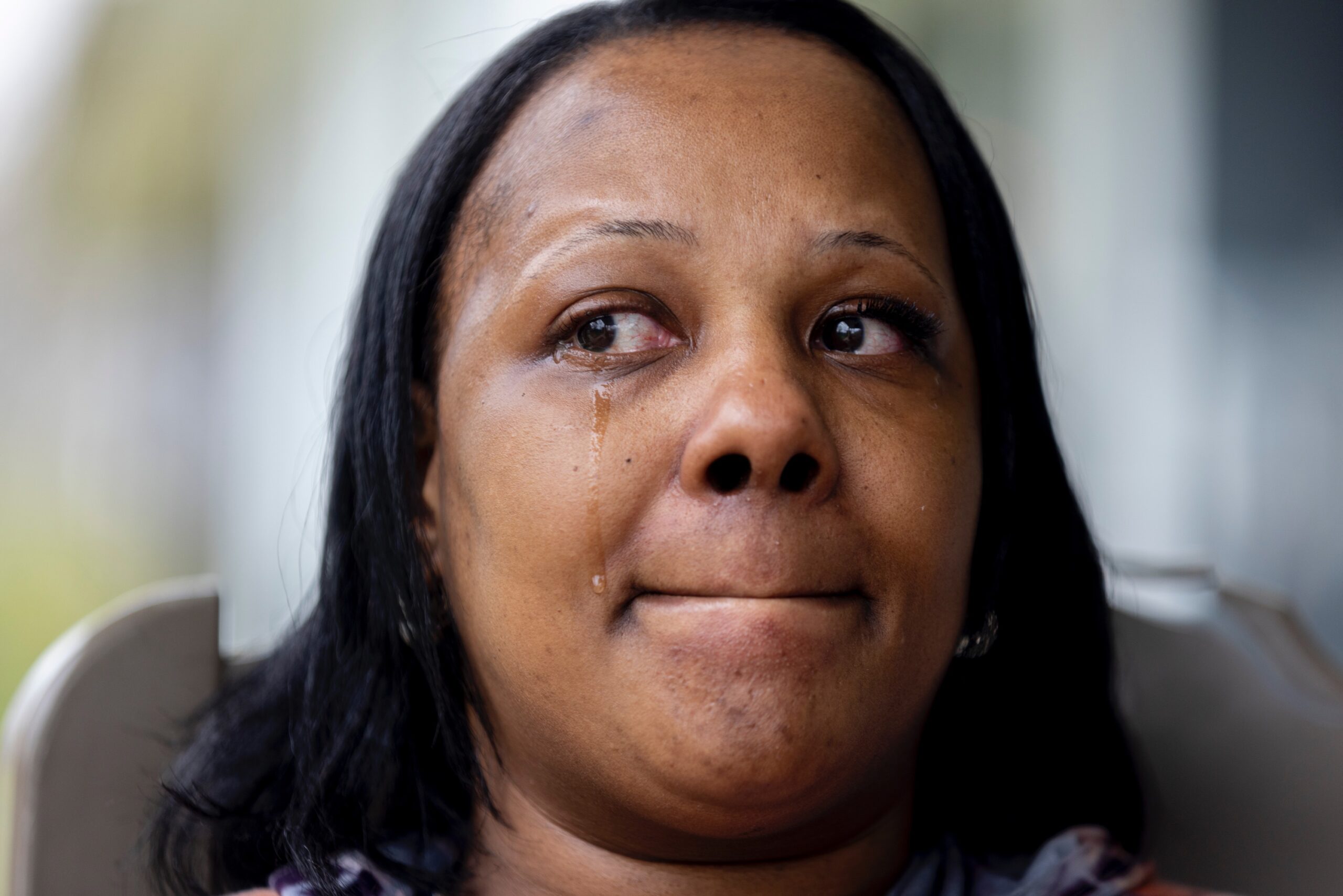
“It took me months to talk about this,” she says, wiping tears from her cheeks. “For me, it’s just the shame of bringing my family here.”
Richardson is not alone in her despair. In 2015, WAMU documented a string of shoddy house flips that left new homeowners in unsafe conditions after they paid high prices typical of D.C.’s frenzied housing market. The city’s attorney general sued a Virginia couple responsible for some of the poor renovations; they were ordered to pay more than $1 million in restitution to homebuyers and they were banned from selling homes in the city.
Richardson’s home on First Street SE was sold to her and renovated by Monir Dellawar, a Virginia-based real estate agent who owns the company Hafiz LLC. Public records show Hafiz LLC has flipped more than 20 houses and condominiums in the city since 2013. According to Richardson, she informed Dellawar last fall about the problems she was having with the house. She says he sent contractors who made minor and incomplete repairs. One worker who turned up to fix her HVAC system left large holes in the wall and never returned, she says.
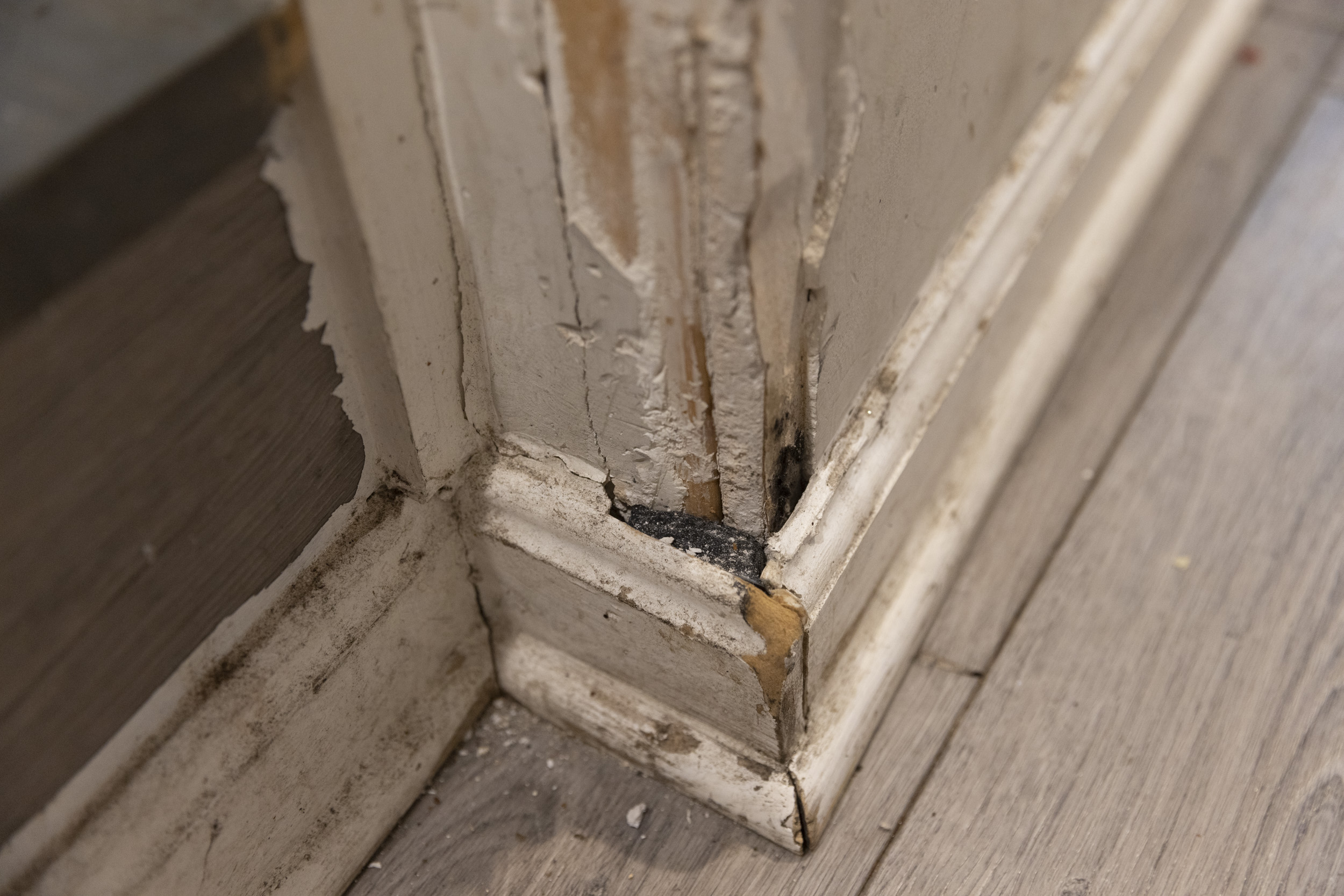
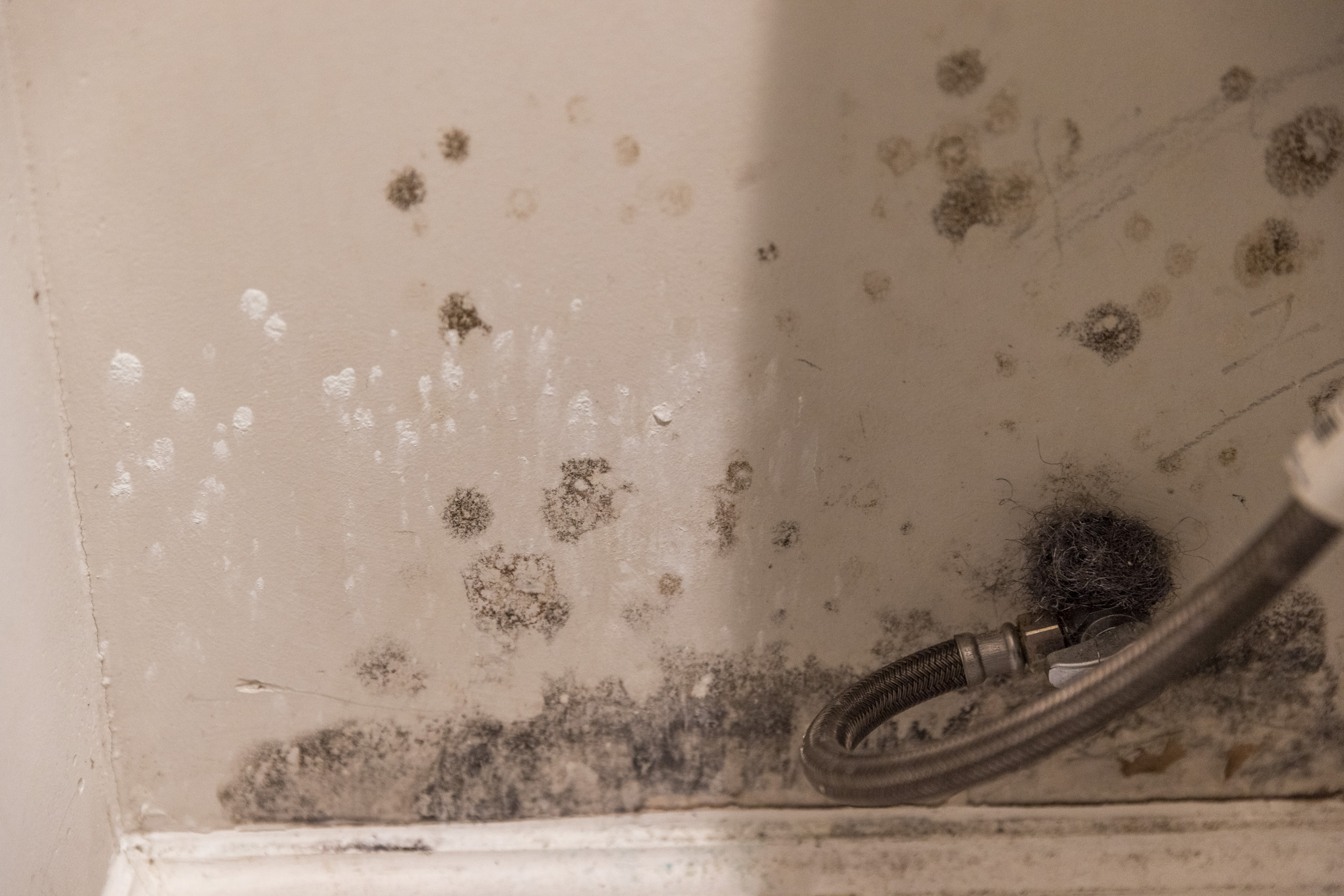
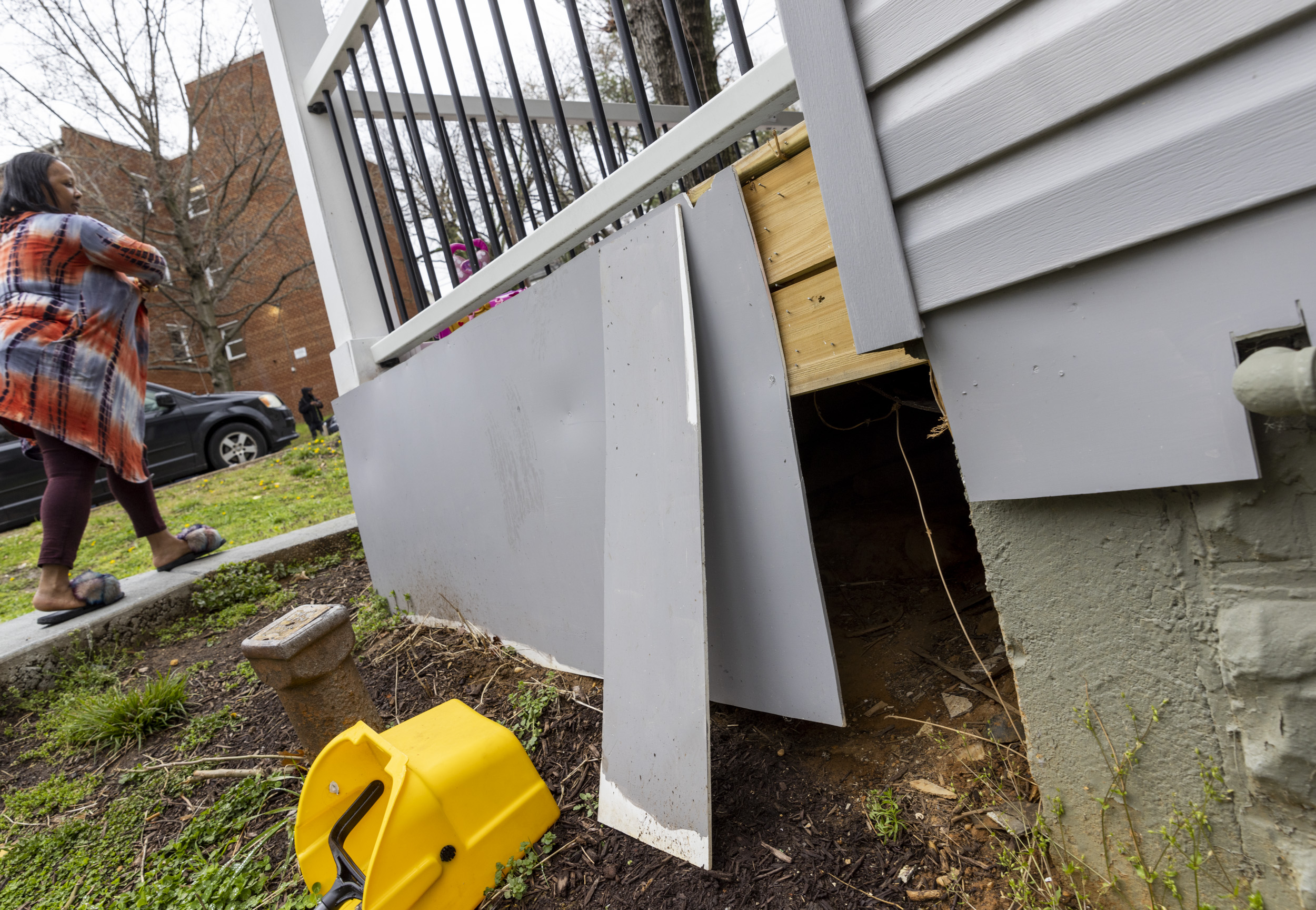
In an email she shared with WAMU/DCist, Richardson wrote Dellawar in November saying she would pursue legal action if he didn’t make additional repairs. He wrote back saying he wasn’t obligated to continue work on the house — she now owned it, after all — and that most problems with the home were her fault.
“The home has been maintained very poorly. The HV/AC filter hasn’t been changed since you moved in,” Dellawar wrote. “This threat to take legal action is absolutely unacceptable and shocking after [the work] we have done.”
Dellawar did not return multiple requests for comment.


Richardson acknowledges she has much to learn about caring for a house, but she says issues with the property go deeper than a lack of basic maintenance. She points to a light fixture above her bathroom sink. It’s falling out of the drywall, but Richardson says no one in the house has touched the light. Most of her children aren’t even tall enough to reach it.
“I came from public housing. Wear and tear with children is expected. But none of our doors fell apart. None of our door knobs fell off. None of my bathroom fixtures fell apart,” she says. “I didn’t have to go through that there, so I didn’t see it coming after buying a new home.”
Her experience is echoed by a woman in Shipley Terrace who purchased a house from Dellawar in 2018. The homeowner, who asked WAMU/DCist to withhold her name to protect her privacy, says she has been plagued by persistent leaks from her roof. The home’s original real estate listing, which is still online, advertised a brand-new roof in addition to other upgrades throughout the home.
“As the years have gone by, I have so much water damage and leakage,” the homeowner says. “If they put a new roof on my house, I should not have all this damage.”
Public records show that Dellawar did not pull any construction permits for the house in Shipley Terrace. A new roof doesn’t necessarily require a permit, according to a Department of Consumer and Regulatory Affairs (DCRA) spokesperson, but it’s not clear whether other permits may have been required. The city has placed stop work orders on at least three properties renovated by Hafiz LLC — including Richardson’s house — citing illegal construction.
Not every house flipped by Hafiz LLC has resulted in unhappy surprises, however: WAMU/DCist spoke with four buyers in D.C. who said homes they purchased from him appear to be in good condition with no structural issues. He has a high rating on Zillow for his work as a real estate agent, and DCRA says it has not received any “identifiable complaints” for work his company has overseen, aside from complaints filed by Tasharn Richardson.
Richardson’s situation exemplifies larger problems within D.C.’s bustling renovation market, says Ethan Landis, co-founder of the D.C.- based remodeling firm Landis Architects/Builders. Some developers cut corners to defray the high cost of doing business in the District, he says, and the city has struggled to crack down on bad actors.
“DCRA has worked really hard to try to double check inspections … but as busy as the marketplace is out here, that’s probably a difficult proposition,” Landis says.
A home inspector with more than 15 years of experience in D.C. says shoddy house flips sometimes fall under the radar because the city allows developers to select their own third-party inspectors from a list of approved companies. Some of those firms, while technically cleared by the city, are known for being unscrupulous. (The inspector asked DCist/WAMU to withhold his name because he’s not authorized by his employer to speak with media.)
“If you’re a contractor and you’re aware of a third-party inspector that’s viewed as being less rigorous, you’re likely to contract with that inspector,” he says. “Why doesn’t DCRA have a program where they randomly choose the inspector for the contractors, so there isn’t this incentive system in place?”
Tasharn Richardson’s home underwent two inspections. The first — the one that uncovered extensive problems with the property — was required under the terms of the Home Purchase Assistance Program loan she received from the city to help her buy the house. The second, required by the city, was conducted by CamJap, a third-party company hired by Hafiz LLC.
CamJap’s owners did not return requests for comment. A spokesperson for DCRA writes in a statement that the agency reviews and approves each report filed by third-party inspectors such as CamJap, and they haven’t received complaints about the company’s inspections. A public records request for the inspection CamJap completed for Richardson’s home is pending.
Richardson feels let down by her real estate agent, whom she says didn’t warn her about potentially major problems with the house, or push for Hafiz LLC to place funds into escrow to cover any needed repairs. The agent, Lee Gochman of Eng Garcia Properties, told WAMU/DCist in a phone call that he does not want to be linked publicly with the sale of Richardson’s home, but as her agent he already is.
“I don’t want my name associated with that transaction,” Gochman said. “I did everything that I needed to. We got the home inspection done. I brought in structural contractors. I did everything I could to be an ally.”
Gochman adds that as far as he knew, the house was in livable condition when Richardson bought it. He says Dellawar made repairs as needed before the sale closed, and that some problems with the house could be the Richardsons’ fault.
“Four months after they moved into the house, they called me out of the blue and said things were going wrong,” Gochman says. “I’m hearing conflicting things from the buyer and from the seller as to how this home was cared for and how it was constructed.”
Richardson says she stayed quiet about issues with the house because she was embarrassed and assumed everything was her fault. NPR had run a story about her new home, she had scraped together thousands of dollars in financial assistance to buy it, and she had given up a coveted five-bedroom apartment in public housing to move.
“Even with my husband, I was trying to hide what was going on with the house,” Richardson says. “But there was no hiding this many issues.”
Meanwhile, Richardson says she continues to find hazards around the property. She recently took one of her daughters to the emergency room after the child ripped open her foot on a broken fence pole in their yard. The hospital trip was just the latest in a series of health emergencies brought on by the home’s condition, she says.
“My son has allergies now because of this,” she says.
Richardson has worked with the nonprofit A Wider Circle throughout her homebuying experience, and for several years before that. The organization didn’t help her buy the house, but it connected her with a financial coach who advised her on how to improve her credit score so she could qualify for a mortgage. Richardson spent years cleaning up her credit, getting out of debt, and cobbling together money for a down payment using low-interest loans and grants, says Liz Anne Ganiban with A Wider Circle.
“This was supposed to be the biggest joy of her life,” Ganiban says. “She’s one of these people who has worked her whole life to have a happy, healthy life for herself and her family, just to watch all this happen.”
But Richardson says she’s not giving up.
“I’m ready to stand up and put forward the effort to fight,” she writes in a text message. “We received the worst end of the bargain and I believe [we’ve] been preyed upon.”
She may not need to fight on her own. A Wider Circle has found Richardson a lawyer.
“My next step is, hopefully, to get compensated,” Richardson says. “My family has been blaming each other for a lot of things that have gone on. But now we realize it’s not so much our fault.”