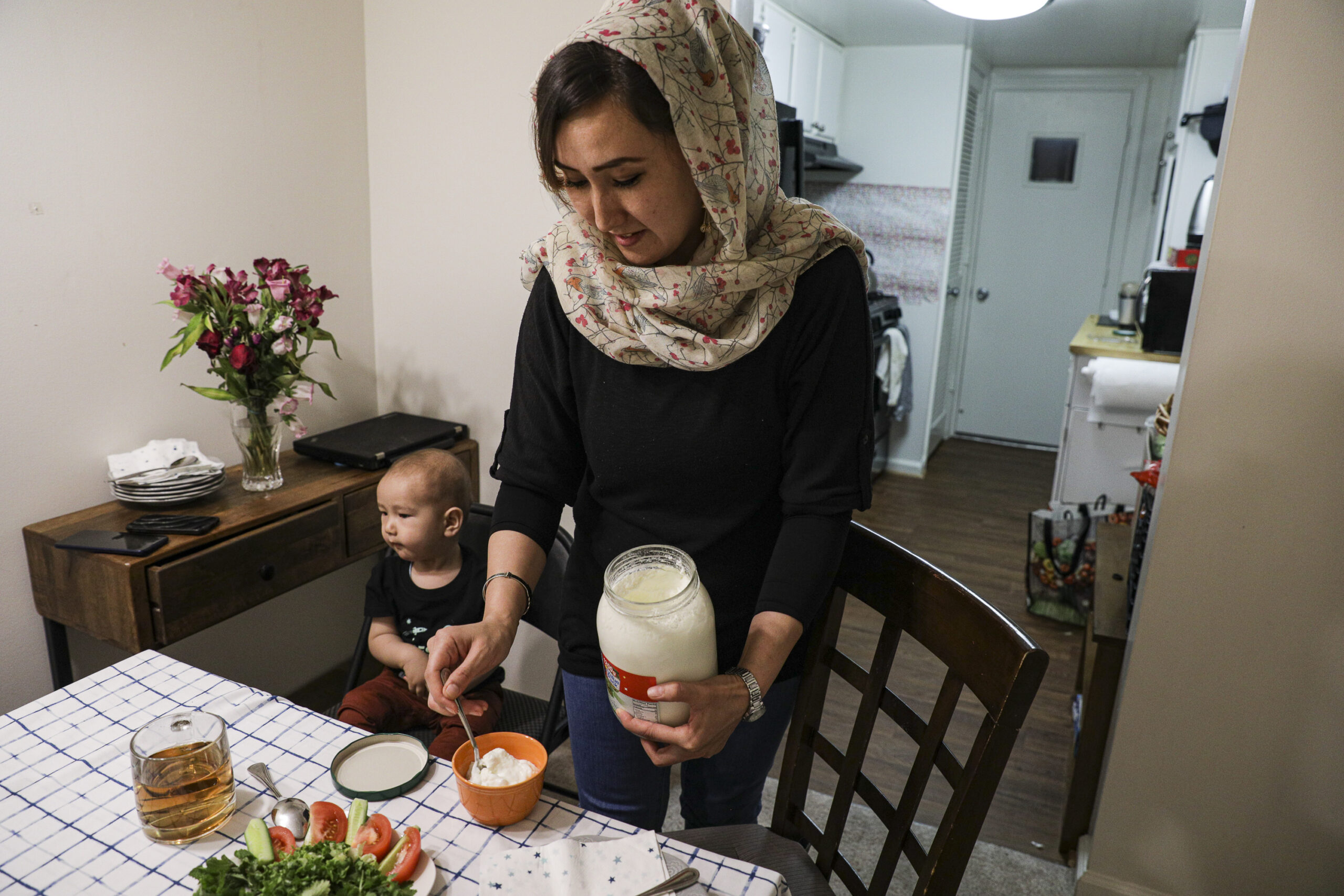
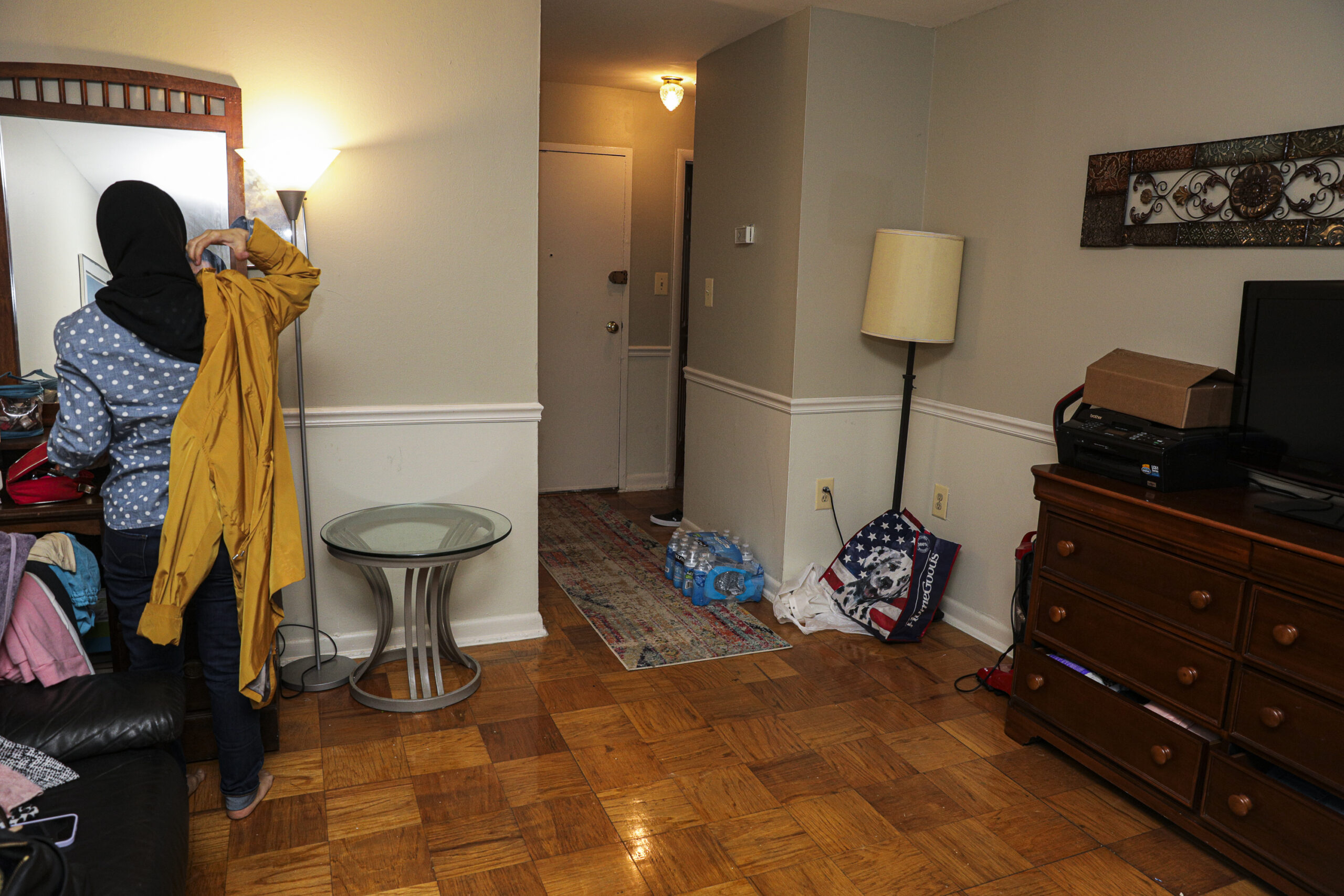
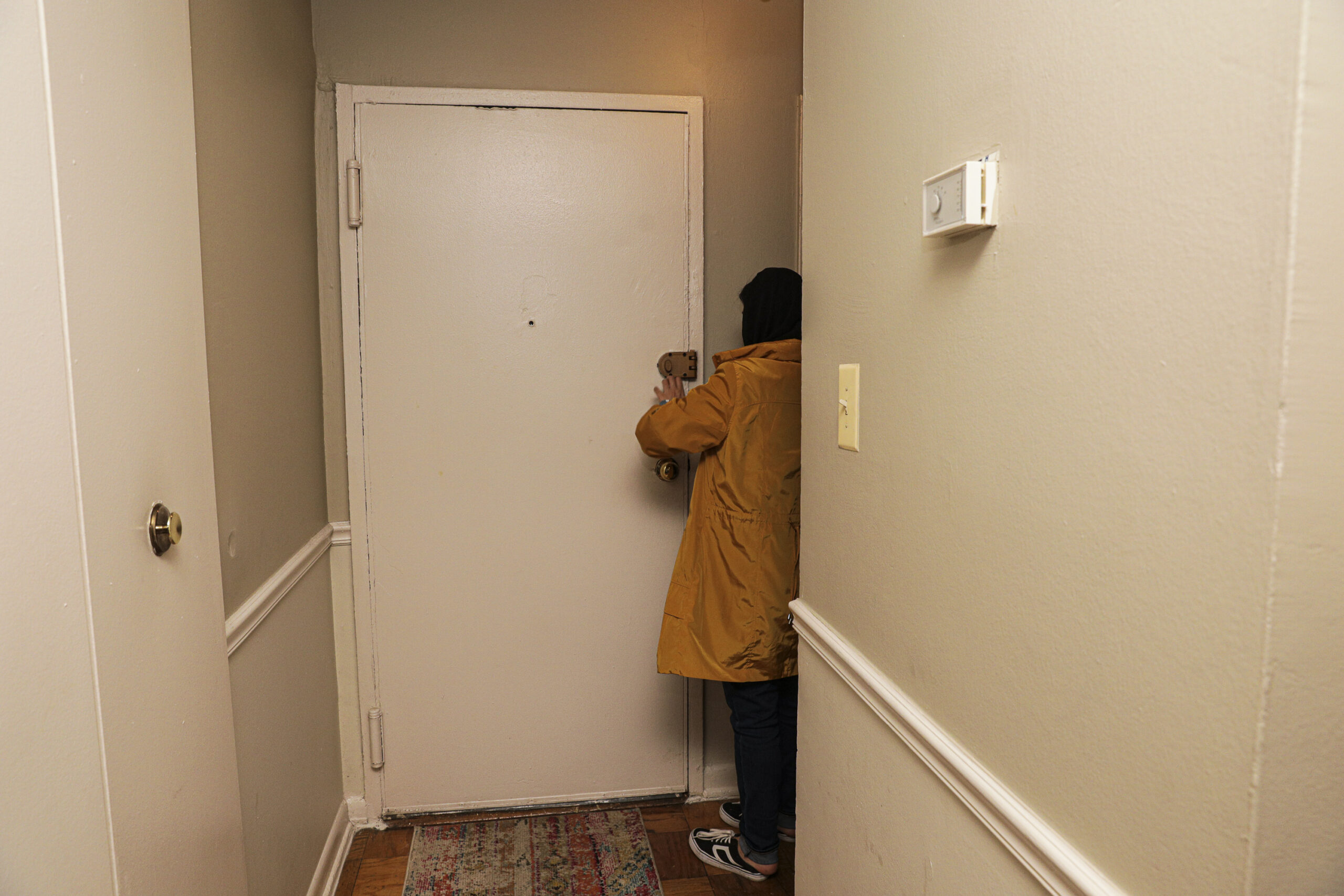
About an hour before sunset on a recent Saturday, Nagita prepared iftar in her new kitchen in Landover, Maryland. The aroma of sauteed onions permeated the air and a large metal pot of basmati rice simmered on the stove. It was the fifteenth day of Nagita’s first Ramadan in the United States and she was preparing to break fast alone.
“Last year, during our Ramzan in Kandahar, Afghanistan, I was together with my family. I was together with my friends,” she said, using the Urdu word for Ramadan, the holiest month of the year for Muslims marked for many by fasting from sunup to sundown. “We were so happy.”
For many of the thousands of refugees who resettled in the D.C. area after fleeing Afghanistan following the Taliban takeover of the capital city, this is their first Ramadan away from home. Nagita, who requested to be identified by her first name out of fear for her family’s safety in Afghanistan, worked at the Afghanistan Women Chamber of Commerce and Industry before she fled. She says that while she’s received a lot of support in her new home, spending Ramadan here is still a difficult experience.
“Right now, we are alone. Everything is new — new culture, new people, new freedom, a new Ramadan,” she said, adding that most of her family is still in Afghanistan.
As Nagita prepared to break her fast with dates and tea, there was a knock at the door. She opened it to find her friend Masuma, another Afghan refugee who lives in the same apartment complex. They met a few months ago while walking to the supermarket and quickly struck up a friendship.
“Salam salam, khobastin? Jantan jorast? Biayen bofarmayen,” said Nagita in Dari, greeting Masuma and asking after her health.
Masuma was carrying a tray with two bowls of halim, a popular wheat and meat porridge dish commonly eaten for iftars in India, Central Asia, and the Middle East, that she had prepared specially for Nagita. It was a good feeling, Nagita said, to be in an apartment complex with so many other Afghan refugees.
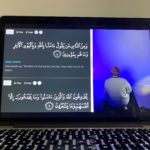
Back inside her apartment, Nagita played a prayer from YouTube on her phone while she brought out the rice and beans from the kitchen and placed them next to Afghan torshi (pickled vegetables), naan, and a special red juice with fresh orange slices often prepared during Ramadan. It’s the same food Nagita used to break fast with when she still lived in Kandahar.
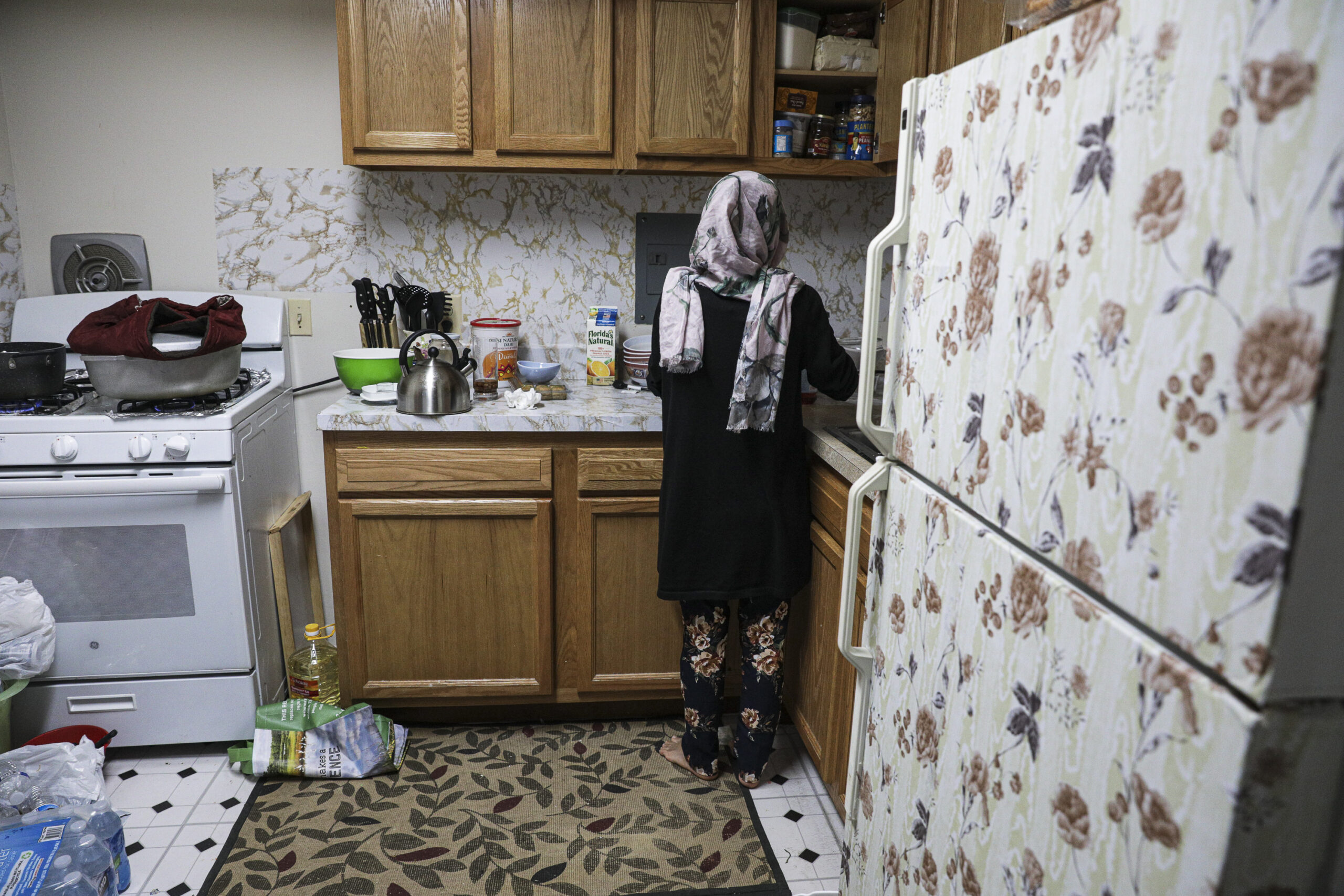
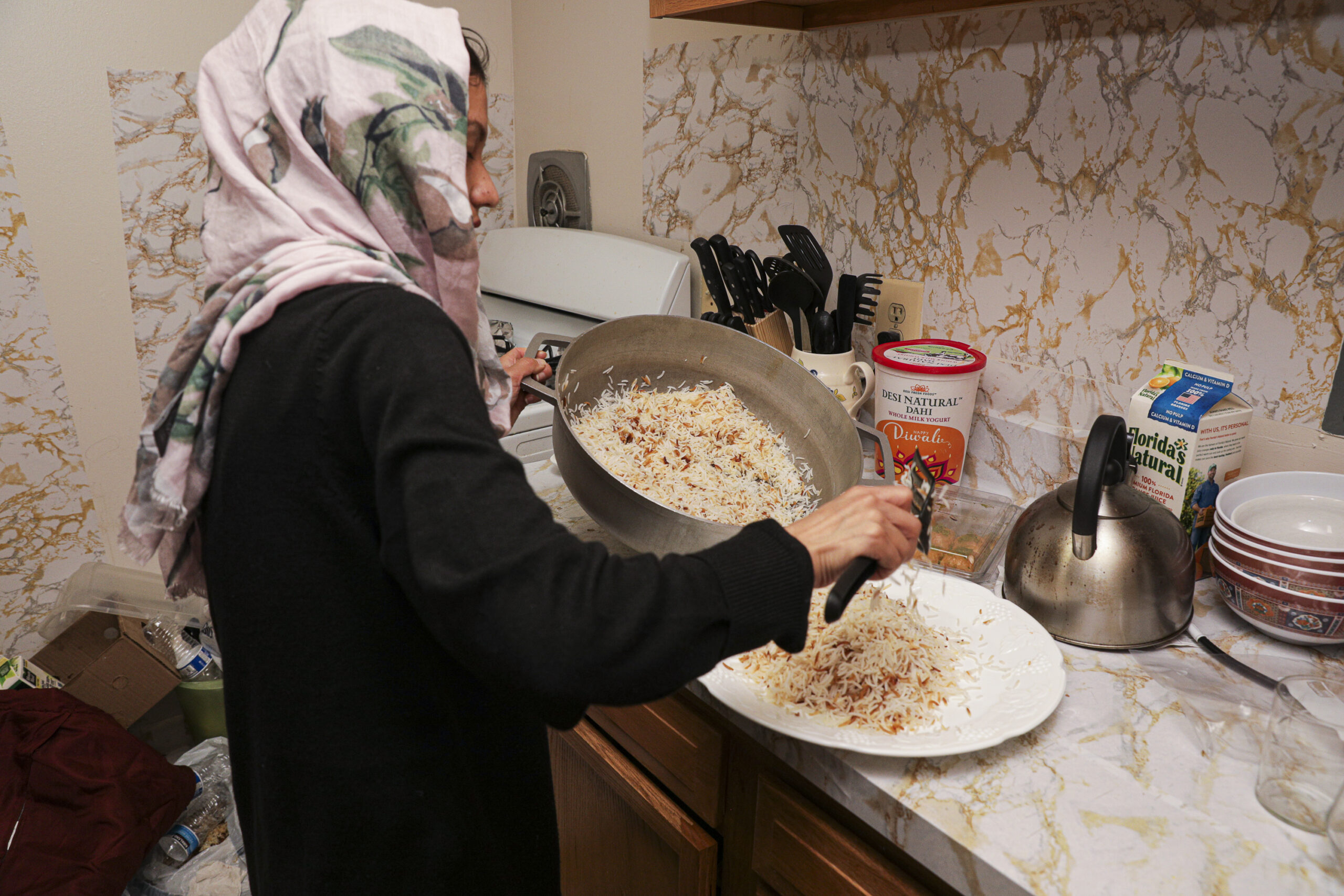
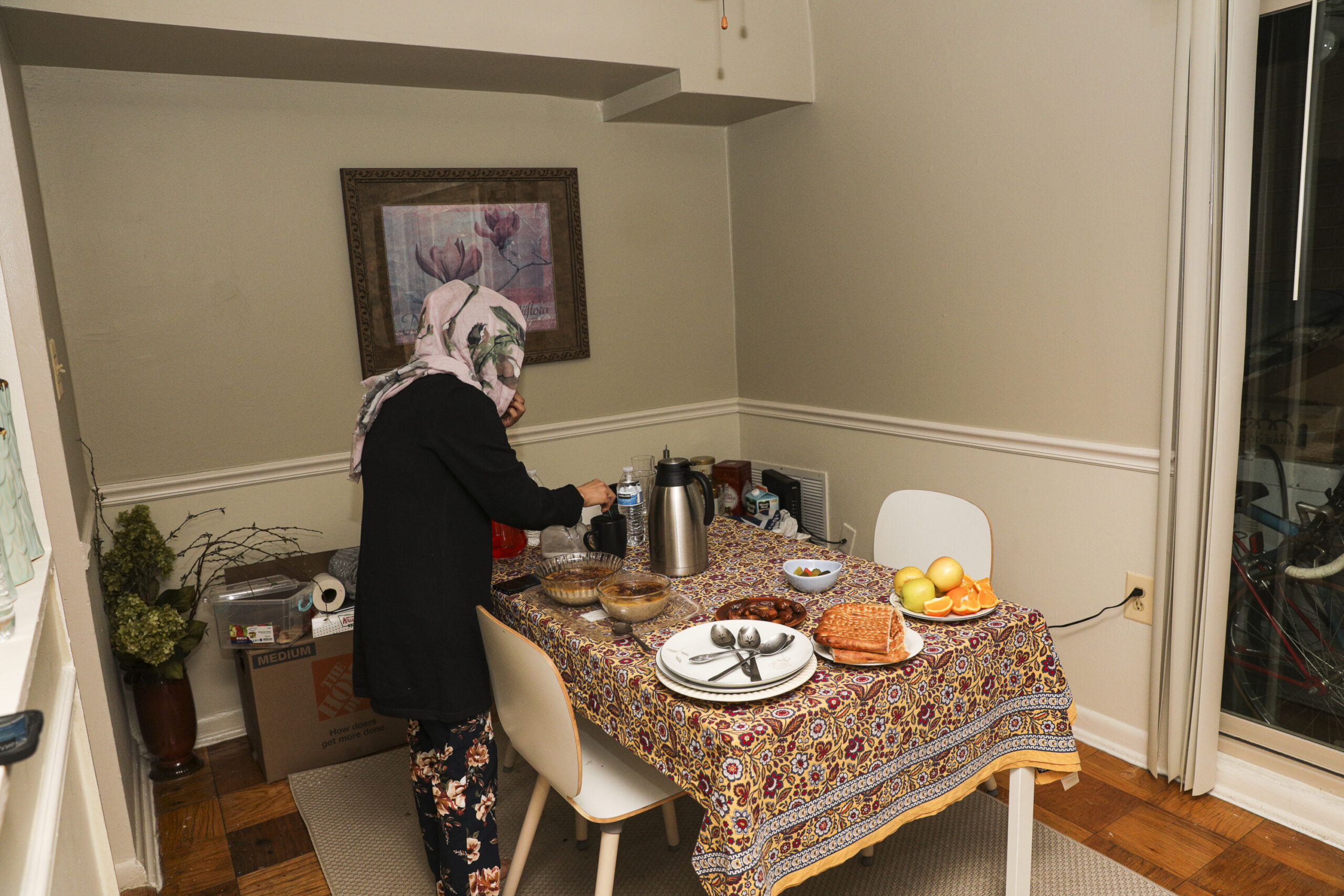
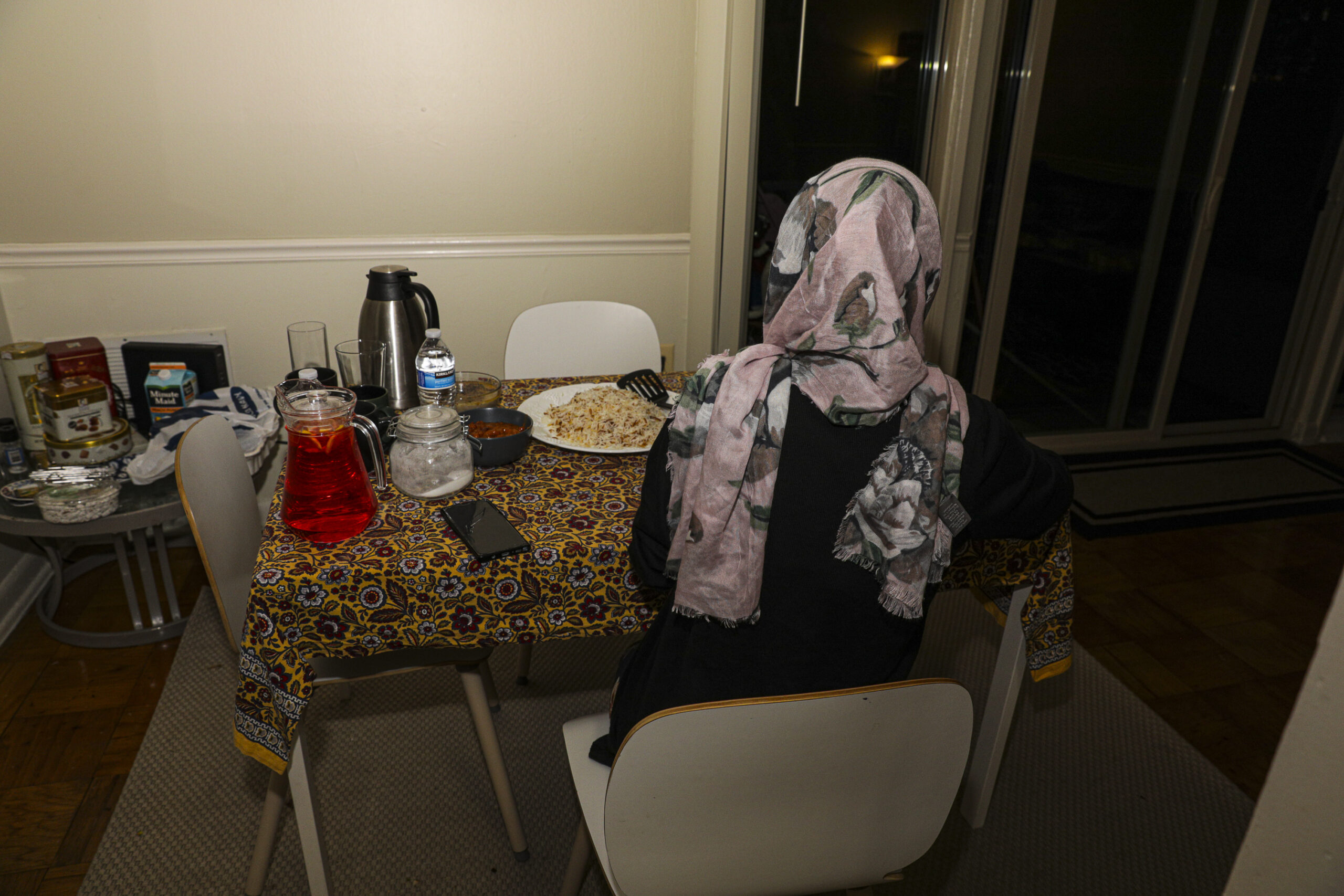
For many of the recently arrived refugees who have been able to find jobs, observing Ramadan can be a challenge, says Megan Flores, executive director of Immigration Resource Outreach Center (IROC), which has been helping Nagita and hundreds of others with their resettlement in the D.C. area. She said that some of the refugees are working 10-hour shifts at factories and do not get a break at sundown.
“Our culture is not conducive to the schedule that they need for Ramadan, so it’s hard for them,” she said.
Earlier in the evening, Nagita’s housemate, Nasim, who also asked to be identified only by her first name due to security concerns, was preparing to attend a Turkish mosque with a friend.
“I am excited because this is my first time going to the mosque here, I didn’t go before in the United States,” she said, explaining that at Fort Bliss’ Doña Ana Village where she and Nagita stayed after evacuating from Afghanistan, there was just a small room for praying.
Almost all of the 70,000 Afghan refugees who have been evacuated since August were first taken to various domestic military bases, staying there for many months while they were processed before being resettled across the country.
Nasim, who was recently accepted into Georgetown University’s Global Human Development master’s program, said that her food stamps ended in March – a problem that Flores says many refugees have run into. Nasim has relied on her limited income as a cashier at Wegmans and as an office assistant at a food production company for groceries. Because it’s Ramadan, many donations of rice, vegetables, and Afghan bread have been dropped off at their apartment complex, which houses many Afghan refugees.
“The kindness of people is good, because during Ramazan, some organizations and volunteer organizations supported Afghan refugees for the distribution of food items,” she said.
When her friend called, Nasim covered her head with a black shawl and grabbed the prayer mat she had received at the camp in Texas.
For other refugees in the D.C. region, the sadness of being away from home is mitigated by relief, especially for those who were able to evacuate with their family.
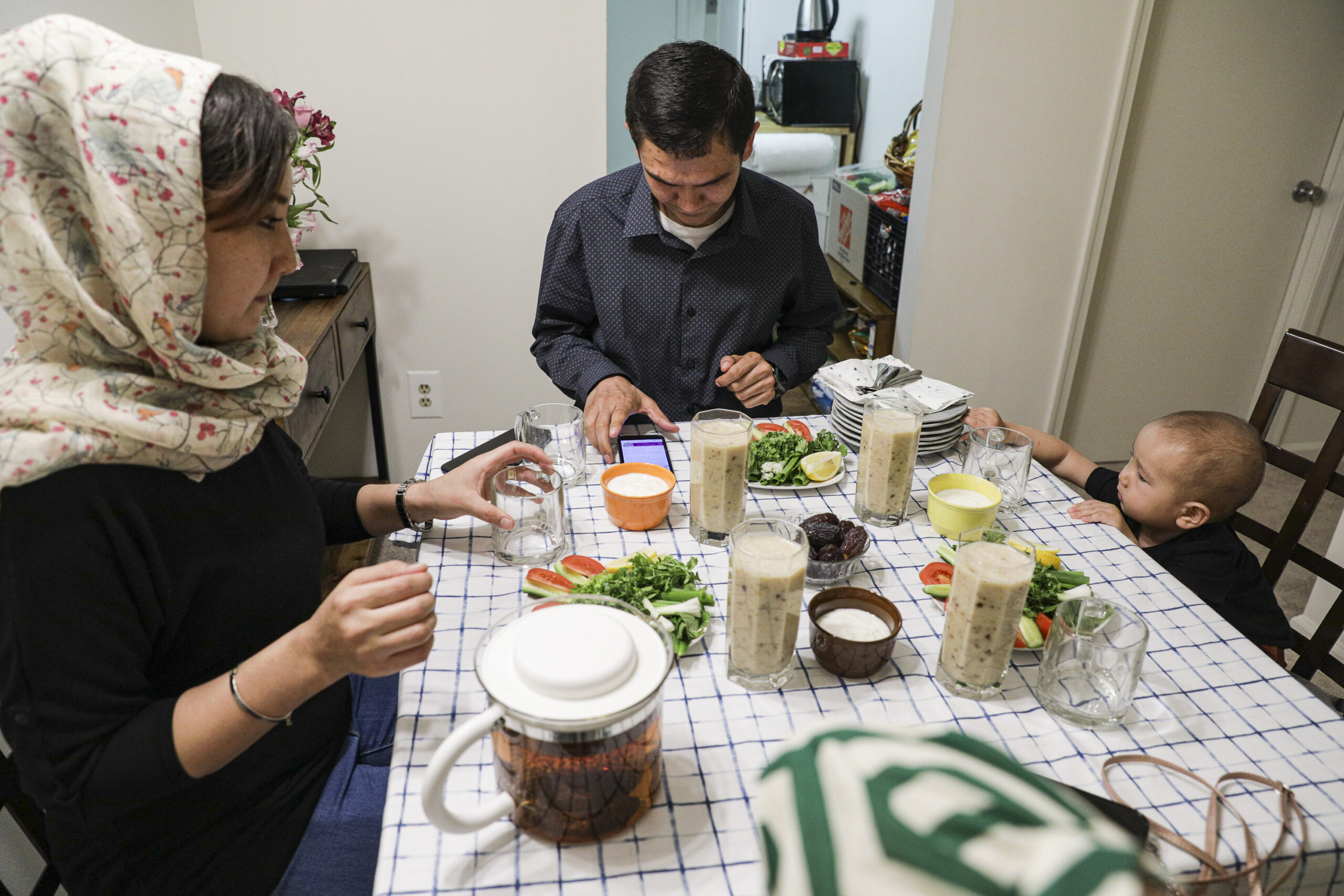
“I am quite happy. I am away from Afghanistan where the Taliban came back and my kids were at risk. We feel ok here,” said Khadija, 29, a midwife from Mazar-i-Sharif in northern Afghanistan who is now living in Rockville with her husband, Ali, a doctor, and their two young children.
“We are super happy that we are sitting around the table and having our iftar and we have no worries about anything,” she said while serving a dish called Kabuli Pulao, a cumin-infused rice pilaf cooked with meat and topped with raisins and julienned carrots.
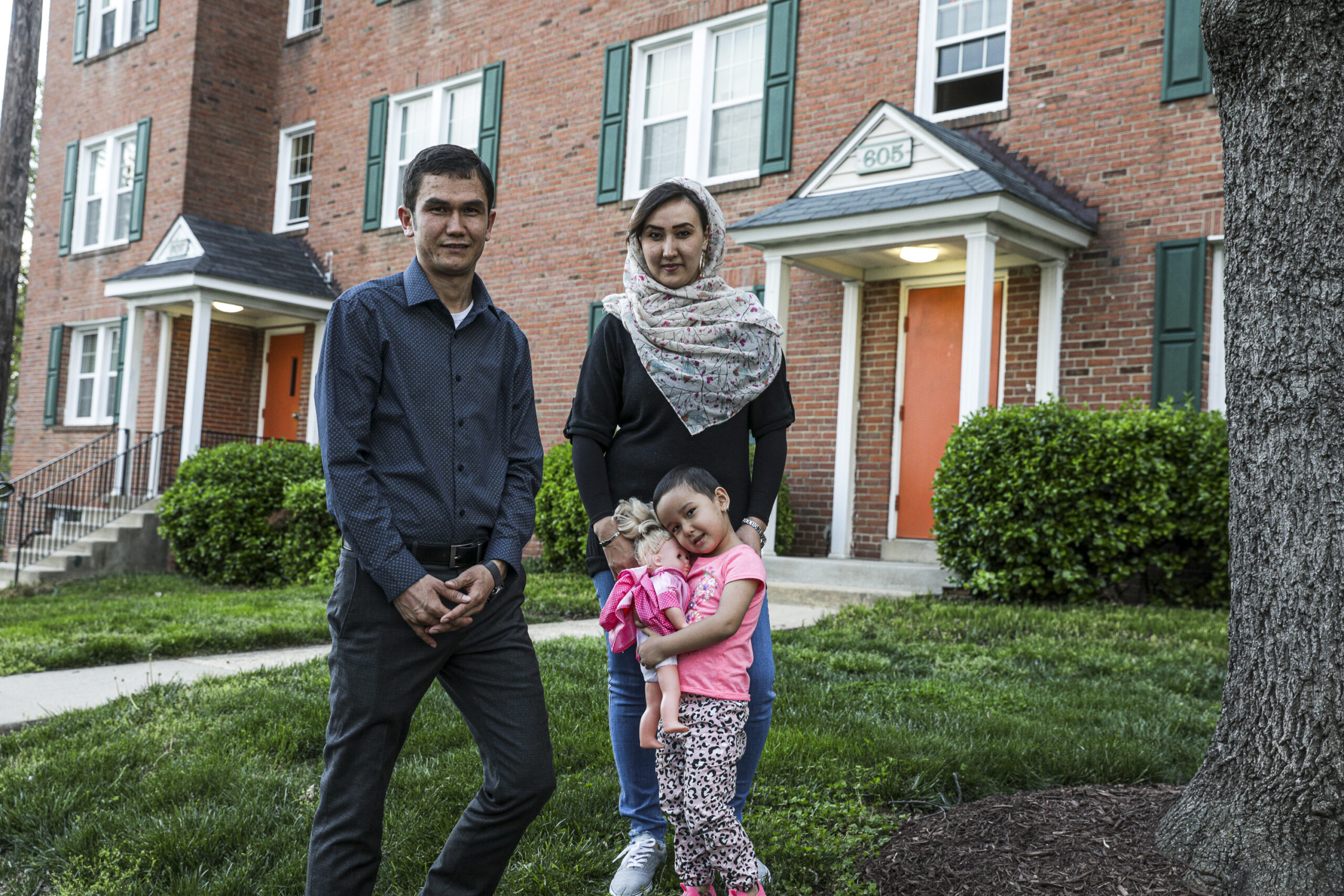
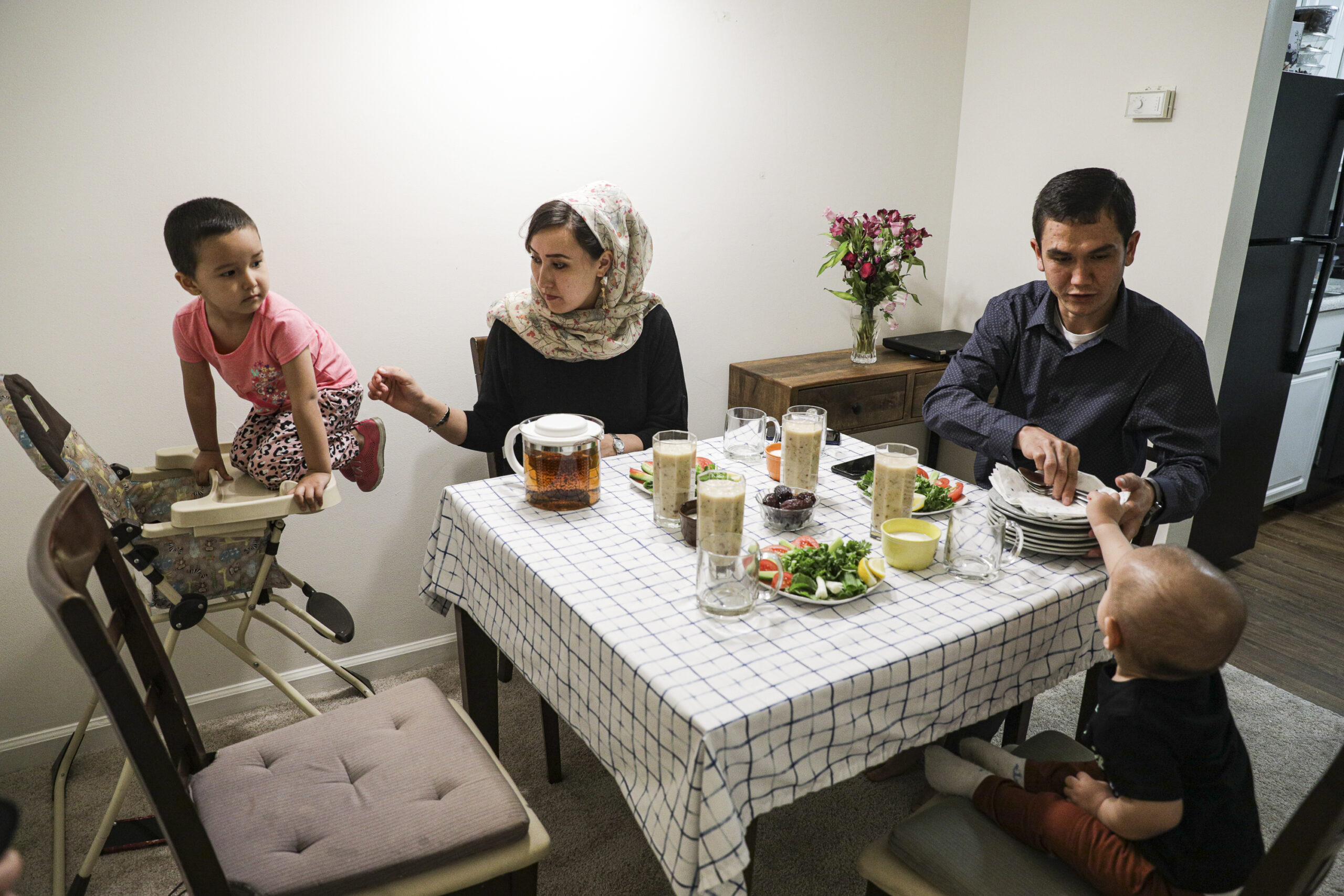
Khadija, who preferred not to reveal her last name because of security concerns, said that shopping for Ramadan in her new city is a completely different experience.
“In Afghanistan we were shopping in fear. We had this idea that anytime an explosion could happen, or we will die,” she said. “But now here we are more calm and relaxed and not afraid of anything because my kids are safe, my husband is safe, and we have no problems.”
For many refugees, the transition is aided by the D.C. area’s long standing Afghan community who have, over the past four decades, established restaurants, markets, and religious centers.
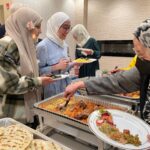
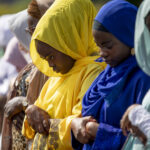
During a recent Friday prayer at the Mustafa Center in Northern Virginia – a mosque founded by Afghan refugees in 1999 — volunteers spread colorful plastic prayer mats in preparation for the increased number of worshippers, many of them refugees, during Ramadan.
“When you see your countrymen, you feel like you’re at home and you feel completely yourself,” said Hazrat Jan, a 52-year-old refugee from Panjshir in Afghanistan, who was attending a mosque in the U.S. for the first time.
“For them, coming to Mustafa Center gives them a sense of belonging, a sense of happiness,” said Rohina Baser-Panah, 52, who fled Afghanistan with her family in 1983 and arrived in the U.S. as a refugee a few years later. She’s since dedicated her life to helping others resettle by volunteering with the Mustafa Center and the Afghan-American Women’s Association.
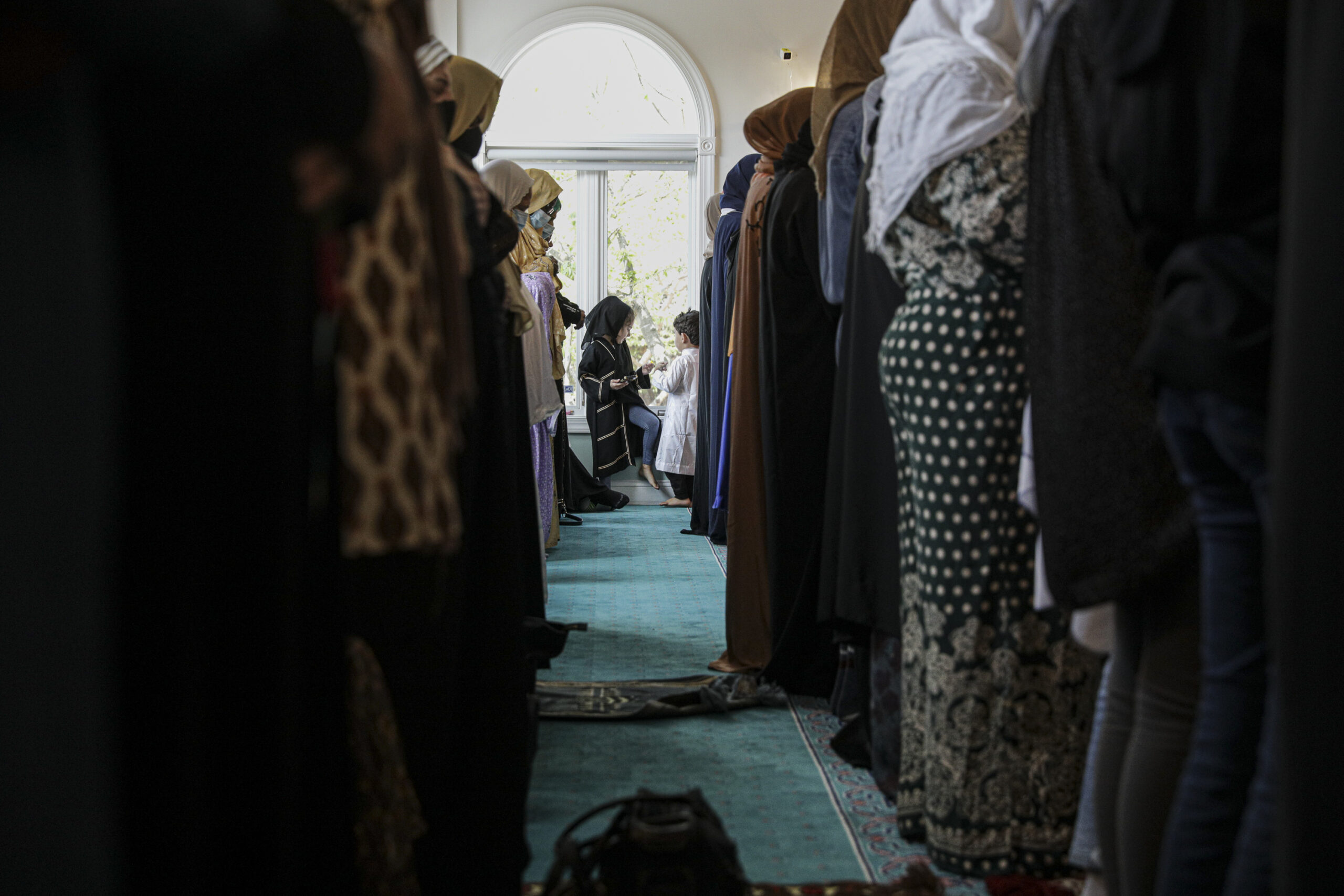
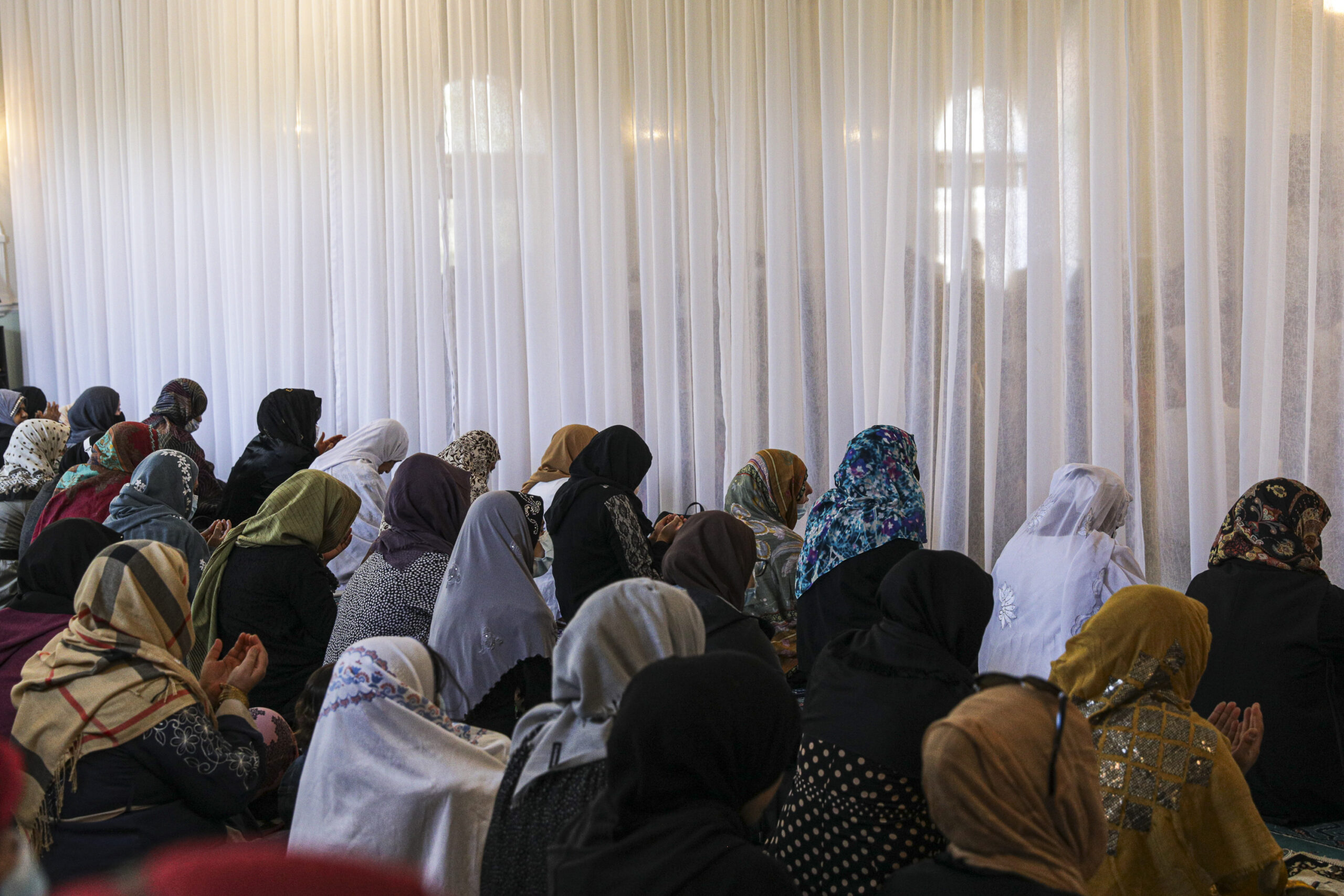
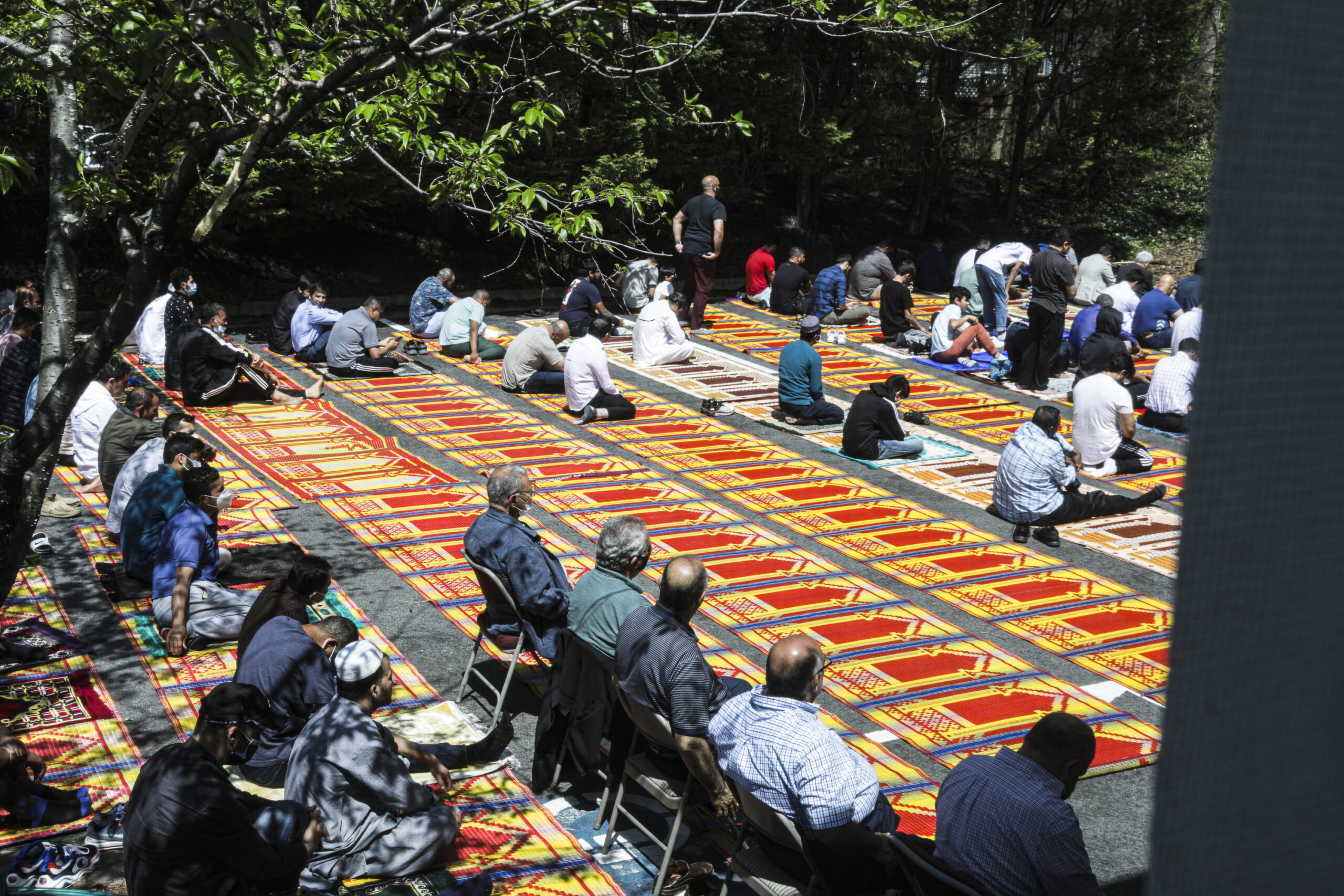
“We also explain to them that this mosque was built by refugees, [people like] you and me,” she said.
When prayers were finished, she and her friend Rahila Azam, who came to the U.S. as a refugee from Afghanistan in 2001, dropped off donated clothes at an apartment complex in Alexandria for two Afghan women and their families.
One of the women, 22-year-old Zuhal, said she is gradually adapting to her new life in Alexandria but that she misses hearing the call to prayer — in Afghanistan, it is projected by mosques over loudspeakers, so it can be heard in most neighborhoods and villages.
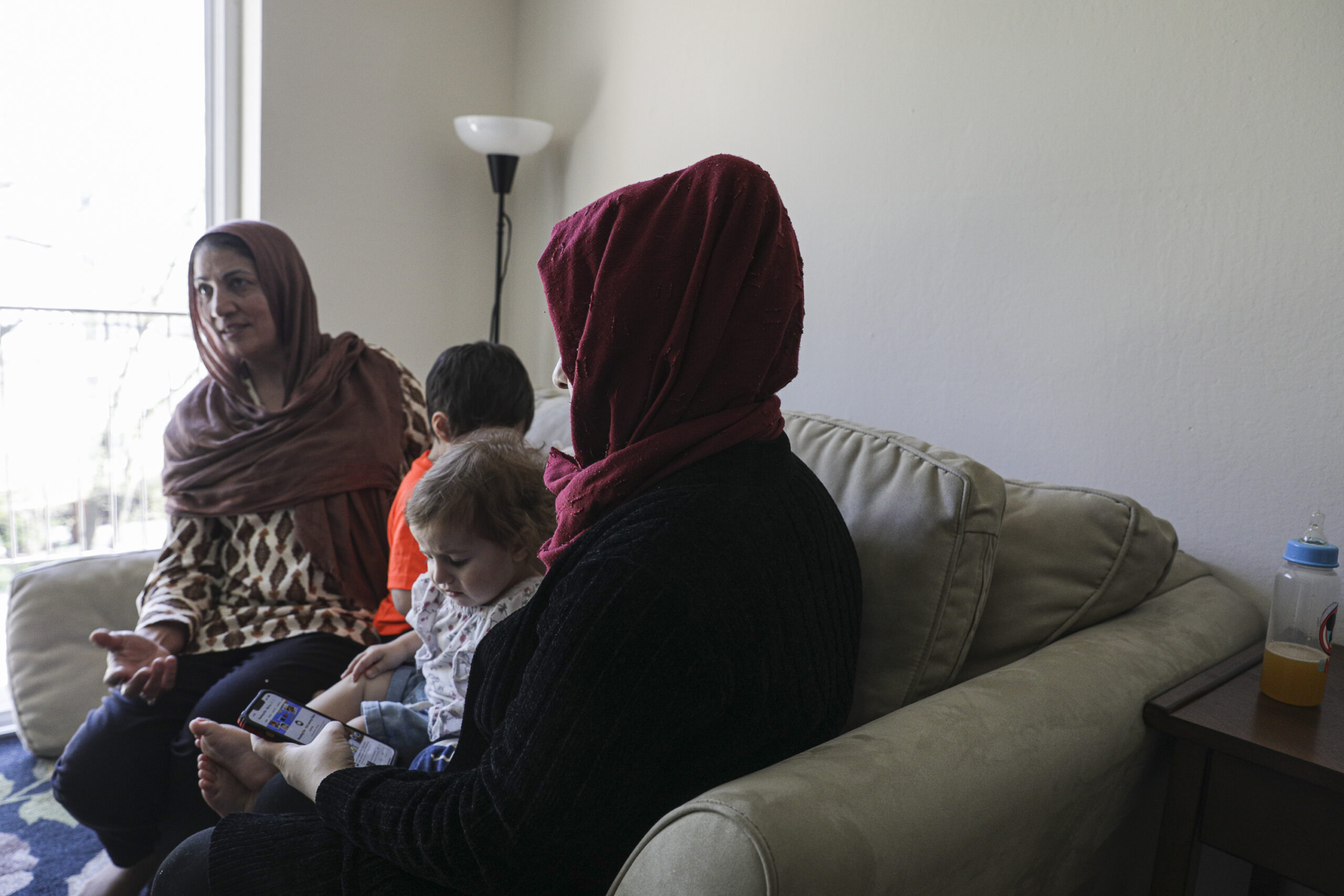
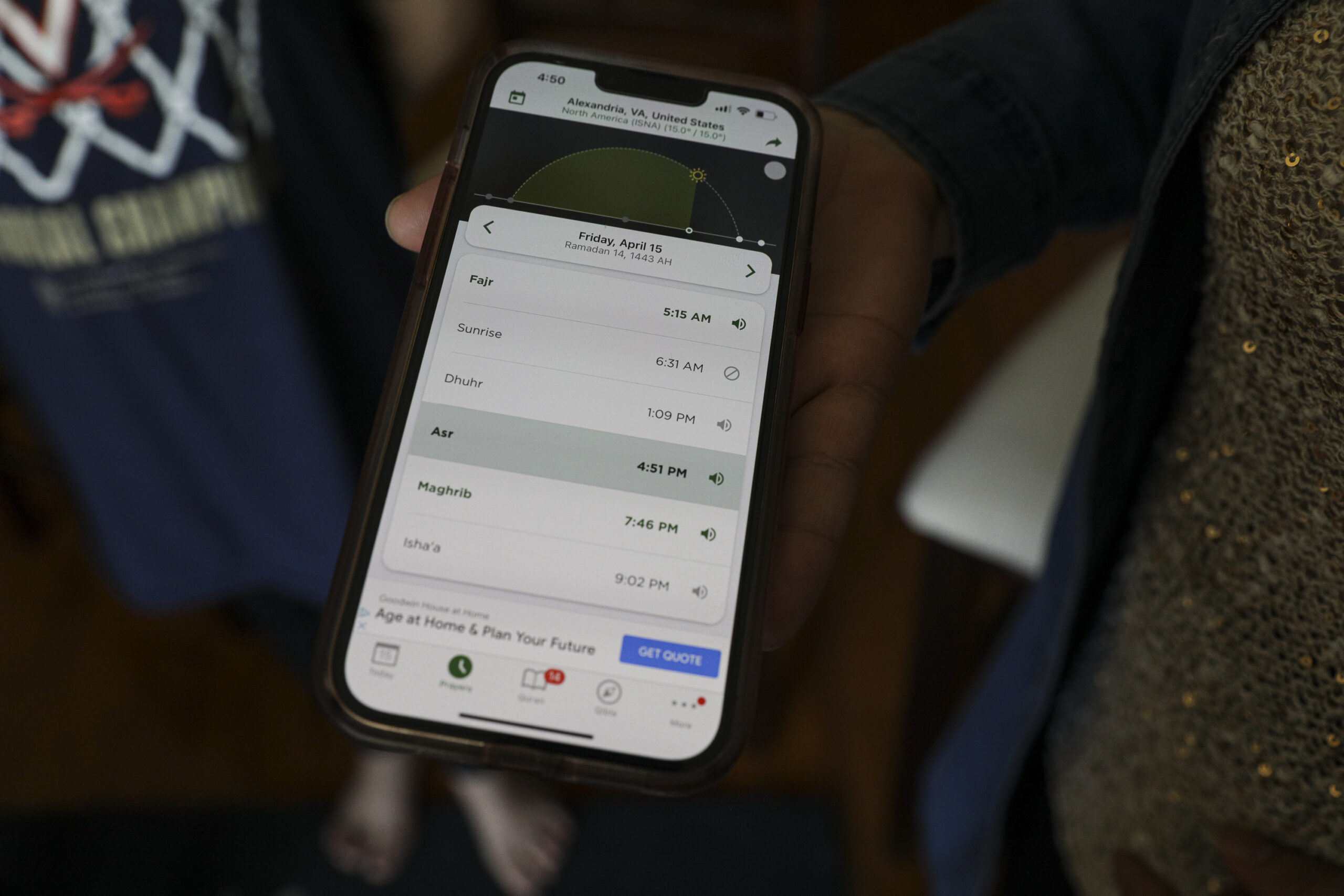
“When we arrived in the United States we were really sad because we didn’t know when we should pray, so we had to look at our phones to hear the azan,” said her friend Farzana (both women asked not to use their last names), who relies on an app on her phone to hear the call to prayer.
Farzana said she’s still learning how to best replicate her favorite dishes from home, especially those she makes during Ramadan. She’s thankful she can walk to the popular Afghan Market near her home in Alexandria, even though she says the rice tastes different here. She’s learning how to find alternatives to specialty food items, like replacing the Afghan leeks, called gandana, with leeks from the Chinese grocer when she cooks aushak, Afghan dumplings, and bulani, a stuffed flat-bread.
Zuhul says that in addition to adjusting to life here, she also worries for those who are still there.
“Our families [are] back in Afghanistan and as the situation is not good there, it doesn’t make us happy,” she said.
For Nagita, and many like her, honoring the community they left behind while also finding ways to forge new community has been an important coping mechanism during such a sacred time of the year.
[During every Ramadan] in Kandahar, we have guests. At night we have guests. This time, our friends are not here but we have new friends, we have a new family, and we have new neighbors,” she said.