Héctor Alejandro Arzate
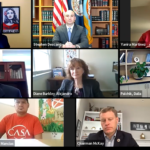
On Thursday, the Fairfax County School Board voted unanimously to adopt a Trust Policy that will restrict schools from voluntarily sharing confidential information about students and their families – including their immigration status – with U.S. Immigration and Customs Enforcement. Officials for Fairfax County said at Thursday’s board meeting that this policy will help build trust with immigrant families throughout the community.
“Fairfax County is home to over 352,000 immigrant families who contribute to various facets of our community,” said Mason District representative Ricardy Anderson, who co-sponsored the proposal. “For many of these immigrant families, the trust has been broken. To regain their confidence, we must demonstrate in all that we do that we are in the business of education and nothing more.”
A Trust Policy was previously implemented in the region in 2021 by the Fairfax County Board of Supervisors to prevent local government (including police) from voluntarily cooperating with ICE. Karl Frisch, who represents the Providence District, says this new application of the policy will allow an important and underserved portion of the district to be reached.
“As a school system we must be fully committed to providing a high caliber education regardless of the immigration status of our students and their guardians,” said Frisch during the meeting. “FCPS has so many opportunities to offer, yet we haven’t been able to reach some of the most vulnerable community members in Fairfax County because of the lack of trust.”
As a father, Jose Rivera says he supports the adoption of the policy because it means he can trust the schools. In the past, he worried that his son, who is currently enrolled at a high school in Fairfax County, could be targeted because of his immigration status.
“With this policy the students will be able to focus on their studies and go to school without the stress and worry that their information can be shared with federal immigration officials,” said Rivera, who is also a member of the Virginia chapter of CASA, a local immigrant advocacy group (formerly known as the Central American Solidarity Association of Maryland).
Rivera is not the only area parent who is leery of school officials. In early April, more than two dozen families with CASA gathered outside of Luther Jackson Middle School to urge the school board to align with the county’s Trust Policy.
Fairfax County Resident Viviana Valverde said her two children have been afraid of having their immigration status reported to ICE, so they opted to not to discuss repeated instances of bullying at school with administrators. She said her 15-year old son has often been subjected to racist remarks about his immigration status from his own peers, as well.
“A lot of the time there exists a fear to talk and complain,” said Valverde in Spanish. “Because we have the worry that our information will be shared with other entities. As a family, we’re susceptible to these racist actions.”
Margarita Brown, a community member who spoke during Thursday’s meeting, said that the fear of being reported to federal immigration officials can drive parents away. But with the new policy in place, some might feel empowered to take full advantage of all the resources Fairfax County Schools have to offer.
“Parents can feel afraid to enter school grounds, to interact with teachers, or to access needed services like food or health care,” said Brown. “A vibrant and successful school system promotes robust community engagement. And that benefits all of us in Fairfax County, not just today but well into the future.”
For his part, Superintendent Scott Braband offered his support during the meeting to both families and the policy.
“I believe very strongly, as I know this board does too, that I don’t want them or their children to have fear in our classrooms in Fairfax County,” said Braband.
At the direction of the school board, the policy is expected to be fully implemented by the beginning of the 2022-2023 school year. However, board members urged Braband to apply it as much as possible in the upcoming summer school session.