Héctor Alejandro Arzate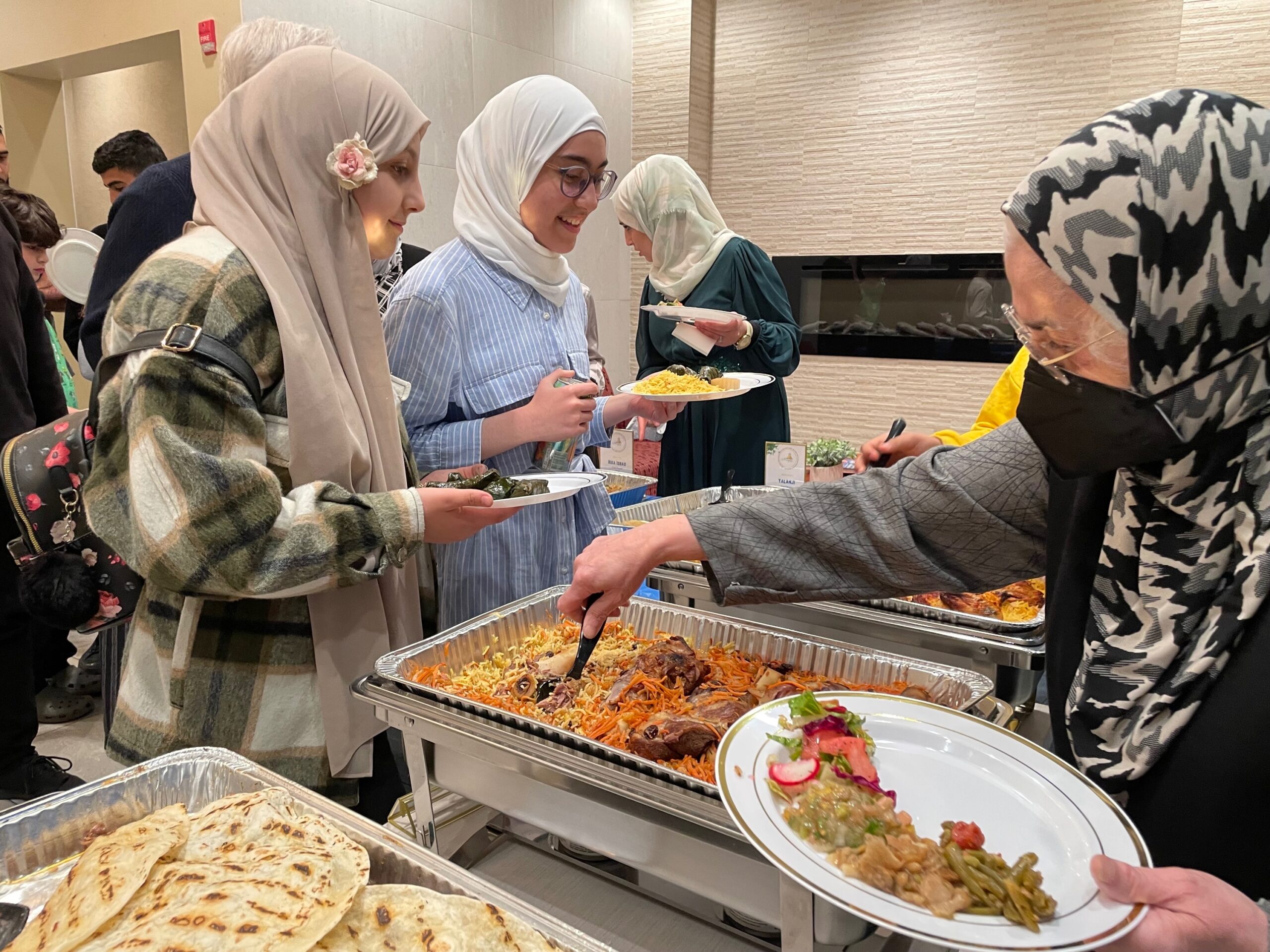
As an immigrant, Mohammad Nauage knows it can be difficult for people to restart their lives in a new country. So in recent months, he’s been trying to support refugees new to the region – many of them from Afghanistan – however he can.
“It’s challenging even under the best circumstances. Even with family here. But coming as refugees from a war-torn country? That’s just another level. You’ve never planned to come here,” said Nauage, who was born in Bangladesh but moved to the United States when he was nine years-old.
Last fall, he and his wife, Farah Bader, helped furnish an apartment for a family from Afghanistan resettling in Maryland. They’ve tried to stay involved with events and organizations, says Bader, but life can get busy.
In late April, for the 29th night of Ramadan, the pair decided to try something different to support refugees: They went out to dinner. Bader says she heard about an Iftar prepared exclusively by refugee chefs, so she bought two tickets.
“I found this and I thought it was really interesting that the cooks and the chefs were actually refugees,” said Bader, who is Muslim. “It seemed like a really worthy and valuable organization that provides a lot for the community and so we decided to come.”
The event was hosted by Mozaic, a local non-profit that works with refugees to help them find housing, jobs, and other resources. As part of their programming they created Mozaic Kitchen, which hires, trains, and licenses refugees with an interest in the culinary world. Raghad Bushnaq, who founded the organization, says it’s their way of breaking bread with the community.
“We have many people coming together from different backgrounds and different religions,” said Bushnaq, who came to the United States from Syria in 1989. “We are having this meal together, and in a sense to support those refugees and to support Mozaic.”
This special Iftar – which is a meal eaten after sunset by Muslims to break their daily fast during Ramadan – was the first ever food tasting hosted by Mozaic chefs. Saffiya Khan, who volunteers with the organization, says the event comes at a time when it’s most needed for refugees and the challenges that they face.
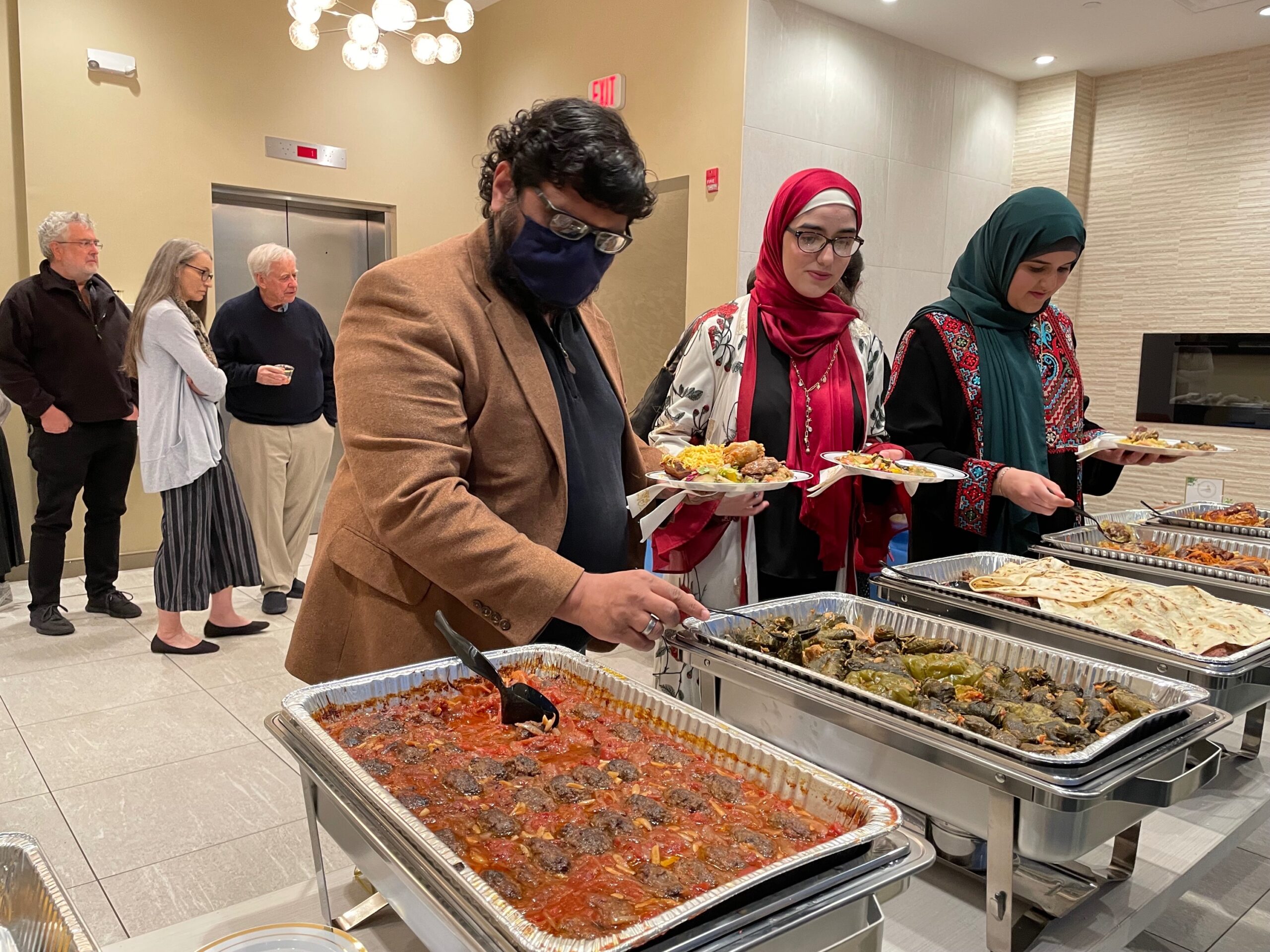
“It’s such a community event,” said Khan. “It’s really nice to be here not just at any dinner party or any Iftar, but one that empowers refugees and puts faith into action, which I think is really beautiful.”
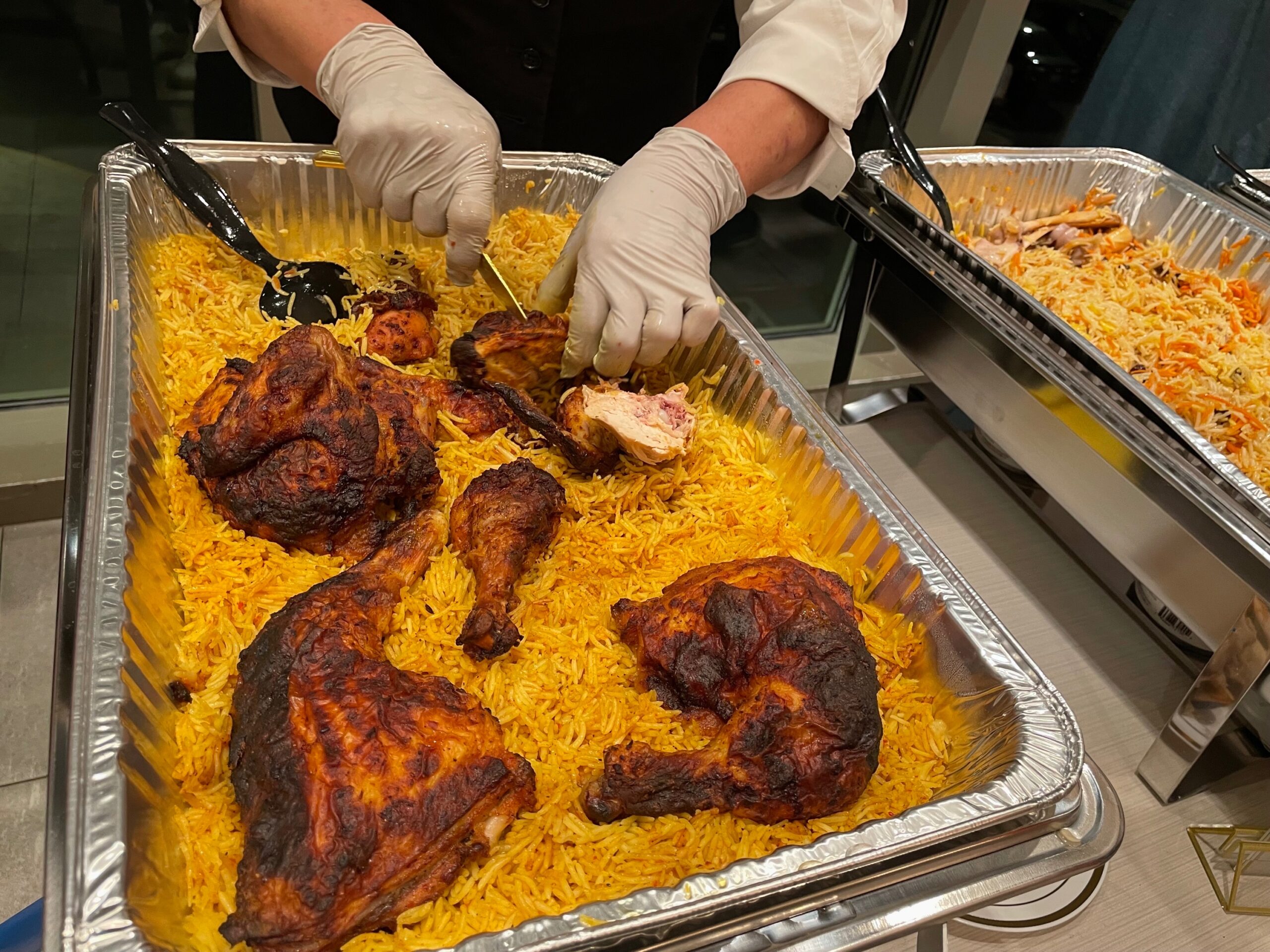
As one of the chefs, Rami Al Ghazzi says, he wanted to showcase the diversity of what’s eaten during an Iftar. He prepared chicken kabseh, a rice and meat dish from the Arabian Peninsula. It’s prepared by marinating the meat in warm spices before browning it, and then cooking the grains in the leftover fat.
“All of that will blend together,” said Al Ghazzi, who started cooking with his wife, Shaza Sakbani, after they left Syria for the United States in 2013. “Even if you eat the rice by itself, it’s really tasty. And the more the meat is fatty, the more it’s delicious.”
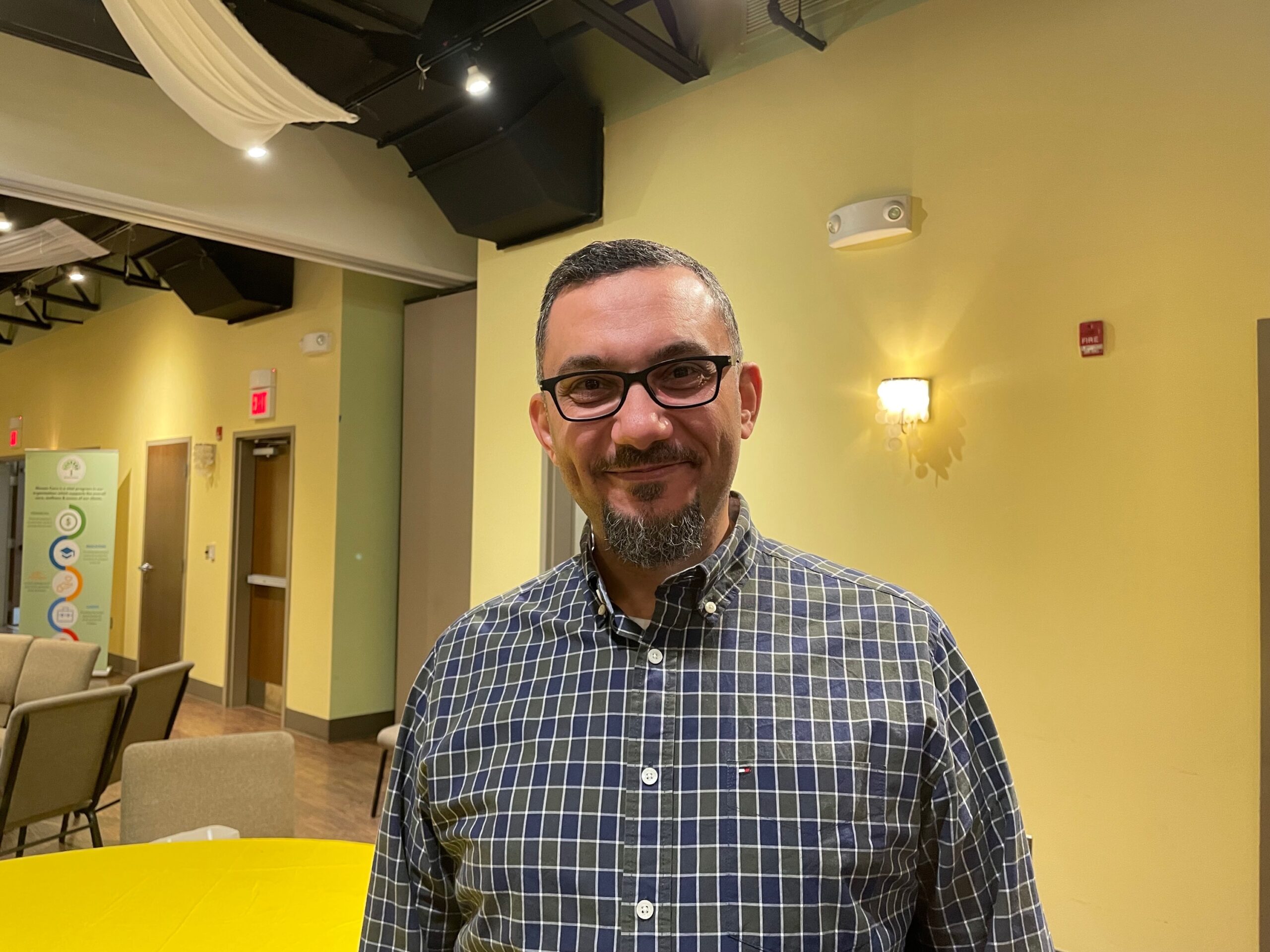
Al Ghazzi says they want to help both people with a passion for cooking as well as those getting adjusted to life in the U.S. Since the arrival of families and individuals from Afghanistan, Bushnaq says Mozaic has been working with agencies like the International Rescue Committee to help with resettlement efforts both in Maryland and Virginia. She says the funds generated from the meals will benefit not just the chefs, but also those who have recently arrived in the area who need help moving out of temporary living situations like hotels, as well as furnishing apartments.
“We have [food] from the Syrian cuisine, Iraqi cuisine and Afghan cuisine,” said Bushnaq. “All food today is prepared by refugees and all of the money will go back to them.”
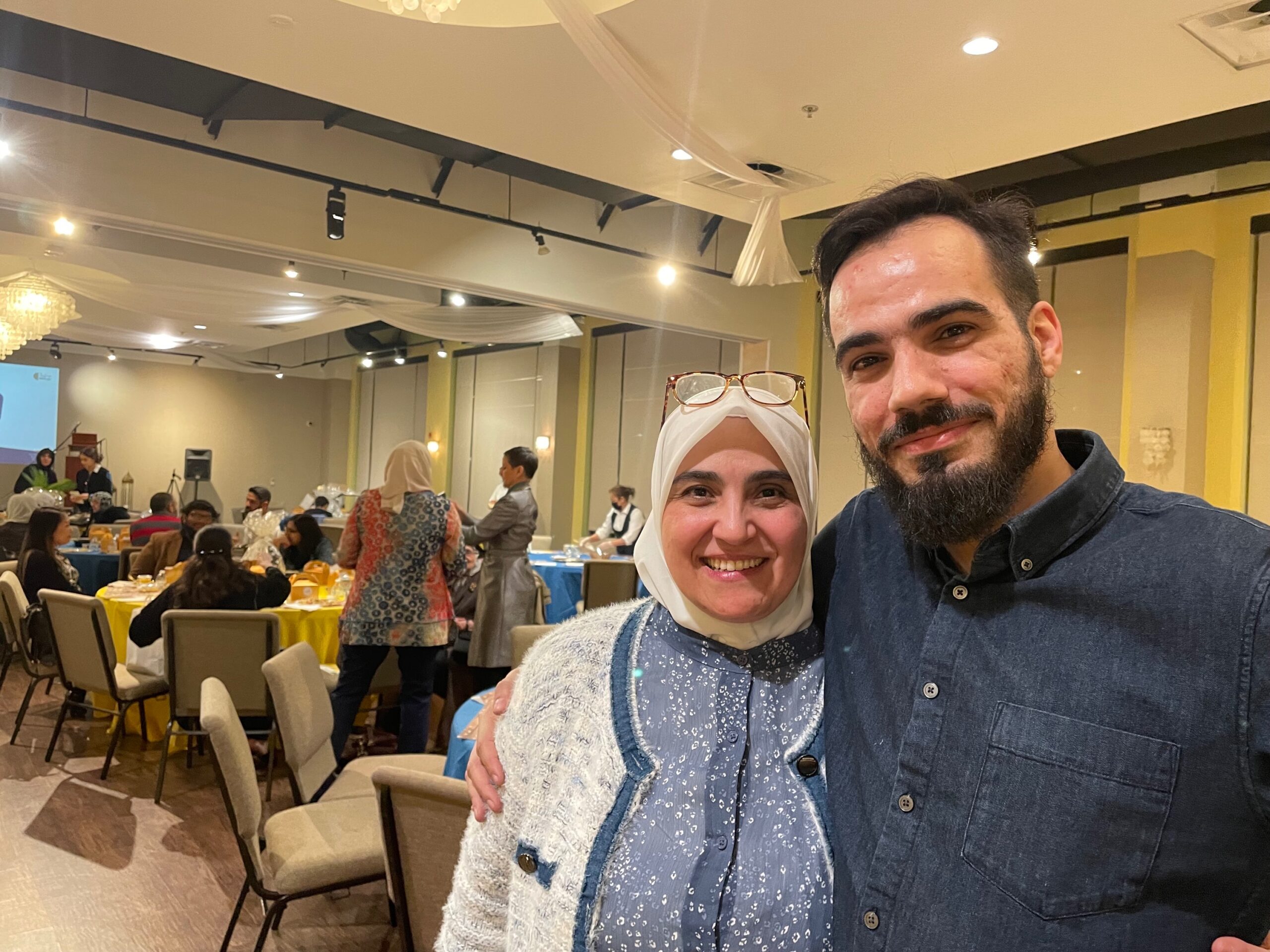
For Othman Altalib, who helps Bushnaq on occasion, there are parallels between what refugees are experiencing today and what refugees have experienced in the past.
“There is a deep, profound relationship between what the immigrants of Mecca felt going to Yathrib and how they were welcomed that made such a difference in their ability to settle and to integrate,” said Altalib, who came to the U.S. from Iraq when he was less than a year-old and months before the first Gulf War.
At the end of the Iftar, Altalib invoked the journey of the Prophet Muhammad’s migration to what would become Medina. Rather than turning them away, he says, the locals gave their homes to the refugees.
“It’s on us as being the ones who have already migrated here from before to make you now feel that this is your home,” said Altalib. “Because it is.”