Martin Austermuhle
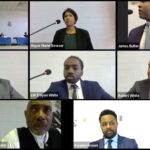
The three leading D.C. mayoral candidates made their pitch to voters and sharpened contrasts between each other during a lively 90-minute debate aired on WAMU 88.5 on Wednesday evening. Key differences emerged on whether the city should hire more police officers and if the system of mayoral control of schools should remain intact.
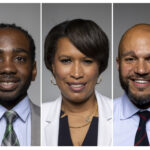
The debate came with fewer than 50 days until the city’s June 21 all-important Democratic primary, during which Mayor Muriel Bowser will be asking voters for a third term in office. D.C. Councilmember Robert White (D-At Large) and Councilmember Trayon White (D-Ward 8) are hoping to unseat her, arguing that she has failed to tackle some of the city’s most persistent problems, from income inequality to violence in low-income communities.
It was only the third time that the three candidates have debated each other; in March they sparred during a forum hosted by the Ward 7 Democrats, and late last month they clashed during an event put on by the Ward 5 Democrats.
Former Ward 5 ANC commissioner James Butler will also be on the ballot, though he did not qualify for Wednesday’s debate.
A split on more police
Some of the most intense disagreements of the debate came around the issues of crime and public safety, which have emerged as two of the most pressing concerns for many residents. They are also two issues where Bowser is seen as most vulnerable, with spikes in homicide and gun violence having occurred during her time in office.
Bowser is pushing to hire up to 350 more police officers next year (after usual attrition, her plan would see a net gain of 35 new officers) and push staffing at the Metropolitan Police Department to 4,000 officers over the next decade, up from 3,500 today. During the debate, she pushed back on arguments made by progressive activists — and her two challengers — that police don’t prevent crime.
“I’ve never been to a community where they say they don’t want the police. Never,” she said, detailing her years in public office and many conversations with residents. “They tell me they want to make sure the police are engaged and they have a trusting relationship. And that’s what we’ve worked on.”
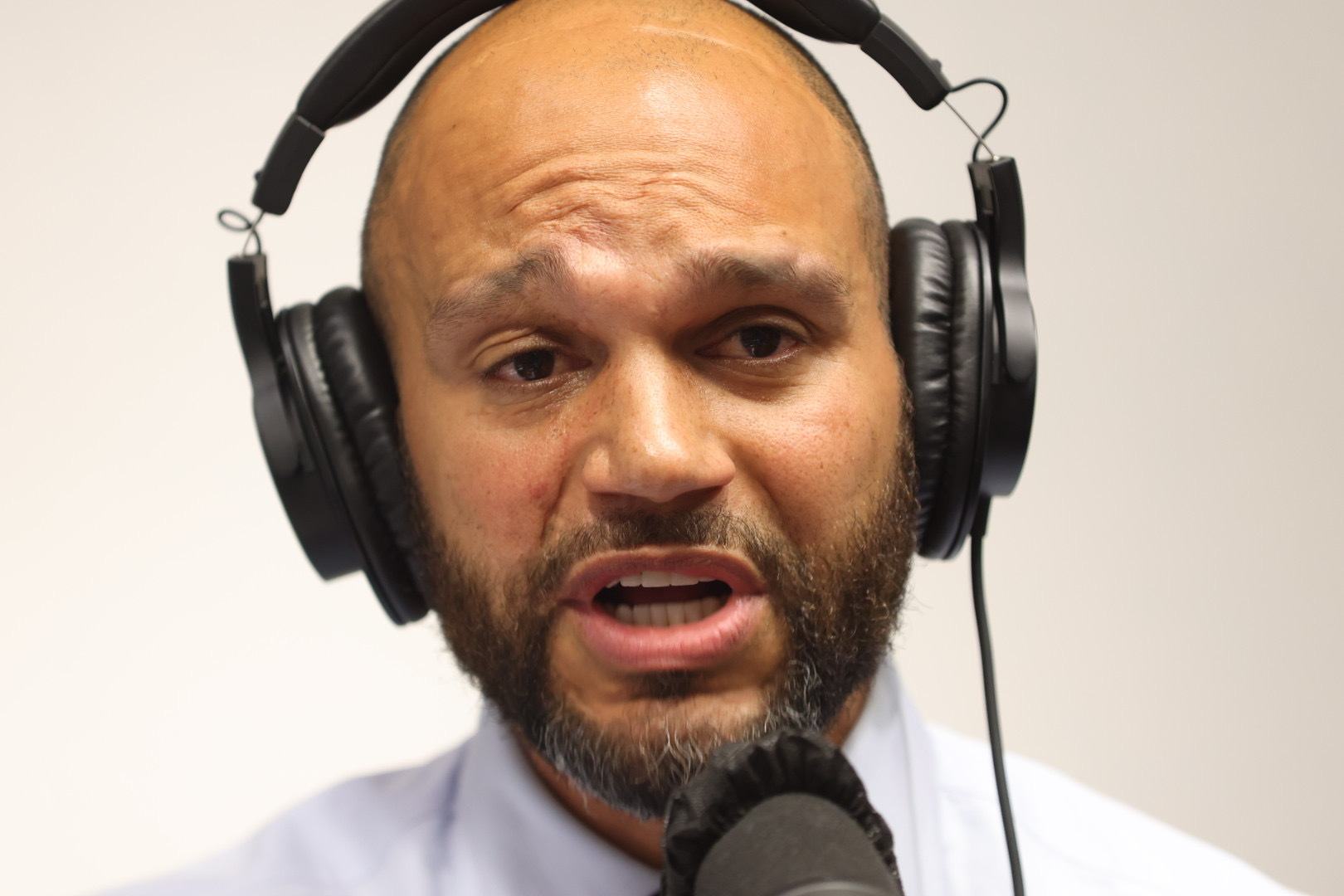
Robert White, though, said Bowser’s push for 4,000 officers isn’t based on any specific data on how many officers MPD should ideally have. He said he supports calls for an audit of the department’s staffing to determine what the appropriate number of officers should be.
“It’s going to take years to reach 4,000 officers. We don’t know what that number is based on. What we need is the right number of police, not just more police,” he said.
White also said police need to focus on closing more cases, and that he would work more closely with federal prosecutors to determine why some cases are being dropped. Bowser and Police Chief Robert J. Contee III have been openly critical of the U.S. Attorney for D.C., which prosecutes violent crimes in the city.
“People are getting arrested and they’re not prosecuted because there are issues with the arrest or issues with the evidence. That’s an issue that we can solve right now, and we are years behind on that,” he said.
Trayon White sounded similar notes, saying that police staffing was high during the city’s most violent years in the early- and mid-1990s and it made little difference in crime rates. He also said improving public safety would take addressing the deeper causes of crime.
“We have to use a public health approach to addressing crime in our community,” he said. “I don’t believe the police is the end-all solution to addressing crime because that individual know that something is about to escalate before the 911 call is made. And so we have to empower our communities to police our own community and stand in the gap.”
According to a February poll conducted by The Washington Post, D.C. voters have nuanced views on how best to improve public safety. While 59% said they agreed that more police on patrol could help, 82% said additional economic opportunities in low-income neighborhoods could make a dent.
The three candidates broke different on the issue of whether police should remain in D.C. schools. Last year the D.C. Council passed a bill to phase the officers out through 2025, a move that Bowser has continued fighting. Robert White agreed with the council’s move, while Trayon White says he opposes it.
“This generation has become more violent, let’s be honest,” he said. “So if you don’t have anyone authorized to break up fights, it becomes extremely violent. We are seeing kids bringing guns to school, knives and weapons as early as middle school and elementary school.”
Who should control the schools?
Since 2008, the D.C. mayor has had almost complete control over the city’s public schools, with an elected State Board of Education only providing limiting oversight. And the three candidates disagreed over whether that should remain the case.
Both Robert White and Trayon White advocated for more independence for the Office of the State Superintendent for Education and a stronger state board; Trayon White went as far as saying that he would share the decision of who the schools chancellor would be with the board. Those statements left an opening for Bowser, who said the two lawmakers had over the months provided shifting answers on the question of who should control the schools.
“D.C. residents want a mayor they can trust. And if your answer shifts depending on which way the wind blows, they can’t trust you with their kids. And the most important thing you have to do as mayor is provide mayoral leadership of the schools. I think it is a seminal issue in this race. And I think what we’ve heard are councilmembers who are equivocating and waffling. I’m straight forward,” she said.
Robert White pushed back, arguing that Bowser is making mayoral control seem like a simple yes-no proposition, while it is more complicated than that.
“We need a mayor who’s not just going to go to the easy talking points, but who’s going to get in the details. And this mayor has not gotten into the details. And that’s why she doesn’t have a clear understanding of why so many students are leaving our schools. Right now, 30% of elementary school students leave D.C. Public Schools before middle school. There is an urgent problem, and we need a mayor with a sense of urgency on public education,” he said.
Robert White said he would increase trade and vocational offerings to boost enrollment in schools east of the Anacostia River and reduce teacher turnover. Trayon White said the significant increase in charter schools has impacted enrollment and investment at traditional public schools, and said he supports a moratorium on new charters. He also pledged to reduce testing of students and assessments of teachers, which he called “punitive.”
Both lawmakers were critical of Bowser’s plan to build a new high school in Ward 3, arguing that resources should instead be funneled to other areas of the city. Bowser responded she had done just that, pointing to the modernizations of Roosevelt and Coolidge high schools in Ward 4.
Tossing out traffic cameras
In the portion of the debate addressing traffic fatalities, Trayon White said supports a more rapid rollout of traffic-calming measures on city streets. But he also made clear that he has little love for the city’s extensive network of traffic cameras, and would work to cut fines and reduce their use.
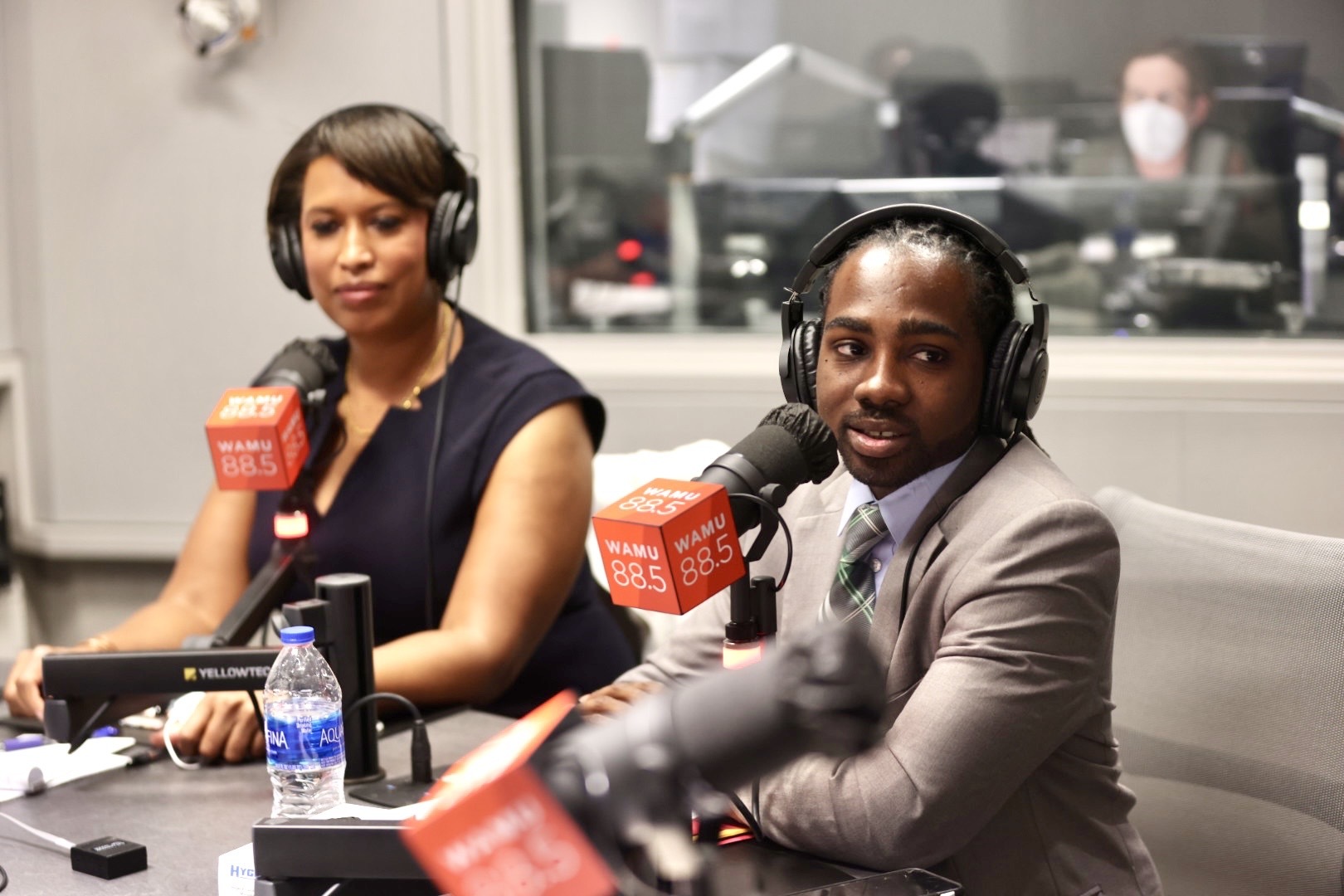
“D.C. has one of the highest ticketing systems in the country. I was talking to a guy yesterday. He said he had $10,000 in tickets. The average person in Washington, D.C. doesn’t have disposable income from $300 to $600 a month to address tickets,” he said, adding that he believes the speed and red-light cameras cause more “stress and anxiety” than they succeed in creating safer streets.
Bowser quickly responded that many residents request speed cameras on their streets, and that drivers could simply avoid tickets by slowing down. She also said she had requested more cameras as part of a broader $200 million plan to re-engineer streets and roads to make them safer for cyclists and pedestrians. On fines, Bowser said that Trayon White was already empowered to make the changes he is proposing.
“The councilmember is a budget-maker and he’s a policymaker. If he wants to change the fines, he can do it. He can change the law. He has the budget on his desk right now and he can change the budget to reflect that,” she said, referencing the fact that traffic fines bring in hundreds of millions of dollars on an annual basis that would have to be accounted for in the budget if fines or the number of cameras were reduced.
In 2018 the council passed a bill written by Trayon White that extended the timeframe in which unpaid fines double, to 60 days from the current 30. It was never implemented because the council never funded it. More recently, he worked with Bowser on a six-month-long ticket amnesty that forgave all late fees and penalties.
Robert White said the rising number of traffic fatalities on D.C. streets — 2021 was the city’s deadliest year in more than a decade — was more broadly indicative of Bowser’s leadership and management of city agencies. “We’ve been on autopilot with Vision Zero, which is a slogan. But it didn’t stop working this year. It didn’t stop working last year. It hasn’t been working, but we haven’t gone back to fix it,” he said.
Statehood, the Commanders, and the tipped wage
All three candidates did agree on a couple of points: in the wake of the leaked decision that would overturn Roe v. Wade and raise the possibility that congressional Republicans could move to outlaw abortions in the city, Democrats on Capitol Hill should focus on pushing a stalled bill that would grant statehood to D.C.
The trio also agreed that Councilmember Kenyan McDuffie (D-Ward 5) should have been allowed to remain on the ballot for attorney general, and that the council should clarify the law spelling out the qualifications for the office.
But the unity wasn’t long-lasting. Bowser and Trayon White said they both opposed a pending ballot initiative that would phase out the tipped minimum wage, while Robert White supports it. And the same dynamic was at play on whether D.C. should try and get the Washington Commanders back; Bowser and Trayon White are supportive of getting the team, while Robert White said he’d rather see if the RFK stadium campus be used for housing and recreation.
The Democratic primary is on June 21. Mail ballots will be sent to all voters starting May 16, and ballot drop boxes open on May 27. Early voting runs from June 10-19.