Amanda Michelle Gomez
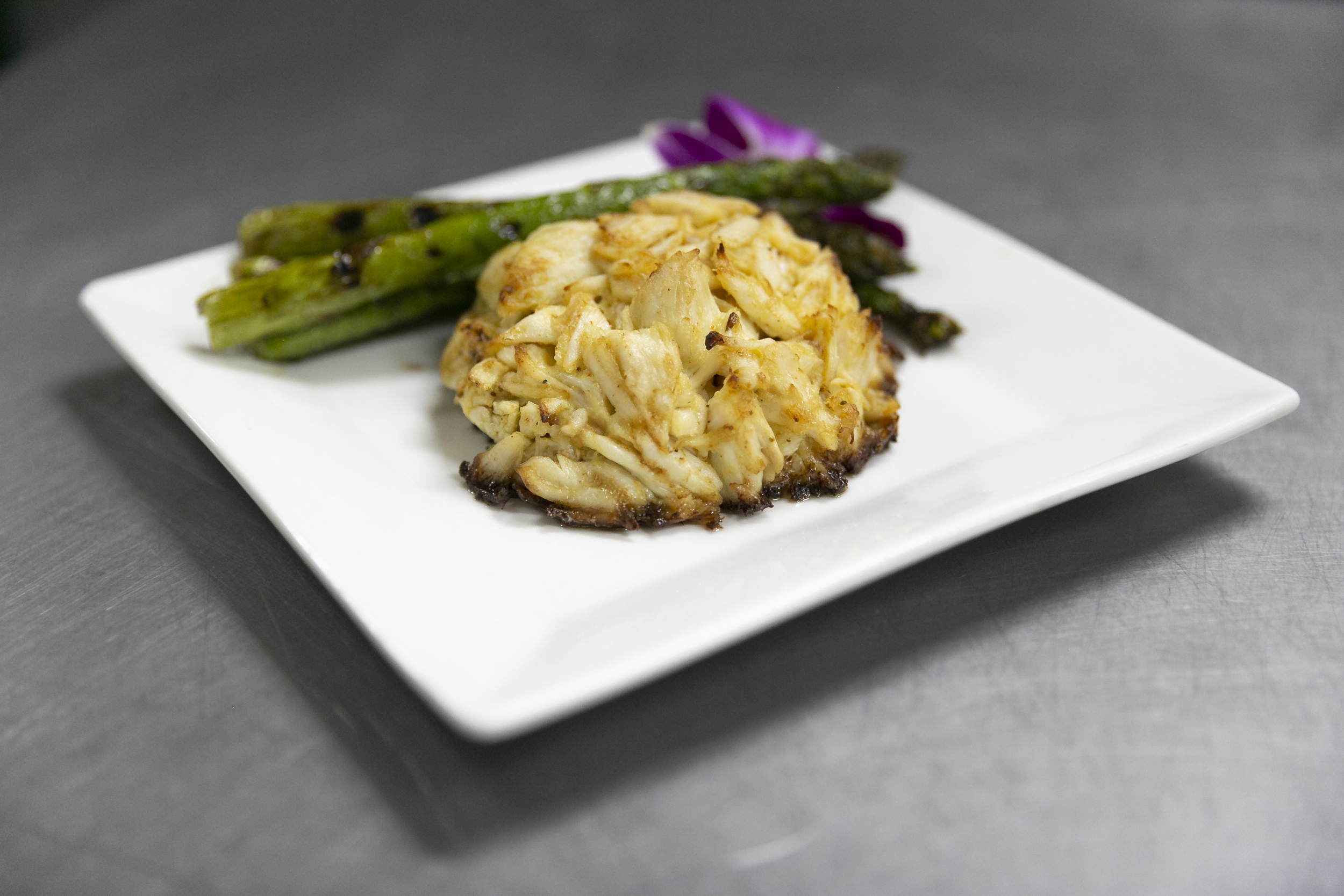
Chef RŌM’s jumbo lump crab cakes are a lot like him: local to Maryland and generous.
“We use eight ounces of jumbo lump crab meat, that’s the key,” he says during an interview at The Food House, a commercial kitchen in Capitol Heights. “You don’t want to outshine the ingredients, so we don’t put too much into it.”
Those crab cakes are RŌM’s specialty; he made a name for himself juggling various food service jobs over the last decade, and then very recently as the chef at In A Minute Cafe, a Black-owned restaurant in Capitol Heights. But like so many restaurants, In A Minute fell victim to the pandemic, and RŌM is back with a new business: a ghost kitchen he’s calling House of RŌM.
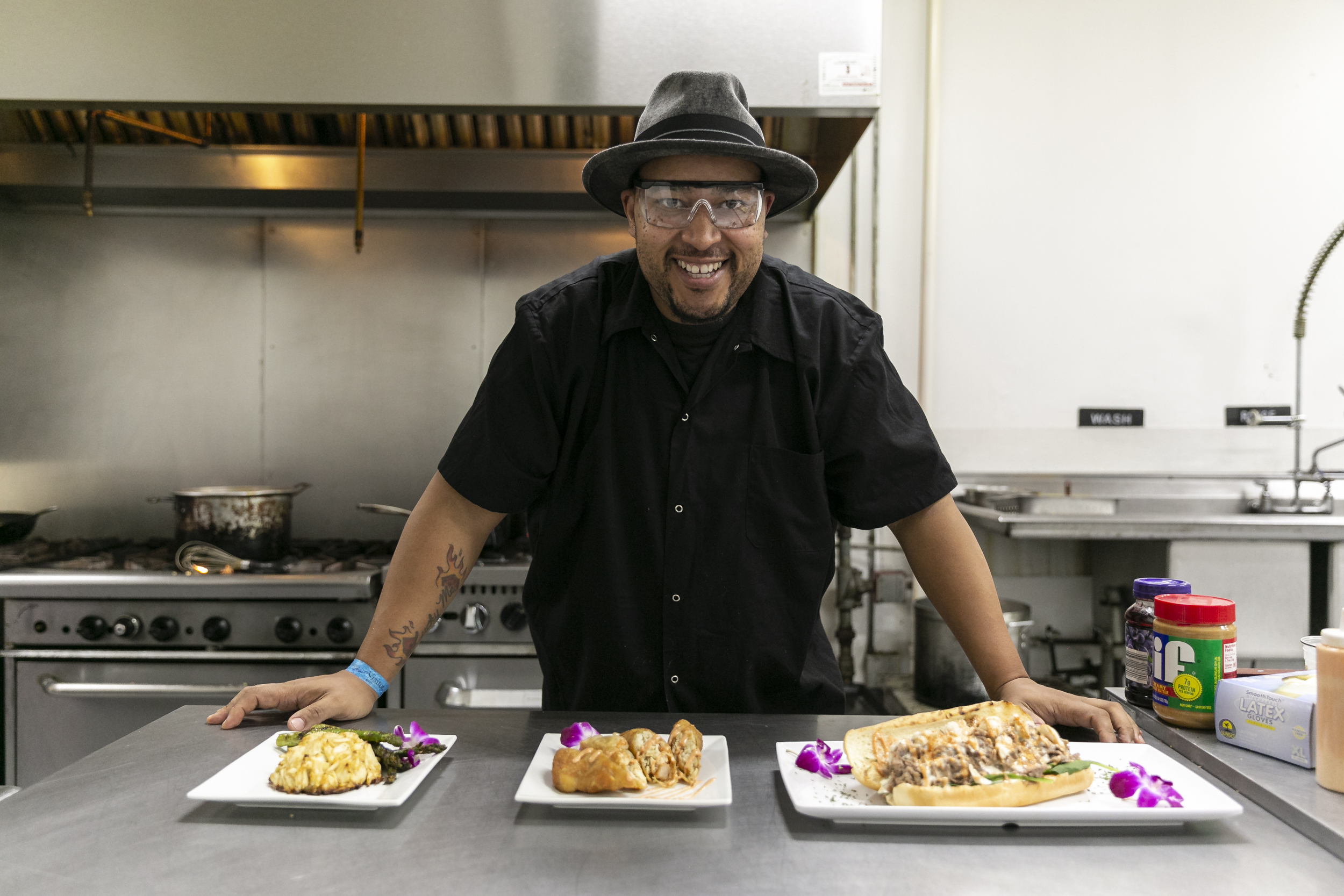
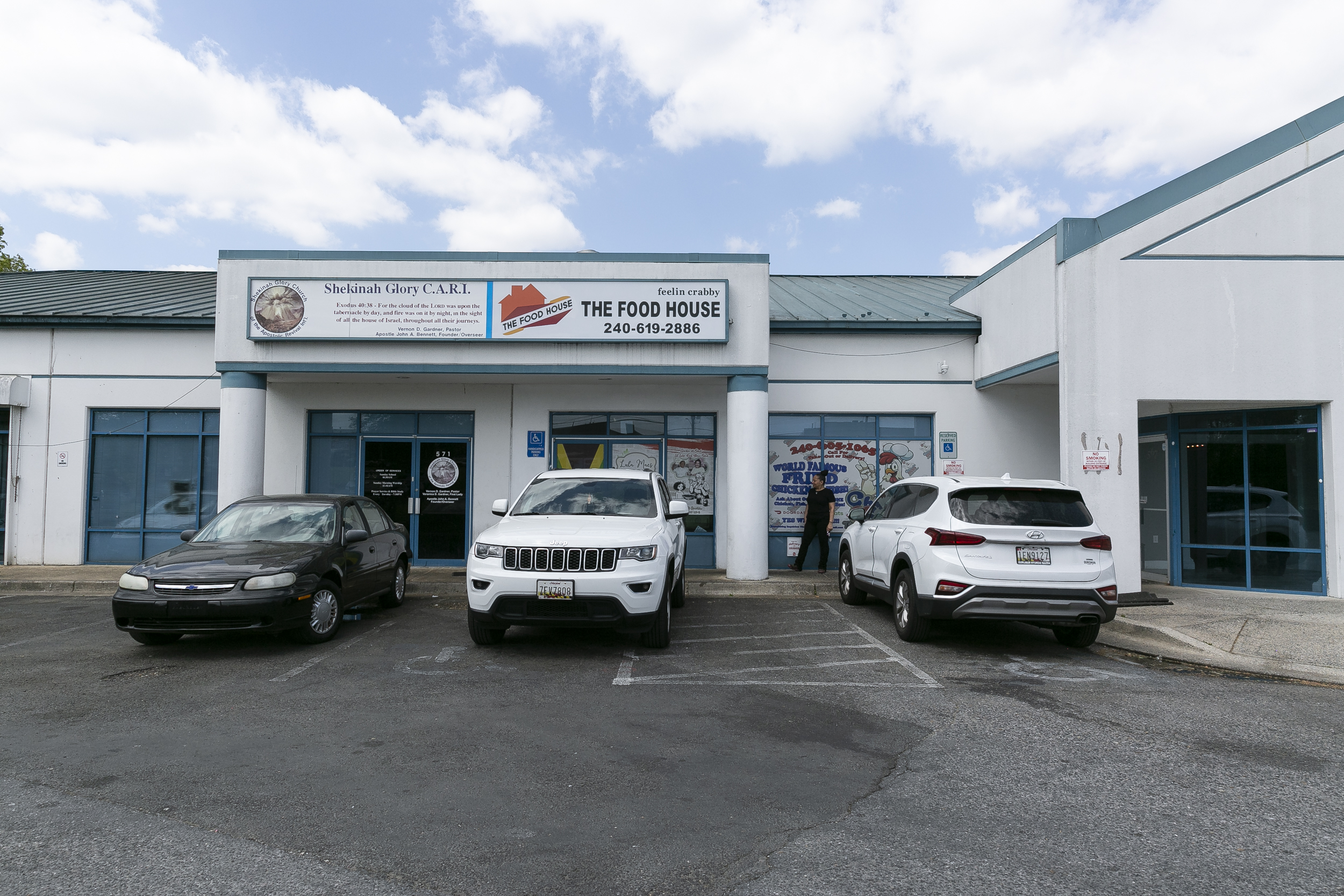
The chef, whose legal name is Reginald Mack, is a freckled man with an easy laugh who shares everything from basic spices to industry tips with the other vendors who cook out of The Food House. On that warm day in April, he’s stationed next to a longtime friend, Lakisha Garden, the owner of Lula Mae’s Gardin. The people responsible for another business, The Chicken Man, go back and forth behind the pair, preparing their own to-go meals.
While various cooks walk past, balancing groceries or sheet pans mere inches away, RŌM crowds over his crab meat to mix in Old Bay, mayonnaise, and mustard. He’s careful to keep the structural integrity of his signature dish, which he calls the “crack bomb.”
“You don’t want to break up those beautiful lumps,” he says of his no-filler crab cake. “That’s what creates the crack. You’ll see a whole bunch of cracks in that thing when it’s all set and done.”
The name of the dish is apt, coming from Chef RŌM — which is pronounced like Italy’s capital and not like CD-ROM — a man whose life has had its fair share of cracks. “People want to see the cracks,” he says.
“I wasn’t always a chef. I wasn’t always in the kitchen,” he says. “I have always been an entrepreneur at heart. … But unfortunately, I sold some narcotics and crack cocaine was one of the narcotics that I sold.”

He grew up in Kentland but now lives in Bowie, which is just a few miles away from The Food House. Now known locally for soul-food seafood, he did not expect to land in the food business. After serving a short time in jail nearly two decades ago, he considered various options, including real estate, upon his release.
“I couldn’t sell narcotics for the rest of my life, but I [wanted to] sell something because I’m an entrepreneur at heart. My father had a moving company. I didn’t want to move furniture all day,” he says. “I said, ‘You know what? Imma sell some food. Let me go to culinary school. Follow granddad’s footsteps.’” His grandfather, who went by the nickname Big O, has been a cook in the army.
RŌM ended up enrolling in Lincoln Culinary Institute in Columbia, and while there, adopted his nickname in homage to his grandfather.
After graduating, he launched his first catering business out of his mother’s kitchen. He later worked at a hotel and then got his own food truck, also called House of RŌM. In 2020, he and Steven Wilson opened a new restaurant, In A Minute Cafe, in Capitol Heights. But the business venture was short-lived, and they recently closed because of a decline in business. He says he noticed business slowed down once pandemic-related restrictions were lifted, and he suspects his patrons were patronizing dining options closer to their homes.
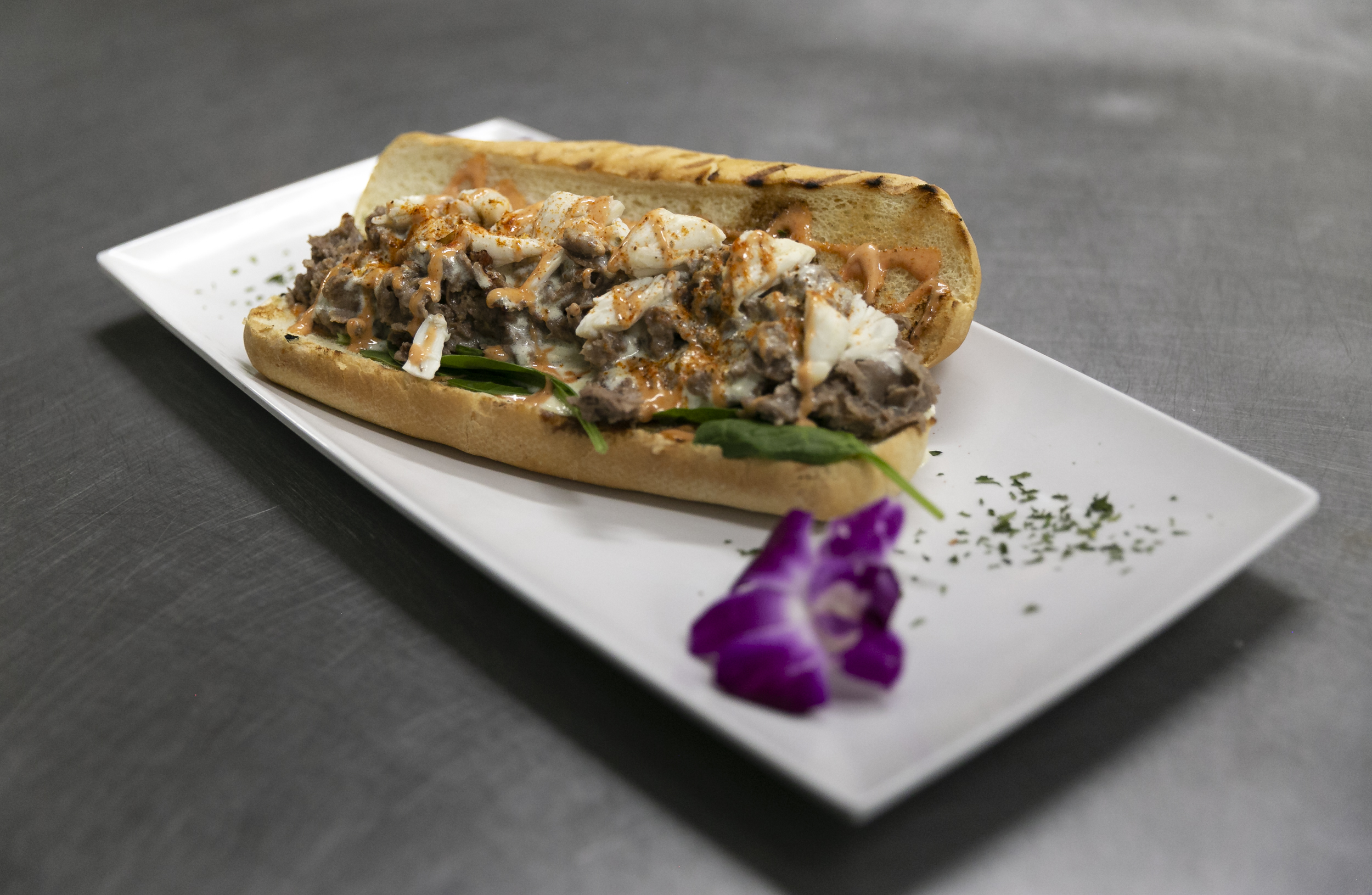
Now, the ghost kitchen prepares various meals, like seafood fried rice and a cheesesteak topped with crab dip that in 2020 made Eater’s list of the D.C. area’s best cheesesteaks, for pickup and delivery. RŌM still caters events, including a recent 50th birthday brunch. He’s prepared food in all types of kitchens and for all types of people, which is why he fancies himself the “Clark Kent of the kitchen.”
“I may have a catering job today, and also I might have a private chef gig later on tonight. So I have to go into the phone booth and change up and come back out and go do another job,” he says.
While many returning citizens struggle to find employment, sometimes due to hiring practices that discriminate against people with criminal records, RŌM says his past never got in the way of his professional successes.
“The kitchen is really the only place that will accept you … I don’t know why that is, but that’s just how it is,” he says. “They look at somebody that maybe went to jail and is like, ‘OK, well, he’s going to be a hard worker. Let’s put him to work.’ That’s just how I see it. A lot of people that’s been in the life, come out, and they live in the kitchen.”
RŌM’s experience mirrors plenty of others, because the food service industry tends to be less concerned than many other professions about a criminal record. D.C. Central Kitchen has built an entire ecosystem around training people coming out of incarceration to work in the industry, and helping them find jobs. Another well-known chef around D.C., D’Angelo Mobley of La Jambe, recently talked to Washington City Paper about finding his home in kitchens after a short stint in jail.

Chef RŌM credits his grit and ability to make connections for his successes. One example? He met someone who now helps him market business by happenstance at an event he was catering. His story has also inspired at least one person: Garden of Lula Mae’s Gardin, his colleague in the ghost kitchen.
Garden met him roughly six years ago, when she was working a nine-to-five desk job and he would deliver his food to her office. She always enjoyed cooking, making dishes like smoked mac and cheese or lamb chops for herself and family, and began peppering him with questions whenever he visited.
Unsatisfied with her day job, she dreamed of starting a food business of her own, and “he told me to jump,” she says of RŌM. “He just said, ‘do it. How would you ever know whether you’ll fail unless you try to do it?’ So that’s what I did.”
She built up the courage to quit her job as dispatcher and started a soul-food business named after her grandmother. That was four years ago. In the beginning, she would rent RŌM’s food truck for a few days a week. They would trade labor; he worked for her on the truck on her days, and she helped him out when he ran the truck, Garden says.
When she needed a place to park her own truck she eventually purchased, she learned of The Food House. (Food service workers can park their trucks there in addition to using the facility to prepare meals.) When Garden started working out of the commercial kitchen full-time in February, RŌM joined her.
“I like working right next to him. We teach each other a lot of different things and we laugh and joke all day. And, you know, that’s my homie. I love him, too, just a little bit,” she says, laughing. “Sometimes, he gets on my nerves, too. And I just kind of push him a little bit, push him like ‘Go over there, go over there.’ But it’s all jokes.”
RŌM eventually sees himself leaving The Food House and opening another sit-down restaurant. He loves to dress a white plate, he says, noting that “people eat with their eyes first.” There is only so much he could do with a to-go container, he says, although that doesn’t stop him from trying to use his sauces to make his dishes look their best for carryout.
It’s all part of his philosophy to “treat everybody like a VIP,” he says. “You never know who’s eating your food. Somebody ordering on DoorDash might be Barack Obama. You don’t know. So you treat everybody like that VIP.”