Martin Austermuhle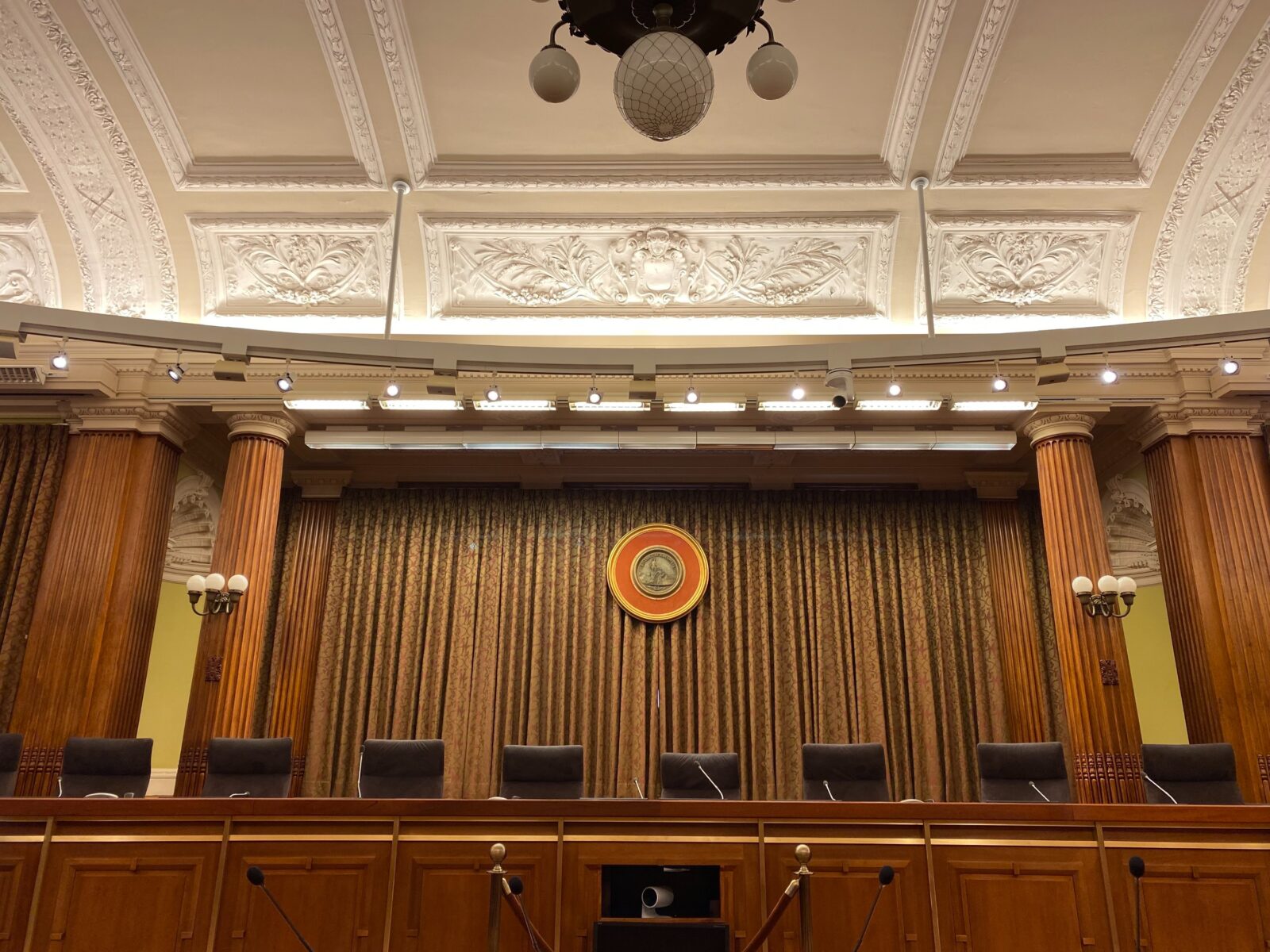
The D.C. Council on Tuesday gave unanimous initial approval to the city’s $19.5 billion budget for the coming year, giving Mayor Muriel Bowser funding to hire up to 350 police officers and almost a half-billion dollars for affordable housing while directing more funding to schools with a high number of low-income students.
The budget covers everything from brick and mortar projects (a down payment on a new D.C. Jail facility and an indoor athletics complex at RFK) to new government initiatives (a $10 million home ownership fund for Black residents) and efforts to assist people and businesses impacted by the pandemic. It also increases oversight of government spending, specifically at the Metropolitan Police Department and also on affordable housing projects.
Lawmakers both hailed the size of the budget — more than a billion dollars bigger than the year prior — while also recognizing that the pandemic’s shadow was still long.
“I am struck by how much our recovery will not be found in one budget,” said Councilmember Charles Allen (D-Ward 6). “It’s not going to be over in one year. Our recovery will take years.”
“We have before us a record-setting budget that shows the wealth of the District,” said Councilmember Robert White (D-At Large), who is running against Bowser in the June 21 Democratic primary. “It is our job that every dollar has a purpose and will improve residents’ lives. Budgets are not just about the money, but also about the administration of it.”
But the most contentious portion of the debate actually focused on something the council unanimously voted to do last year: gradually pull police officers out of D.C. schools through 2025. As part of her budget proposal in March Bowser had asked the council to repeal the plan, and this week Council Chairman Phil Mendelson said he agreed with her.
But on an 8-5 vote, the council opted to stay the course, though the debate and the outcome exposed changes of opinion among the body since last year — some of them shaped by the overall uptick in violent crime across D.C.
“There’s substantial support within the school community to keep the school resource officers,” said Mendelson, reading from a letter sent by the union that represents school principals, saying that the police officers have helped keep students and staff safe. Late last year, Mendelson, who is running for re-election, said at a debate that he supported removing police from schools.
“D.C. is at a 20-year high in violent crime,” echoed Councilmember Trayon White (D-Ward 8), who has otherwise expressed support for alternatives to police to address crime and is currently running for mayor. “The security officers are not allowed to break up fights or touch kids anymore. We’re seeing more violent acts around our schools. I’ve never seen this amount of assaults and shootings. Ever. My thoughts have been changing on what do we do when there is a fight in the hallway.”
But other lawmakers pushed back, saying that little data existed to prove that violent crime was entering schools and that the council shouldn’t abandon its own plan — one built upon a recommendation from the D.C. Police Reform Commission, which was created by the council in the wake of the 2020 racial justice protests.
“Two years ago our streets were filled with protesters after the killing of George Floyd,” said Councilmember Christina Henderson (I-At Large). “Two years ago… the council created the Police Reform Commission. Two years later we have already forgotten what people asked for and the [commission] said.”
Councilmember Robert White rejected claims that status quo was keeping students safe. “The argument is violence is spreading in our schools. Right now we have [school resource officers] in our schools. Therefore, the current system is not working to keep our students safe,” he said.
The pendulum over keeping police in schools has swung in similar fashion in other jurisdictions in the Washington region, including Montgomery County, where elected officials signed a new agreement to reintroduce police in schools in a limited capacity less than a year after they were pulled out.
Under the council’s current plan, the existing 67 officers in MPD’s School Security Division will have to be decreased to 60 by July 1, to 40 in 2023, and 20 by 2024. The division would be dissolved in 2025. Along with Robert White and Henderson, the votes in favor of keeping the plan in place came from Brianne Nadeau (D-Ward 1), Janeese Lewis George (D-Ward 4), Kenyan McDuffie (D-Ward 5), Charles Allen (D-Ward 6), Anita Bonds (D-At Large), and Elissa Silverman (I-At Large).
The budget faces a second and final vote on May 24, and there are possible changes that could happen until then. Advocates for excluded workers — those who are undocumented or work in the informal sector — have been pushing for additional financial assistance; Robert White said he would work to find some. For her part, Silverman said she would push to move an expansion of paid leave benefits for private-sector workers up to July; it is currently set to take effect in October.
Previously:
More Money For At-Risk Students And Housing Vouchers Included In Mendelson’s Budget Amendment
In Budget Proposal, Bowser Aims To Hire More Police And Dramatically Increase Funding For Housing