 Maciah King-Brooks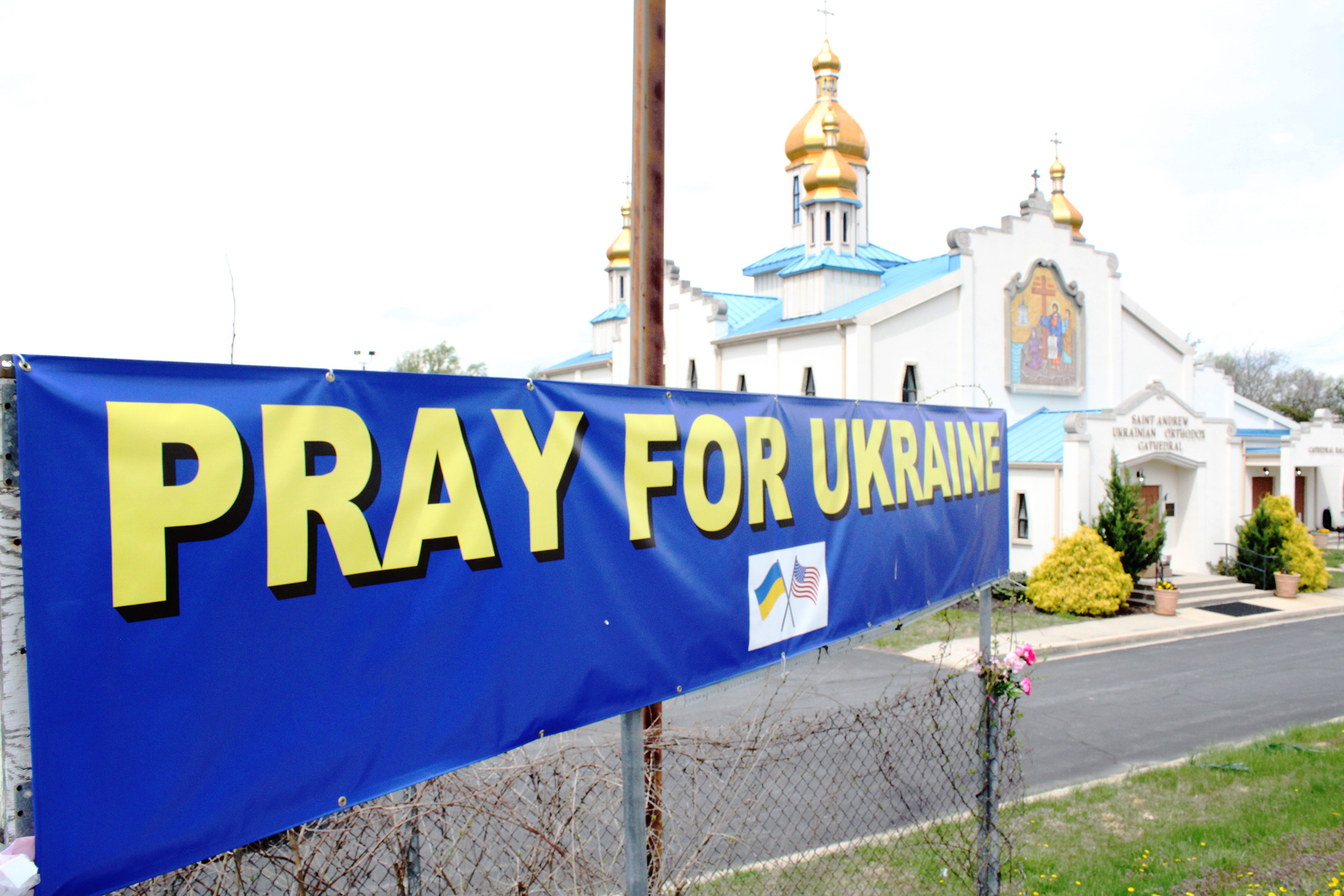
This article is part of a collection of work produced by young journalists. DCist/WAMU partnered with The Creative School, a nonprofit focused on empowering youth-led storytelling in Southeast D.C., to teach a foundations of journalism workshop during spring break. You can see all of the stories here.
During the first few weeks after Russia invaded Ukraine on Feb. 24, it seemed like the war was all that was being talked about. After weeks passed, people stopped talking about it, like it was less serious and like no lives were being harmed. But the war was getting worse. The prosecutor general of Ukraine told BBC that their office has opened more than 6,000 war crime investigations against Russia. The Kremlin has denied these accusations, according to the BBC.
So, I went to the Embassy of Ukraine and St. Andrew Ukrainian Orthodox Cathedral to ask how people felt about the war. (Three people interviewed at the embassy are identified by first name only. One would not provide their last name. For others, we forgot to ask or confirm.)
Wendy was standing in front of the Ukrainian embassy.
When asked about her perspective on the invasion of Ukraine, Wendy said, “I think … they have deep pain for their country and their nation, and it’s a very good opportunity for Ukraine people to unite because before they had some disagreement between themselves. But now they have the same enemy, Russia.”
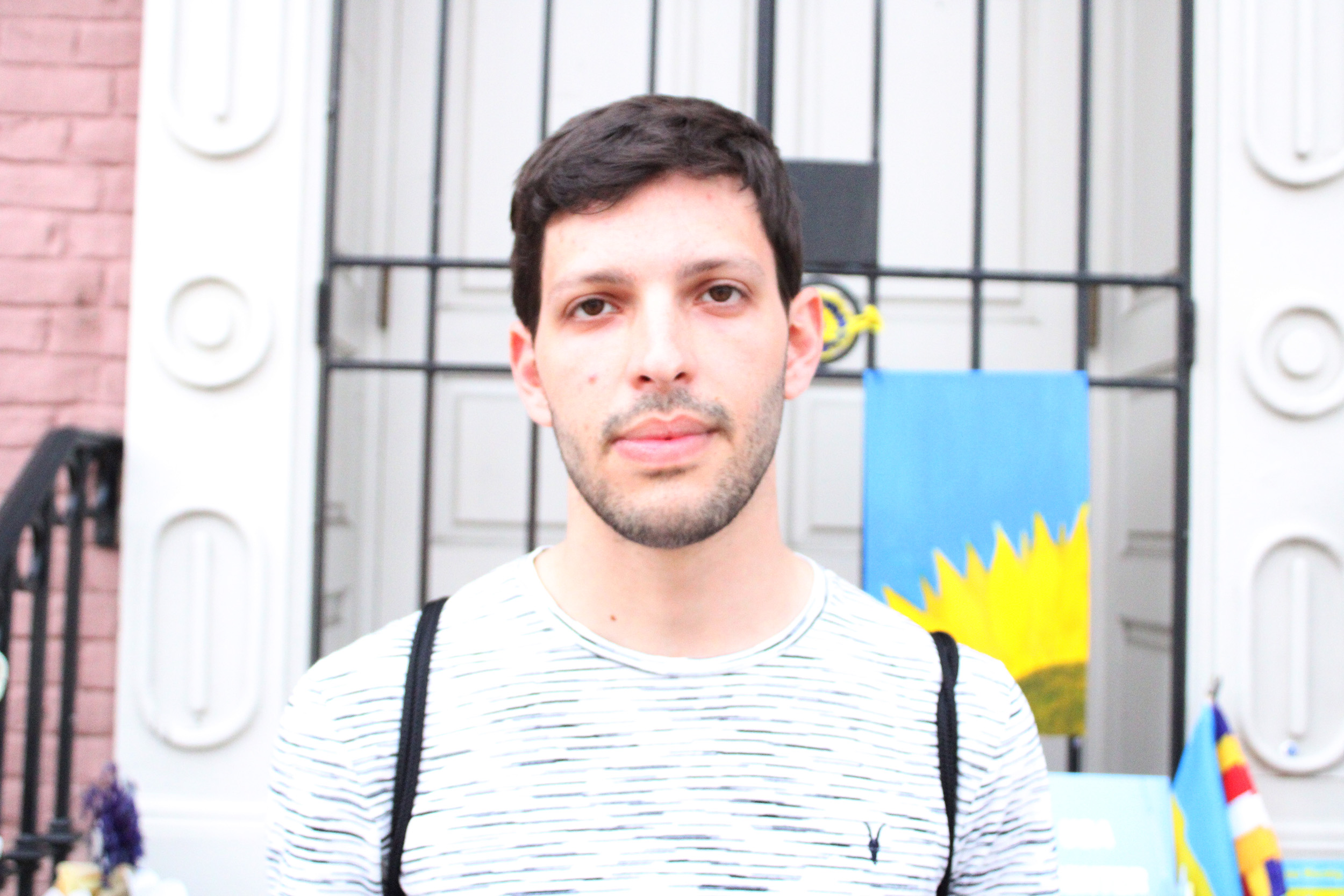
Neil is from Israel and was visiting Washington, D.C. for the first time. He has friends in both Russia and Ukraine, and shared his perspective on the invasion. “I think it’s horrible. Many innocent people are getting involved in between the fight and I think whenever there is war, eventually both sides will lose because people will die.”
Neil said the situation leading up to the invasion of Ukraine was like the story about the little boy that cried wolf, “and nobody came, and then the wolf came.”
He said the reality in Ukraine is very similar to what Putin described in all the threats that Russia made leading up to the attack. “I was among the people who said no, no way … no way [Putin] is going to do it. No way a country is going to invade another country in 2022.”
“The moment [Russia] invaded another country – that’s illegal.”
Noga was visiting the Ukrainian embassy in Georgetown with Neil. She feels powerless and wishes other countries would provide more help.
“We want to be on the right side of history. I mean, [governments] are involved, they’re doing what they can,” she said. “I understand they can’t get more involved because that would complicate things even more and the U.S. has a history of getting over-involved in wars and making things maybe sometimes worse, sometimes better. It depends, but it’s very complicated.”
Last week (more than a month after this interview), Congress passed more than $40 billion worth of humanitarian and military aid for Ukraine.
“And it’s very disheartening to see that there isn’t much you can do … as a regular person [besides] like donating money, reading up on history,” Noga said.
She praised Poland for taking people in. As of May 19, more than 6 million people have fled Ukraine since the war started and more than half – 3.4 million – have found refuge in Poland, according to the United Nations Refugee Agency.
“These are, you know, innocent children and their mothers that are just trying to evade war. And they didn’t do anything wrong … they’re just trying to be safe and keep their kids safe,” Noga said. “It’s really sad to see, but I’m glad that Polish people are even willing to take people into their homes. I’ve been seeing videos of just regular citizens taking in Ukrainians. It’s amazing to see people coming together. I hope it continues.”
Most of all, she hoped people won’t forget about Ukrainians. “The momentum … I mean, it’s already died down, but I hope it doesn’t die down too much because it’s still going on,” Noga said.
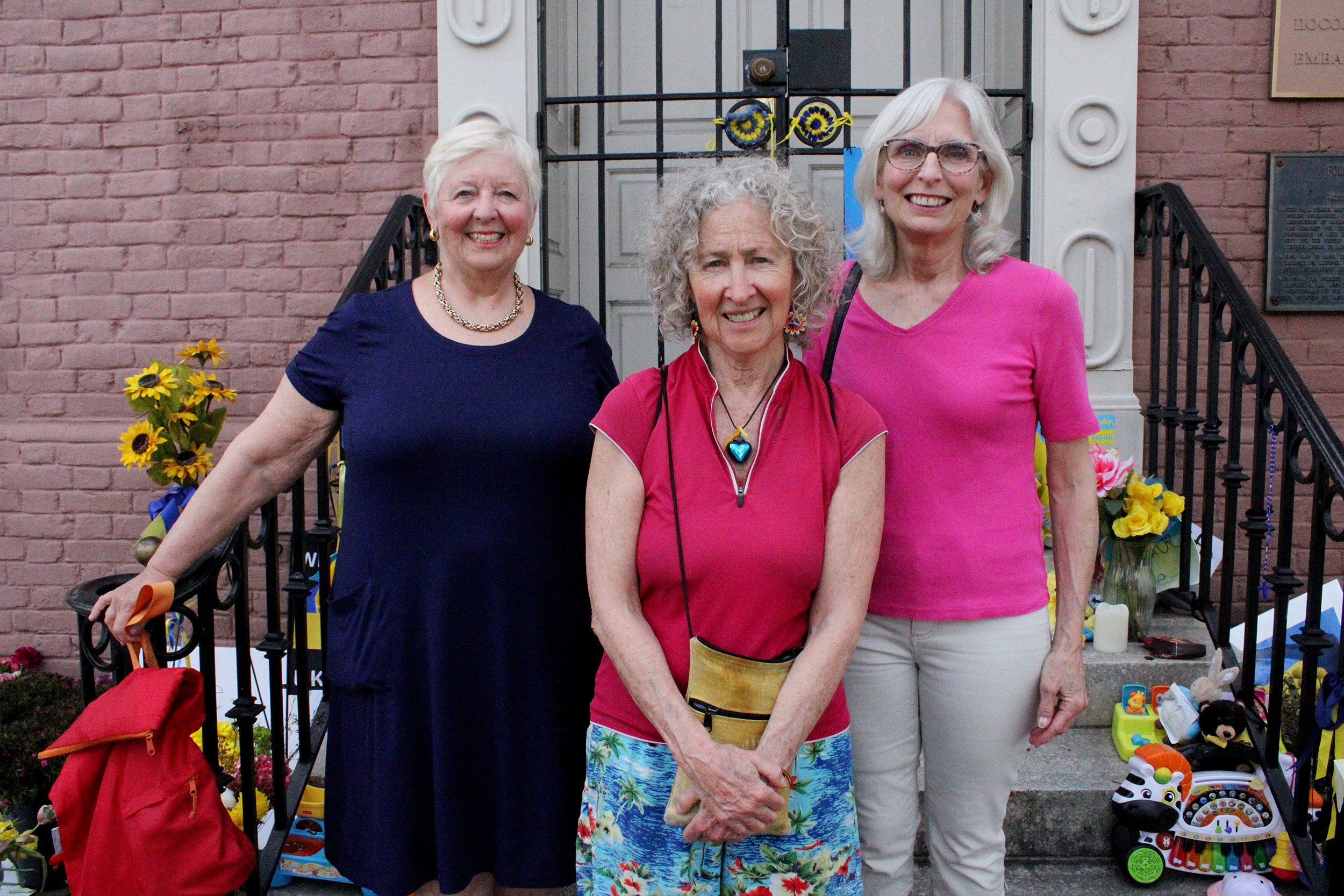
Three friends from Pennsylvania were also visiting the embassy that day. Joanne Sweeney said they feel “helpless, but at least we’re paying homage at the Ukrainian embassy.”
Pat Morrissey Jackson said the crisis is overwhelming. “Every day I look at the news and I don’t want to become numb to it because we’re distant from it. So, I just keep wanting to do something, however, to help out,” Jackson said.
About seeing the build-up of Russian troops on the Ukrainian border, Michele Palamountain said, “I felt helpless then and I feel helpless now. I mean, do I want to risk my son’s life to go in? Or in a nuclear Holocaust … that Russia could do?”
Palamountain wished something could be done other than sitting and watching everything happen.
“Otherwise, NATO would probably be chiming in. We’d be sending troops,” Palamountain said. “But because they have a nuclear power – it’s aimed at Washington, D.C. – we have to dance around it. But this is wrong. This is war crimes. This is genocide. This is invasion.”
Sweeney compared watching the buildup of Russian troops on Ukraine’s border to seeing two cars approaching each other on a collision course: waiting for something terrible to happen.
“Russia did not anticipate the reaction that they got from Ukraine. Ukraine is certainly giving them much more of a fight [than] they anticipated. They’ve sustained tremendous losses. And unfortunately, as a result, they are now going to fight back even harder. They’re now committing war crimes, atrocities,” Sweeney said. “And so, as we’ve all said, we’re sitting here thinking, ‘what can we do?’ We’re in a situation where there’s not much we can do to affect the outcome other than to vocalize our support.”
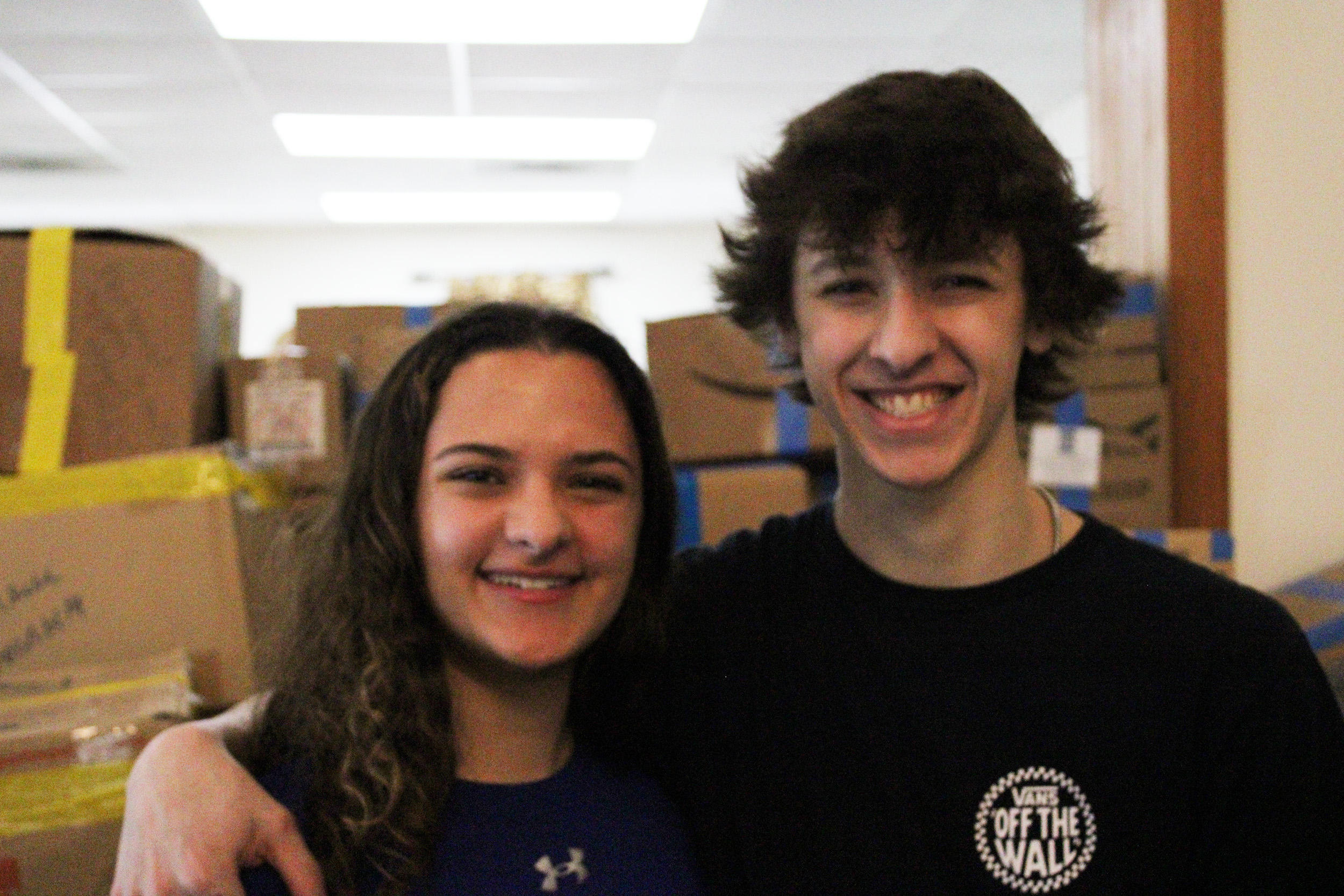
Alex and Emily Wieser, 18 year-old twins from Columbia, Maryland, volunteered to help organize and pack donations to ship to Ukraine at the St. Andrew Ukrainian Orthodox Church in Silver Spring.
“We have to put it all in boxes and then everything is going to be shipped to Ukraine in order to help Ukraine have this. Like all this food, all these medicines, everything that can help people in Ukraine that are struggling right now,” Alex said. “It’s very sad, you know … I can’t control anything, what’s going on. So doing all this volunteering, being able to help, I think is a really good way to help what’s going on in Ukraine.”
Emily talked about how attention fades as a crisis continues.
“With all these world events going on, there’s always that initial outcry. And everyone’s, ‘Oh my gosh, this happened. Where can I help?’” Emily said. “But after a month of that going on … it’s almost like people just move on. I’m not sure why, but…I think just that’s why we have stuff like this continuing to go on because … people can always have something to continue to help.”
The president of St. Olha Sisterhood at the cathedral, Marta Steliac, talked about the efforts of the church to support Ukraine during this rough time.
“We’ve [been sending donations] since 1991, since Ukraine became free in the first place, and we continue doing until now the war started,” she said. “But now, since the war started, we started to do it on a larger scale, as you can see here.”
Steliac talked about the many different ways they ship things. “If something is urgent … like medical stuff, we ship by air. If food, which is urgent too, but unfortunately is very heavy … none of the cargo planes will take it. So, we ship by sea, and we already send some packages by sea.”
As a leader in the church, she believes that the crisis in Ukraine gave them no choice but to scale up the donation program.
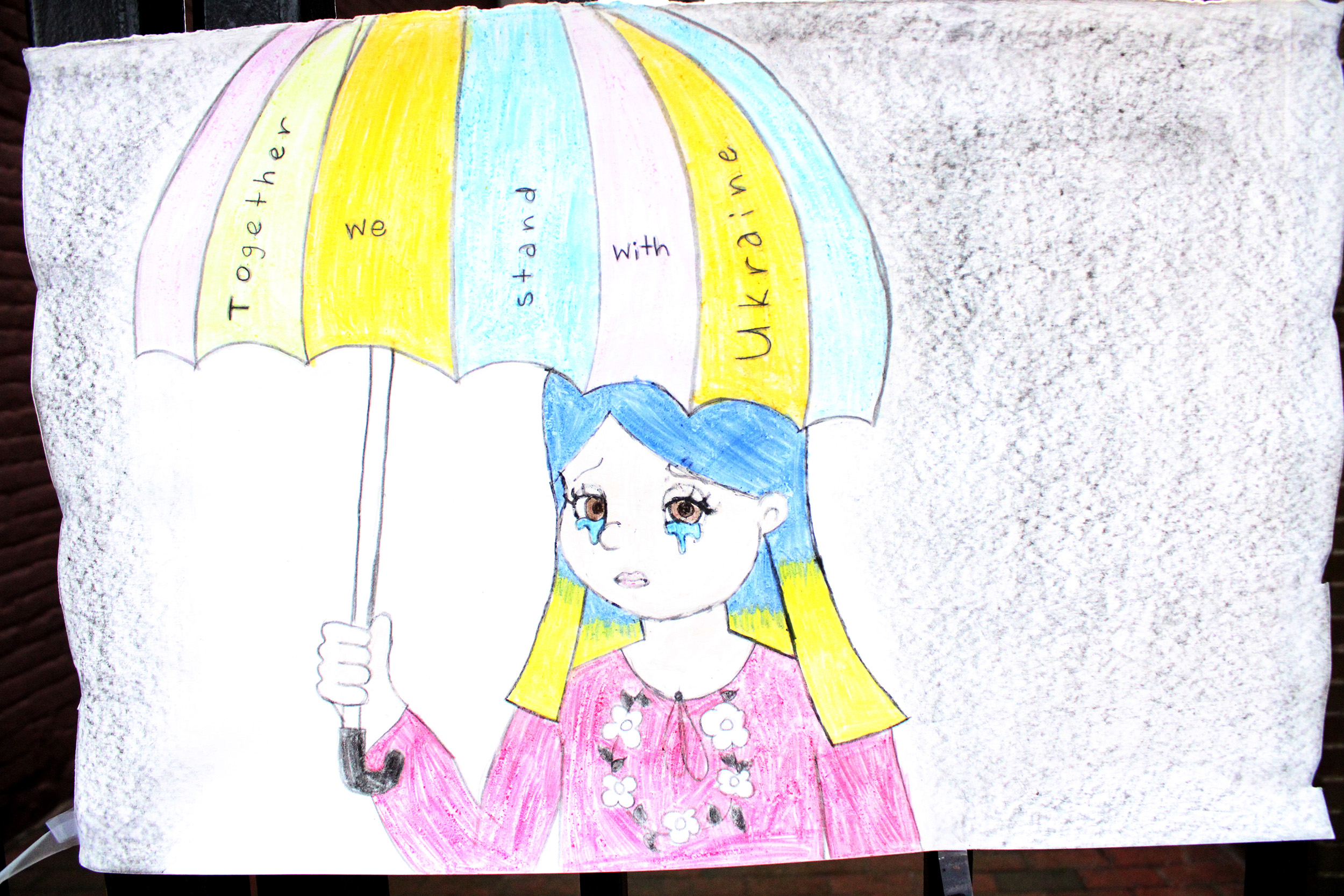
“The community around, which was very kind, showing their love and bringing stuff from … day one,” Steliac said, “dropping flowers by the door or dropping packages or anything that they thought we can use for Ukraine.”