Martin Austermuhle
 Colleen Grablick
Update: A D.C. Superior Court judge has dismissed a lawsuit seeking to stop Initiative 82, which would slowly phase out the city’s tipped-minimum wage, from getting on the ballot this November.
In the ruling, judge Hiram Puig-Lugo dismissed the plaintiffs’ (which included a local bartender, chef, and two groups linked to the hospitality industry) claims that the D.C. Board of Elections made any procedural errors in tallying signatures for the petitions needed to get the initiative on the ballot. The judge also dismissed the argument that the DCBOE denied a permitted watcher as signatures were reviewed.
“[The] plaintiff fails to show any prejudice, harm, or injury as a result of the procedures the Board followed,” reads the ruling.
Thus, Initiative 82 can stay on the November ballot.
Original:
The fight continues.
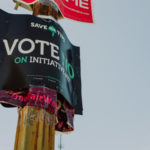
Opponents of a ballot initiative that would slowly phase out the subminimum wage that is paid to workers who collect tips have filed a lawsuit in D.C. Superior Court seeking to reverse a recent ruling by the D.C. Board of Elections that put the measure on the November ballot.
The lawsuit is yet another salvo in the years-long battle over the fate of the tipped wage in D.C., which voters chose to do away with in a 2018 vote before it was overridden by the D.C. Council.
In some jobs — largely those in bars and restaurants, but also in nail salons and parking lots — employers pay a subminimum wage of $5.05 an hour (to increase to $5.35 in July), and employees collect tips on top of that. If those tips don’t get them to the prevailing minimum wage of $15.05 (increasing to $16.10 in July), the employer has to cover the difference. Proponents say the wage lets employers keep costs down and allows some employees to make much more than the minimum wage; opponents say it creates pay disparities and can leave employees at the mercy of their bosses to get what they’re owed.
Through 2018’s Initiative 77, opponents of the tipped wage pushed to phase it out, and last year they said they would try again. Last month, what’s now known as Initiative 82 was cleared for the ballot.
But in the lawsuit filed late last week, a local bartender, chef, and two groups linked to the hospitality industry argue that the elections board made a series of procedural errors in tallying signatures from voters on the petitions that are needed to put an initiative on the ballot. (The bartender, Valerie Graham, has filed multiple lawsuits and challenges over the years to prevent the tipped wage from getting to the ballot.)
D.C. law requires that proponents of any ballot initiative get signatures from 5% of the city’s registered voters, while also getting signatures from 5% of voters in five of the city’s eight wards. The plaintiffs say the elections board improperly relied on a base count of registered voters from Dec. 31, 2021 when it should have relied on counts from a month later, after the boundaries of the city’s eight wards were redrawn as part of the redistricting process, and some voters were shifted from one ward to another.
They also say the board did not allow a representative from the No to I-82 group — which is linked to the Restaurant Association of Metropolitan Washington — to observe board staff as they reviewed signatures, and did not conduct proper analyses on samples of voter signatures submitted by proponents of Initiative 82.
“If BOE had utilized the right numbers in its certification analysis and followed its obligations under the D.C. Code and related regulations, BOE would have reached the determination that it should not grant ballot access to Initiative 82,” reads the lawsuit filed jointly by the Veritas Law Firm, which has long been tied to the city’s hospitality industry, and Richard Bianco, an attorney who has represented bar and restaurant owners.
A spokesman for the elections board said they had no comment as the matter is in litigation. In an email, Ryan O’Leary, the proposer of Initiative 82, said he was still reviewing the lawsuit but added that “this is just another baseless attack on workers and the D.C. government.”
A hearing on the lawsuit is scheduled for Sept. 2. Unless the matter is quickly resolved or dismissed before that, it could put the initiative in jeopardy since the elections board has to finalize ballots in mid-September ahead of the November general election.
Proponents of doing away with the tipped wage have also said that the D.C. Council could simply pass legislation doing so, but there has been no formal push for that. More lawmakers have said that if voters do approve Initiative 82 at the ballot box, they will let the decision stand instead of overriding it as they did in 2018.