 Olivia Gyapong
A new documentary debuting Saturday at the Martin Luther King Jr. Memorial Library takes on the complex history of the Barry Farm housing development in Southeast D.C.
Directors Samuel George of the Bertelsmann Foundation and Sabiyha Prince of the DC Legacy Project created Barry Farm: Community, Land and Justice in Washington, DC to educate people about the titular Black community as it undergoes a long-planned redevelopment, one that has already displaced many residents.
“I’m just hoping that we can create awareness for newcomers and also representation for folks who have been here for a long time,” says George. “Hopefully it can be a broader conversation about gentrification, about preserving the history.”
For Prince, this project is personal. The filmmaker and cultural anthropologist is a native Washingtonian whose family has lived in the District since the beginning of the 20th century. “There’s lots of aspects of our history and culture that are overlooked, and I was excited to be in a position to amplify [them],” she says.

The 50-minute film delves into the historic Black enclave’s strong legacy of resilience, starting with its roots as a home for newly freed Black Americans in the 1860s on the former farmland of slave owner James Barry. The freed slaves worked to create a successful neighborhood that fostered a sense of community, one that eventually helped give rise to the Civil Rights movement in the 1960s and the incubation of Go-Go music in the 1970s.
In every chapter of the film, a different vignette illustrates Barry Farm’s significance to multiple generations of Black Washingtonians. One of the stories focuses on residents’ recent battle to stop the complete demolition of the original Barry Farm settlement and protect the remaining buildings as historic sites.
That fight continues today, as residents look to be heard on what to do with the five buildings that were granted protected status. Ideas include creating a museum that would preserve the homes in time.
In a related discussion, the documentary highlights what is top of mind for many former Barry Farm denizens: whether ousted residents will be able to return to the updated development if there are a decreased number of affordable housing units, as is envisioned in the current plan.
The documentary also touches upon the hardships Barry Farm has faced with drugs, unemployment, dilapidated dwellings and a lack of community facilities. The filmmakers, however, intentionally shift the blame for these issues away from community members, and do not make these struggles the central focus of the documentary.
“[We’re] maybe avoiding some of the things that have gone on,” Prince acknowledges. “But there’s also a vulnerability that people have experienced that is often not framed appropriately.”
The film has been a journey for Prince, who says she might shed a few tears at the premiere. “I’m really trying to figure out how I’m going to hold it together on Saturday. Every time I see it, there [are] certain moments in the film that I get choked up,” she says.
Filming Barry Farm was an emotional experience for those featured in it as well. Detrice Belt, president of advocacy group Barry Farm Tenants and Allies, was interviewed throughout the documentary.
“I’m nervous, but I’m always trying to spread the word,” Belt says of seeing the film for the first time. “I know not only in my community is this happening, I know it’s happening all over the world for a lot of low-income families, so I’m hoping this documentary reaches enough people for someone to do something.”
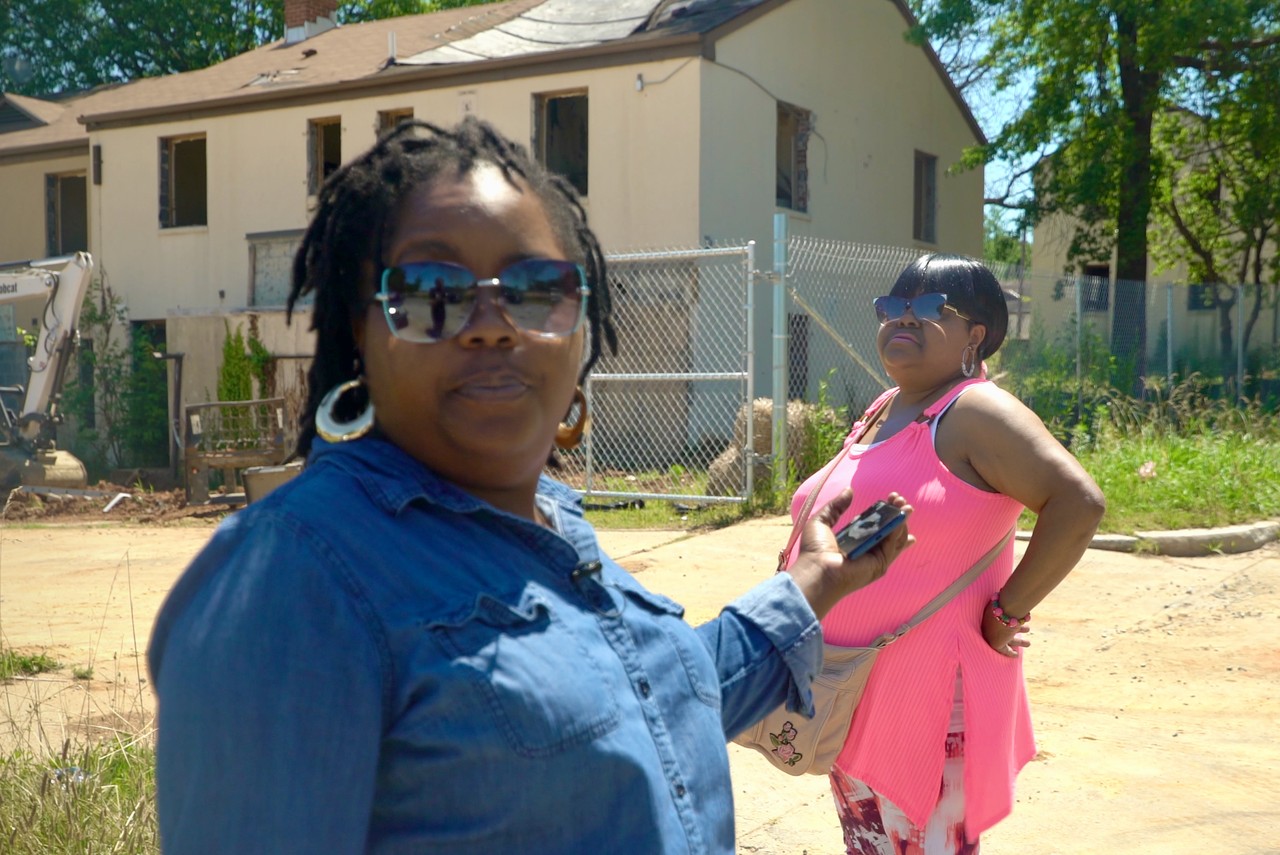
Prince hopes the film will correct people’s misconceptions about Barry Farm and other D.C. neighborhoods like it, as well as provide a blueprint for those facing the demolition of their homes.
“I think there are definitely lessons in this case for local examples,” Prince said. “The DC Legacy Project envisions this film as a tool to be used to both educate people and mobilize them around pushing for something that is going to be for the public.”
Much like what the activists it features have tried to do for Barry Farm itself, the documentary aims to preserve its legacy for generations to come.
“[D.C.] is one of the most important cities of African American heritage in the country, and one of the most important neighborhoods in that city is Barry Farm,” said George. “If ever there was an important time to tell this story … to remind each other what this neighborhood is, I think that’s what made this the moment for the film.”
Barry Farm: Community, Land and Justice in Washington, DC premieres at 4 p.m. June 18 at the Martin Luther King Jr. Memorial Library as part of the DC Public Library’s Democracy Docs series. Tickets are free, but register here to reserve them. Organizers plan other screenings to be announced, and eventually will make it available for streaming on the Bertelsmann Foundation website.