Jacob Fenston
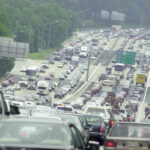
Leaders from around the D.C. area voted Wednesday to adopt aggressive greenhouse gas reduction goals for the transportation sector, pledging to cut carbon emissions by 50% by 2030. Reaching that goal would require building more housing in walkable, transit-friendly areas, disincentivizing driving in favor of walking, biking and public transportation, and the rapid adoption of electric vehicles.
The vote, at a meeting of the regional Transportation Planning Board, came as a surprise to some observers. Previously many leaders, particularly from car-dependent suburbs, scoffed at a 50% goal as unachievable. The board was set to vote on a much more modest proposal to cut emissions by 32%, which planners said was realistic yet still ambitious. That goal was upped to 50% through an amendment put forward by Montgomery County.
The board, part of the Metropolitan Washington Council of Governments, is made up of elected officials from each of the jurisdictions in the D.C. region, and its planning decisions guide which transportation projects get approved for federal funding.
Ahead of the vote, some board members argued that an ambitious goal, without a clear pathway to get there, would be counterproductive. Neil Harris of Gaithersburg said too high a target would be seen as just “political numbers.”
“I hate to be a curmudgeon, but management science has shown that setting goals that are unachievable leads the effort down the wrong path because people don’t take it seriously,” said Harris, who voted against the 50% goal.
Board Chair Pamela Sebesky, of Manassas, echoed that sentiment. “I do have concerns on credibility when we’re picking things that we know from the beginning are not in any way achievable,” Sebesky said.
But others argued that climate goals should be aspirational. “I have a high respect on aspirational when it comes to dealing with climate change,” said Takis Karantonis of Arlington. “It is clear that any goal that we set right now has to be aspirational to a certain degree because we don’t always know how the path looks in front of us.”
“Aspirational is a serious business here. It’s not just a wish list,” Karantonis said.
The board has identified 14 strategies to cut emissions from transportation in the region. Jurisdictions have already agreed to begin implementing seven of those strategies, while continuing to explore the other seven.
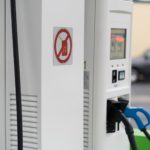
The strategies that are ready to be adopted include making half of new cars electric or fueled by other carbon-free sources by 2030; building an electric vehicle charging network; completing a regional trail network to boost biking and walking; building 77,000 new homes around transit hubs; and cutting travel times on bus and rail. Other strategies to be further explored include changes that could be more expensive or politically unpalatable, such as a tax on vehicle miles traveled, making all public transit free, and charging a fee to drive in downtown D.C. and other activity centers.
But even implementing all of those strategies in the next eight years would not get the region to a 50% emissions cut.
Still, advocates cheered the adoption of the goal, even without a clear path to implementation.
“It was a historic vote today,” said Stewart Schwartz, executive director of the Coalition for Smarter Growth. “As they said in the movie, failure is not an option. We have just eight years to slash our emissions to avoid truly runaway climate change.”
Schwartz said there are lots of ways the region can cut transportation emissions that don’t rely on new technology. “It’s not only the ability to accelerate adoption of electric vehicles. But it’s also simply going back to the great communities we have built in the past: walkable, transit-accessible, inclusive communities.”
Josh Tulkin, director of the Maryland chapter of the Sierra Club, lauded the emissions goal, but noted that in the same meeting the board also approved updates to its long-range plan including a massive expansion of the Capital Beltway and I-270 in Maryland.
“The commitment to the goal is great, but at some point we need to take a look at projects which are inconsistent with that goal and be willing to put our foot down,” Tulkin said.
Regionally, transportation is the largest carbon emitting sector, according to greenhouse gas inventories by the council of governments.
The region already has multi-sector emissions reduction goals in place, but previously did not have a goal specifically for the transportation sector.