Amanda Michelle Gomez
More details of the multibillion-dollar redevelopment of D.C.’s Union Station were unveiled on Thursday, including renderings of what modernized tracks and platforms, as well as a new train hall and mezzanine could look like.
In a presentation to the U.S. Commission of Fine Arts, the architectural firm for the Washington Union Station Expansion Project stressed the importance of creating a bright and expansive space that is more accessible for visitors, by adding a new train hall that would connect people to all the different modes of transportation offered at the station, and new entrances so people can enter from different parts of the city, including H Street Corridor.
“The hope is to take what is currently a below ideal space for passengers, and open that up, and get on and off buses and trains in a straightforward fashion,” said Nikolas Dando-Haenisch of Grimshaw Architects during the presentation. The Commission of Fine Arts reviews and approves design proposals for select public and private properties in D.C.
The Federal Railroad Administration — part of the U.S. Department of Transportation — owns Union Station, so it is leading the transformation of the nation’s second-largest rail hub. But many government agencies and private entitles are also involved. Amtrak is also involved in the project because the rail service owns the tracks and leases other portions of the station. (Amtrak has tried to take over Union Station in its entirety through eminent domain.) The expansion of Union Station is costly, so parties involved are eyeing federal dollars from infrastructure legislation signed into law by President Joe Biden last year.
FRA director of communications Dan Griffin, says it’s premature to estimate costs and the project timeline at this time. An earlier draft of the project estimated the renovation by 2040 and estimated costs to be around $10 billion.
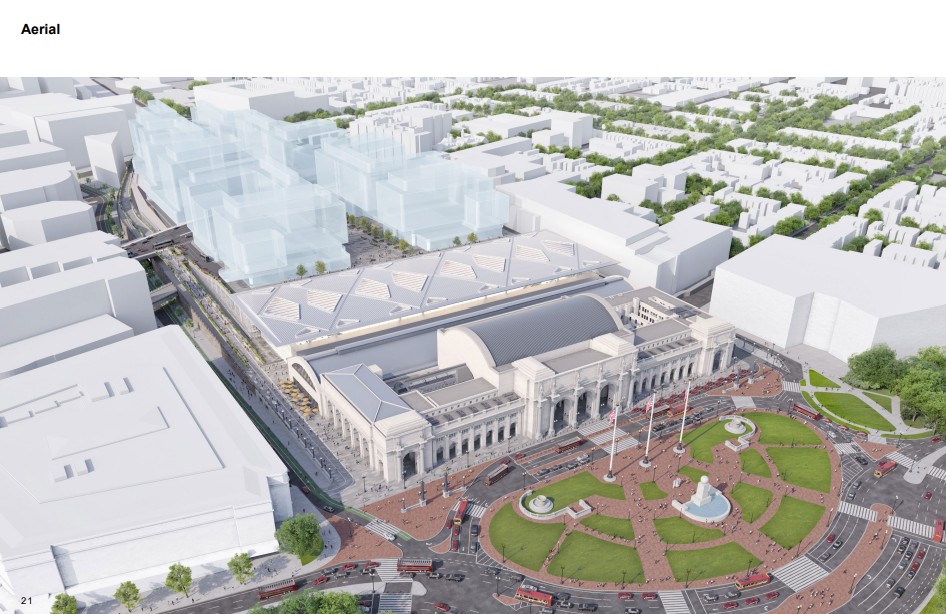

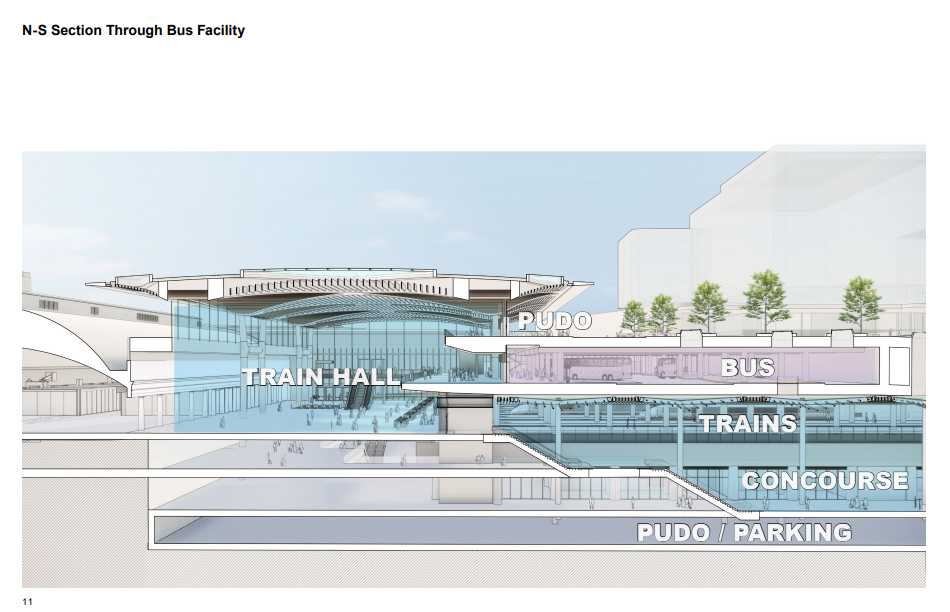

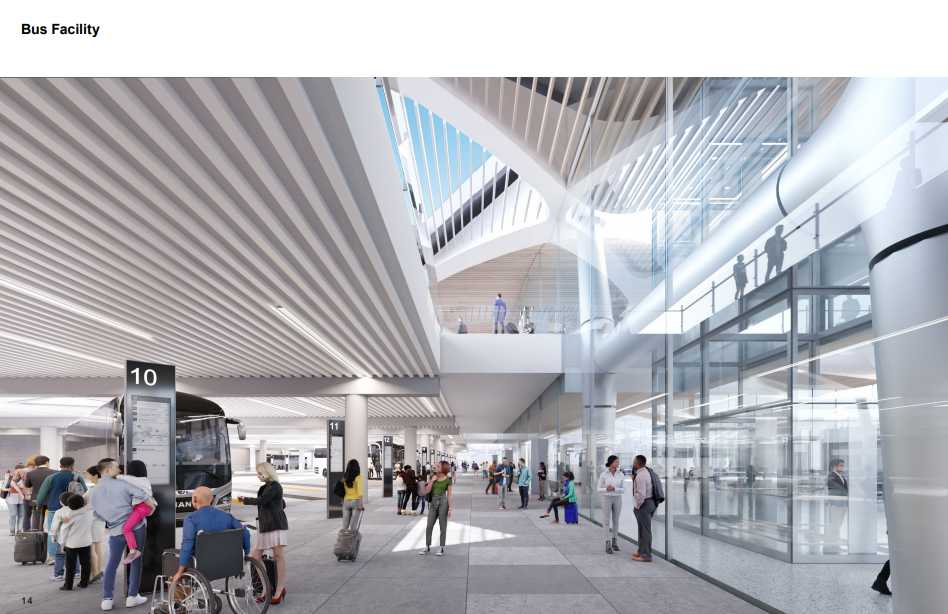
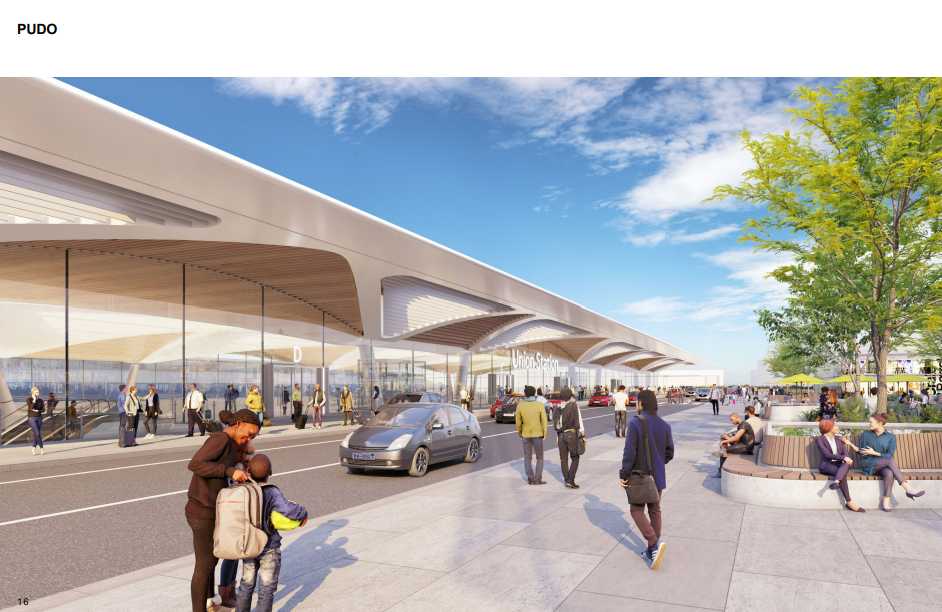
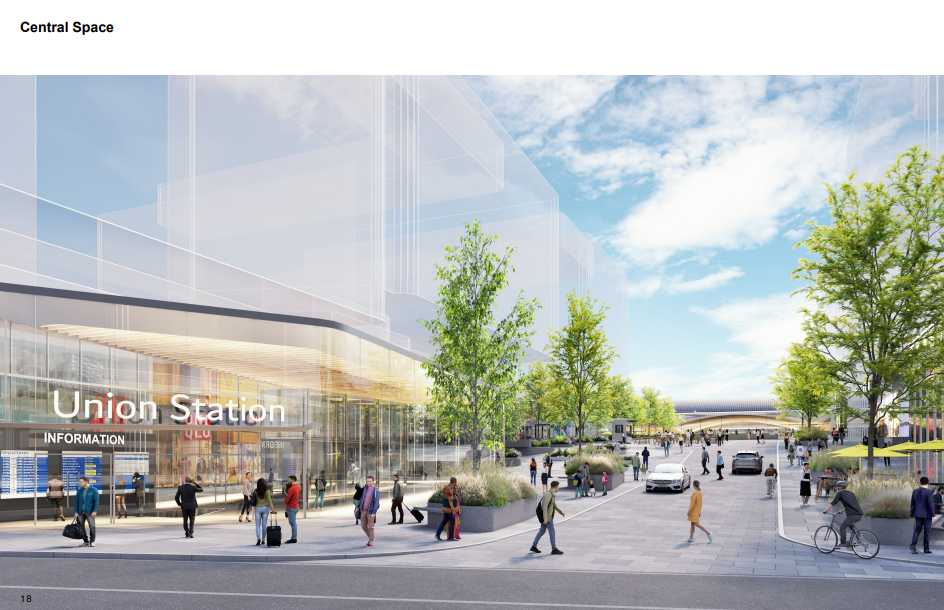
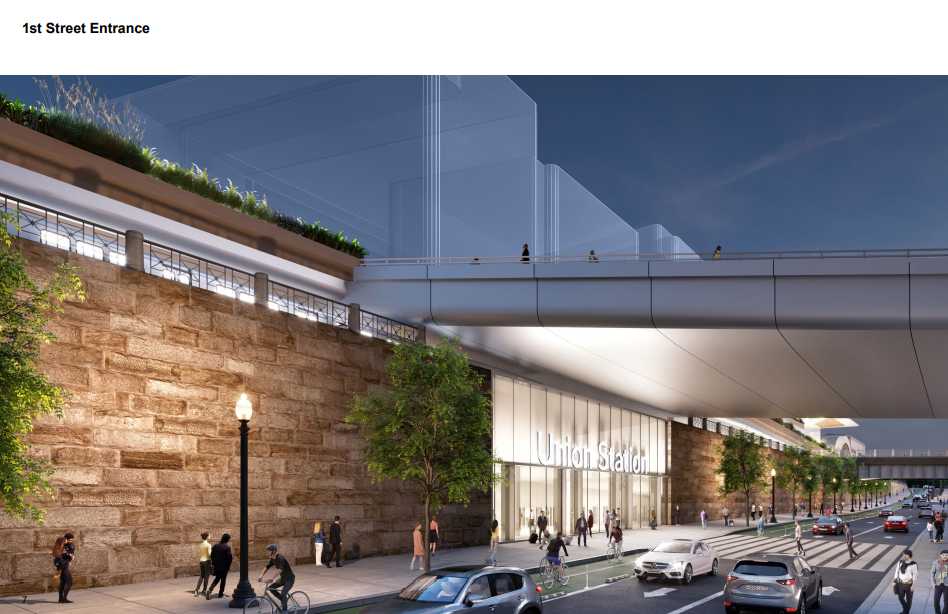
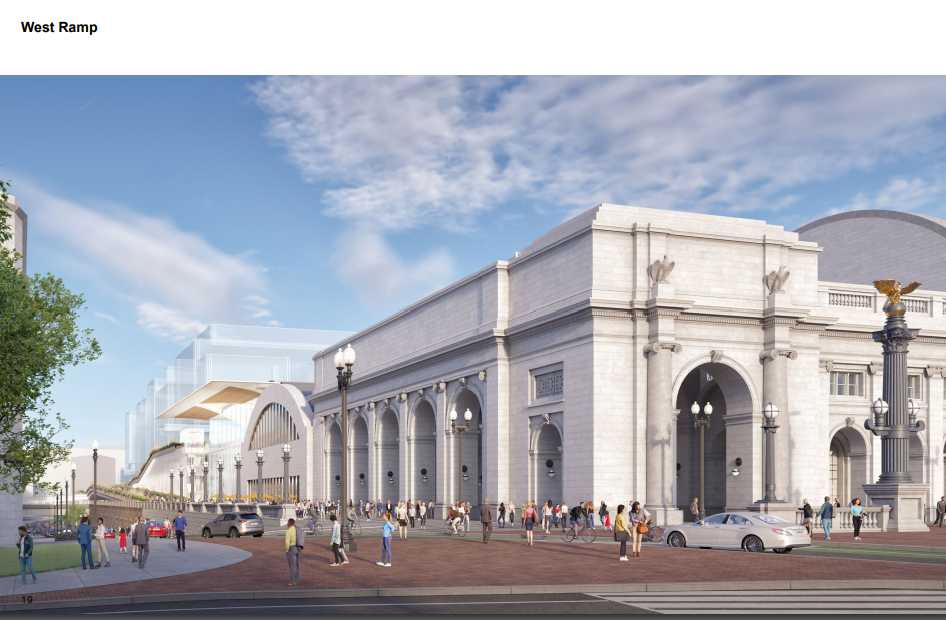
According to the renderings and animated video, visitors could enter the redeveloped Union Station from the historic building that’s currently the face of Union Station or newly-constructed entrances all around the station, to alleviate traffic at Columbus Circle. The project would make no changes to the historic building, according to Dando-Haenisch. The century-old building was designated a historic landmark in 1964.
Visitors can make their way from the historic building to a new train hall, which is designed for daylight and for passengers to more easily spot where to catch their bus or train. The station also connects to Metro and DC Circulator services.
Parking is located at the lowest level, along with the majority of the pickup and drop-off area and two of the four concourses lined with retailors. From there, visitors have their pick of escalator or elevator to travel up to the train station. And above the train station is the bus facility. The project assumes increased use, so bus and train capacity has been added. The highest level offers an outdoor deck where people can be dropped off or picked up, or simply leisure along some green space.
Developer Akridge plans to create a mix of residential and commercial buildings next to the center space with greenery, along the 15 acres of air rights north of Union Station. However that $3 billion project called Burnham Place is contingent on the redevelopment of the station.
The latest design accounts for public feedback, including from local government officials who were critical of an earlier proposal that had a massive parking garage. Members of the Commission of Fine Arts seemed to largely support the plan, however a few voiced reservations that the historic building would become just a passthrough to the new train hall.
The Federal Railroad Administration needs to complete more steps, including an environmental impact statement, before the project enters the final design phase and construction, according to Griffin.