Martin Austermuhle
After months of candidates sniping at each other and D.C. mailboxes being stuffed with an inordinate amount of political mailers, Primary Day is finally upon us.
You may be the type of voter who returned their mail ballot weeks ago or voted early in person — as of Sunday, this is more than 63,000 of you — but if you’re a little more of a voting traditionalist and trying to get up to speed before heading to a polling place today (they open at 7 a.m. and close at 8 p.m.), below is everything you need to know.
Wait, a primary?
Yes. If you’re an independent voter, none of this applies to you. But if you’re registered as a Democrat, Republican, Statehood Green, or Libertarian, you have the chance to vote for party nominees for a number of offices. And depending on what party you’re registered with, the number of choices you have will vary. Registered Democrats, for example, will have loads of candidates to choose from for just about every office on the ballot. Libertarians, not so much.
Remind me, what elected offices are on the ballot?
Below are the offices up for grabs. But as we just mentioned above, some of the smaller political parties didn’t put up any official candidates. In those cases, voters are limited to writing in a candidate should they so choose.
- Mayor: The city’s chief executive. There are four Democratic candidates (Mayor Muriel Bowser, Councilmember Robert White, Councilmember Trayon White, and James Butler) and one Republican (Stacia Hall).
- Attorney General: The city’s chief law enforcement officer, who is independent of the mayor. The Democratic candidates are Bruce Spiva, Brian Schwalb, and Ryan Jones.
- D.C. Council Chairperson: The leader of the D.C. Council. There are two Democratic candidates (Chairman Phil Mendelson and Erin Palmer) and one Republican (Nate Derenge).
- Delegate to Congress: The city’s non-voting representative in the House. There are three Democrats running (Del. Eleanor Holmes Norton, Wendy Hamilton, and Kelly Mikel Williams) and one Republican (Nelson Rimensnyder).
- At-Large Councilmember: One of four at-large members of the council. The winner of each party primary will then go up against independent candidates in November, when voters will be able to choose two candidates on their ballots. There are four Democrats running (Incumbent Councilmember Anita Bonds, Dexter Williams, Lisa Gore, and Nate Fleming) and one Republican (Giuseppe Niosi).
- U.S. Shadow Representative: This is part of D.C. three-person “shadow” delegation to Congress, or the congressional delegation-in-waiting should D.C. ever get statehood. These are not paid positions, and are largely meant to advocate for statehood. There are two Democrats running (Oye Owolewa and Linda Gray).
The following races will be limited to voters in those specific wards:
- Ward 1 representative on the D.C. Council: Three Democrats are running (Councilmember Brianne Nadeau, Sabel Harris, and Salah Czapary).
- Ward 3 representative on the D.C. Council: Six Democrats (Eric Goulet, Matt Frumin, Beau Finley, Phil Thomas, Monte Monash, and Deirdre Brown) and one Republican (David Krucoff) are running. Three Democrats (Tricia Duncan, Ben Bergmann, and Henry Cohen) dropped out of the race, though their names remain on the ballot.
- Ward 5 representative on the D.C. Council: Seven Democrats are running (Faith Gibson Hubbard, Zachary Parker, Vincent Orange, Gordon Fletcher, Kathy Henderson, Art Lloyd, Gary Johnson) and one Republican (Clarence Lee Jr.) are running.
- Ward 6 representative on the D.C. Council: A sole Democrat (Councilmember Charles Allen) is in the race.
There are also party leadership positions up for grabs, largely on the Democratic side.
Can you quickly tell me something about all the candidates? Please?
Quickly? No. But thankfully there are some solid voter guides out there you can peruse. Here’s ours.
You should also check the Washington Post, Axios, 730DC, The Washington Informer, and Street Sense Media. The City Paper also covered the mayor’s race and the At-Large Council race.
Where can I go vote?
There are 90 vote centers across D.C., opening at 7 a.m. and closing at 8 p.m. You can vote at any of them; your residential address doesn’t dictate where you’re supposed to vote.
Is it too late to use my mail ballot?
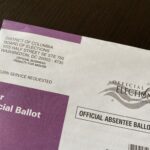
Not at all. You can drop off your mail ballot at any of the 55 drop boxes around town, provided you do so before polls close at 8 p.m. The same goes for vote centers, where you can drop off your ballot any time before they close the doors. You can even drop it in the mail, but it has to be postmarked by the end of the day for it to be counted once it is received — so your best bet would be to hand it to a postal employee during the post office’s business hours. (D.C. law gives until June 28 for the ballot to be received so it can be counted, provided it is postmarked by Election Day.)
I returned my mail ballot but I worry it hasn’t been received. What do I do?
First off, here’s D.C.’s handy ballot tracker.
There have been reports of voters who mailed their ballots in, only to see that the ballot tracker says that the U.S. Postal Service has not delivered them to the elections board. While ballots postmarked by June 21 can be accepted by the elections board through June 28, any voter who doesn’t want to leave this to chance is allowed to go to a vote center and cast a ballot there. Fear not, this isn’t fraud — the city’s electronic poll books will record where and when you vote. So if you vote in person after having sent in a mail ballot that hasn’t been received yet, then the system will know to discount that mail ballot if it comes in later.
There have also been some voters who dropped their ballot in a drop box and say the ballot tracker hasn’t yet updated to reflect that it has been received. As of Monday the elections board said they were trying to determine the cause of the processing delay, but staff told DCist/WAMU that ballots left in drop boxes are in the board’s possession and will be counted.
You can reach out to the board by calling (202) 727-2525, or by sending them a message via Twitter.
I voted for candidates who later dropped out. Is there a do-over?
This applies on the Democratic side of the Ward 3 race, where last week three candidates dropped out even though voting had already started. There’s no current way to take back a vote, so any votes those candidates received will be duly counted. If you’re a Ward 3 Democrat and plan on voting Tuesday, just remember that Tricia Duncan, Ben Bergmann, and Henry Cohen have dropped out.
I moved to D.C. recently and really want to vote. Is it too late?
Not at all — D.C. offers same-day voter registration. You can head to any vote center to register, just bring a form of identification that shows where you now live in the city. (The list of acceptable forms is here.) Even if you don’t have ID you’ll be able to cast a provisional ballot; this just means you’ll have to show up after the election to verify your residence in order for your vote to be counted.
I voted! When can we expect results?
The D.C. Board of Elections processes mail ballots and early in-person votes first, so it will release the results of those votes soon after polling places close at 8 p.m. (Provided everyone has voted; anyone standing in line when polls close will still be allowed to vote.) After that, each vote center will start tabulating its results and reporting them back to the elections board to be published online. We’re not going to predict how quickly or how slowly this could go; sometimes it’s pretty fast, other times it’s pretty slow.
But it’s always worth remembering this: no results are final on Primary Day, or even the days afterwards. That’s because D.C. allows seven days for mail ballots to come in, so if a race is particularly close, it could remain undecided for more than a week after the voting happens.
What’s next?
If you simply can’t get enough of local elections and stacks of political mailers, you’ll only have to wait a few weeks before the entire thing starts up again. That’s because there’s still a general election to come in November, and the winners of the June 21 primary are merely their party’s nominees for specific offices. Independent candidates are already starting to toss their hats in the ring, and this will be most evident in the race for one of two At-Large seats on the council. (By law, one seat is reserved for a member of a non-majority party, so no Democrats are allowed to run.) And while it is true Democrats who win their primaries tend to cruise to victory in November, it’s not written in stone.