Amanda Michelle Gomez
 Margaret Barthel
 Colleen Grablick

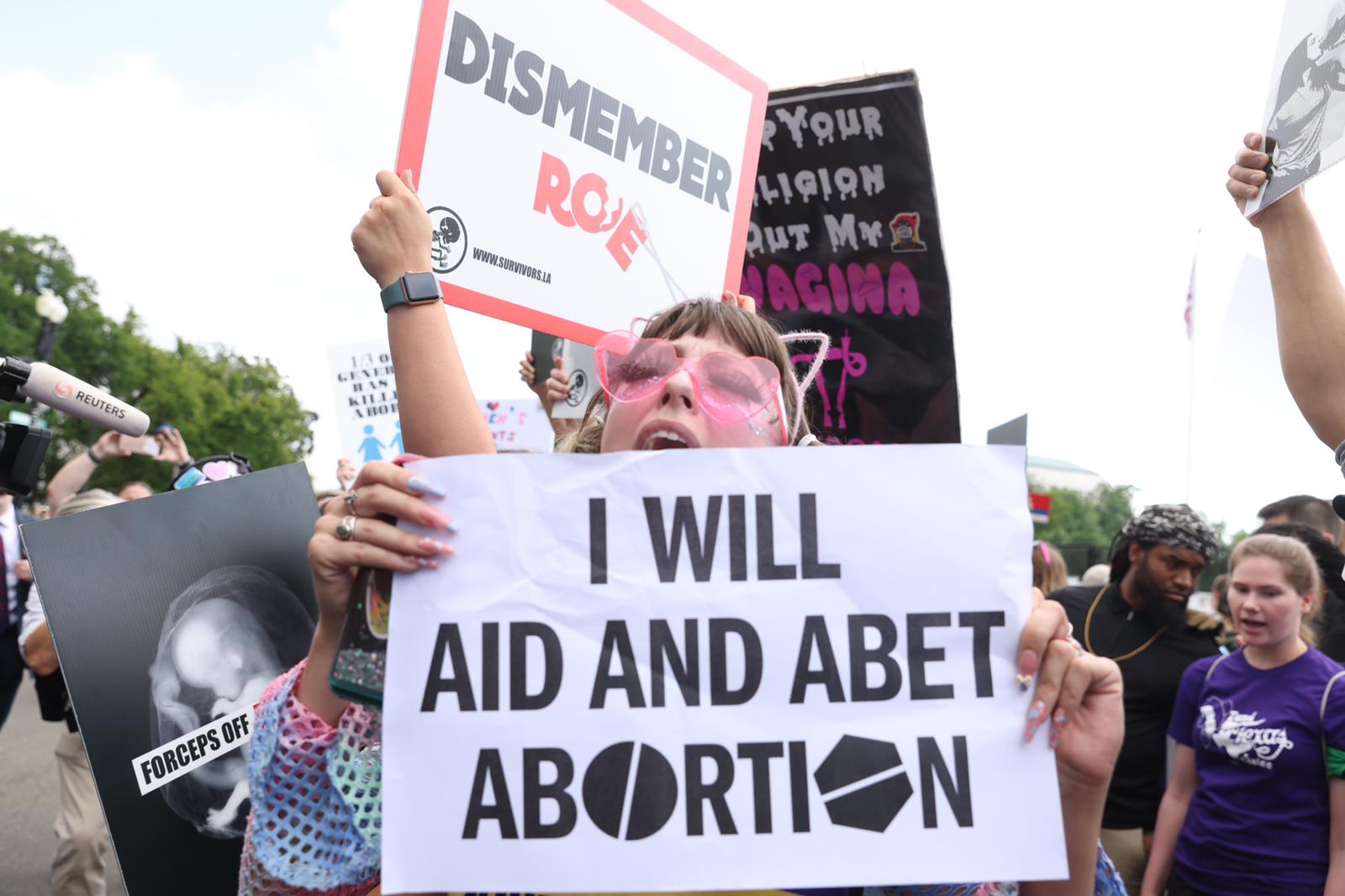
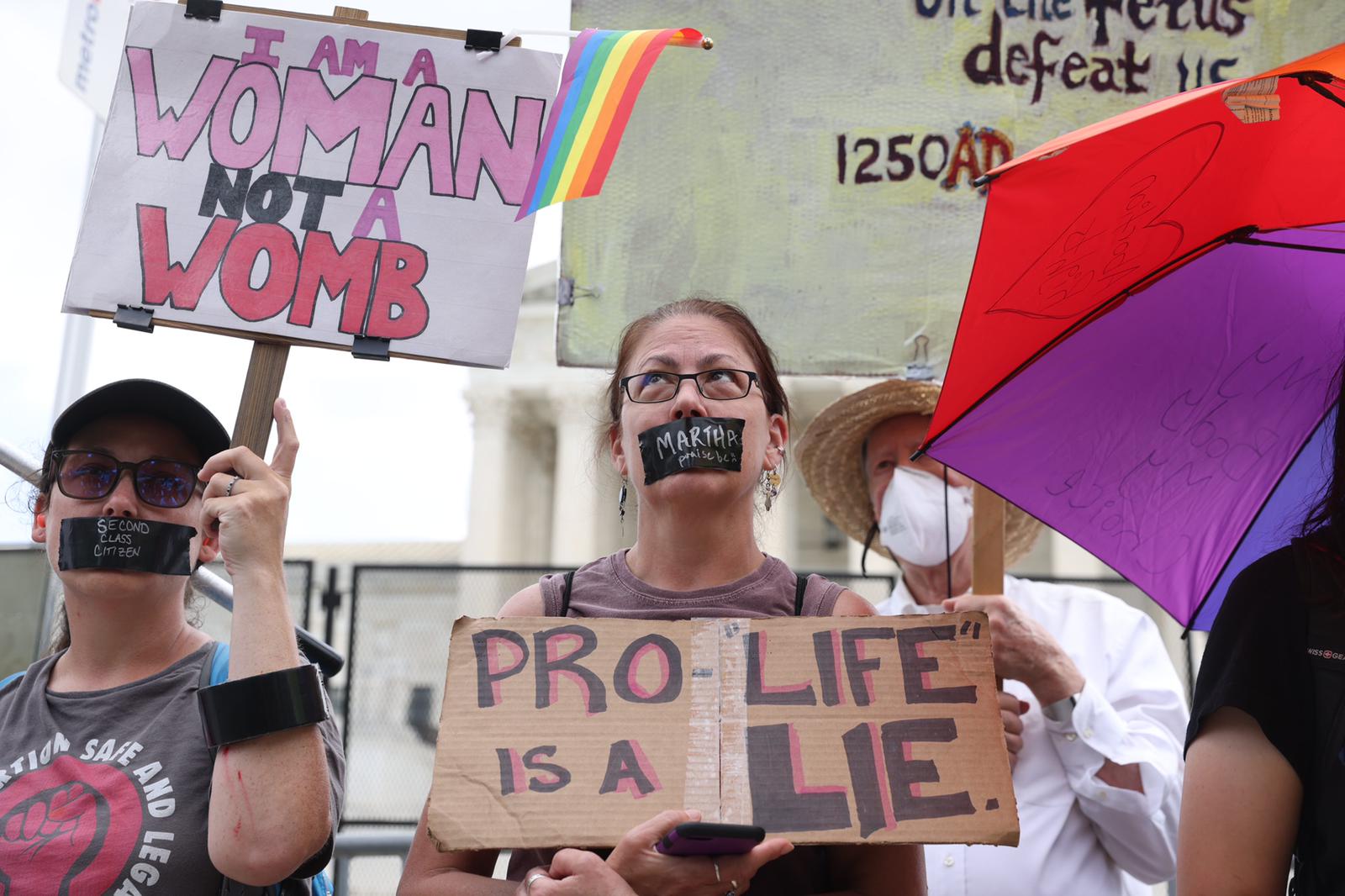

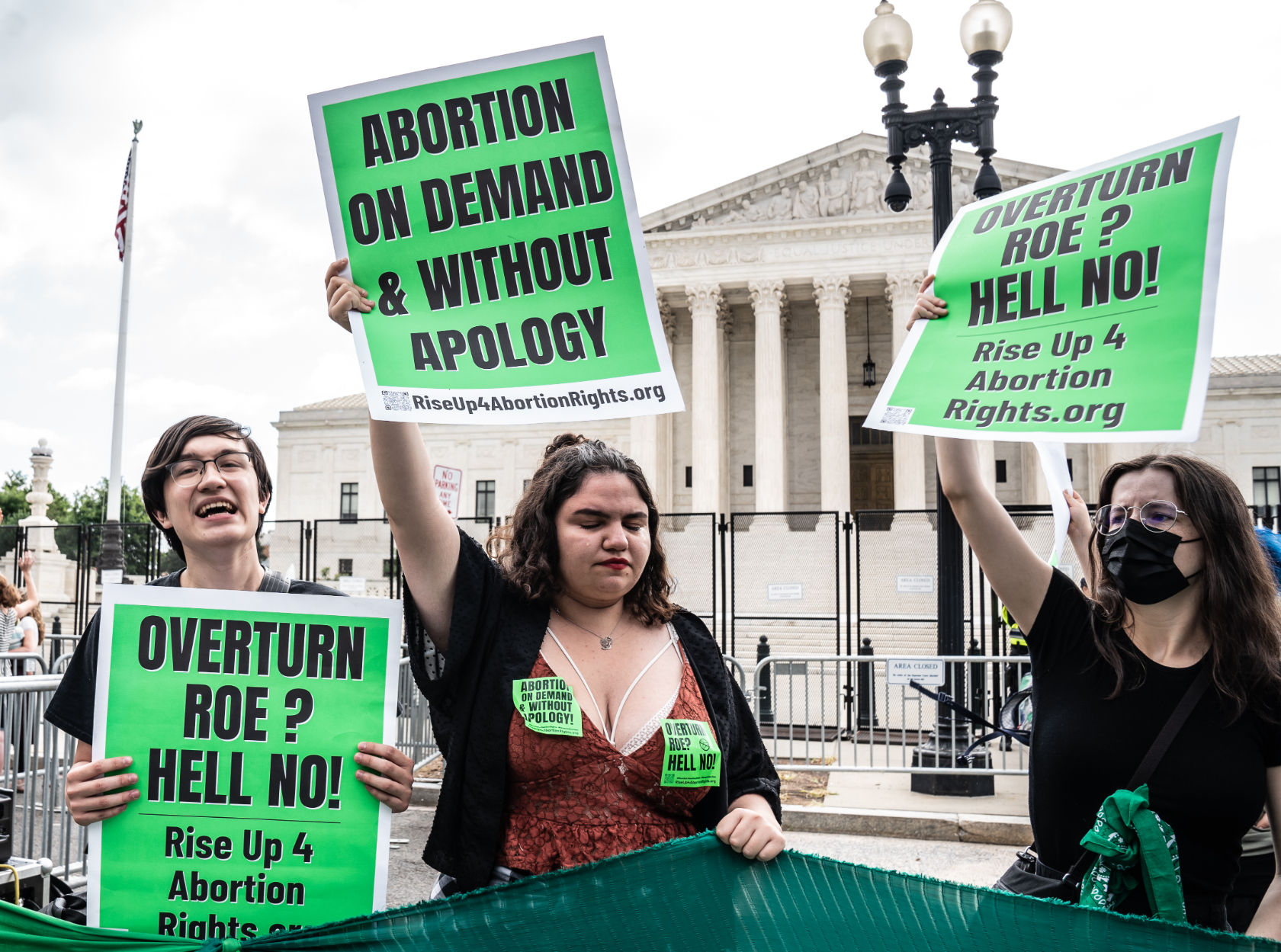
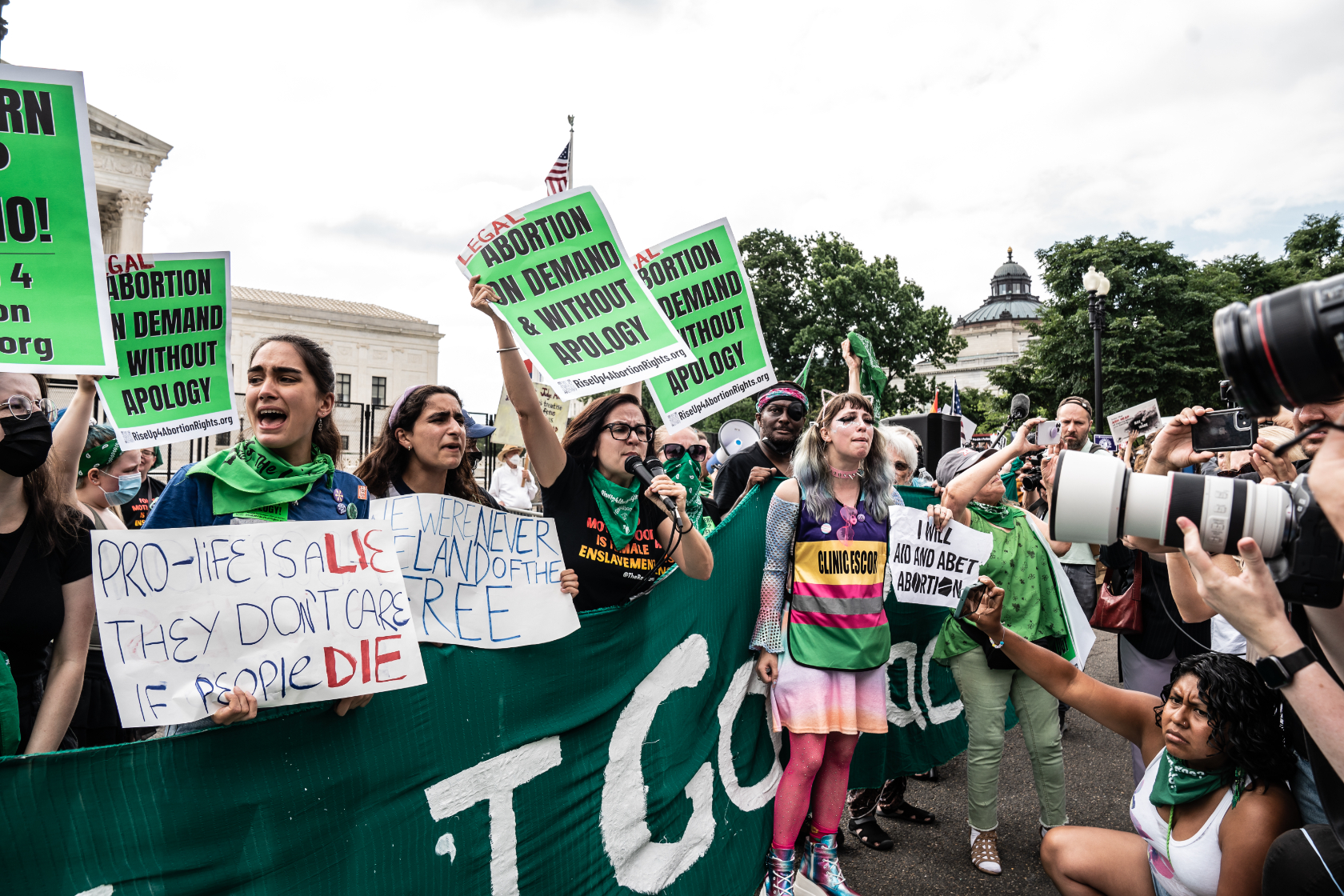
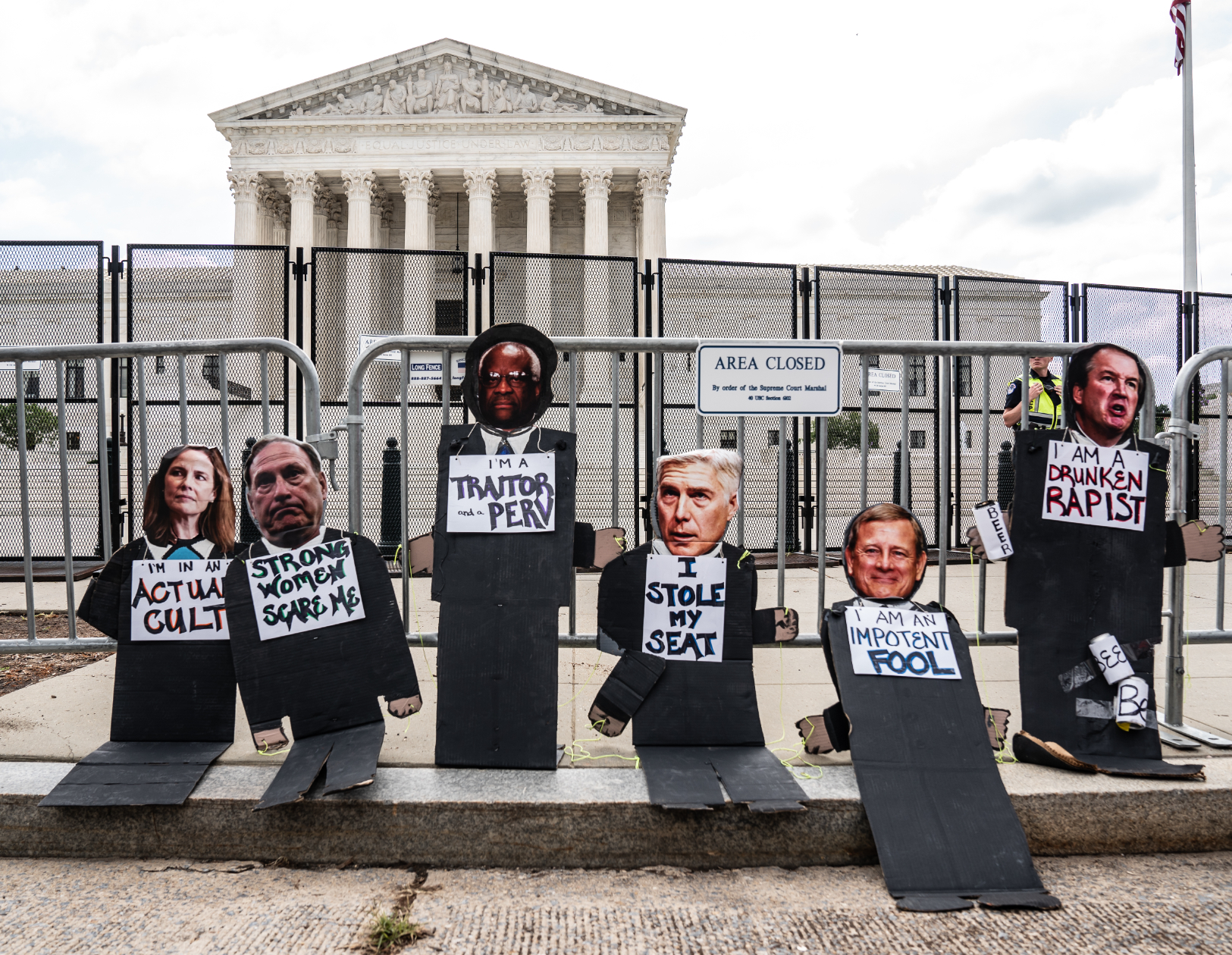
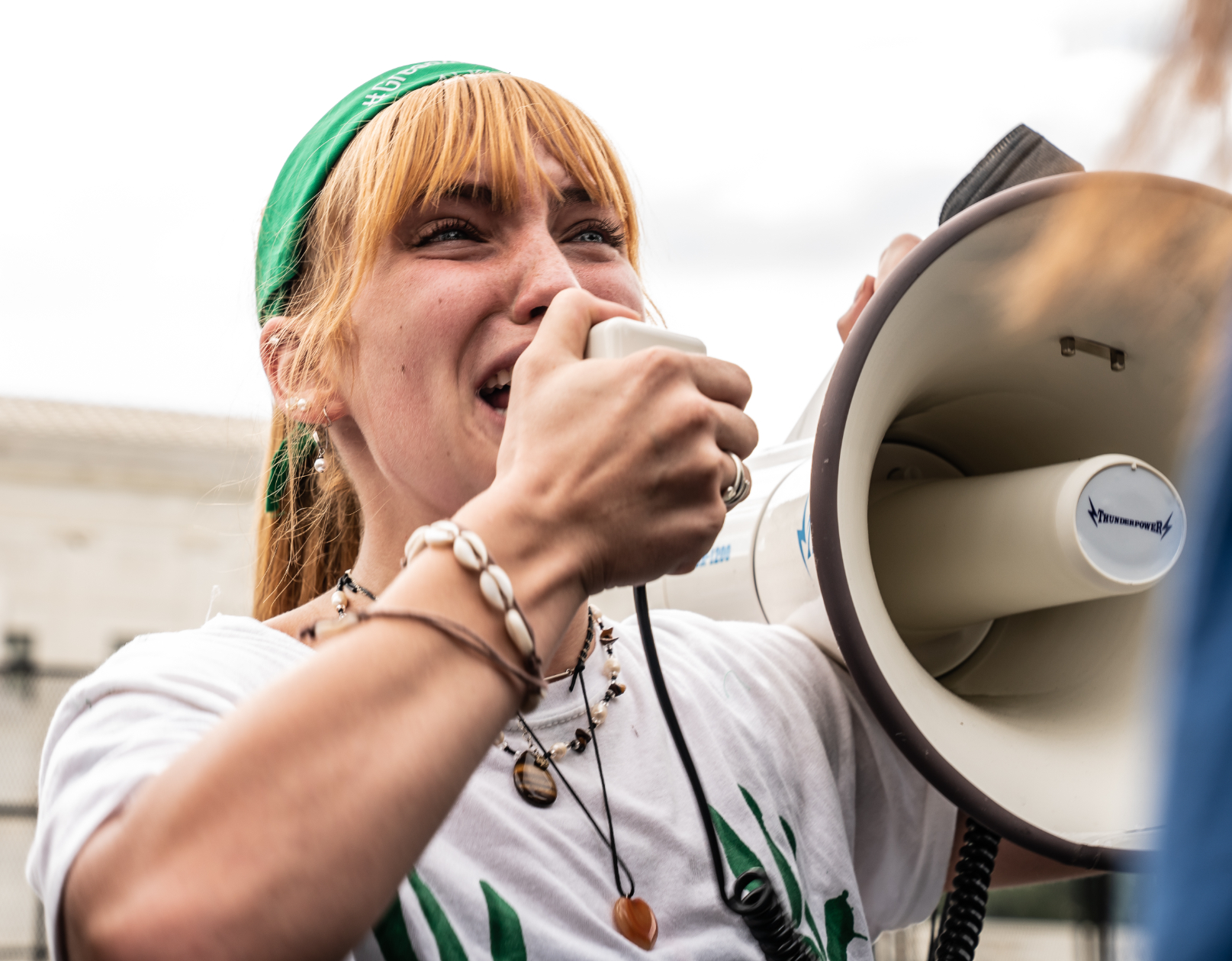
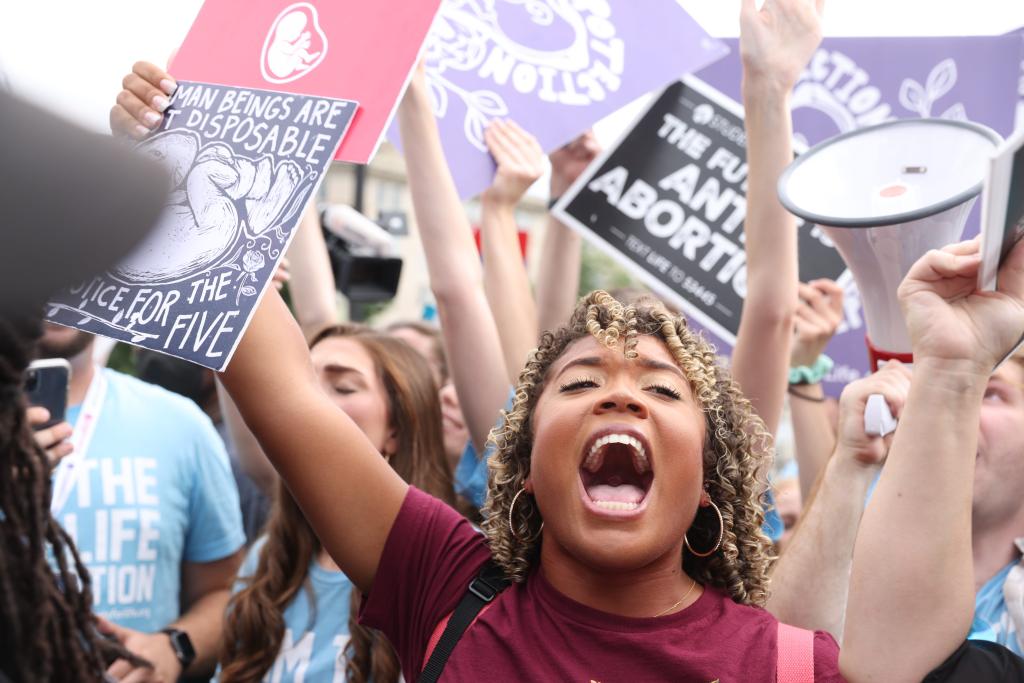
The Supreme Court overturned the landmark Roe v. Wade ruling on Friday, ending nearly five decades of constitutional abortion rights. About three hundred people gathered outside the nation’s highest court in D.C., many of whom were devastated after learning about the justices’ decision.
“I have a young daughter and the idea that she has fewer rights than my mother and I did is just so heartbreaking and sad,” said D.C. resident Vida Johnson outside the Supreme Court, where protesters and counter-protesters were staged Friday morning awaiting the decision that’s been anticipated for weeks. While demonstrators remained peaceful, Capitol Police in riot gear made their way into the crowd, joining other law enforcement agencies like D.C. Police.
The ruling in Dobbs v. Jackson Women’s Health Organization means abortion laws now fall to the states, and parts of the country will drastically curtail access to the procedure.
The ruling came down more than a month after Politico leaked a draft opinion of the decision sparking continuous protests in front of the Court building and justices’ homes, a massive march on the National Mall, and weeks of anxious anticipation as residents waited for the final decision.
Currently, people can still access abortion in the region. D.C. and Maryland protect the right to abortion in local law, while Virginia does not expressly ban the right once Roe falls like a handful of other states.
But despite its progressive local government, the District is vulnerable: D.C.’s lack of statehood could take abortion access out of the hands of city leaders, especially if Republicans win back control of Congress. For decades, congressional Republicans have prevented the city from using its Medicaid dollars to subsidize abortions for low-income people, and in the 1990s, GOP congressional members tried to stop city-funded hospitals or medical centers from performning any abortions. Most recently, GOP senator from Utah, Mike Lee, pushed a budget provision that would have banned abortion after 20 weeks in D.C., but ultimately failed.
“The possibility for what’s next is scary,” said Alison Delprico, a Northeast D.C. resident outside of the Supreme Court. “It feels like this country is breaking our hearts.”
Protests are expected to be reoccuring, and local Black abolitionist group Harriet’s Dreams has one planned for 5 p.m on Friday. Demonstrations are taking all different forms – one individual appeared to climb the Frederick Douglass bridge to protest the court decision.
The Metropolitan Police Department said Friday that the agency has “full departmental activation” through Tuesday, June 28, for expected protests. D.C.’s Homeland Security and Emergency Management Agency is also working with MPD, as well as federal law enforcement partners, through the duration of upcoming demonstrations.
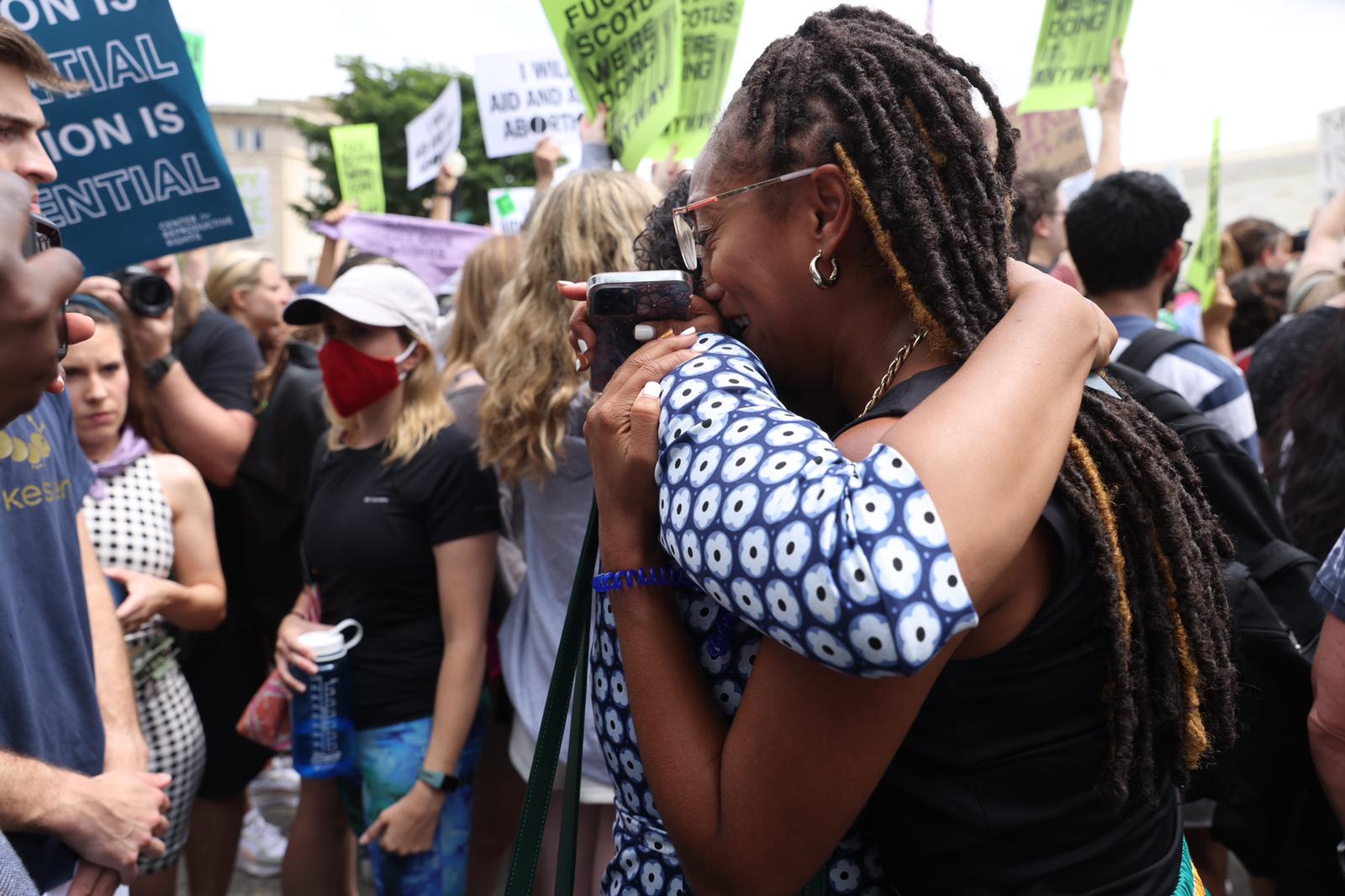
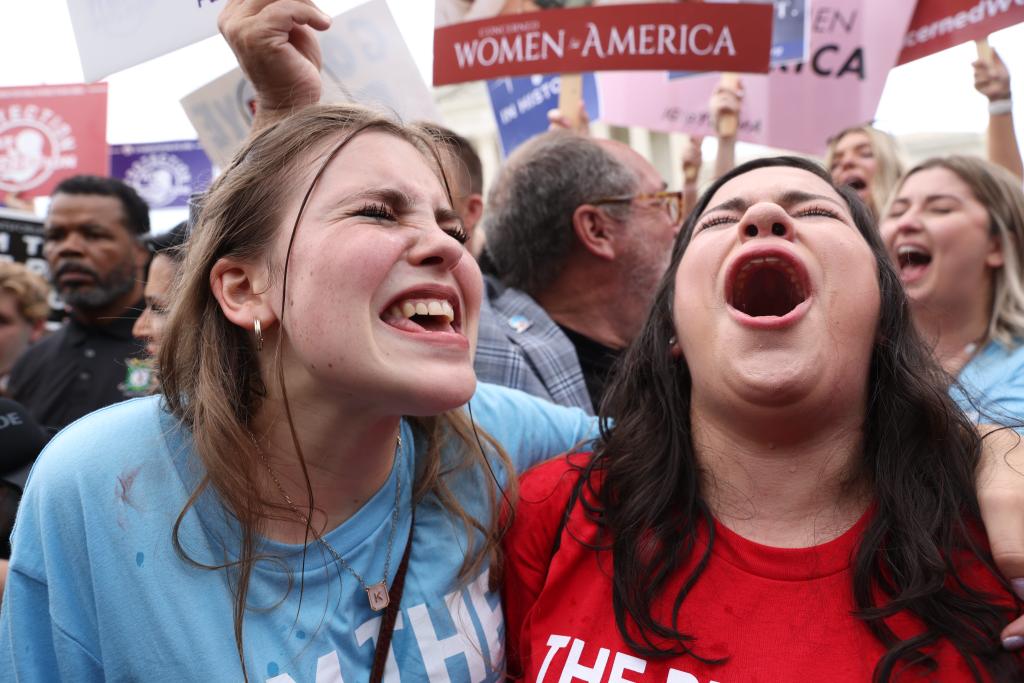
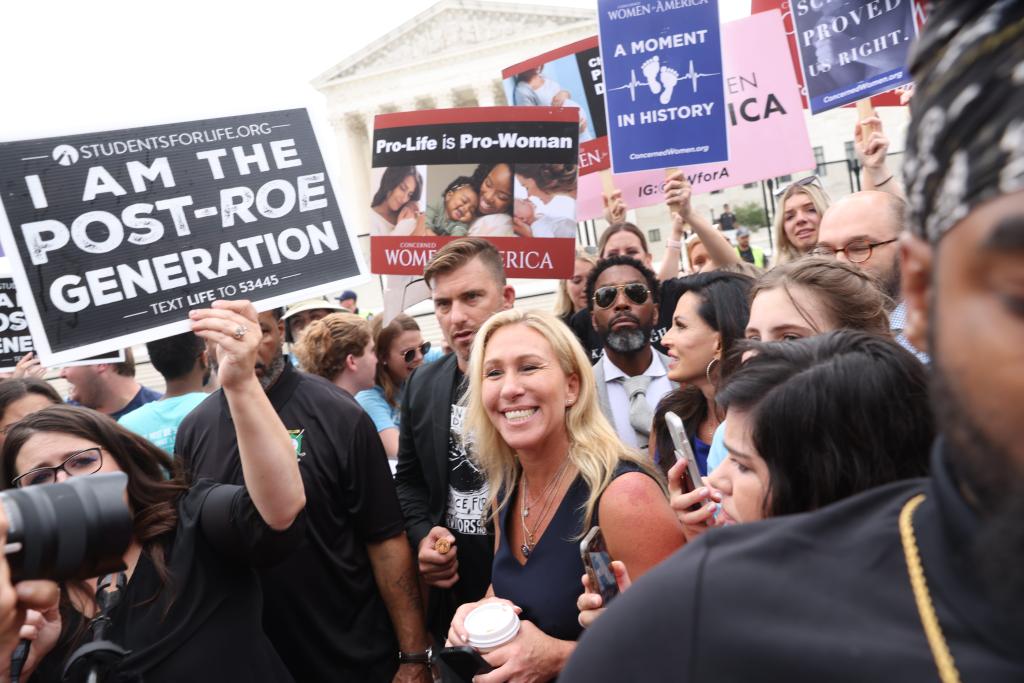
As anti-abortion demonstrators celebrated the ruling on Friday morning with loud music and cheer, pro-abortion activists feet away embraced one another in tearful hugs. Some shared information on abortion funds, which provide money to cover the cost of a procedure, or logsitics like transportation and childcare. After weeks of refreshing online blogs and social media feeds, waiting for what felt like an inevitable ruling, the gathering served as part protest, part catharsis for some.
Sarah Frederick, from Colorado, was attending a conference in D.C. when she got a notification about the ruling. She says she left immediately to get to the Supreme Court.
“I told my husband, we will provide our room for anyone needs to come to Colorado to receive any abortion, or anything that they need to stay healthy, whether that’s physcially helath or mentally healthy,” Frederick told DCist/WAMU, pulling down her mask to wipe away tears. “For the Supreme Court member who dissented, saying birth control was the reason he chose to vote against Roe v. Wade: birth control and contraceptives are not available to all people in this country.”
For Capitol Hill resident Nicky Sundt, coming down to the Supreme Court and shouting was the first thing she thought she could upon hearing the news Friday morning. Sundt carried a banner that read “Bans Off Our Bodies,” covered in artful swirls.
“The right wing in this country is going after women, people of color, queer people. They’re all tied together, and we have to fight it together, or we’re all going down together,” Sundt said. “This isn’t going to be the [last] decision that’s going to erode our rights.”
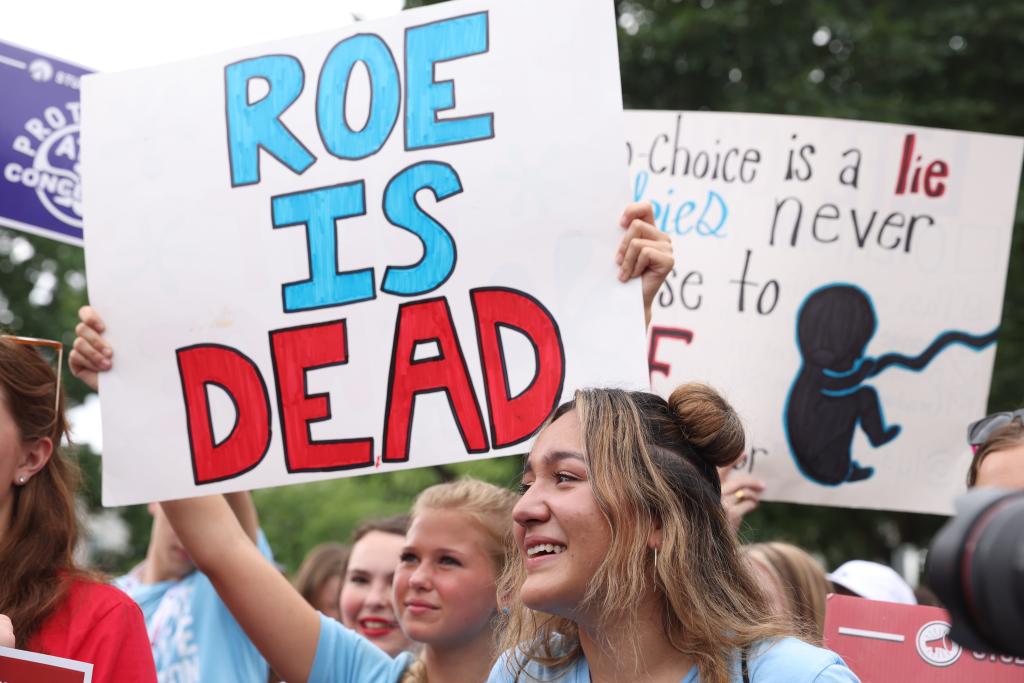
Other locals, though, came out to celebrate the ruling they’d been waiting on for 50 years. Alexandria resident Izzy Stephen said the moment “is absolutely historic, one that I’ve been praying for,” standing near the Supreme Court with her children. A former campaign staffer for Women for Glenn Youngkin, the Republican governor of Virginia, Stephen said she’s hopeful about what the ruling opens up for the future of abortion policy in the commonwealth.
“We hope that they will do the right thing, just give it to the people and let the people decide how we want to go,” Stephen said. “We’ll find out in the next few months, we’ll see what happens, but we’re grateful for that.”
While the crowd appeared split at first, with roughly equal groups of anti-abortion and pro-abortion rights protesters, the anti-abortion group dwindled as the afternoon wore on.
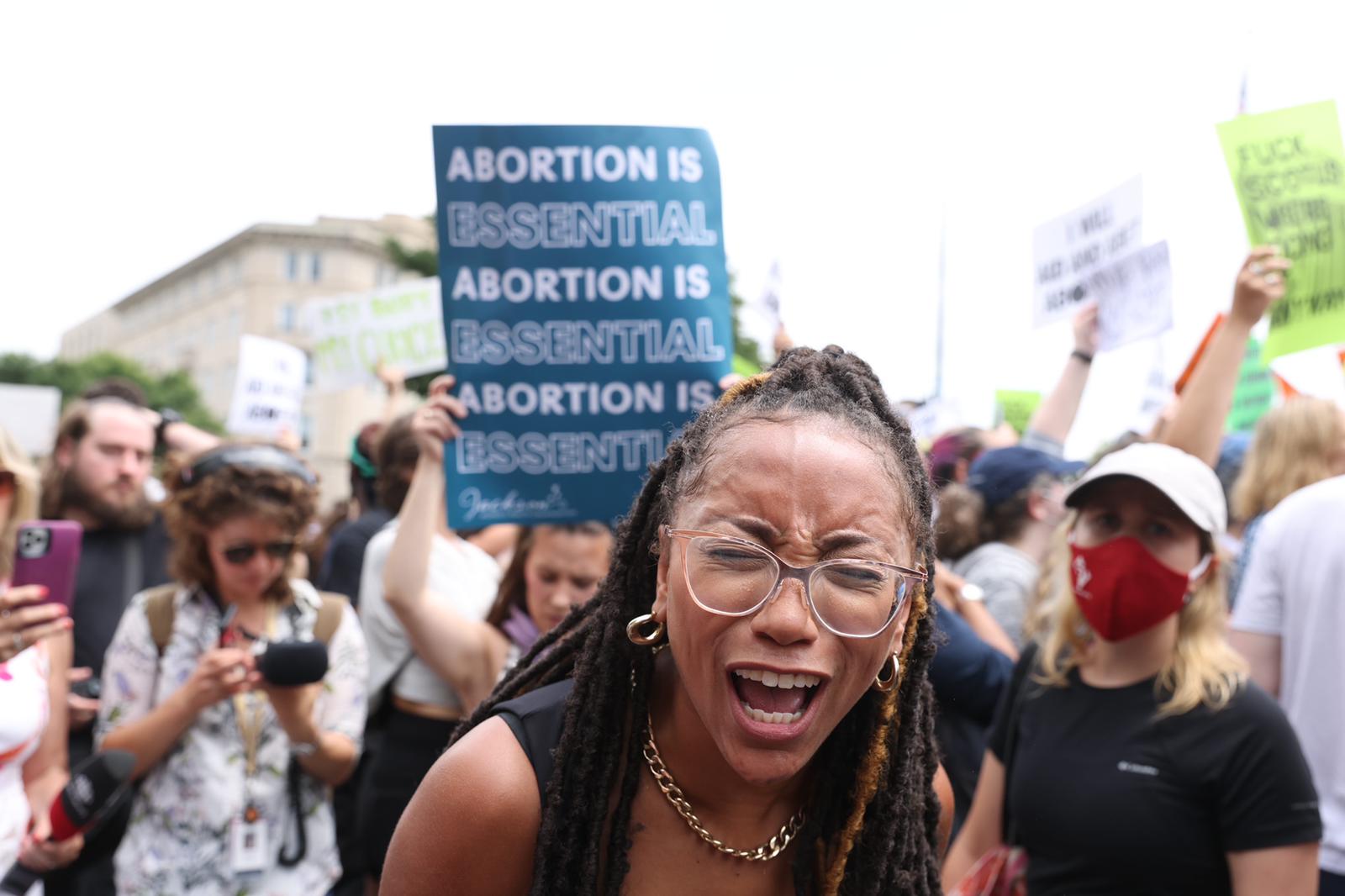
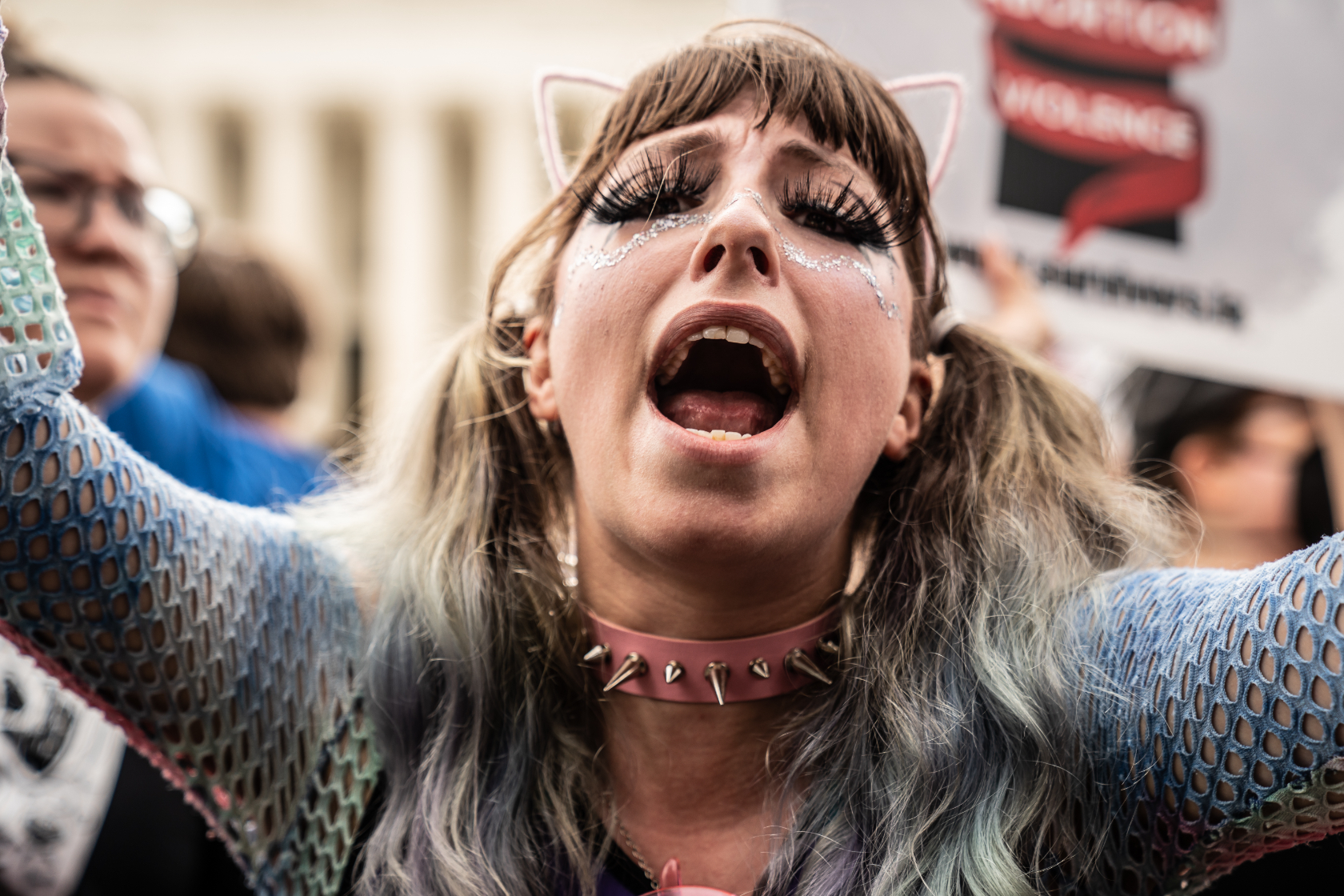
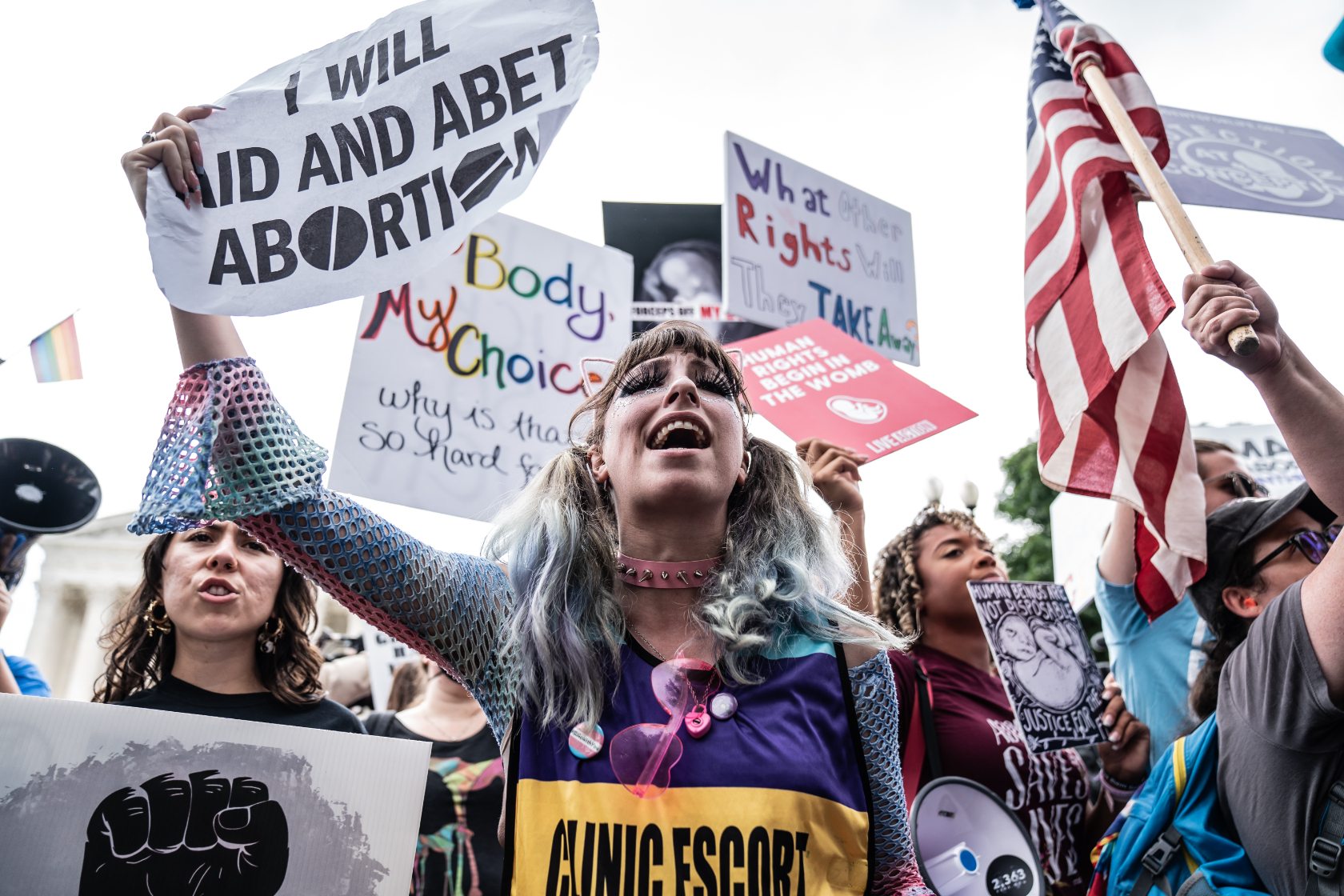

Local lawmakers, reproductive rights advocates, and health providers have said they’ll work to keep abortion accessible. D.C. Mayor Muriel Bowser and D.C. Attorney General Karl Racine issued statements on Friday affirming their commitments to protecting abortion access in the city. Bowser pledged D.C. as a “proud pro-choice city,” where abortion is still legal, while Racine urged residents to donate to organizations supporting residents in states with restrictive abortion laws. He also defended the rights of D.C. residents in the face of potential federal control over abortion access.
“We know our strong abortion laws could change if the federal government seeks to take away this right. We have seen the playbook before,” Racine wrote. “The Office of the Attorney General will do everything in our power to fiercely defend and strengthen the right to abortion in the District so that everyone can create their family how and when they choose.”
Appearing on The Politics Hour Friday, Bowser echoed Racine’s frustration at the federal restrictions that prevent the city’s most vulnerable residents from accessing abortion.
“I think it’s tragic,” Bowser said. “We have less rights here for poor women who use Medicaid for abortion care. It’s an unlevel playing field that makes some women more vulnerable.” (Not all people who seek abortion care are women.)
According to the Guttmacher Institute, nearly half of people who receive abortions live below the federal poverty level. In D.C., 15% of residents live in poverty – meaning the most vulnerable residents will be most affected should Congress attempt to restrict abortion access in the city.
Following the leaked draft opinion in May, Ward 1 Councilmember Brianne Nadeau, recently re-elected for a third term, introduced a bill that would prevent the city from cooperating with any investigation led by another state into someone who gets, assists with, or performs an abortion in D.C. – essentially establishing the city as a sanctuary for residents in the 26 states that are either certain or likely to ban abortion in the wake of Roe’s elimination. The bill is scheduled for a hearing on July 14.
At-Large Councilmember Christina Henderson tells DCist/WAMU she hopes to get a first vote soon on a bill that would decriminalize self-managed abortions in the city.
In Virginia, meanwhile, abortion is legal through the second trimester, but must be performed in a hospital in the second trimester, and is only allowed in the third trimester if three doctors agree that the pregnancy endangers a patient’s health. But the new GOP state leaders elected last fall – Gov. Youngkin, Attorney General Jason Miyares ,and Lieutenant Governor Winsome Earle-Sears – cast doubt on the future of abortion access in the commonwealth.
Youngkin avoided mentioning explicit plans for abortion policy on the campaign trail (as to not alienate independent voters, in his words) and in the wake of the leaked opinion. But on Friday morning the governor told the Washington Post in what appears to be a pre-scheduled meeting with the paper’s editorial board that he has asked four state lawmakers – all anti-abortion Republicans – to draft a 15-week abortion ban that will be introduced when the General Assembly convenes in January.
“The truth is, Virginians want fewer abortions, not more abortions,” he wrote in a statement. “We can build a bipartisan consensus on protecting the life of unborn children.”
According to 2022 polling from Christopher Newport University, a majority of Virginia voters oppose a ban on abortions at six weeks – 58% to 33%.
Youngkin’s proposed 15-week ban is similar to the Mississippi legislation that the Supreme Court voted to uphold on Friday, thus overturning Roe v. Wade. His ban would likely face an uphill battle passing both chambers of the General Assembly – where Republicans control the House of Delegates and Democrats control the Senate.
Just last week, following an emotional debate in Richmond, Senate Democrats shot down Youngkin’s attempt to add a state version of the federal Hyde Amendment, which prohibits the use of federal dollars to pay for abortions, to the Virginia Constitution. Due to the absence of Sen. Scott Surovell from Fairfax, Democrats had to rely on Joe Morrissey (D-Richmond), a Catholic who opposes abortion. Morrissey ultimately aligned with Democrats to kill the amendment, but his flexibility on abortion-related issues could make him a swing vote concerning pro-abortion activists when Youngkin’s legislation comes before the Senate next year.
Chairman of the Board of Supervisors in Fairfax County, Jeffrey McKay, said in a statement on Friday that he is “paying close attention to any threat to diminish a woman’s right to reproductive healthcare in Virginia,” and plans to expand healthcare resources in the county – the largest jurisdiction in the state – to meet the needs of residents. McKay also affirmed his protection for residents demonstrating in the wake of Roe, as his county is home to Justices Samuel Alito, who wrote the Roe majority opinion, Amy Coney Barrett, and Clarence Thomas. Protesters gathered in front of the justices’ homes in May, prompting Youngkin to request a security perimeter for the justices’ residences – a request the Fairfax County Board of Supervisors denied.
Mike Scheinberg, the development director of Falls Church Healthcare Center, which provides abortion care, says they’ve been fielding calls on Friday from people who are asking whether abortion is legal. It is – and Falls Church Healthcare Center is working to expand capacity because they suspect they’ll soon get more out-of-state patients. They are looking to add more appointments, considering adding an extra day for scheduling and hiring nurse practitioners to deliver care.
Tannis Fuller, the executive director of Blue Ridge Abortion Fund, said the organization has alredy been supporting an increasing number of out-of-state patients in recent weeks. She says it’s important for pro-abortion locals to keep abreast of local politics.
“Write down how you’re feeling today. Remember that in a year. Remember that in two years. Let this be a moment that engages you in a way that you have not historically been engaged, and maybe that’s knocking on doors for you. Maybe that’s connecting to a campaign,” Fuller says.
In Maryland, where abortion access is protected in state law, outgoing Republican Gov. Larry Hogan has largely stayed away from legislating abortion policy – although he has voiced his personal objection to abortion. After the leaked opinion in May, state lawmakers pressured Hogan to release millions of dollars set aside in a recently adopted budget provision to train medical providers on abortion procedures. Democrats in the state General Assembly feared that in the absence of Roe, Maryland would quickly become a destination for people seeking abortion, and the influx of patients would overwhelm the state’s current provider network. Hogan ultimately denied lawmakers’ requests to release the funding early.
In a statement on Friday, Hogan said he would hold to the 1992 constitutional referendum that legalized and protected abortion in Maryland as a matter of state law.
“I swore an oath to uphold the Constitution and the laws of Maryland, and that is what I have always done and will continue to do as governor,” Hogan wrote in a statement.
Local county leaders also expressed their anger at the ruling. Montgomery County Executive Marc Elrich stated on Friday that he plans to draft a new policy that bars the county from paying government employees to travel to states that restrict abortion rights.
“While Montgomery County does everything it can do protect the right to an abortion, we will also not give tax payer dollars to states that try to drag us back to a dark past,” Elrich wrote.
After the draft opinion leaked in May, Elrich asked the Montgomery County Council to set aside $1 million to fund abortions in the county, for both residents and out-of-state patients seeking care. The move came as Elrich expected a surge in patients from neighboring West Virginia, which does not protect the right to abortion in its state constitution.
Prince George’s County Executive Angela Alsobrooks called the ruling “stunning” in a tweet, “especially given its gun ruling yesterday. The message: gun rights need to be protected at all costs, but not women’s rights.”
This story has been updated to reflect the correct year Roe v Wade was decided.
PREVIOUSLY:
If Roe Goes, What’s Next For Local Abortion Access?
How Local Abortion Funds Have Been Getting Ready For The End Of Roe
Poor People In The D.C. Region Struggle To Access Abortion. The SCOTUS Decision Could Make It Worse
New Bill Would Prohibit D.C. From Cooperating With Other States’ Investigations Into Abortions
Montgomery County Executive Wants To Establish A $1 Million Abortion Access Fund
Maryland Lawmakers Push Hogan To Release Money For Abortion Training