Colleen Grablick
A few yards down from the Popeyes on Columbia Road in Northwest D.C., nuzzled next to the Metro PCS and beneath a strip of townhomes, a small boom box sits on the sidewalk, blaring a selection of old and new Top 40 music (think: “That’s The Way I Like It”) a few nights a week.
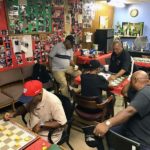
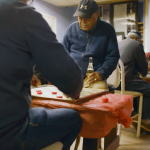
It’s placed there, in part, to lure passersby into the slightly inconspicuous basement, tucked away from the street: the new home of the Capital Pool Checkers Club. Inside, the sound of the loudspeaker is drowned out by the sound of checkers moving across the boards, as players break long stretches of silence with cries of victory — or disappointment — followed by a round of trash talk.
“Quite often we have people coming down, saying, ‘do we have to pay to come in?'” says Louis Kelley, or as he’s known to club members, “Special K.” “We say ‘come in.’ We’ll give you a game, we don’t turn anybody down.”
Members of the Capital Pool Checkers Association have been squaring off against each other in D.C. for decades, becoming something of a legend in the city. The club has been featured in a documentary, honored by the Smithsonian National Museum of African American History and Culture, and most recently, visited by NBC’s Lester Holt as a part of his Across America series. For more than 40 years, players met up at their clubhouse in Shaw, a nondescript, brick corner building abounding with character but lacking in basic utilities, like heat. They made that spot their home until spring 2021, when their landlord decided to sell the building, setting the group on the hunt for a new hangout. It wasn’t an easy task given D.C.’s rising rent prices, and the group’s finances — they fund themselves solely on dues from members, whose numbers have dwindled in recent years.
At the time, then-president Tal Roberts described the move as “losing their best friend.” Now, halfway across town, they’ve made a new one.
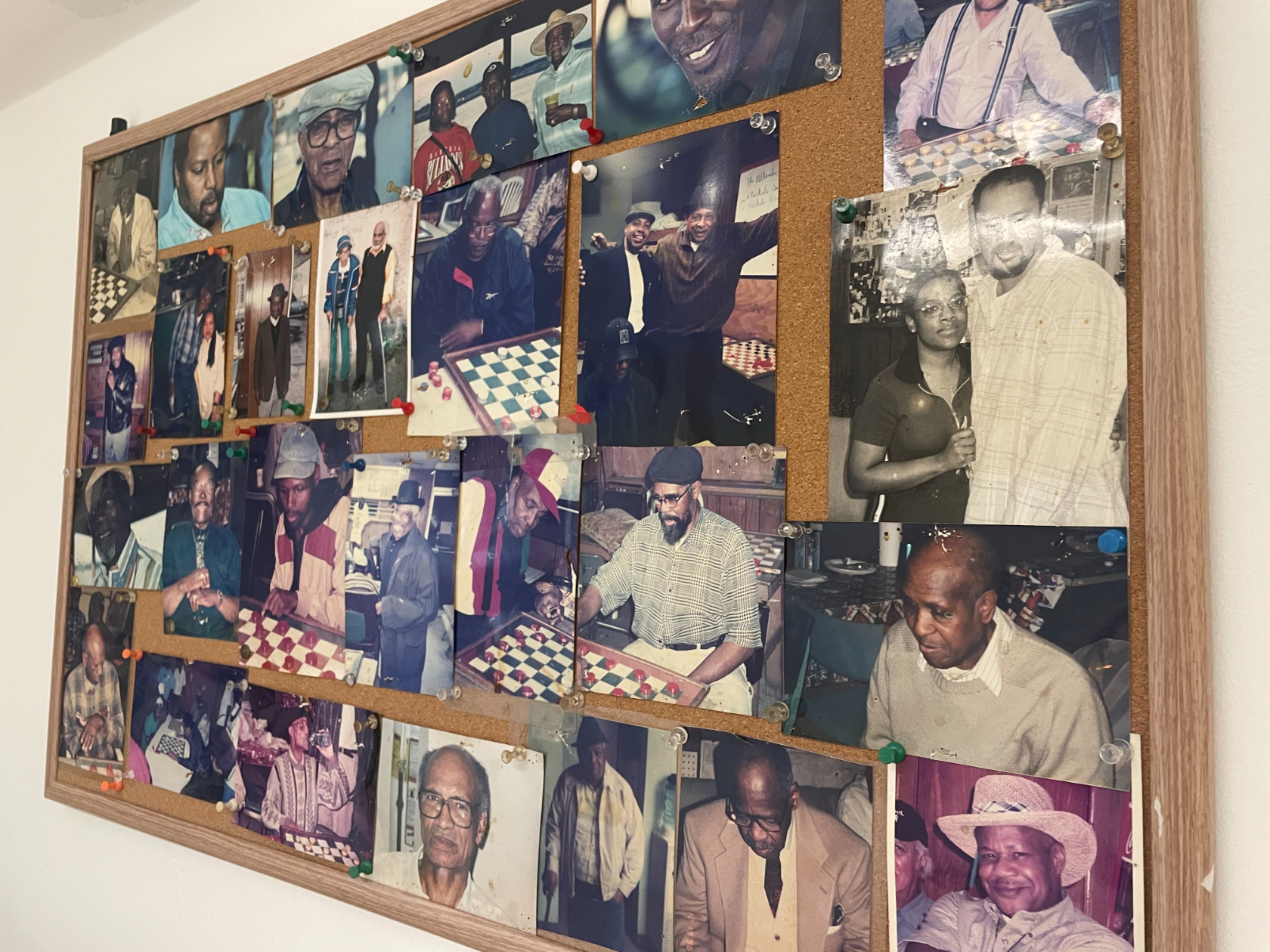
In May 2021, a few months after the lease ended in Shaw, a local nonprofit in Adams Morgan offered up their basement for the group, at the same price the club paid in Shaw. By June, Capital Checkers had nearly completed the move into the basement on Columbia Road — maintaining the memory of players past with collages of photographs pinned to the walls.
“We were at the old place 42 years, so we’ve got to miss it somewhat,” says Roberts, AKA “Razor.” “This place is a lot more accessible to more and more people, and it’s a more up to date. The other one was really, really sort of outdated … well, it didn’t have any heat.”
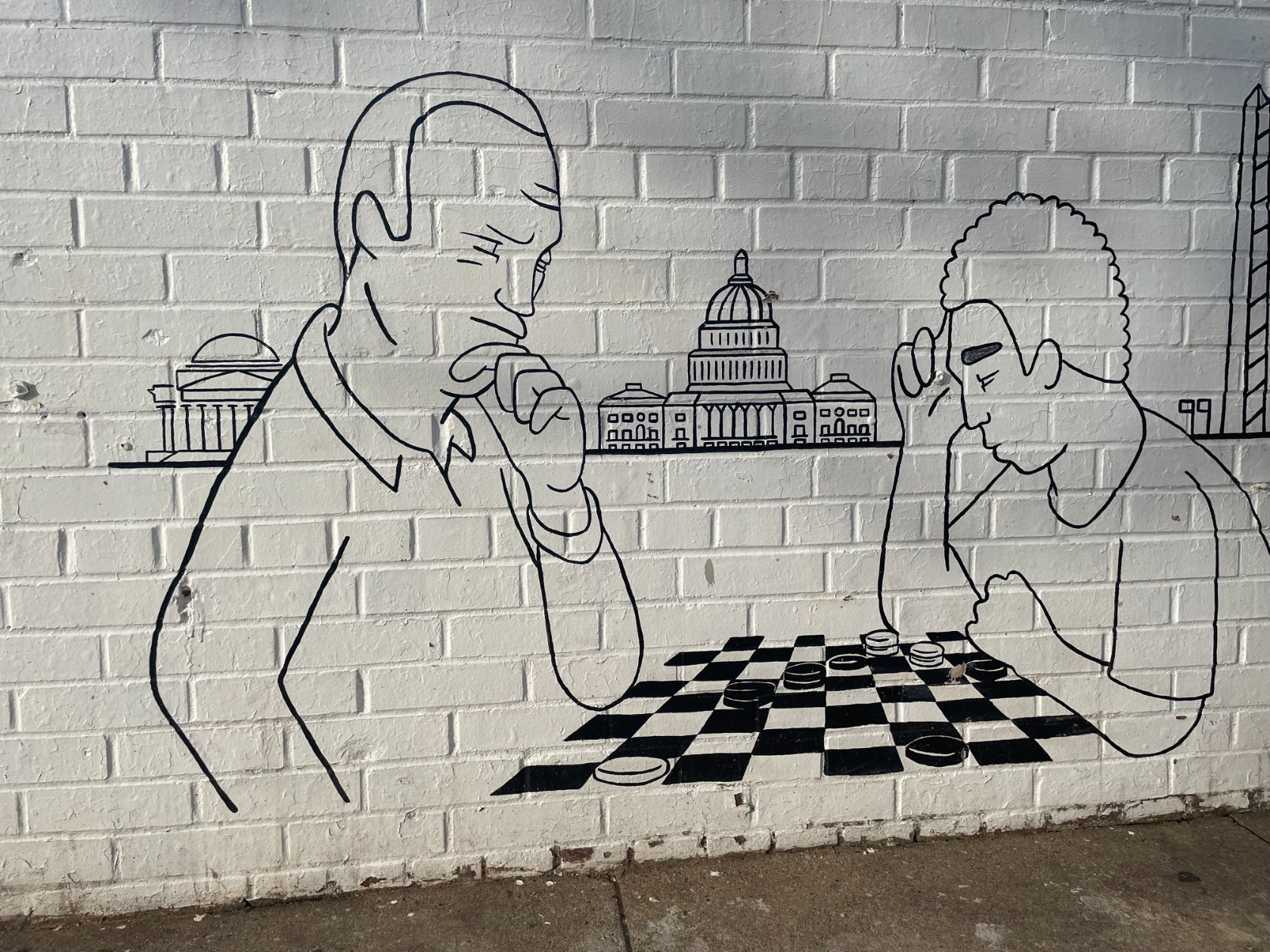
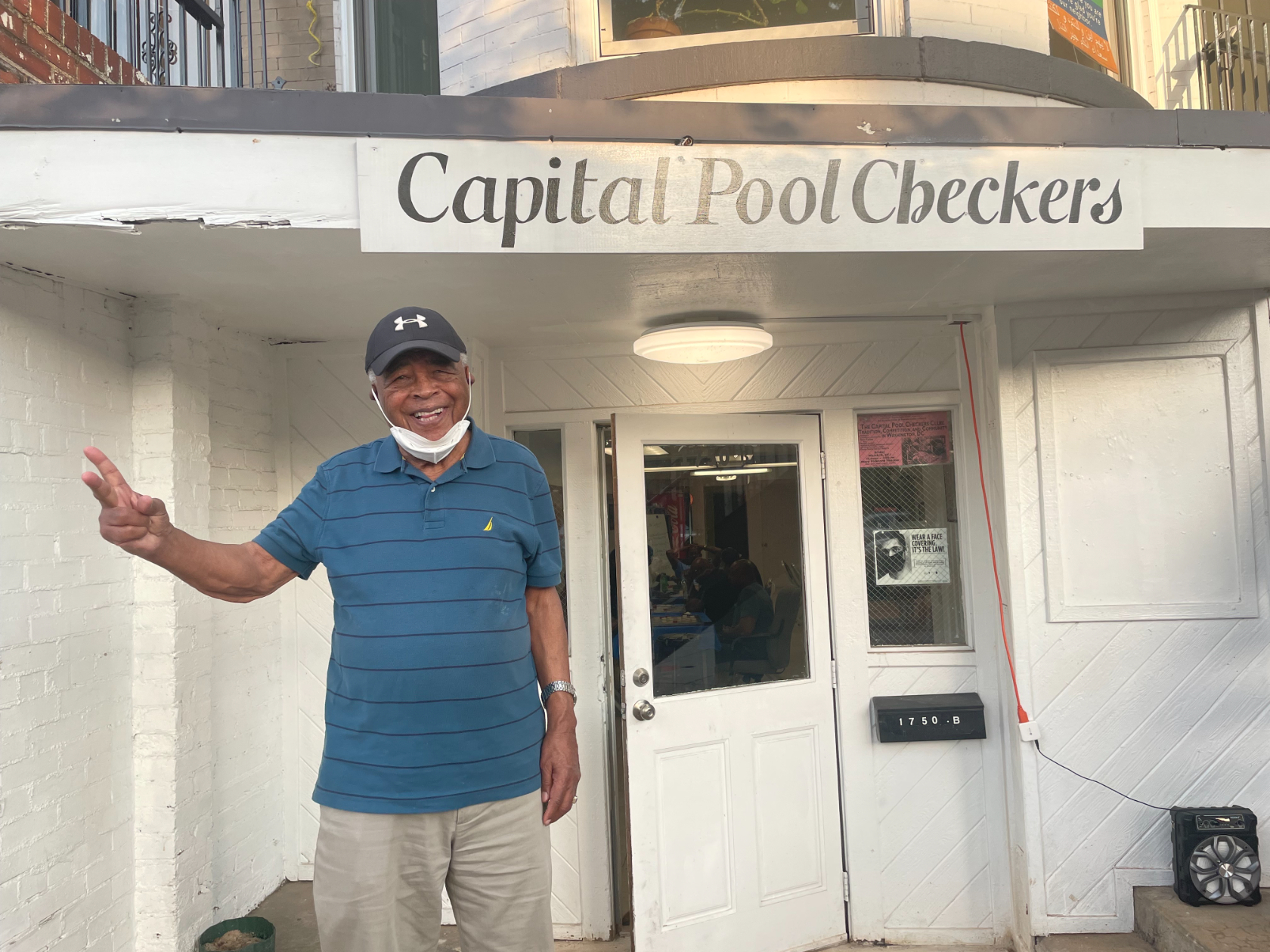
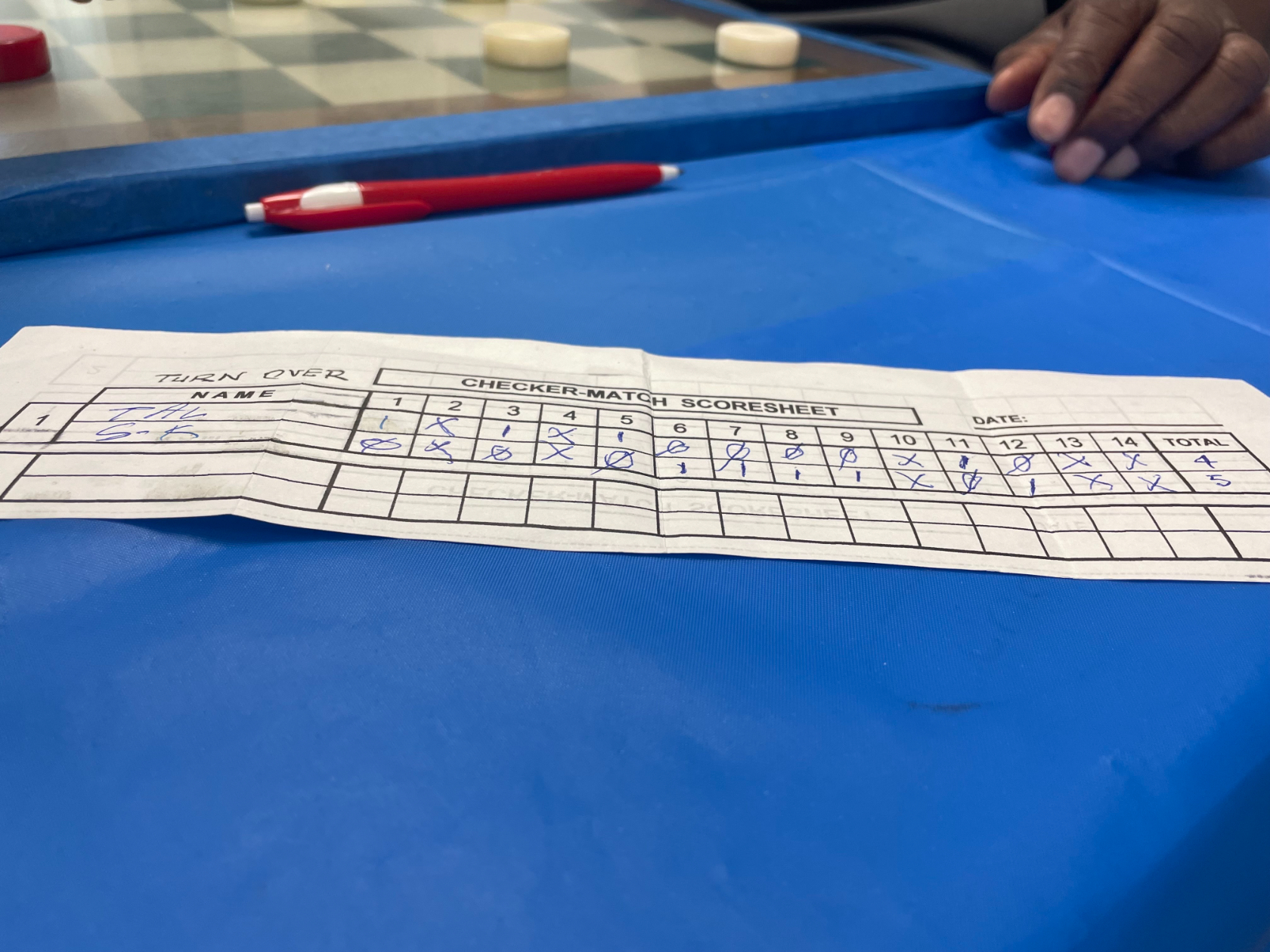
And while the surroundings might look different (they had to say goodbye to an old, clunky radio in the move, and have yet to find a place to store their many trophies) the game — and the players — have stayed the same. The club plays pool checkers, a variation of the standard game that incorporates some elements from chess. Pieces can move forward and backward, and kings can move several spaces diagonally in one move, like a queen in chess. Players normally match off in best-of 14 series, with games narrated both by a fair amount of laughter and smack-talk, and silent concentration as they slam their checkers across the board.
When DCist/WAMU visited the group one weeknight in June, 10 attendees showed up to play. On their meeting log that night, jotted down on a piece of loose-leaf paper, Kelley, aka “Special K,” wrote “good” next to the number of attendees. It was up from meetings in recent months, which have drawn between 5-7 players. At its peak in the 1980s, the club boasted roughly 60 members, but the group has shrunk as members have aged and passed away. Thursdays and Saturdays are usually the most popular nights at the clubhouse, when members will sit for hours, sometimes until midnight, playing game after game, beers in hand. (One member noted that the quality of play often decreases as the number of drinks increases.)
But it’s not all just for fun, either. This month, the club is heading to a tournament in North Carolina, where they’ll compete with players from across the world for the first time since the pandemic began. At these tournaments, players fall into one of several categories, ranging from “Top Master” as expert and “blue ribbon” as novice. In the U.S., pool checkers is particularly popular in the south, but similar iterations of the game exist in Brazil and Russia, sometimes drawing competitors to the states for tournaments. Similar checkers clubs exist across the U.S., from Georgia, to Albany, to Chicago.
Special K will be headed to the tournament this month. His last big win, third place in his bracket, is one of his favorite memories since joining the club, he says, especially given how green he was when he came into the checker world more than a decade ago. Then in his 60s, he befriended a club member who was in his 80s at the time, and started offering him rides to the Shaw clubhouse.
“I learned from the guys beating on me … that I needed to play more checkers,” Special K says.
For Roberts, or “Razor,” one of the hard-to-beat members of the club, checkers is an exercise of the mind that keeps him sharp at age 91.
“Almost every person you know will go out and about, for one hour, [or] five miles, or a one mile a day — some physical exercise program. But seldom do they exercise their mind,” Razor says. “Checkers is an exercise of the mind, it’s one of the major benefits of checkers … seldom do you find a checker player with dementia.”
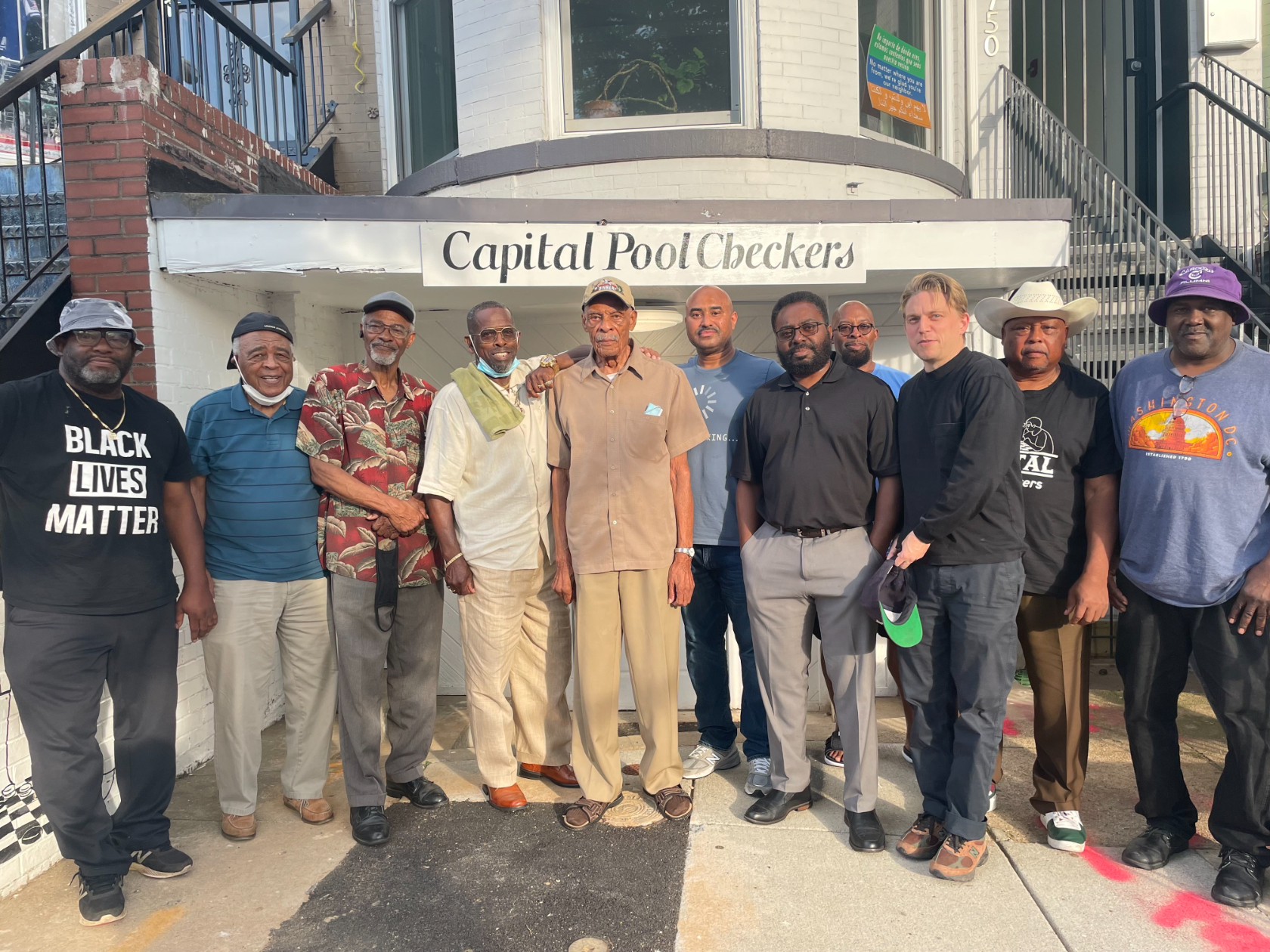

And while the club is happy to have a new home, Roberts says it’s not about where they play checkers, so long as they’re playing at all. Besides beating each other up across the board, the club’s main mission to get more people into the game. “Each one, teach one,” as Razor says.
Before the pandemic, Razor spent years teaching the game at elementary schools in D.C., trying to get younger generations interested in checkers — a challenge, he says, given the popularity of video games and online entertainment. Plans haven’t finalized yet, but the group is hoping to work with a school down the road in their new neighborhood, teaching them the ways of the game.
“All you need to do is get some children together, no matter what the age, put a checkerboard in front of them…and they will be playing checkers all [day],” Razor says. “It keeps people out of trouble…as they say, what’s an idle mind? The devil’s workshop.”
As always, there’s concern among the club about the game dying out as players get older, original members of the club pass away, and more and more players turn to virtual board game competing in place of IRL-matchups. Members pay fees to use the club regularly (they now can afford to pay for utilities, meaning no more long-john-clad nights huddled next to space heaters) but they don’t charge people who stop by for a peek into the game. Despite the competitive nature they keep among themselves, they’re eager to teach and bring amateurs into the game, even if it’s just for a night.
“Under the tree, in barber shops, in place where people gather … that’s the way checkers began,” Razor says. “Anytime there’s a social gathering, take out a checker board and start playing checkers. That’ll keep you entertained.”
Previously:
Capital Checkers Finds A New Home In Adams Morgan
Capital Checkers Is Looking For A New Home After 40 Years In Shaw
Living History: Members Of Shaw Checkers Club Find Their Place At NMAAHC
Video: Meet The Players At Shaw’s Capital Pool Checkers Association