 Jordan Pascale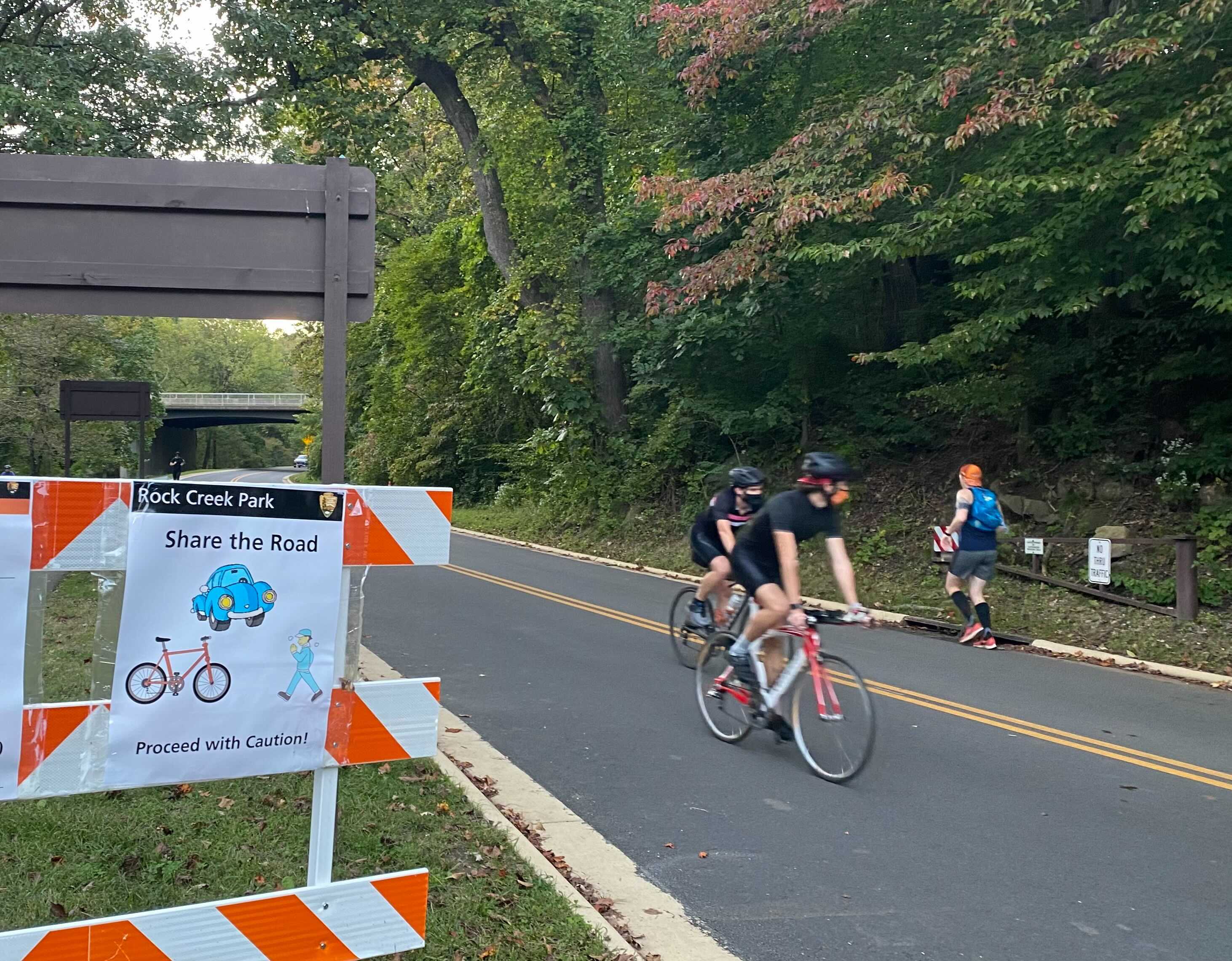
The National Park Service says the upper portion of Beach Drive should be closed to traffic and open to recreation in the summer, in addition to weekends and holidays throughout the year.
A new Environment Assessment, required for any permanent change in the park operation, was released with the findings on Monday.
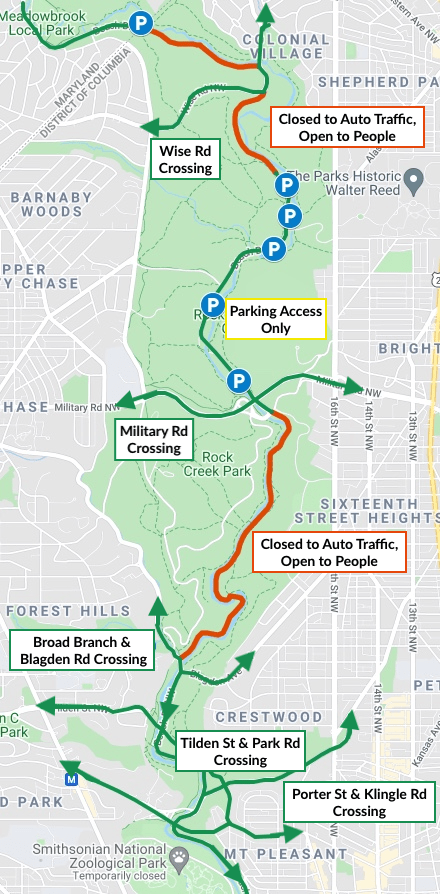
The recommendation provides more recreation time than before the pandemic (when it was limited to weekends and holidays only) but less than the current setup. The upper 4.3 miles of Beach Drive from the Maryland state line to Broad Branch Road have been closed to through traffic since the early parts of the pandemic, April 2020. It was meant as a way to provide social distancing for outdoor activity. Vehicles can still access parking and picnic areas along the stretch.
NPS has said it will keep the current setup through until the study process is completed. A final decision is expected this fall.
The decision is a compromise between heated factions: those that say Beach Drive is one of the few car-free havens for running, cycling, roller-blading, and more, and nearby residents and commuters who say closing the road to through traffic will cause spillover traffic into their neighborhoods.
“They say when you make a compromise, no one is completely happy, right?” Rock Creek Park Superintendent Julia Washburn said in an interview. “However, I think it’s a very good compromise… and allows for both kinds of use of the road.”
“The NPS sees the seasonal closure as the best way to protect park resources and strike a balance of different uses – whether visitors are walking, cycling, commuting or scenic-driving,” the Park Service said in a release. “(It) would improve recreational opportunities, minimize impacts to natural and historic resources, and address the needs of people who drive and those who use non-motorized transportation.”
But the study looks at other considerations, too, including how different setups affect people with disabilities, wildlife, and problems with vegetation.
More than 4,100 people weighed in during the comment period. The study was set to be released at the end of 2021 but was delayed for unknown reasons. Over 1,800 commenters asked for full closure for recreation while 343 people wanted it to return back to weekday through traffic.
The Park Service says the increased recreation and visitors to the park have had some negative impacts — users created “informal, unofficial trails” which can cause damage, more off-leash dogs, and increased numbers of visitors in the park at night when it is closed, disturbing wildlife via noise and fires in and out of designated fire structures. Washburn said NPS did not do a census of how many people use the road for recreation, but anecdotally she says there is a “great deal of use by recreational visitors.”
The change would also have minimal effects on traffic and allow drivers to commute through the park when there are fewer recreational visitors in non-summer months. About 5,500 to 8,000 vehicles a day used this portion of Beach Drive before the pandemic — a small amount compared to Rock Creek and Potomac Parkway which averaged 50,000 vehicles per weekday. A District Department of Transportation traffic analysis found traffic delays and impacts are predicted to be minor — an additional 2-5 minutes of travel time during rush hour on 16th Street — and could be mitigated with tools like adjusting traffic light timing and other measures.
Beach Drive was originally designed as an internal park road to provide recreational access to the valley, according to NPS documents. “In the 1918 master plan for the park, the Olmsted brothers warned against bringing the ‘noise and tangle’ of trucks and other city traffic into the heart of the park. At the same time, they recognized a need to accommodate urban traffic in the park while ensuring that any roadways were constructed so ‘that the essential qualities of the park are impaired to the least possible degree.'”
The tunnel near the National Zoo was finished in 1966 which created a through route from Maryland to downtown D.C., creating a new commuter route.
The study says closing Beach Drive to traffic would improve air quality in the park but that traffic would not be reduced — just redirected to other areas. It also says water quality in the immediate area could be improved with traffic closure, but not substantially enough given runoff in other areas in the watershed.
Both the D.C. Council and Montgomery County Council, as well as Del. Eleanor Holmes Norton, wrote NPS asking for the area to stay closed to traffic.
The deal is not completely done yet. The public can still weigh in on the idea through August 11th. An online public meeting is scheduled for July 18.
The current setup of Beach Drive allows recreation 24/7 with no through access for vehicles. Vehicles can still access parking and picnic areas along the stretch. Jeanne Braha of the Rock Creek Conservancy said opening the road to permanent, year-round recreational use would’ve been transformational for the park’s wildlife and the community.
“The decision to keep upper Beach Drive open to seven-day-a-week recreation in summers is an important step towards that more equitable vision for America’s first urban national park,” she said in a statement. “The National Park Service is charged with balancing resource protection with visitor enjoyment. This Environmental Assessment makes clear the latter is a strong stressor on the park.
“As the park’s philanthropic and stewardship partner, Rock Creek Conservancy will continue to identify and make possible implementation of safer, more equitable access to the recreational opportunities in Rock Creek Park and protect the fragile forests that make them so enjoyable.”
Garrett Hennigan of the Washington Area Bicyclist Association, an organization that had advocated for full closure, says they are disappointed and frustrated.
“We are grateful that the National Park Service has recognized the benefits of closing Upper Beach Drive to through car traffic and opening this exceptional public space so that the people of D.C. can experience their park free from the threats of sharing space with cars during the summer months,” Hennigan said in a statement. “However, welcoming drivers to Upper Beach Drive for the other nine months of the year abandons this irreplaceable public space, effectively restricting every other form of recreation or travel that has been so popular over the past two years.
“We are disappointed and frustrated that the National Park Service has dismissed the requests of the D.C. and Montgomery County Councils and instead prioritized moving cars and minimally reducing car congestion over its core mission of recreation and preserving natural spaces.”
The Park Service says, if approved, it will monitor the effect of a seasonal closure and Washburn could expand or reduce the closure in the future. A final decision is expected to be made on the closure this fall.