Elliot C. Williams
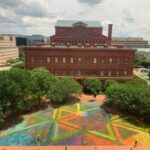
Every summer, there’s no shortage of bards reciting Shakespeare’s most famous lines on local stages and, these days, in Zoom performances. But this week, one of Shakespeare’s classics will take on a new life in an unconventional setting: The National Building Museum.
That’s right: A Midsummer Night’s Dream begins a six-week run Tuesday inside the museum’s storied Great Hall this week as part of a collaboration between the Folger Shakespeare Library’s Folger Theatre and the University of South Carolina’s theater department.
It’s all part of The Playhouse, this season’s iteration of an annual summer activation at the private nonprofit museum near Judiciary Square. (Previous Summer Block Party programs at the museum have featured a massive ball pit, a maze, and a rolling hill of grass.) During the day, the museum will host kid-friendly events like face-painting, theater discussions, scavenger hunts, and Shakespeare-themed Mad Libs in and around The Playhouse’s stage and around the Great Hall. In the evenings, a cast of local and national actors directed by Victor Malana Maog will put on performances of the Shakespeare favorite.
Daytime hands-on activities at The Playhouse are included with admission to the museum’s exhibits ($10 for adults; $7 for kids), while the Midsummer performances and evenings programs require tickets or pre-registration.
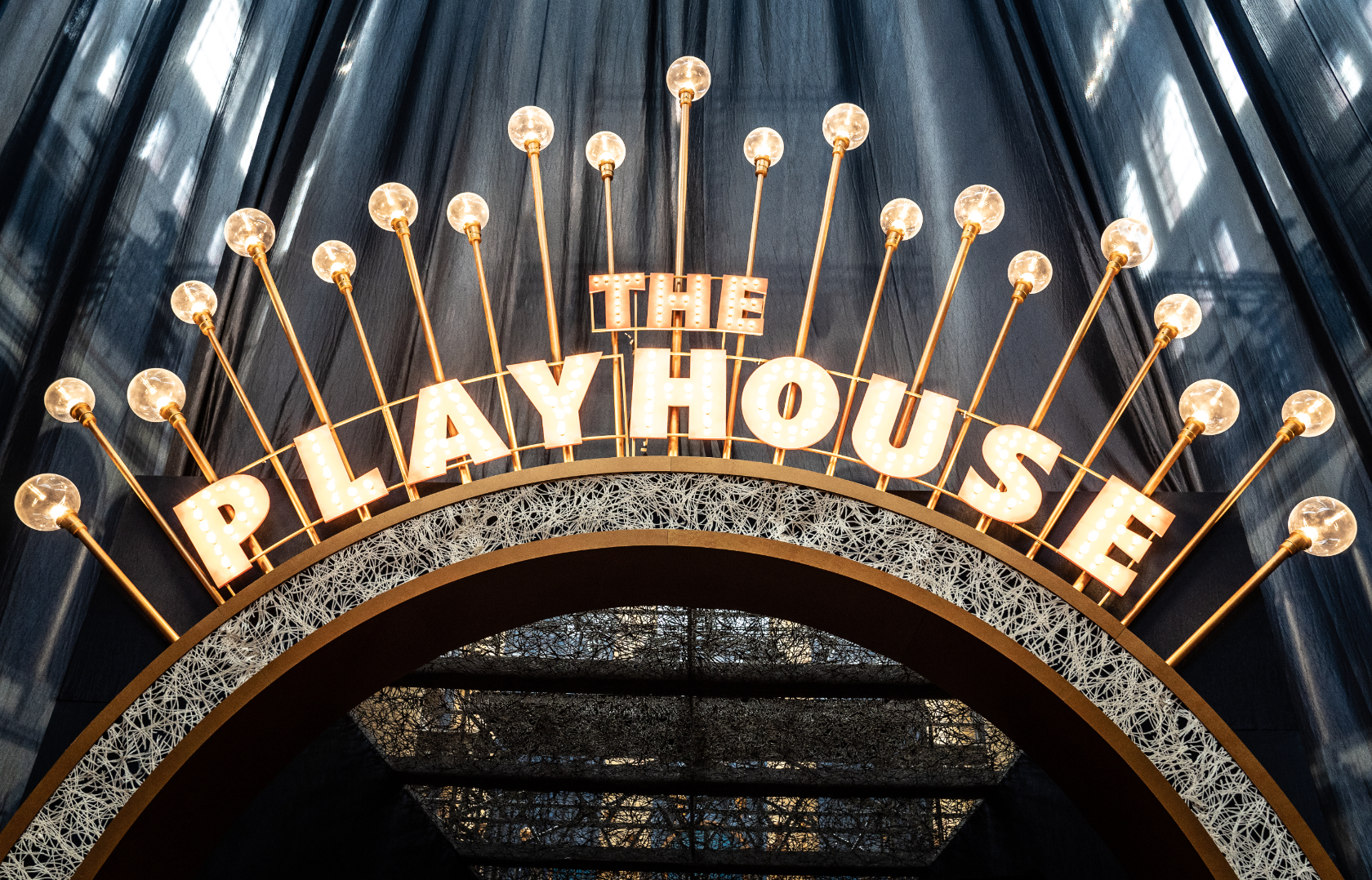
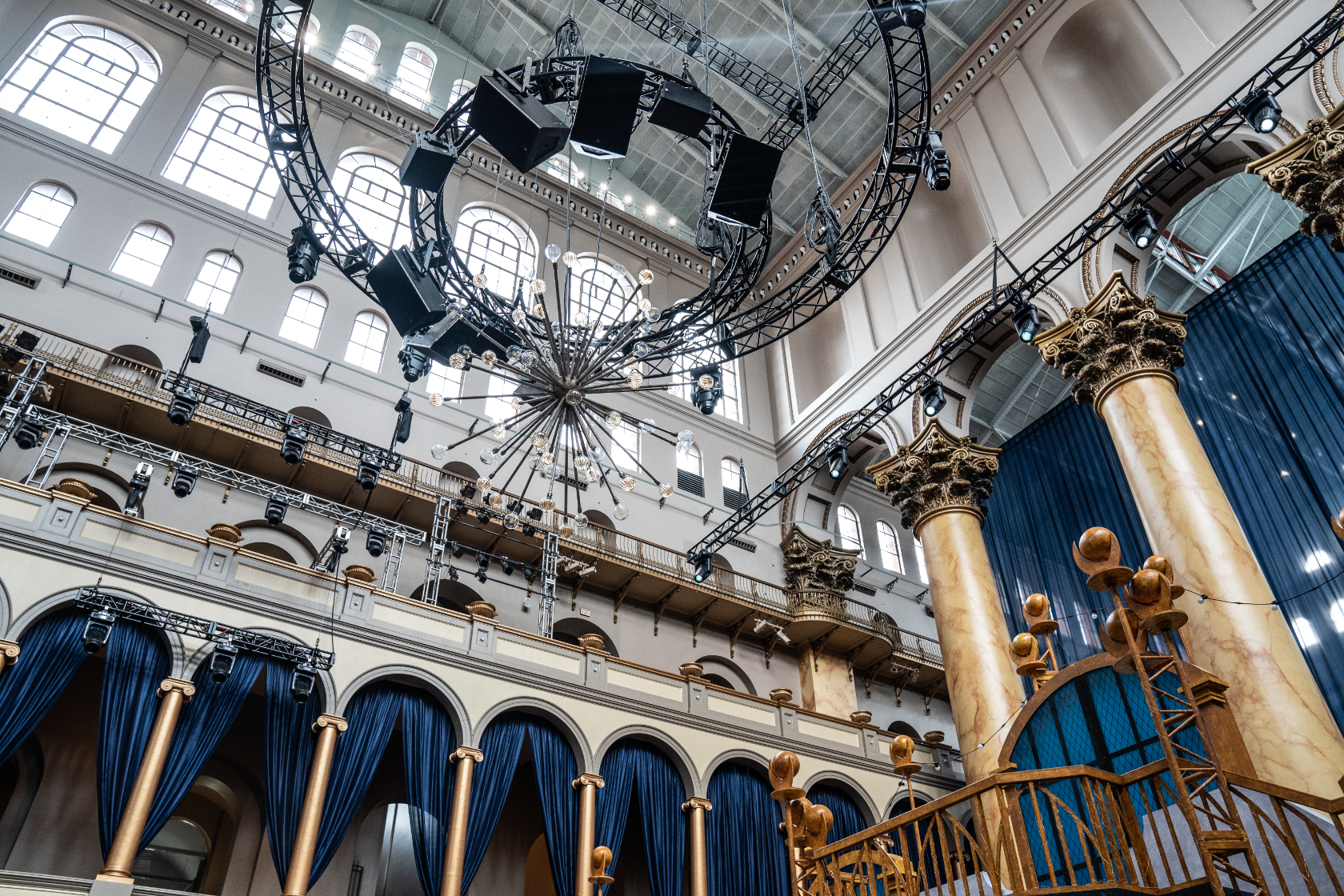
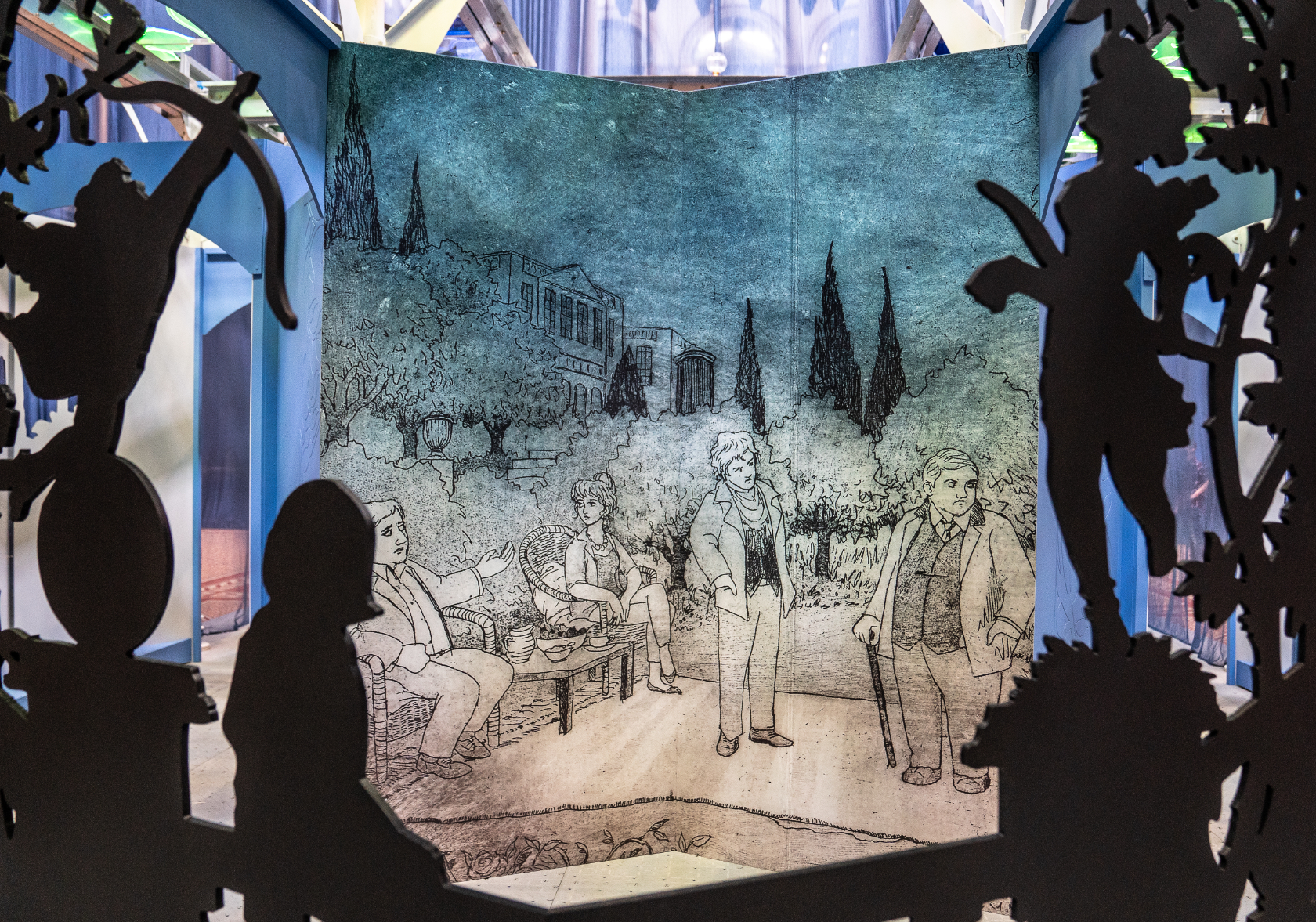
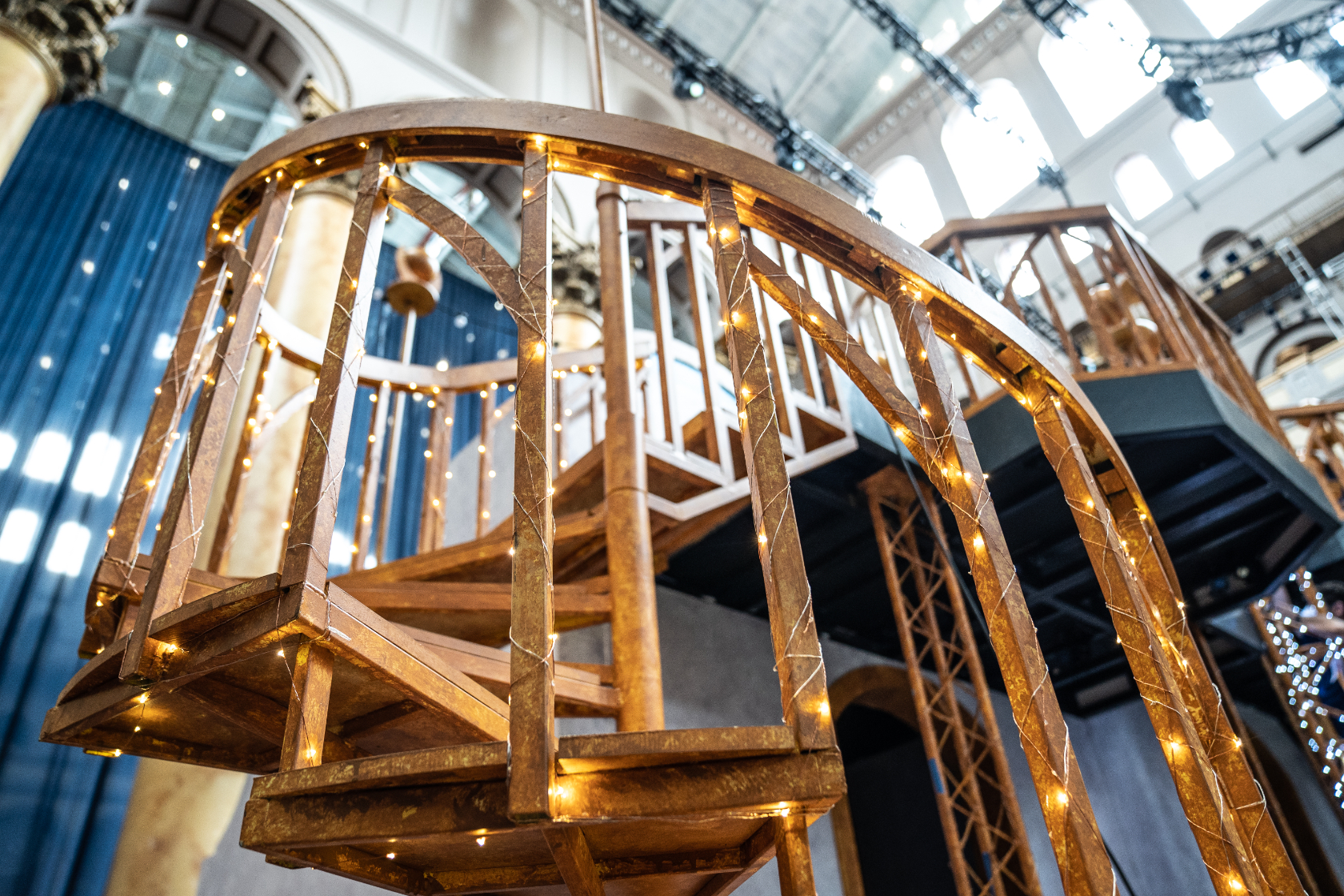
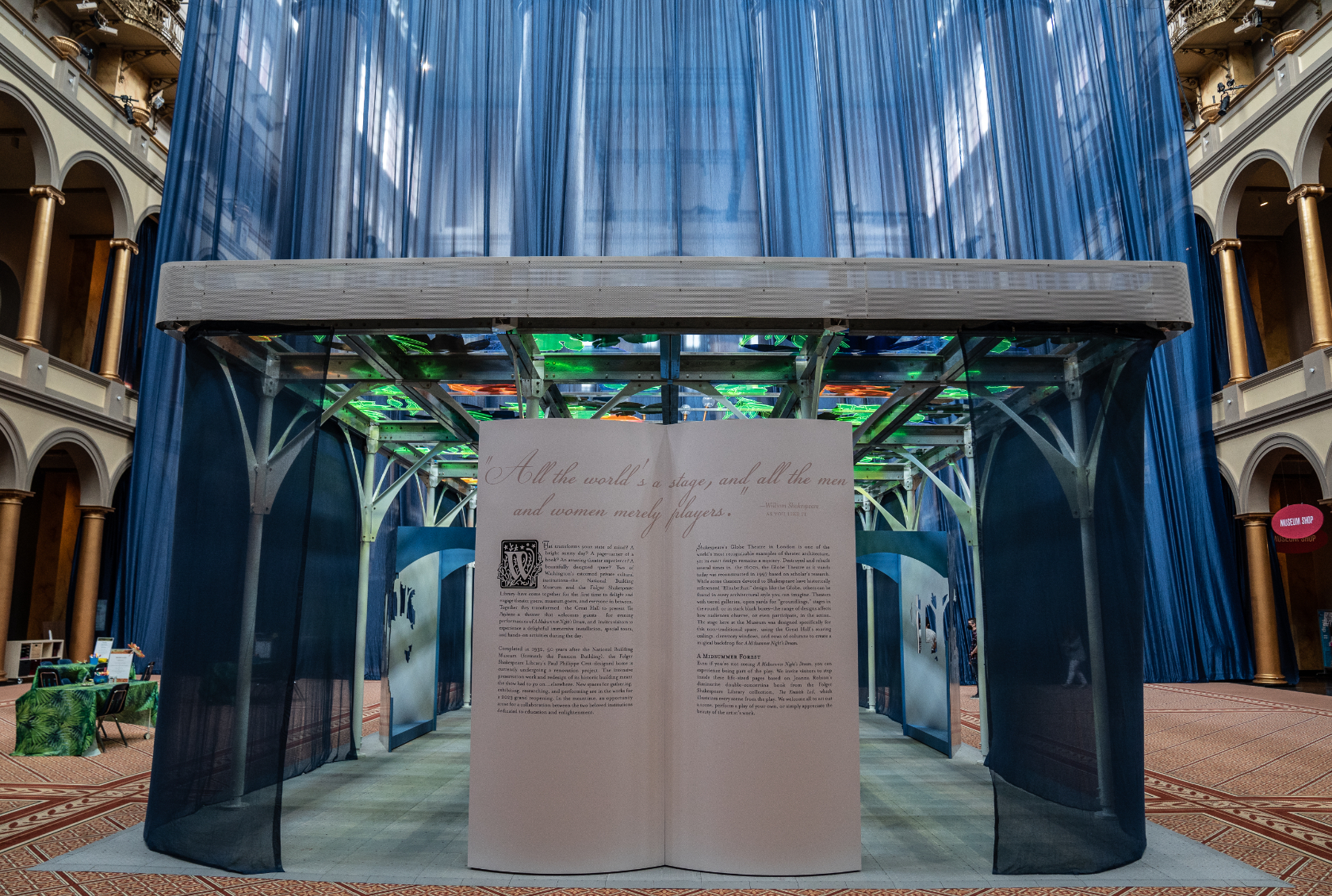
Tony Cisek, the project’s production manager, says Folger and the museum are taking a calculated risk on this venture, as it is costing Folger hundreds of thousands of dollars to keep the equipment in the space for 10 weeks. That includes a 40-by-40-foot festival stage about 20% bigger than Folger’s regular stage, per Cisek.
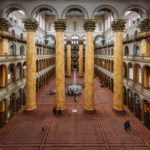
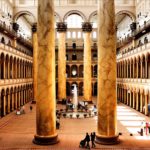
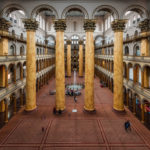
The entire Playhouse itself is twice as wide and more than three times as long as the stage, and can seat about 360 people. Locating the recreation of Midsummer’s Athenian forest in the Great Hall, which has soaring ceilings anchored by 75-foot-tall Doric-style columns, posed its own set of theatrical challenges.
“Getting a person to have some presence in that kind of space takes a lot of work,” says Cisek. “Given the the monumental-ness of this space, how do we focus on a six foot tall human being speaking Shakespeare, which already requires a little leaning in?”
Lighting also proved to be a challenge since the building’s high ceilings make it nearly impossible install scaffolding for light fixtures. The ones Cisek installed are LED sourced, so they’re less likely to blow out. Engineers are also able to move them remotely, a feature that makes them more expensive. The project also involved installing massive black curtains to block many of the Great Hall’s multitude of windows — which are great for natural light but not so great for creating a dark theater setting before the sun goes down.
With the larger area around the festival stage, designers looked to create other places for daytime programming. One of the installations they came up with draws inspiration from Joanna Robson’s children’s book, A Knavish Lad, which is full of illustrated cutouts that depict the Midsummer scenes and is part of the Folger collection.
The designers also attempted to create something of a journey from the building’s west entrance, where visitors walk through a shrinking tunnel with lights overhead. The goal is for the museum to temporarily vanish in the audience’s mind as they walk through the tunnel, and then the festival stage and seven rows of seating will simply appear.
If it all sounds like … well, a dream, Cisek confesses that’s the point. “We’re hoping for a little magic,” he says.
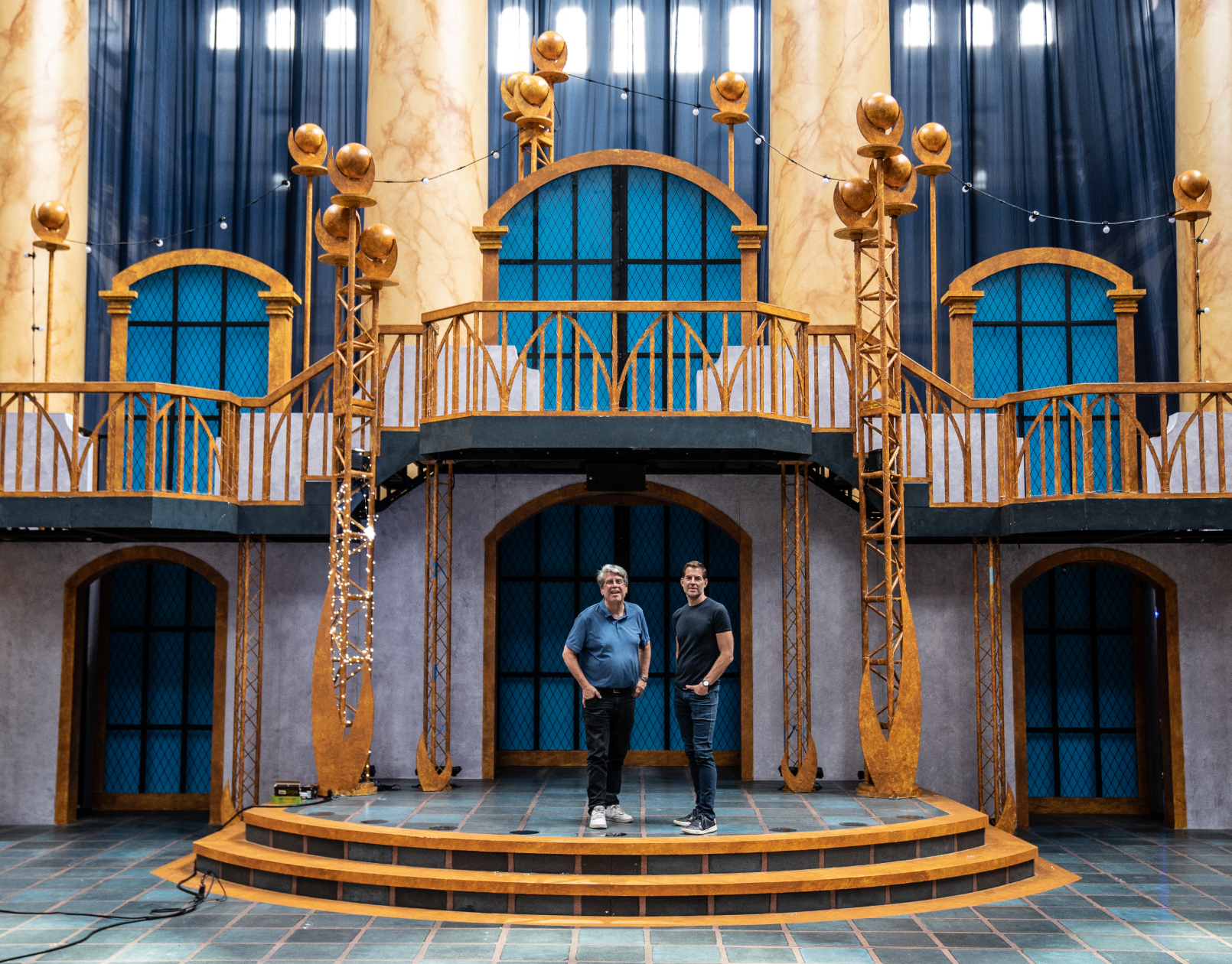
The University of South Carolina has had a relationship with Folger for decades, says Jim Hunter, chair of the USC’s theater department and designer of the festival stage. About three years ago, the two institutions started planning something like a traveling Shakespeare’s Globe theater modeled after one that had become popular in San Diego, that could help Folger Shakespeare Library take its productions offsite while it began a $50 million underground expansion project.
After dozens of renderings, the final design for the traveling stage ended up looking more modern than originally intended. But by the time they were ready to construct it, the world was already deep in the COVID-19 pandemic, and the project was postponed — twice.
The pieces of the set were built in Maryland and sat in storage for 14 months until June, when the crew brought them through the loading dock entrance on the National Building Museum’s east side over three days. (A timelapse on YouTube shows the process.)
“It’s hundreds and hundreds of parts … I mean, like, a thousand parts,” Hunter says. “We fit it in two semis.”
After the show’s run, the crew will deconstruct the stage and transport it to the University of South Carolina in three shipping containers. Student actors will perform A Midsummer Night’s Dream on the stage through September before the university showcases it to communities across the state. After the show tours South Carolina, Hunter says he hopes it will move on to various out-of-state festivals.
The show marks Folger’s first off-site performance since it began renovations in 2022. The theater plans to resume shows in its building on East Capitol Street next year.
A Midsummer Night’s Dream at the National Building Museum, July 12- Aug. 28; $20 – $85. Daytime activities at The Playhouse are included with admission to the museum. Ticketed performances of A Midsummer Night’s Dream and other evening programs are a separate purchase. A calendar of programs can be found online.