Héctor Alejandro Arzate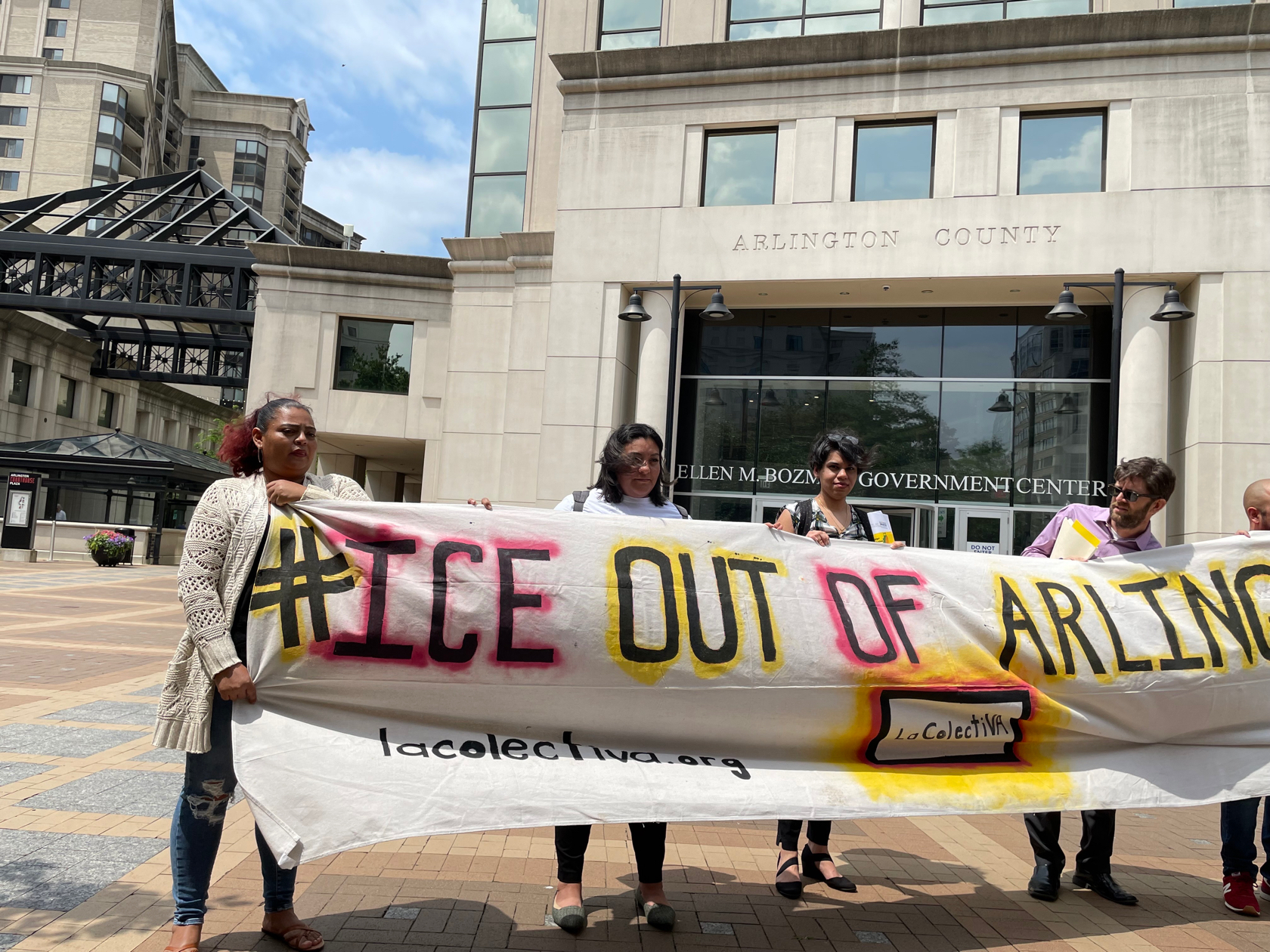
Arlington County has passed a new policy limiting how it cooperates with U.S. Immigration and Customs Enforcement – a step that both community members and the County Board says will build trust with immigrants, encourage them to contact law enforcement and utilize other local resources.
“It’s definitely a step in the right direction,” says Simon Sandoval-Moshenberg, the legal director of the Immigrant Advocacy Program at the Legal Aid Justice Center. “It puts very strict restrictions on any communication or collaboration with ICE whatsoever for most of the agencies of the county.”
The trust policy, which was passed by the County Board unanimously last week, allows county residents to access public services regardless of their immigration status. The policy also prohibits county employees from asking residents to disclose their immigration status and prevents the use of county resources for immigration enforcement.
“There were a few key barriers that we needed to acknowledge and improve,” says Christian Dorsey, the vice-chair for the Arlington County Board. “I think these are all the necessary steps forward to respond to what people truly need from the government.”
While county officials and advocates agree that the policy is a victory for immigrants, Sandoval-Moshenberg says it still falls short because it does not force county police or pressure the sheriff’s office to stop working with federal immigration officials outright – a measure that he and others have been working towards for nearly a year.
“Unfortunately, there’s this giant glaring loophole that you can drive a truck through with regards to the police department,” says Sandoval-Moshenberg.
Under the new policy, Arlington County Police officers are now required to get permission from their superiors before they can contact ICE, but can do so when they arrest an undocumented person for a violent felony or if they are involved in terrorism, human trafficking, or street gang offenses. They can also notify federal immigration officials if the person is arrested for a non-violent felony but deemed a threat to community safety.
But Sandoval-Moshenberg says those exceptions can result in people of color being overcharged and getting stuck in immigration detention.
“There’s really a broad, broad range of things that would qualify,” says Sandoval-Moshenberg. “A lot of things get initially charged as felonies that ultimately end up getting resolved as misdemeanors.”
The new policy does, however, establish an oversight board that will investigate any violations of the new provisions from Arlington County Police personnel.
“There are very strict guardrails that are put in place to ensure that is not the result of an individual officer’s discretion,” says Dorsey. “We are going to have a record that can be audited and assessed.”
Meanwhile, the policy does not limit the Sheriff’s Office because it operates independently from the County Board. Currently, they no longer notify ICE if someone is arrested for a misdemeanor but they do hold detainers on anyone who has been arrested of a felony if a judge signs a bench warrant.
Despite community members urging the Sheriff’s Office to stop working with ICE altogether, spokesperson Tara Johnson says they’re still required to upload a person’s fingerprints to a federal database for those felonies.
“Those individuals that are monitoring those systems, they’re going to be notified anyway,” says Johnson. “It’s automatically going to be reported that they’re in our custody.”
Still, there is a provision requesting annual data from the agency for any time it contacts or engages with ICE. Although it’s not required of the Sheriff’s Office, Dorsey says it could lead to greater transparency.
“We’re not going to be having conversations about hypothetical scenarios,” says Dorsey. “We’re going to be looking at real cases.”
For community members like Beatriz Mejia, who’s been organizing for a trust policy for more than a year, it’s disappointing that the County Board did not stop the county police from voluntarily working with ICE.
“It’s truly frustrating because this shows that they are not listening to the community,” says Mejia, who was born in El Salvador.
Last September, the Arlington County Board began accepting public comments after announcing that it had plans to draft a new policy for cooperating with ICE. Among those who gave feedback were members of the ICE Out of Arlington Coalition, who provided a seven-page proposal.
According to Danny Cendejas, an organizer with local activist group LaColectiVA, the coalition sought out the expertise of the Legal Aid Justice Center and the National Immigration Project of the National Lawyers Guild in an effort to stop all voluntary police collaboration in the least disruptive way.
“We did the work with community to get input and our organizational partners to draft the policy and show them that there’s no requirement for them to continue this practice,” says Cendejas. “But they still, of course, want to keep it in place.”
While he’s still proud of the new policy, Sandoval-Moshenberg says it wouldn’t take much to tumble confidence within Arlington’s immigrant community.
“If there’s even one case in which the police are directly responsible for turning someone over to ICE, there is never going to be trust in the community,” says Sandoval-Moshenberg.
Previously:
Immigrant Community Members Call On Arlington County To Cut Ties With ICE
As Arlington Reassesses ICE Collaboration, Advocates Push For Plan To End It Entirely
Arlington County Is Reassessing Rules For Cooperation With ICE