Héctor Alejandro Arzate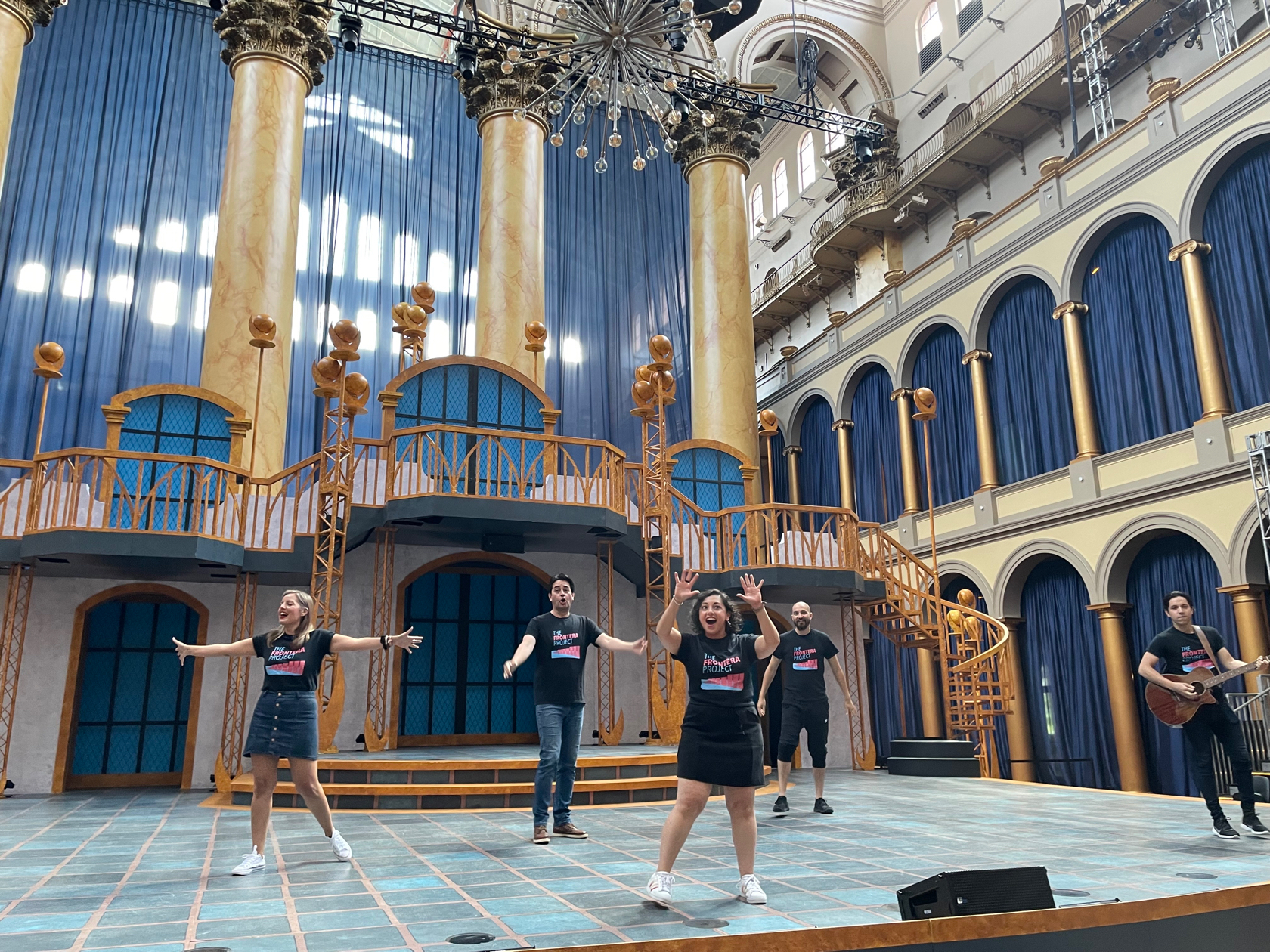
Nearly every day since she turned 20 years old, Valeria Vega-Kuri has been crossing the U.S border between San Diego and Tijuana to get to work.
While it may seem like an extraordinary practice, it’s one of many experiences that she and other performers hope to showcase through the Frontera Project. It’s a bilingual, binational theater production about life on the frontera, or the border, that features movement, music, and monologues to engage audience members.
“My familia comes back and forth almost every day. My siblings live in San Diego but the rest of the familia lives in Tijuana, so that makes us a true familia fronteriza,” says Vega-Kuri during the production’s opening performance.
Through the support of the Mexican Cultural Institute, the play is being hosted by the Folger Shakespeare Library and the National Building Museum. It was created and directed by Ramón Verdugo and Jessica Bauman of the Mexican company, Tijuana Hace Teatro, and the U.S. company, New Feet Productions.
According to performer Cristóbal Dearie, it’s meant to be an interactive experience for both the audience and actors. He says he hopes it can change people’s minds about stereotypical images of life on the border.
“It’s a place where we can have a conversation,” says Dearie, who was born in Tijuana. “As soon as you sit in one of these chairs, you’re going to experience something that probably is going to change your way of thinking.”
For Bauman, who grew up in D.C., those performances are an opportunity to not only change the narrative of what it means to be an immigrant but also the policies – both local and federal – that impact their everyday lives.
“I’m not a policy person but I do truly believe that if we don’t have the right stories, we can’t make good policy,” says Bauman.
Meanwhile, Karen Ann Daniels, the artistic director of Folger, says she’s proud that the theater can offer the production thousands of miles from Tijuana. She hopes those less familiar with life on the border can learn from it.
“I just felt like we needed to bring this here,” says Daniels. “Artists can actually engage in civic conversations and actually help bridge that for us.”
Although the production does touch on serious topics, Bauman also says she hopes it can offer a sense of comfort for the local immigrant community – and especially those who have arrived to the region from the southern border in recent months.
“Maybe some of the people who have sort of been dropped into the D.C. area as kind of pawns in a political conversation might find their way to the show,” says Bauman. “I hope they would find a kind of warmth and humanity and recognition in the stories that we tell.”
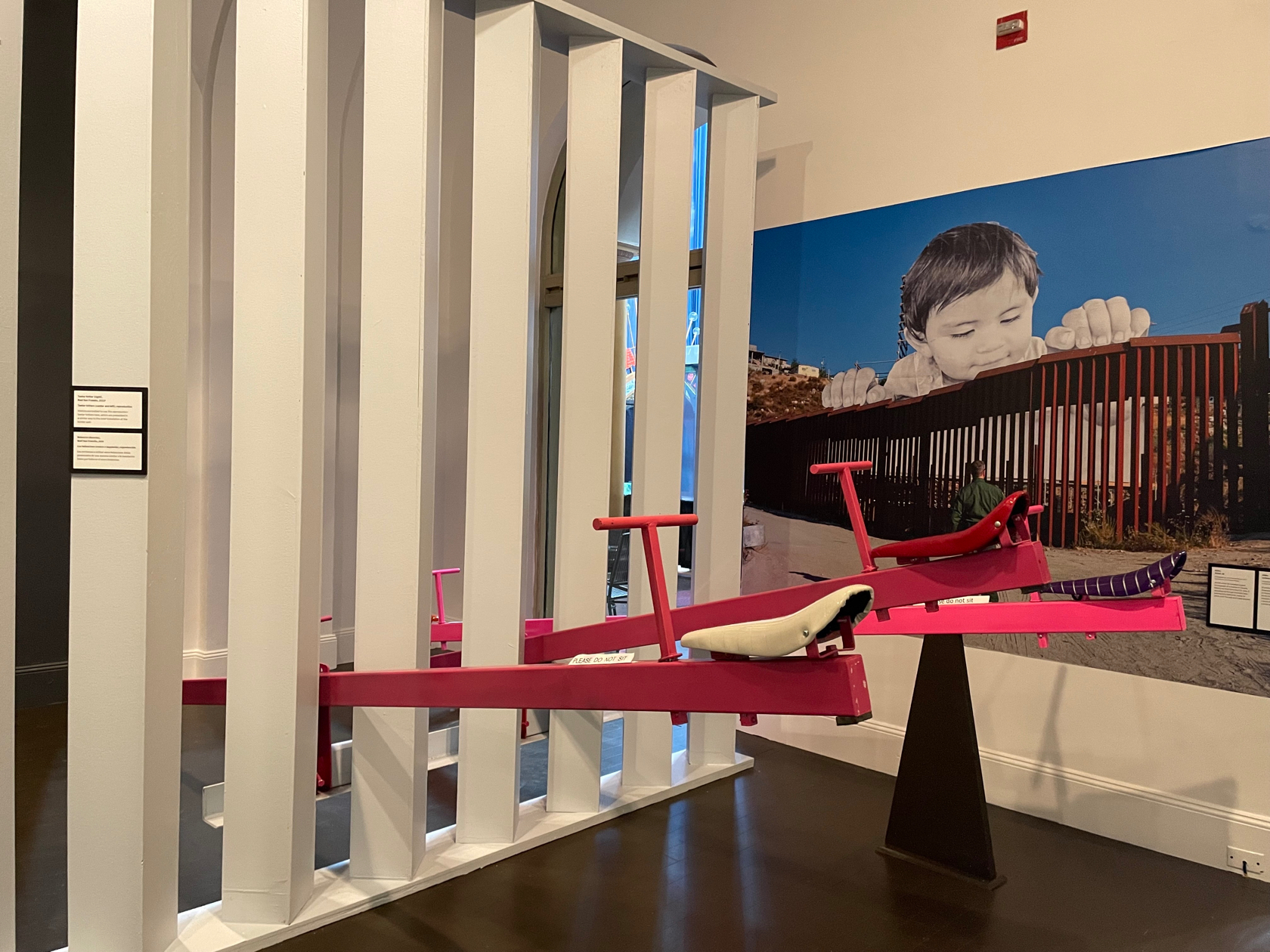
The play is also being exhibited alongside the museum’s display of The Wall/El Muro: What is a Border Wall?. According to Victoria Gonzales, the museum’s digital media marketing manager, it’s another way to showcase the impact that the border wall has on communities.
“What we want you to take away is the bigger story of the border,” says Gonzales. “We’re here to present the historical context. The impact on the built environment. How it affects people’s lives… to try to humanize the story and to give it a different perspective than maybe one that’s only through a political lens.”
As part of the National Building Museum’s Summer Block Party installation, performances and workshops for the Frontera Project will run from July 29 through August 1. The show runs 60 minutes and tickets are free with Museum admission ($10 adult, $7 youth, students, and seniors).