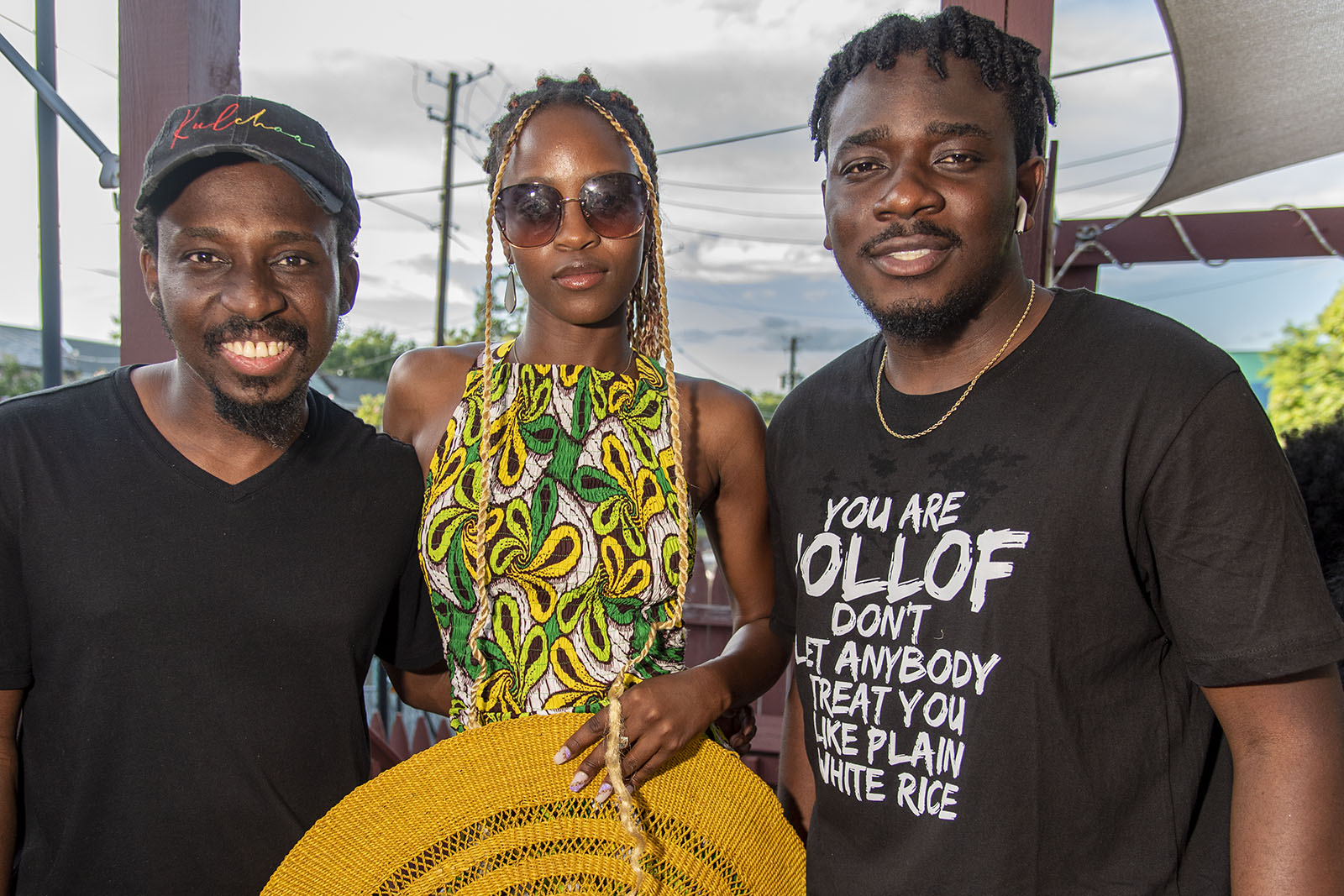
The Jollof Festival is a traveling competition where teams representing various West African countries compete for a trophy and bragging rights for the title of best Jollof in their region that was held in D.C. the weekend of July 30.
The event was being put on by founder and producer Ishmael Osekre, who has a checkered history when it comes to throwing large food events. A pizza festival he organized in 2017 led to him being banned from running events in New York.
“All I have to say about the pizza festival is that experiences from the past have a way of informing the future,” Osekre wrote in a statement to DCist/WAMU after the D.C. Jollof Festival. “The mistakes and lessons of 5 and 6 year ago have clearly not been wasted as they inform how I improve curating the experiences for participants.”
Jollof is a West African dish in which a flavorful tomato-based stew turns white rice a deep orangey-red color. It’s typically cooked with a protein, meat or fish, but can also be made vegetarian. “When you look at the various African cultural experiences, certain countries claim a stronger hold than others. When you look at soccer, it’s Ghana, Nigeria, Egypt, Cameroon. When you look at Afrobeats, it’s Nigeria and then Ghana comes in a little bit – the other countries don’t feel a stronger hold or claim on how it represents them,” Osekre said when I quickly pulled him aside at the festival. “But when it comes to jollof rice, it’s the unifying and dividing factor. Because each country believes they make the best. That’s why this is so exciting. It creates room for equal participation and collaboration.”
This year’s competitors for the D.C. region are local restaurants and caterers representing Senegal, Liberia, Ghana, Sierra Leone and Nigeria. The last competition was held in 2019, where Mabin’s Kitchen, representing Sierra Leone, took the crown. I decided to head out to the festival for the first time, and I’ll be honest: As a Ghanaian-American, I was pulling for Ghana, but I vowed to vote on taste rather than any loyalty I hold to the nation.
10:21 a.m.: The festival doesn’t start until 2 p.m. so for now, I will take a walk and eat a light breakfast in preparation for the eating marathon I’m going to later — although nothing sounds as good as a steaming bowl of jollof right now.
2:50 p.m.: I arrive at the Jollof Festival in a loose fitting dress. The festival is being held on the grounds of The Dew Drop Inn, a two-level dive bar in Northeast D.C. Immediately upon entry, a huge smoker filled with skewers of meat and chicken catches my eye. I see that the smoke and enticing smells are coming from Koité Grill, a family-owned business in Silver Spring.
2:53 p.m.: Reader, please note that it is hot. Though the high today is only supposed to be 80, the sun feels like it is beaming directly on us. There is some shade from the building and the vendor tents and the occasional breeze. In addition to those cooking, there are vendors selling brightly colored African print personal fans, baskets, beaded jewelry, handbags and more.
Guests are seated in small groups on benches talking and fanning themselves since there isn’t yet much to do — the event was supposed to start at 3 and it doesn’t look ready to start. I strike up a conversation with Olayinka Sarayi. Although she’s attending the event to promote her company Taptap Send, she is also rooting for Nigeria to win the competition.
“I’m rooting for that Senegalese spot right there,” Takia Taylor-Anthony tells me, pointing to Koité Grill, “I can’t wait to taste their food. They heated the grill and there was no food on it and it smelled so good, so it must be good.”
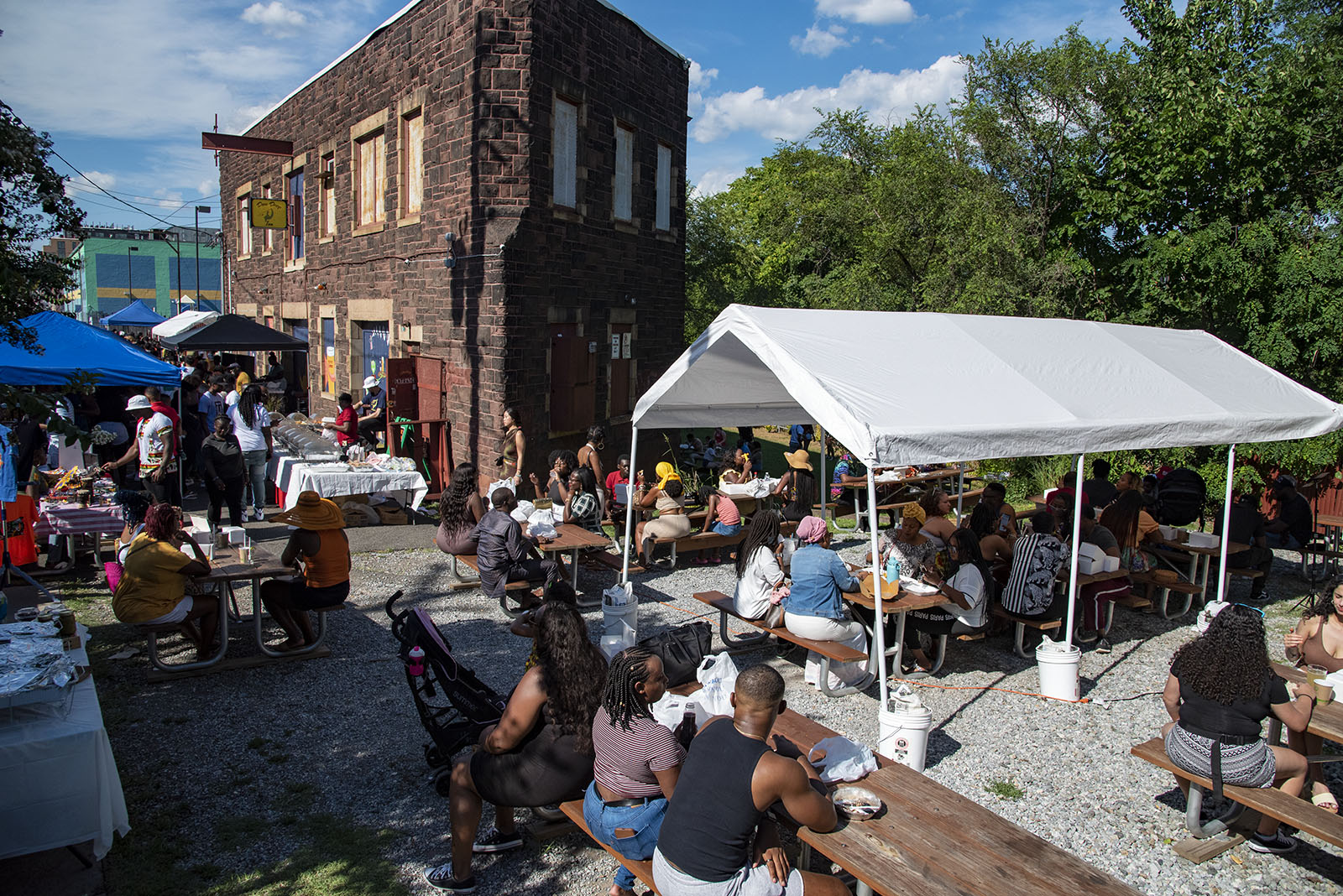
3:27 p.m.: Lines in front of the food stands are growing. Near the DJ booth, a group of boys have started playing on djembe orchestra drums. “The music we play is from West Africa,” says Zion Utsey, a member of the group, the Farafina Kan Drum and Dance Ensemble, “I fell in love with it, but a lot of people were born into this music and this culture.”
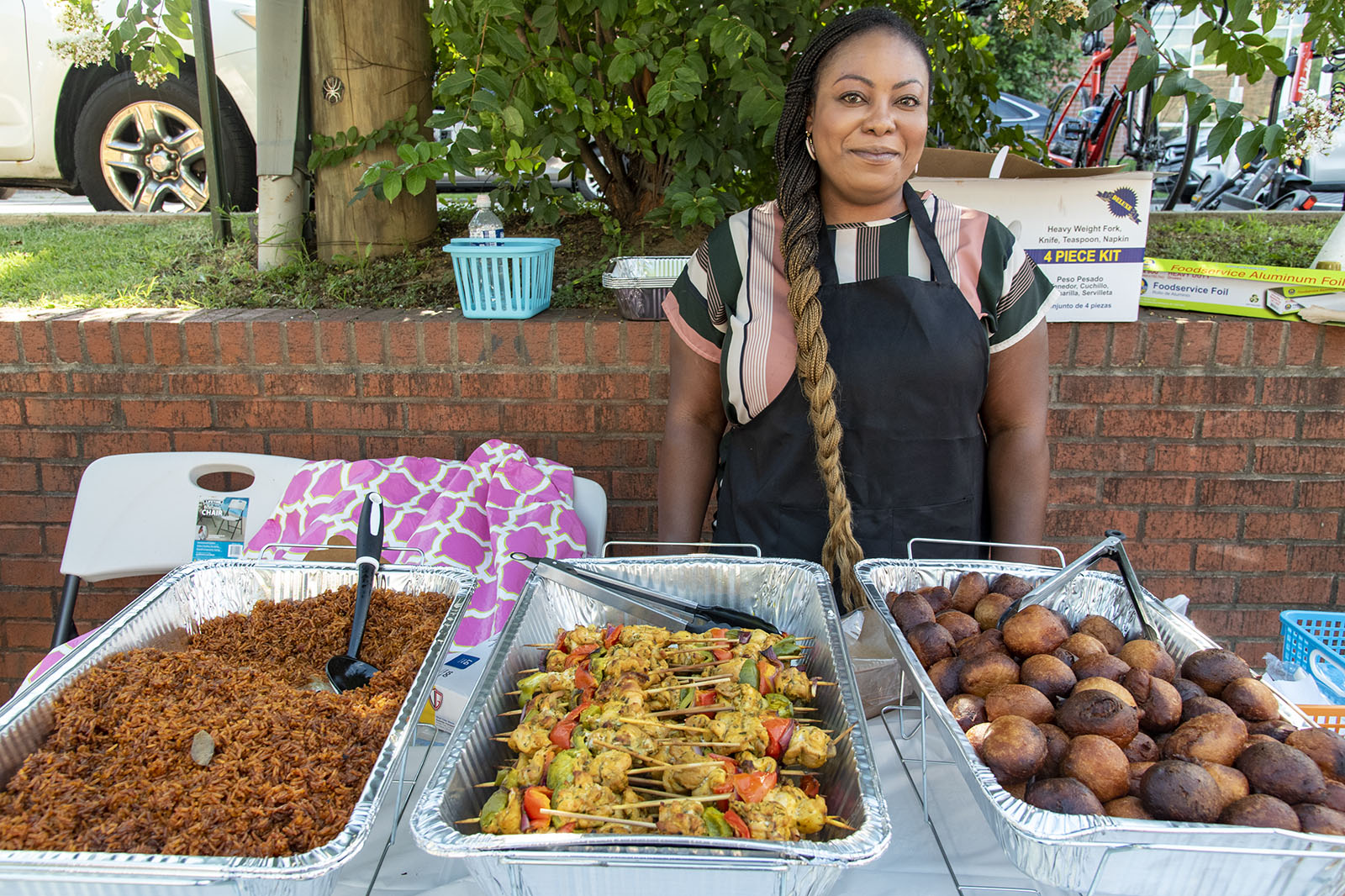
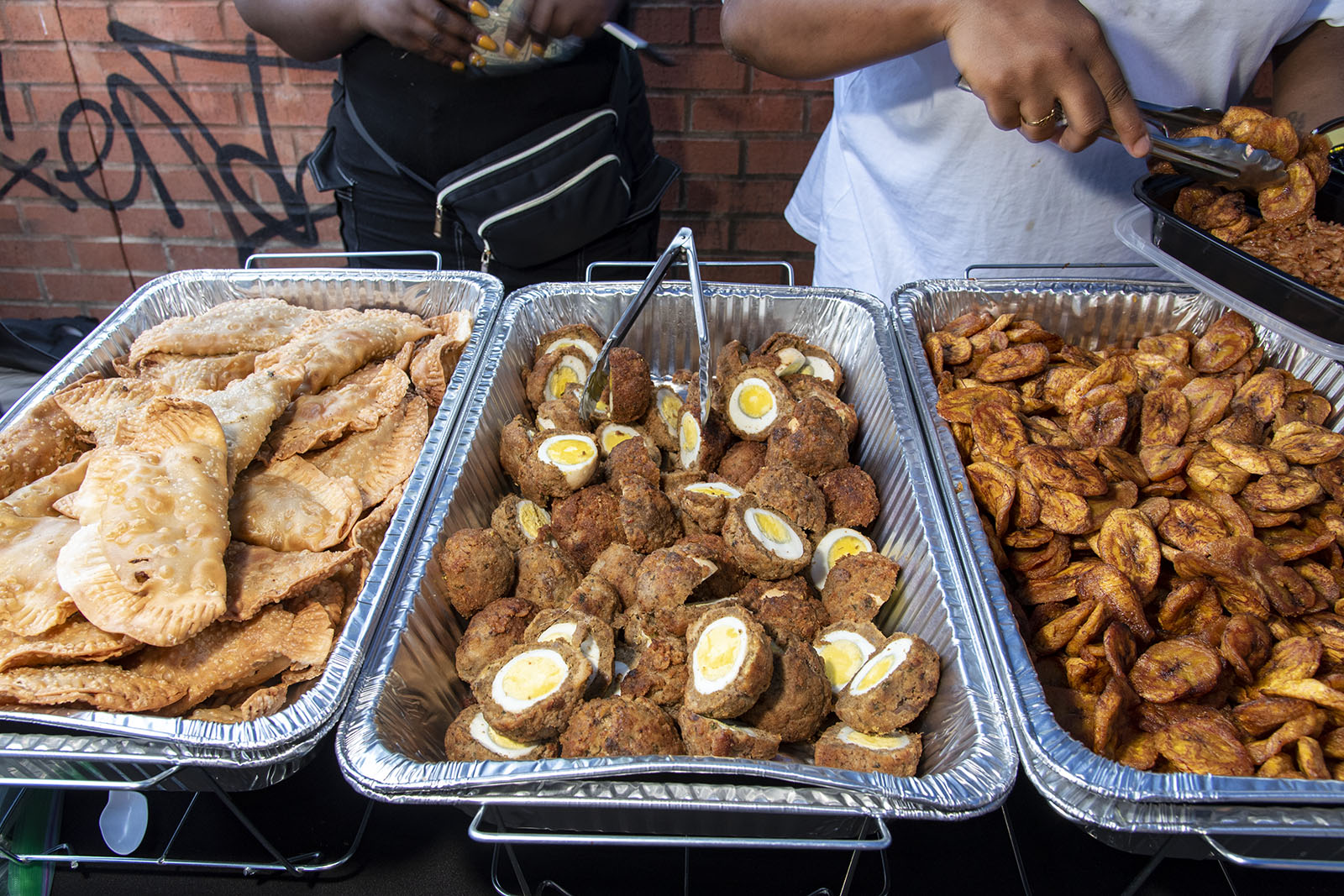
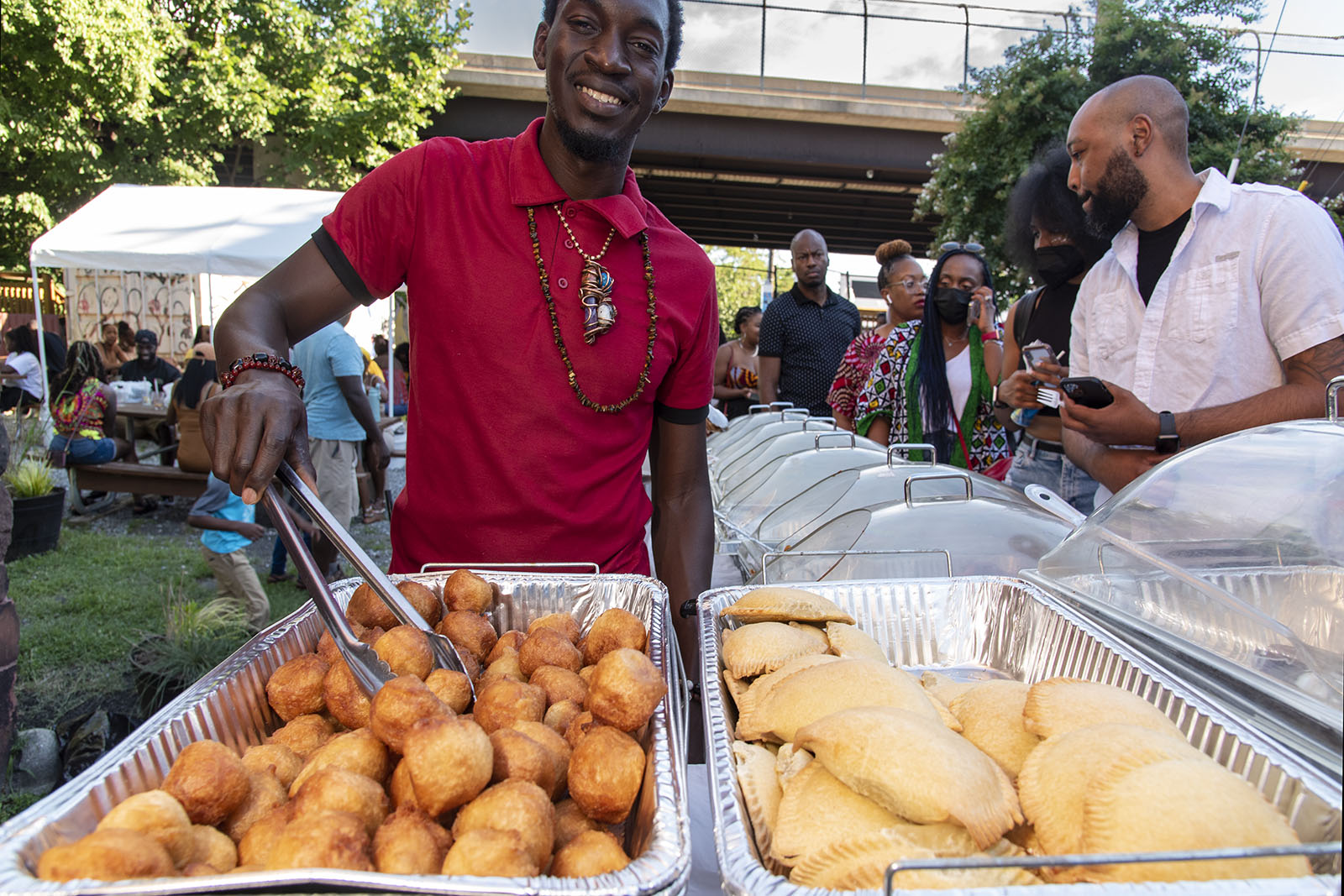
3:45 p.m.: At this point I am hungry. (The last thing I ate was pizza rolls at 11 a.m.) I spot the tray of fried plantains at the Queensway table. Plantains are one of my absolute favorite foods so there’s no way I’m walking by. “We won the jollof competition about 5 or 6 years ago so we always come through and rep for Nigeria,” says Queensway owner Ade Ogunsalu, whose family’s Afro-Caribbean restaurant has been in Maryland for 24 years. In addition to the plantains, Queensway’s epic spread included jollof, jerk chicken, curry goat, suya beef (spicy, seasoned beef on a skewer), suya chicken, stew chicken, meat pie and puff puff (balls of sweet fried dough).
After I collect my plate, I plop down on a stool in the air-conditioned bar to start shoveling jollof, cabbage, plantains and meat pie into my mouth. There are several more people in the bar now. My jollof is delicious as is the meat pie which has a lighter, fluffier crust than I’m accustomed to. I don’t want to be too full since I know the blind tasting is coming up, so I stop eating before I’ve had my fill and find somewhere to stash my leftovers.
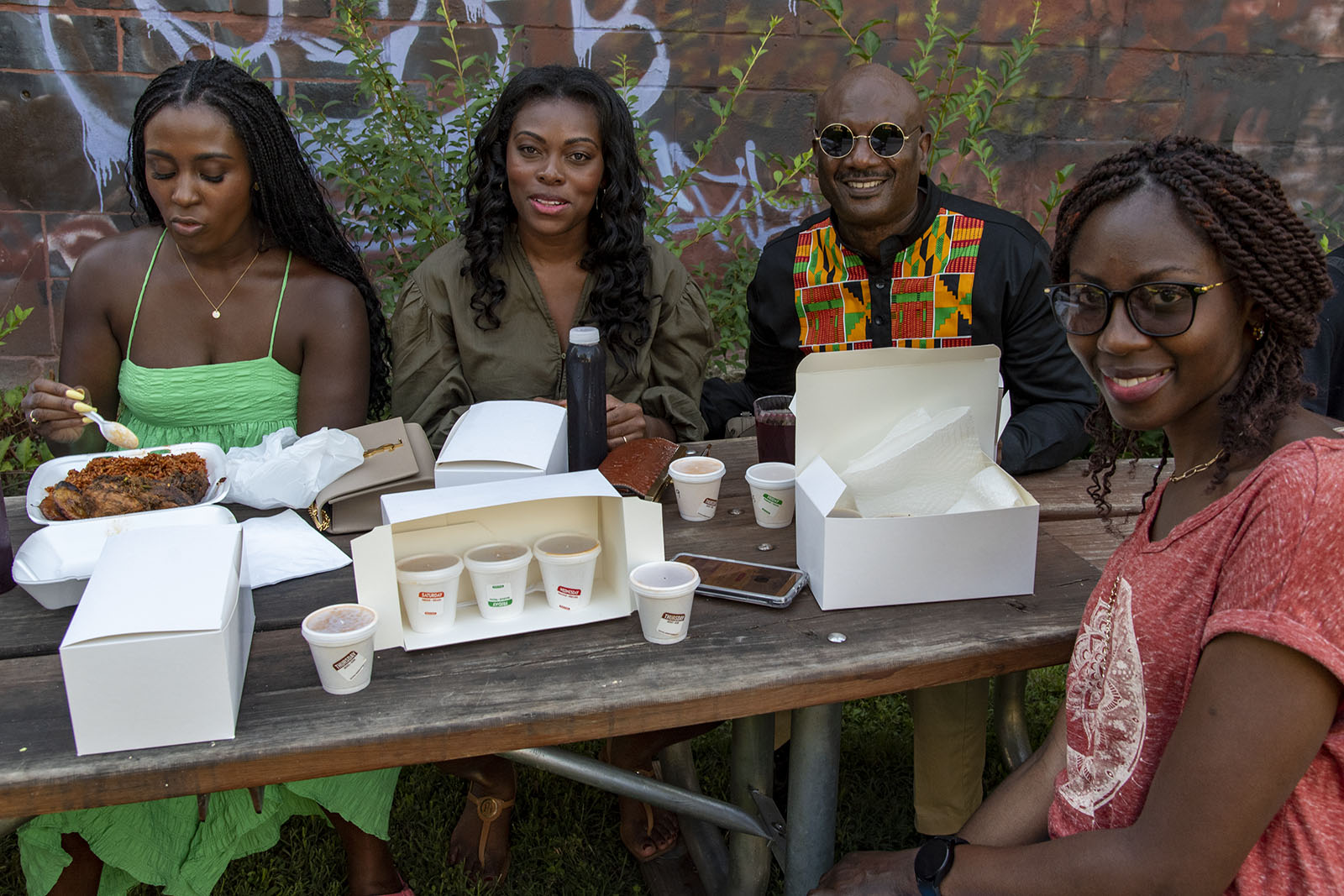
4:00 p.m.: Organizers announce that the official tastings are starting. No one else seems to react, but I pop out of my seat immediately. The competing jollofs are scooped into small, color-coded styrofoam containers and bundled in a box so that each guest gets one sample of each company. There are five competitors, but only four are on time so the boxes are missing a sample.
4:07 p.m.: The line to grab the tasting box has grown rapidly, and is now running down the length of the venue. One of the people in line, Dan Baum, tells me he’s rooting for Ghana. “I studied abroad in Ghana for a summer in college and put on about 10 pounds worth of jollof while I was there, so I had to come out once I heard about this,” he says.
“I understand that there is immense competition between the different styles so I’m excited to try all of them and determine for myself which one is — quote — best,” says Dana Schmucker, also waiting in line.
4:20 p.m.: Mukul Ranjan, who is photographing the event for DCist, and I skip the line to get a tasting box — press privileges that right now I’m really grateful for because the sun is unforgiving. We head into the bar to unbox and taste. After going through the four samples, we both determine red is our favorite. We think we can taste heavy notes of nutmeg. It’s moist without being oily and has a nice color. I immediately go to the voting web page and vote.
4:45 p.m.: The event is now in full swing. I walk around to find out what other people think about what they’ve tasted. I hear a lot of people saying red is the best. I can’t help but think that it may be the Ghanaian one; it tastes so much like my mom’s jollof. But someone else insists it’s Liberian. One guy was singing praises of the spicy jollof being served by Woodbridge, Virginia-based Hajara’s Kitchen and Suya Supply. I believe him that it’s spicy — the spiced suya on the restaurant’s small open grill has stung my nose several times when I walked by, causing me to sneeze.
5:04 p.m.: Inside the bar, I run into a group of girls wearing pink shirts that say “Bach Crew” trying to convince one girl wearing a white “Bride” shirt to take a shot. “You can’t get married without taking a shot,” one of the bridesmaids says to Caire Grigsby, the bride. Seems legit. She finally does — though she looks like she regrets it a second later. What brought her here on her bachelorette party of all days? “I’m Liberian and I’m here to settle the truth that we’re going to win,” she tells me. “I also just wanted to get a little cultured with my bridal party,” she adds.
5:46 p.m.: I decide to investigate my hunch and find the Ghanaian vendors. I meet Dorcas Arthur, owner of Korkor’s Eatery also in Woodbridge. “As Ghanaians, we have a very special way of making jollof and as much as people want to argue, we’re the best. We have good taste,” she says. “The herbs we use are different from the Sierra Leoneans, but they won’t believe that,” she adds, tossing a playful look to the Sierra Leonean table right next to her. “We use more tomatoes–as much as they will argue jollof is not just tomatoes. But the more tomatoes, the better.” I peek over at their jollof and realize it doesn’t look like the one I most enjoyed. I start to worry.
5:47 p.m.: I walk a few steps to the reigning champ who has had the luxury of reigning for the past three summers while the competition was on COVID ice. “I think the spices make the difference,” says Carol Khanu, owner of Mabin’s Kitchen, a catering company based in Maryland. “I have my own spice line so when I cook my jollof — I reemphasize — I up the spices and my jollof comes out tasty and that’s what it’s about.” I glance over at the jollof they’re dishing out and spot it immediately: that’s the red one we loved (I think).
5:50 p.m.: I see the line at Hajara’s Kitchen stretches about 20 people deep. As a bi-national family business, they are repping a Sierra Leonian and Nigerian jollof hybrid. I want to ask them more about it, but between flipping over fresh sticks of suya, serving out bowls, and having a smaller staff than the other vendors, they seem too busy for a chat.
6:01 p.m.: The line at Koité seems calm for the first time in a couple hours so I snuck one of the managers aside for a quick conversation, “We’re from Senegal, known as the jollof rice originators,” Adja Koité told me, “Jollof is an ethnic group in Senegal and the people there are called jollof jollof. We have two types of jollof, one with fish and one with meat. So of course we’re the originators, so of course we’re going to win.” Although I didn’t know this story, some cursory googling suggests that it’s true.
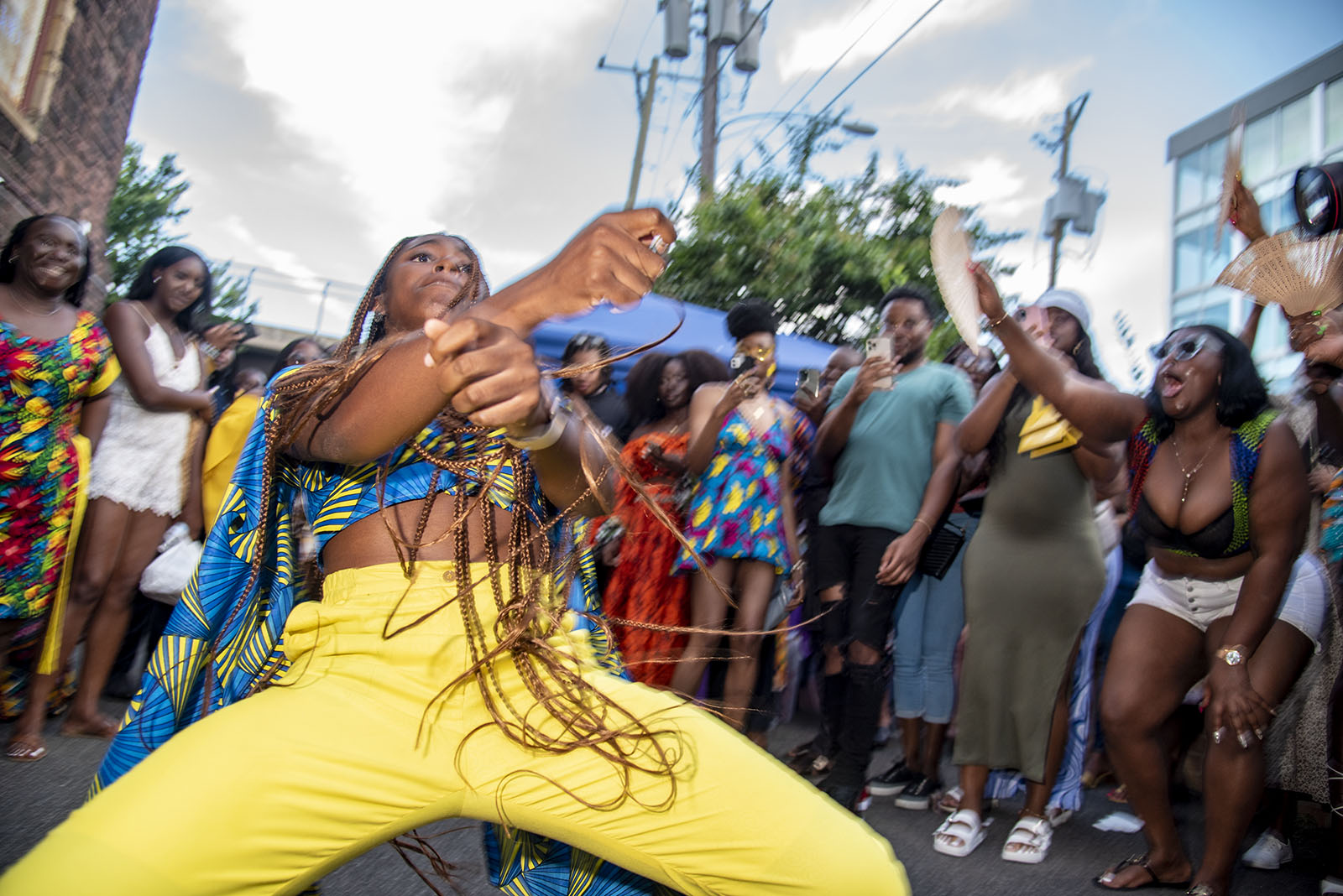
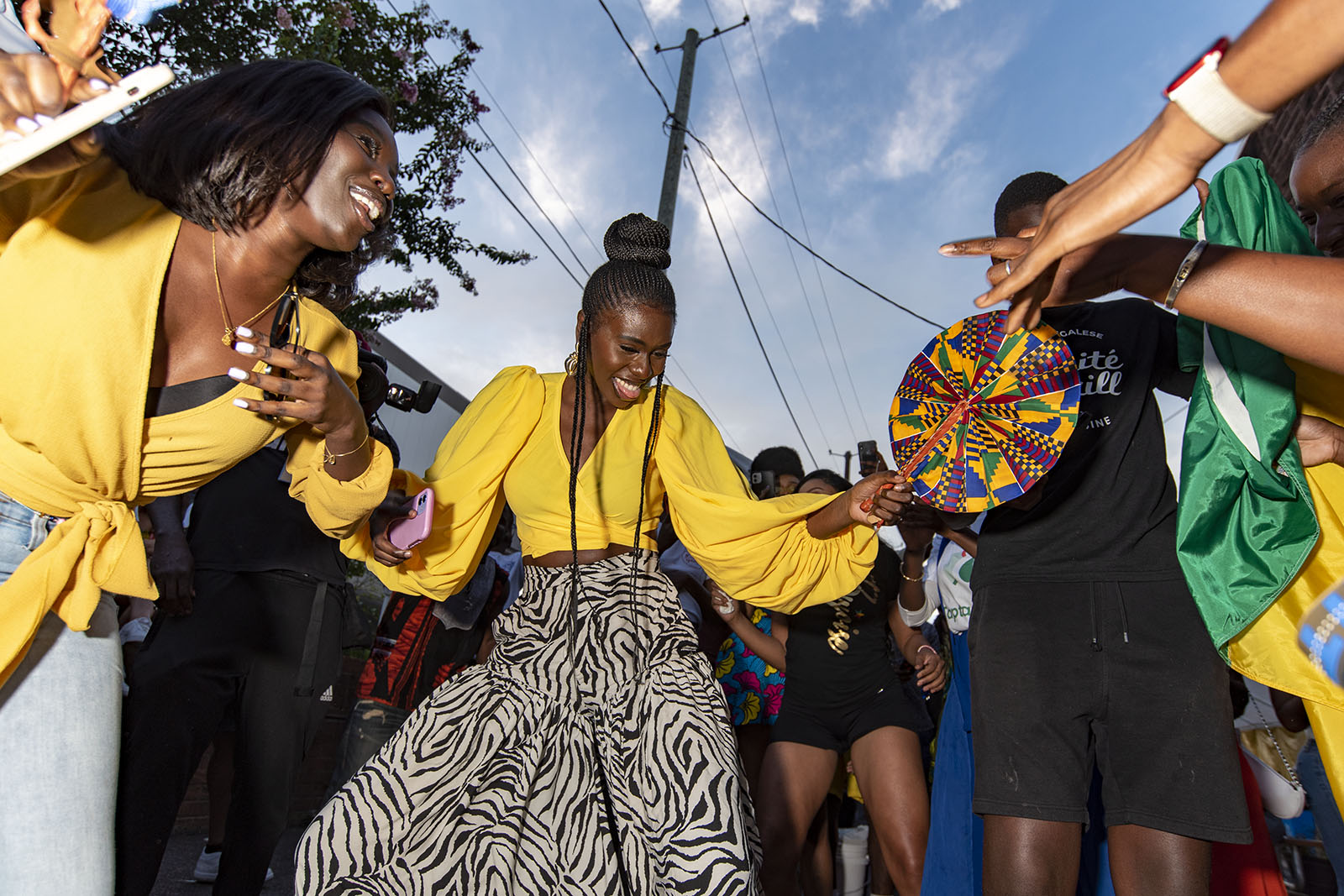
6:41 p.m.: Now that everyone has full bellies and the sun is lowering in the sky, people have started dancing. Mukul points out how lively and full of energy the event is. He’s not kidding. The afrobeat songs are blasting from the speakers. People are in raucous conversation with each other, many switching between English and their native languages. I hear squeals as girls run into old friends. Kids are running in the grassy areas while their parents try to catch them.
Still, I could use a break. I stop by the table for SF Catering and Events, based in Frederick, Maryland. They are serving homemade juices on ice and their drinks look like a cold, refreshing escape. I buy two bottles of pineapple-ginger juice.
7:07 p.m.: Remember that fifth contestant that was late? It is Liberia’s own Graystone Music Group, a local studio space, which has a small catering arm for anyone who is using their facilities. They are competing, but not serving as a vendor. They somehow managed to get their jollof entry to attendees, but I didn’t realize it early enough to get a taste.
I run into people from college and enter long conversations with strangers while we all wait for the winners to be announced. The winner was supposed to be announced at 6 p.m., but things are behind schedule.
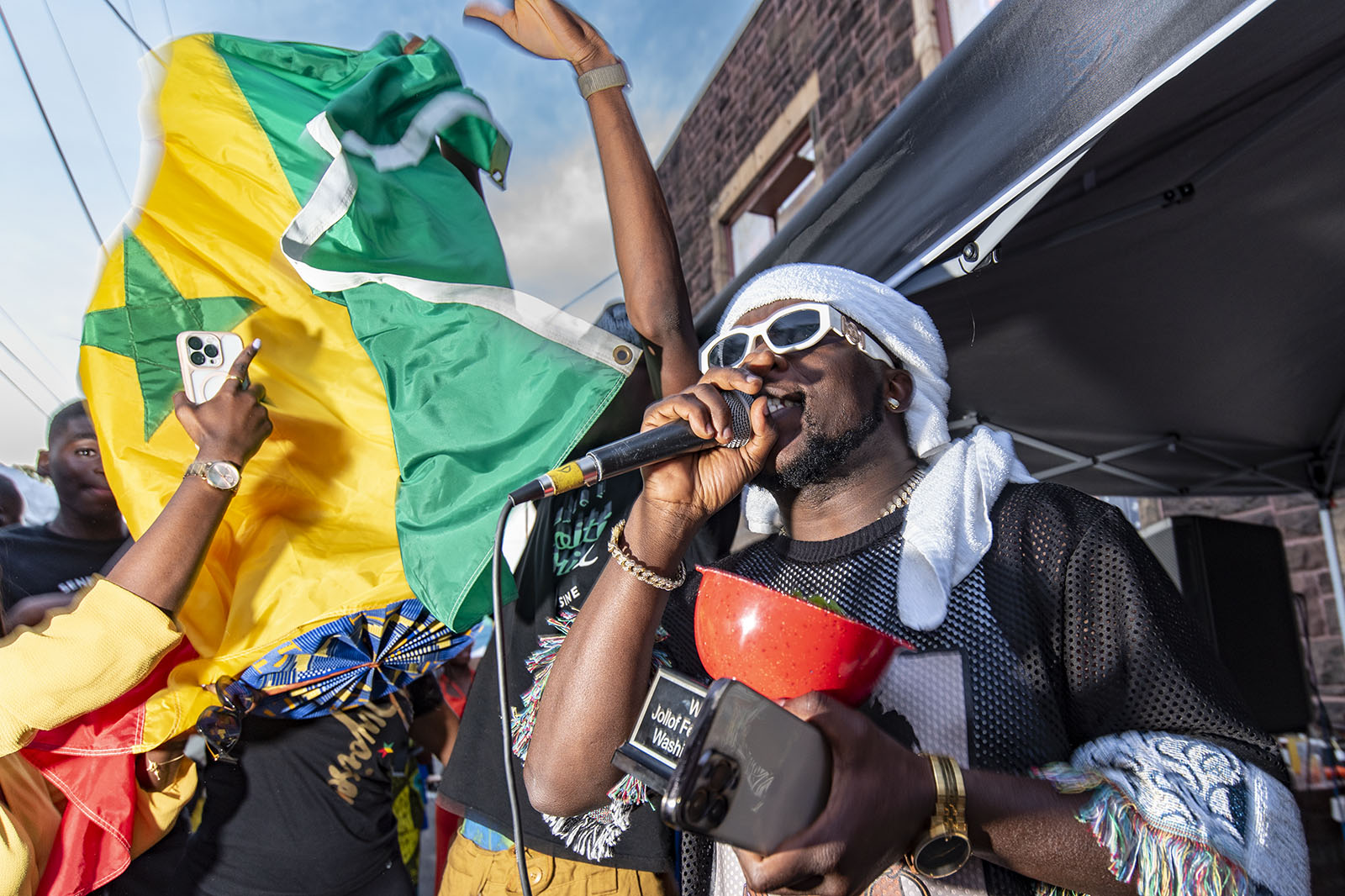
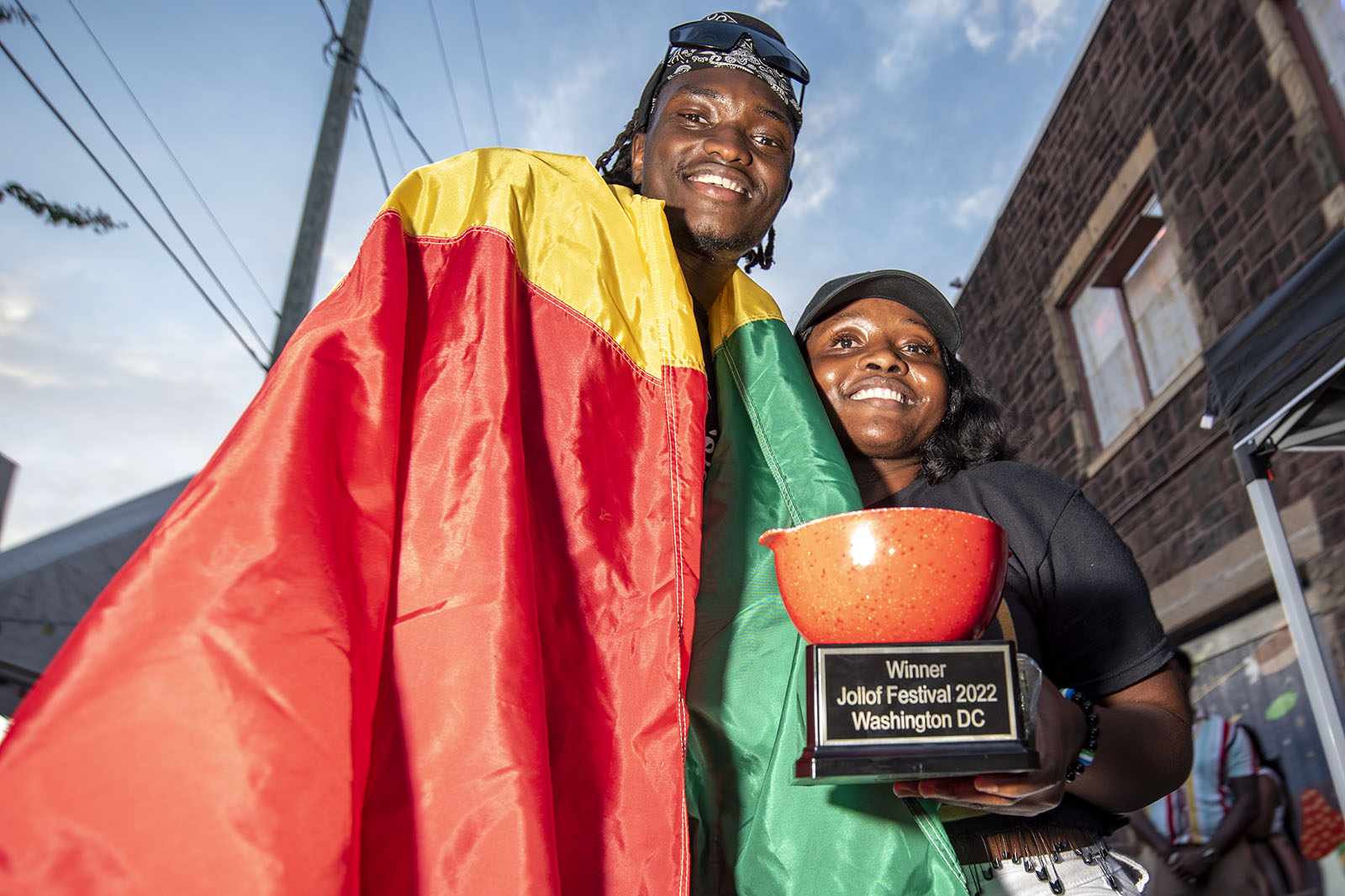
8:03 p.m. They’re finally announcing the winner and surprise — there is a tie! Senegal represented by Koité’s Kitchen and reigning champ Sierra Leone represented by Mabin’s Kitchen are tied for the winner.
People are hooting and hollering, jumping up and down. A huge crowd has formed around the two groups of winners. I push my way through the crowd to get reactions to this turn of events.
8:12 p.m.: “All I have to say is history repeats itself, so at the end of the day I love my Senegalese brother here,” Khanu says, patting the shoulder of one of the boys from Koité’s Kitchen, “It’s a healthy competition and I love it.”
The warmth was mutual.
8:15 p.m.: “To us, we represent the whole of Africa. So whether we win, we tie, we lose, we’re just happy to be here to share with the competition. That’s it,” says Pape Koité.
Yeah, that’s it for me too.
Update: This story has been updated to reflect Osekre’s comments about the New York City Pizza Festival and his involvement in food events.