Martin Austermuhle
For some, they were a historic treasure. For others, they appeared to be an odd pile of rocks hidden away in the midst of Rock Creek Park. For the younger set, they were a climbing structure or place to wage make-believe wizard fights; for the cynics, an apt metaphor for the delicate state of American democracy. And for many D.C. locals, they were a hidden quirk in a city of obvious monuments and memorials.
But no matter what they meant, the old Capitol stones will soon be no more.
According to a story posted by Bloomberg Government on Tuesday morning, the sandstone and marble stones — which had once formed part of the U.S. Capitol, but were removed during a renovation in the late 1950s and placed in Rock Creek Park some 20 years later — will be moved to a storage facility in Maryland, where they will no longer be accessible to the public.
“The stones are being moved at the request of the National Park Service for safety, realignment and preservation purposes. They are being moved to the AOC’s area at Ft. Meade. The public will not have access to the stones there,” confirmed AOC spokesperson Kiren Marshall in an email to DCist/WAMU.
The push to move the stones to a more secure facility reportedly dates back to 2020, but was delayed by the pandemic; last summer fencing was placed around the stones, cutting off the site just behind a maintenance facility next to the Rock Creek Horse Center. The fencing remained in place as of Tuesday afternoon, though there was no evidence that any stones had yet been moved. Marshall says the actual moving of the stones is “anticipated to take several years.”
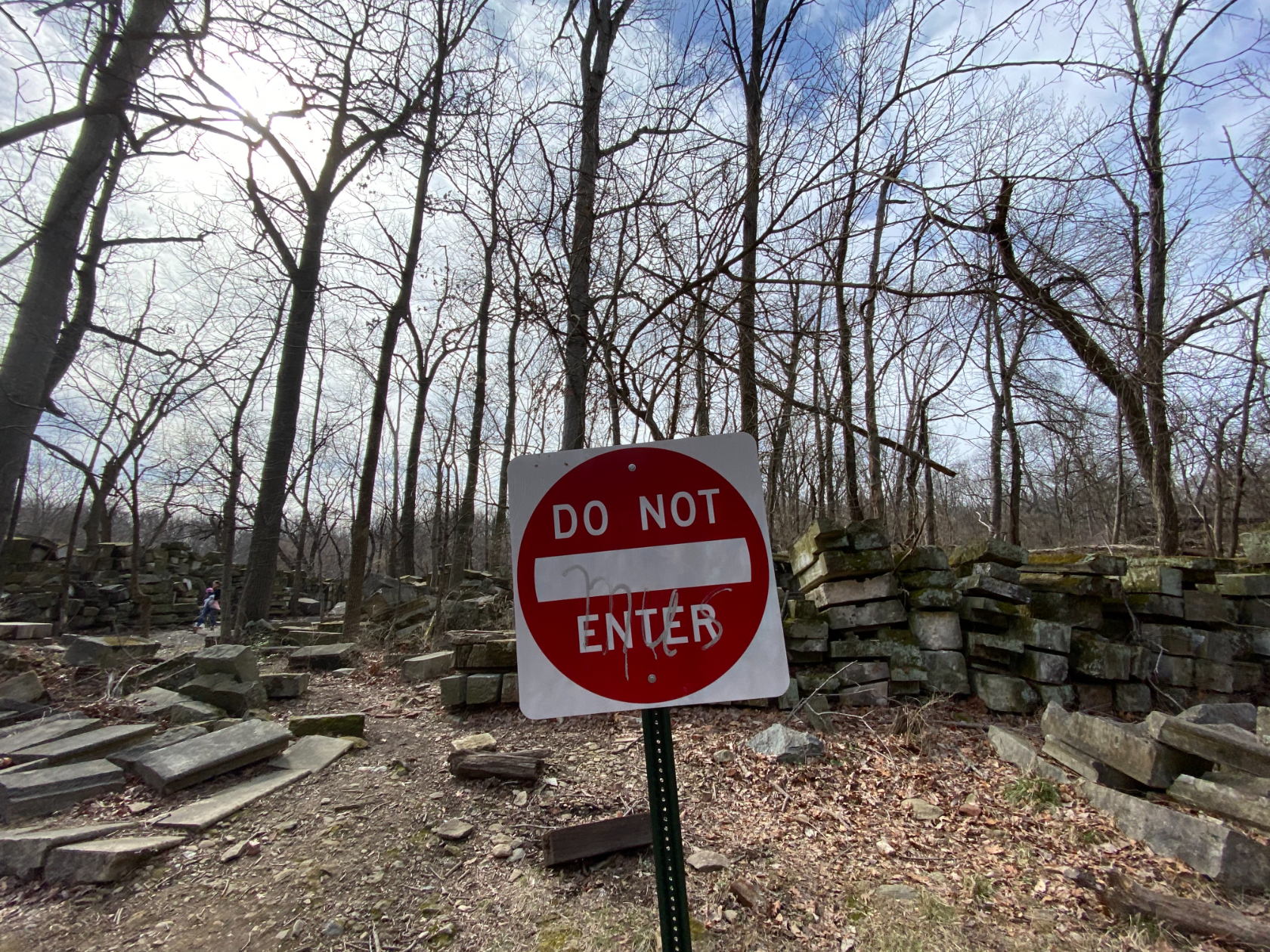
Even though getting to the stones was technically prohibited — a large “Do Not Enter” sign marked one entrance point off an established hiking trail — they were long a quasi-secret destination for in-the-know locals. Many visitors were aware of the stones’ history, but what made them additional enthralling was how they seemed to have been unceremoniously dumped into Rock Creek Park as if to be forgotten. In a city so well-planned and monumental, the stones came off as the historic underbelly.
“The Capitol Stones are barely off of the beaten path — they’re just half a mile from the Rock Creek Park Horse Center parking lot. However, stumbling across the maze of crumbling stones feels like uncovering a mystery worthy of Indiana Jones. Many of the stones still have intricate carvings that have barely been tainted by encroaching vines,” said D.C. Refined, referring to them as “D.C.’s best worst-kept secret.”
On social media, reaction to the stones’ move was largely negative, with many a variation of “boo,” “bummer,” or “this sucks.” Amanda Kolson Hurley, a local author and editor, saw the move as history winning out over popular curiosity. “To officials, the integrity of the stones takes precedence over the beloved local site they became. It’s a pity,” she tweeted.
Others said they understood the need for the move. “It’s for the best,” tweeted local furniture-maker Art Drauglis. “They were not intended to be a playground. The second some kid was seriously injured in there everyone would have been complaining that the Park Service should have secured the site better.”
D.C. resident Molly Hill Patten said she is of two minds on the move. “Moving the old Capitol stones? The historian in me: Great! They will be preserved. The kid/parent in me: NOOOOOOO,” she tweeted.
The old Capitol stones may soon be gone, but at least the Capitol columns at the National Arboretum remain.