Martin Austermuhle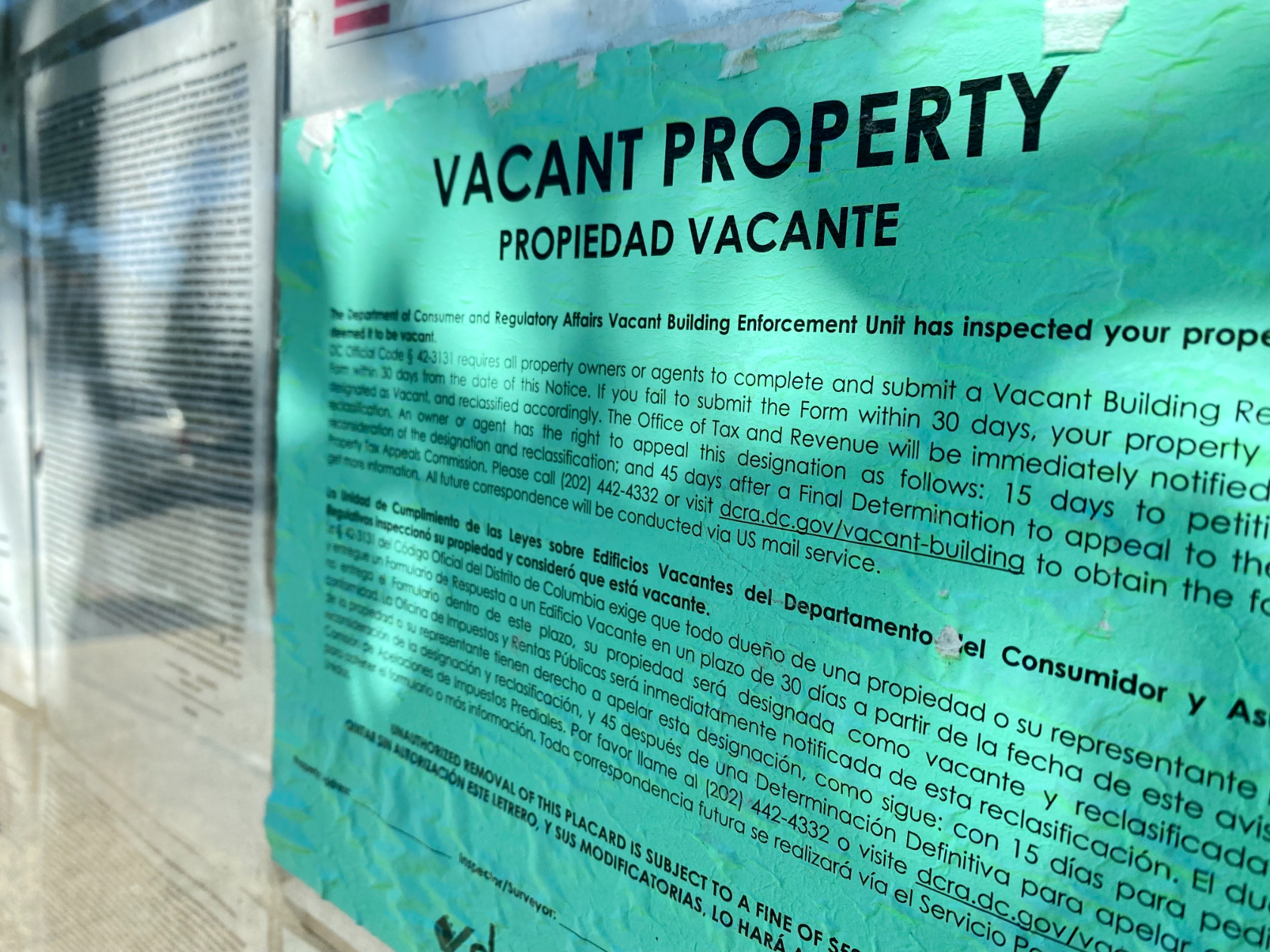
When Fort Totten resident Dan received his twice-a-year property tax bill last week, he wasn’t expecting the surprise he got: D.C. was charging him $19,434.75 for the second half of 2022, almost 10 times the same tax bill for the first half of the year.
“The first reaction was panic,” says Dan, who asked only to be identified by his first name to protect his privacy. “We don’t know where the money is going to come from. Whose mistake was this?”
The mistake appeared on that same bill: his house, purchased in late 2018 and occupied by him and his wife since, had been classified as Class 3, or, in regular parlance, vacant. And in D.C., that designation has huge financial consequences. An occupied home pays a tax of 85 cents per $100 worth of its assessed value; a vacant home pays $5 per $100.
Dan isn’t alone — nor is this the first time that D.C. homeowners have had their homes mistakenly classified as vacant, thus dramatically increasing their property taxes. It happened last summer to 385 homeowners, and in the last week more homeowners have taken to social media to complain about the errant designation and consequent spike in property taxes.
Those homeowners who noticed what they say is the city’s error face a tight timeline to try and have it corrected. If Dan doesn’t pay his property tax bill in full by Sept. 15, the next day he’ll owe $2,235 more. And he and others also have to contend with the possibility that their mortgage holders will go ahead and pay the higher property tax bill before the errant vacant classification can be corrected, and pass the cost on to homeowners in the form of much higher monthly mortgage payments. (Many homeowners have their property taxes paid out of escrow accounts that they pay into on a monthly basis when they pay their mortgages.)
The decision to designate a house or building as vacant is made by the D.C. Department of Consumer and Regulatory Affairs; the designation is meant to spur homeowners to bring properties that have been unoccupied back into productive use. (If the houses are vacant and in poor condition, they can be designated as blighted and pay an even higher tax rate.) In years past, though, D.C. lawmakers have criticized the agency for not being aggressive enough in its use of the vacant designation, saying that the city had both missed out on tax revenue and failed to address homes that are not being occupied. And partly because of that, on Oct. 1 DCRA will be broken up into two smaller agencies with more focused missions.
In an email, a spokesman with DCRA said that each designation of a vacant house is different, some based on complaints from neighbors and others from agency inspections.
“Sometimes, when a property is purchased, a vacant property status applies, however, an exemption may be in place to provide relief from the higher tax rate during construction, while listed for sale, due to financial hardship, etc. to encourage returning the property to productive use. When the exemption expires, the tax rate adjusts upwards unless an inspection is requested by the owner and occupancy can be confirmed. To provide proper notification to a purchaser, the existence of a vacant property exemption is legally required at the time of closing by the seller and purchasers are encouraged to review their closing documents to determine if a vacant property exemption is in place for the property,” they wrote about situations where a home may be considered vacant even though someone is living in it.
That’s what happened to Ruben Labrada when he bought his Capitol Hill rowhouse in 2020; he only became aware his home was designated as vacant when he got a property tax bill for almost $20,000, which his mortgage provider quickly paid. After that incident Labrada notified DCRA that he lived in the house, and he applied for and started receiving the Homestead Deduction, which reduces property taxes for D.C. homeowners on their primary residence. Last week, though, Labrada was again sent a property tax bill that listed his house as vacant — and demanded a payment of $21,566.50. (His property tax for the first half of the year, when the house was designated as occupied, was $3,331.83.)
“They’re kind of like just forcing you into a vacant state out of out of the blue, not helping you resolve the issue, which is what I need immediately so that I can send it to the bank so they don’t pay the exorbitant bill, which is what happened last time,” says Labrada.
When Dan first got his property tax bill, he reached out to the D.C. Office of Tax and Revenue, which placed the blame on DCRA and transferred him there. But he says a DCRA representative said a computer glitch at OTR was at fault. After reaching out to Councilmember Janeese Lewis George (D-Ward 4) late last week, Dan says DCRA has scheduled a re-inspection of his property this week. Once that is done, a spokeswoman for OTR says “we will adjust the tax rate and issue the property owner a revised tax bill.”
That’s what happened to Brian Valentine, who earlier this month received a property tax bill for $12,431 for the home in Fairlawn he purchased in late 2019. After getting DCRA on the phone last week, the agency quickly re-inspected his home and reclassified it as occupied, leading to to a new tax bill for $1,778.80. He says he feels relieved he’s not on the hook for more than $12,000, but also worries that some people may not check their property tax bills or not notice a higher-than-usual payment until it is reflected on their monthly mortgage statement.
“In the back of your mind you know everything will work out, but at the same time say you can’t get the ball rolling or you don’t pay attention because you do escrow and the only way you find out is when you lender comes and says, ‘Pay me back,'” he says. “I almost have a survivor’s remorse that we got this figured out quickly when it doesn’t always happen that way.”
Dan hopes his situation can be resolved quickly, but says it could be a “huge hassle” for other homeowners. He also says he’s concerned this may not be the only time it happens. “I’m pretty unhappy that everyone was blaming each other and no one could really pin down why it happened,” he says. “There’s no way to know if this is going to happen in two years as well.”