Elliot C. Williams
On Sunday, a rare summer day under 80 degrees in Northwest D.C., nine musical acts from across the region performed original songs in front of an intimate crowd. It was the culmination of a yearlong recording project that involved an American University professor, a sound engineer who’s worked with Prince, and a recording studio on wheels.
AU media professor and musician Aram Sinnreich and his partner, musician and composer Dunia Best, launched the Out of Our Shells project last fall with the goal of giving undiscovered, D.C.-based musicians of all genres a free platform to record and perform their music with professional-grade mixing and mastering. Sinnreich and Best, along with a few of their musical collaborators, wanted musicians of all backgrounds to crawl out of their pandemic-induced shells. They put out an open call for time in the mobile studio, and about 100 musicians applied.
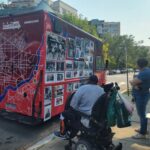
After reviewing the songs, videos and mission statements from the artists, the team selected more than a dozen acts. For the next seven months, the mobile studio rolled up to the artists’ homes, driveways, churches — basically, anywhere convenient for them to record. The result? A 14-track compilation album named after the program featuring artists who are just starting their careers and others who have been at it for decades, playing a range of genres and styles, including: traditional bagpipe music, R&B and hip-hop, family-friendly rock, and Cumbia.
“What we were aiming for was to get diversity — different musical styles, different ethnicities, different languages, different regions of the DMV, different national origins,” Sinnreich says. “What the musicians get out of it is an absolutely free finished professional-quality recording that belongs to them.”
Sinnreich’s team recorded the project under a nonexclusive, nonprofit license, meaning the artists can use their tracks however they want. They each recorded one song for the album, and each artist owns the rights to their song — so, for example, an artist could upload it to Spotify and make revenue from it.
It’s all part of AU’s Humanities Truck initiative, which allows scholars to conduct yearlong community projects funded by the university, the Henry Luce Foundation, and the Andrew W. Mellon Foundation. As part of Out of Our Shells, Sinnreich’s students recorded mini-documentaries about each band, and those videos will stream on the program’s website. (Disclaimer: AU holds the license for DCist’s parent company, WAMU.)
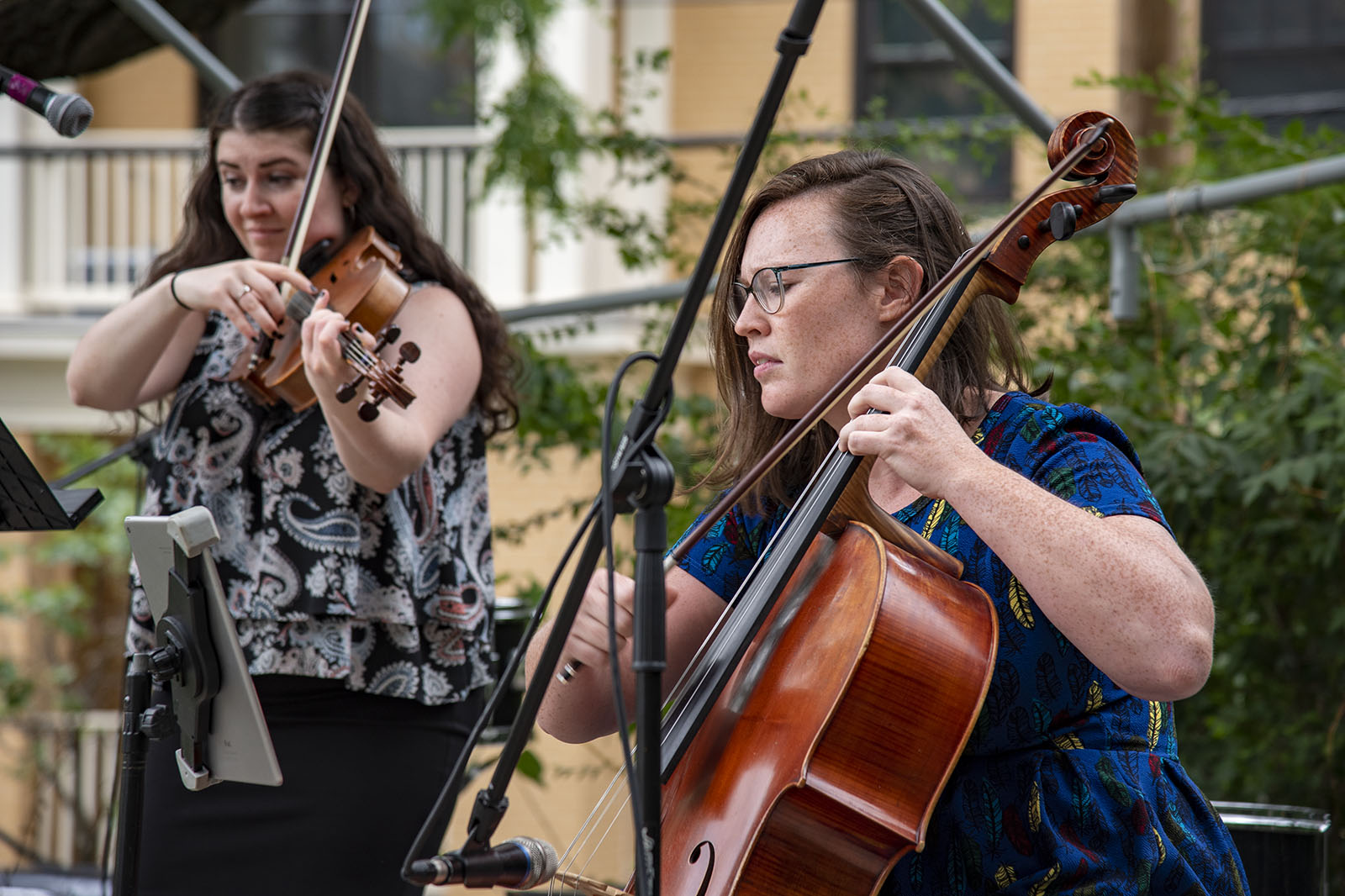
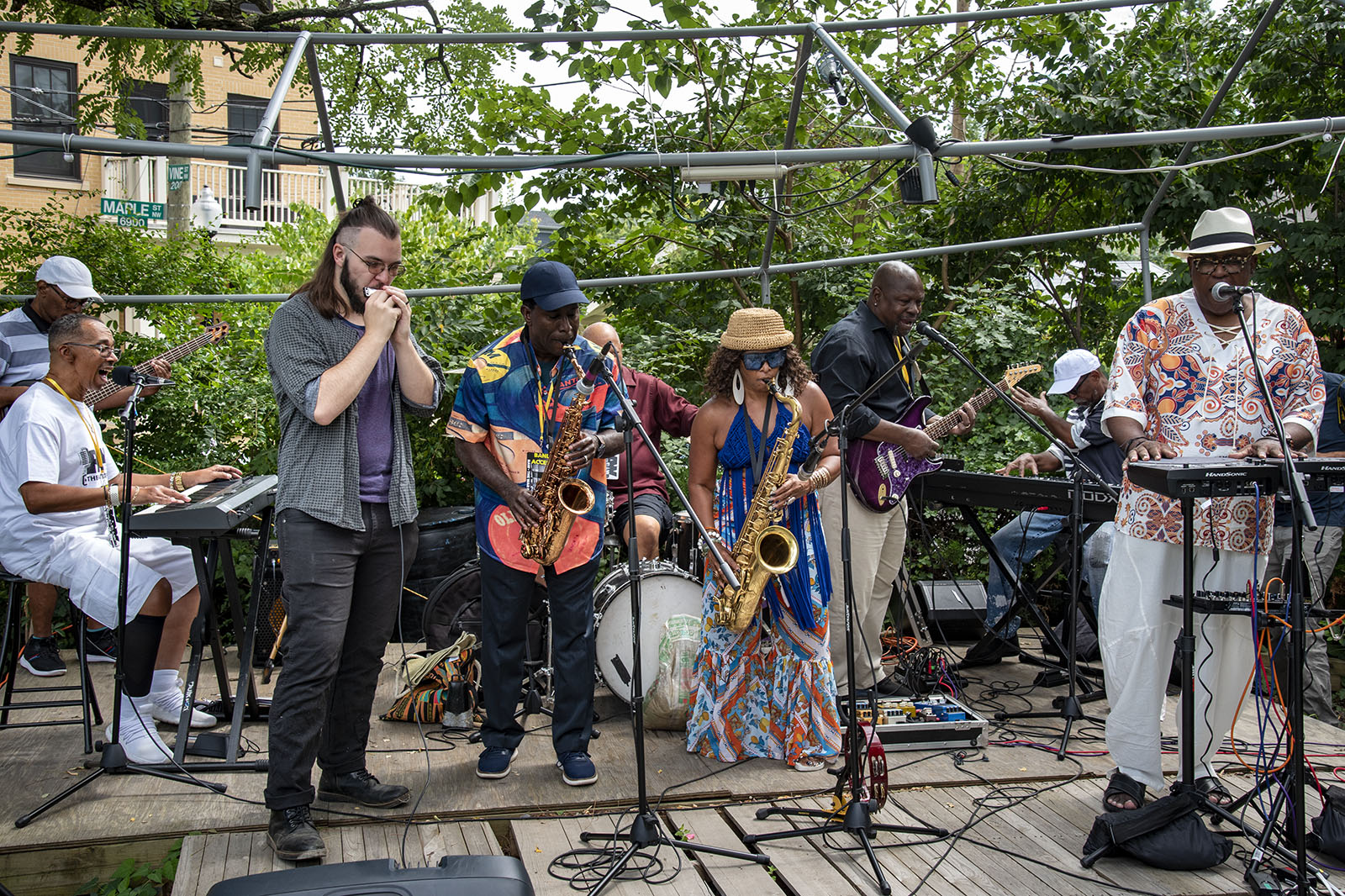
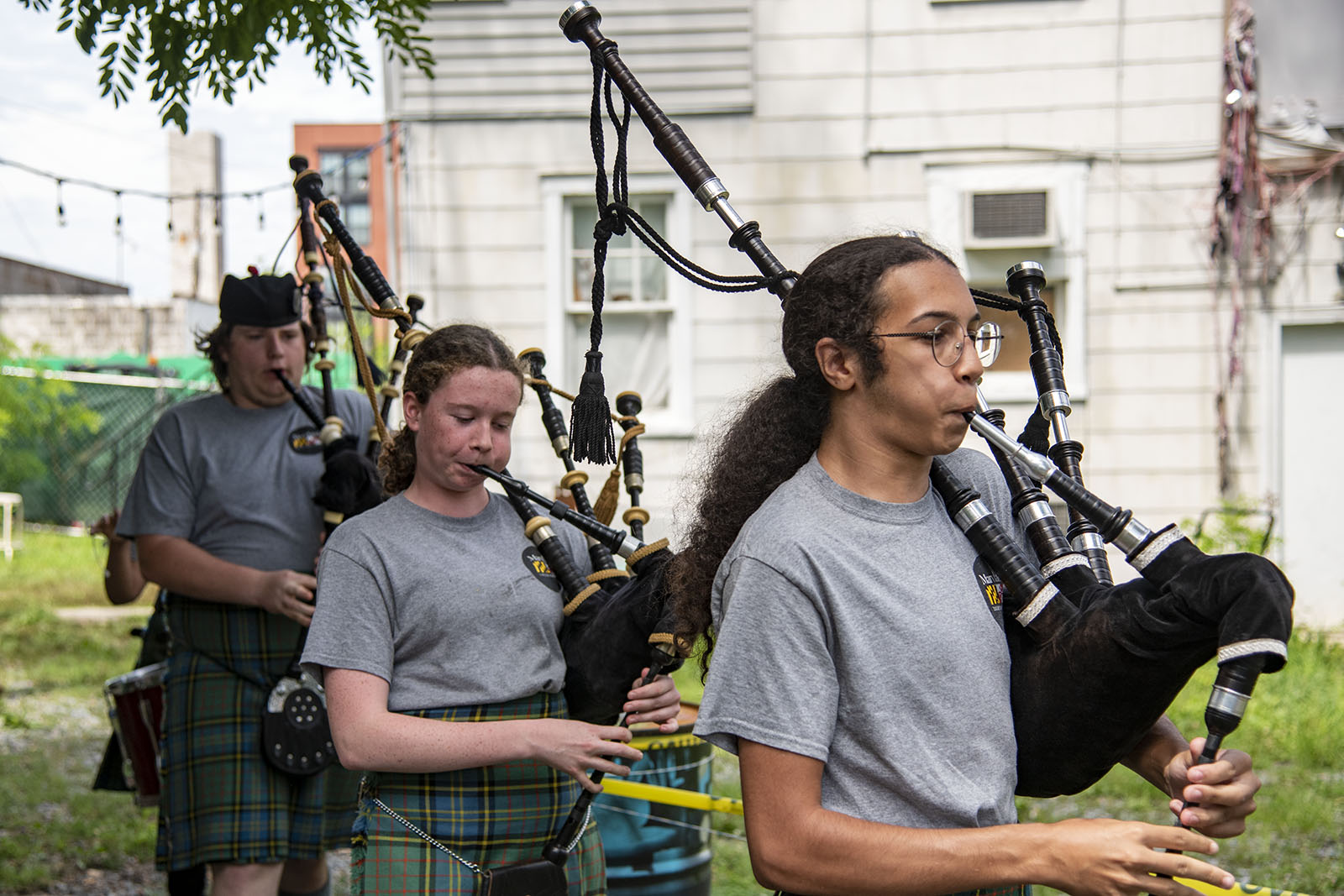
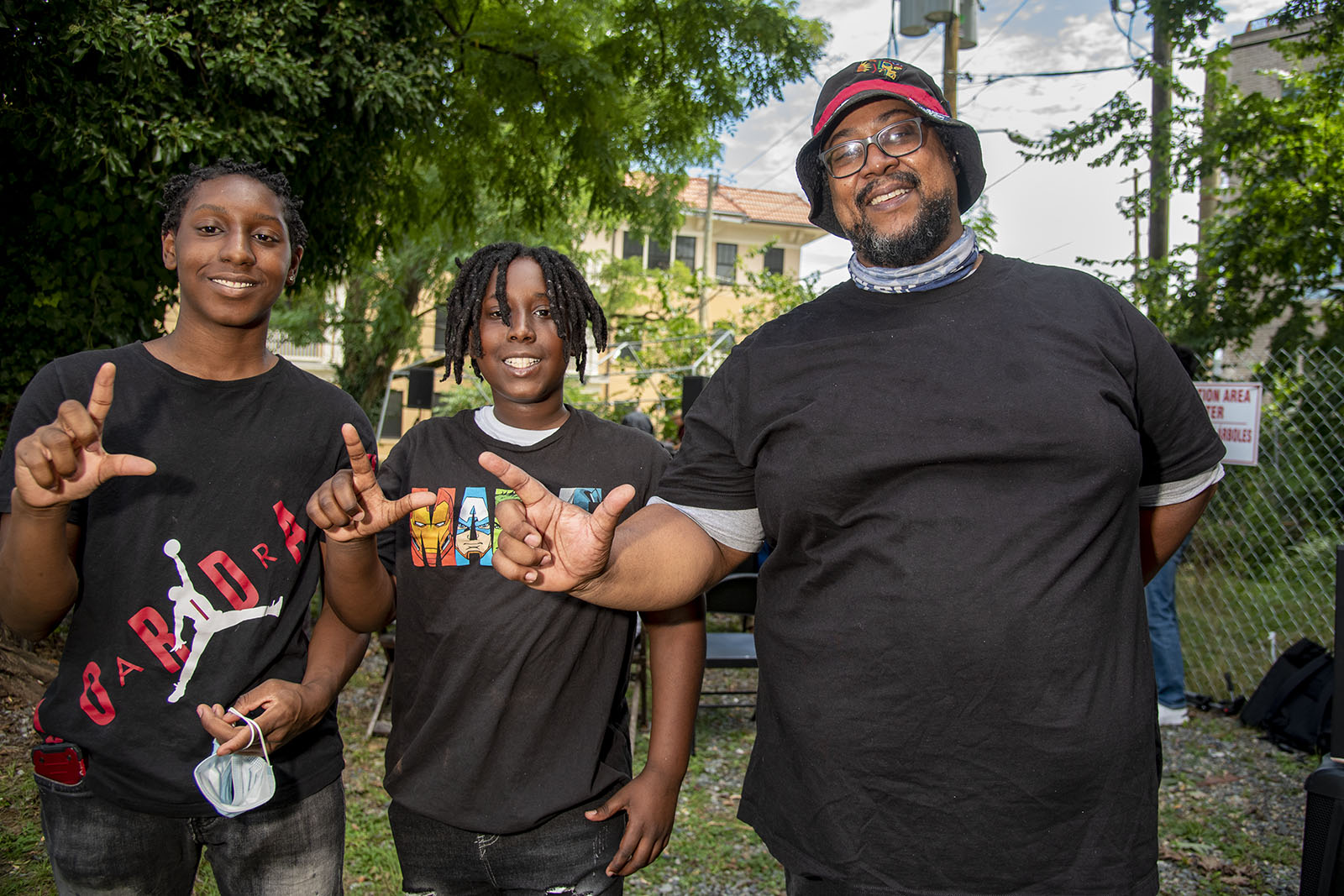


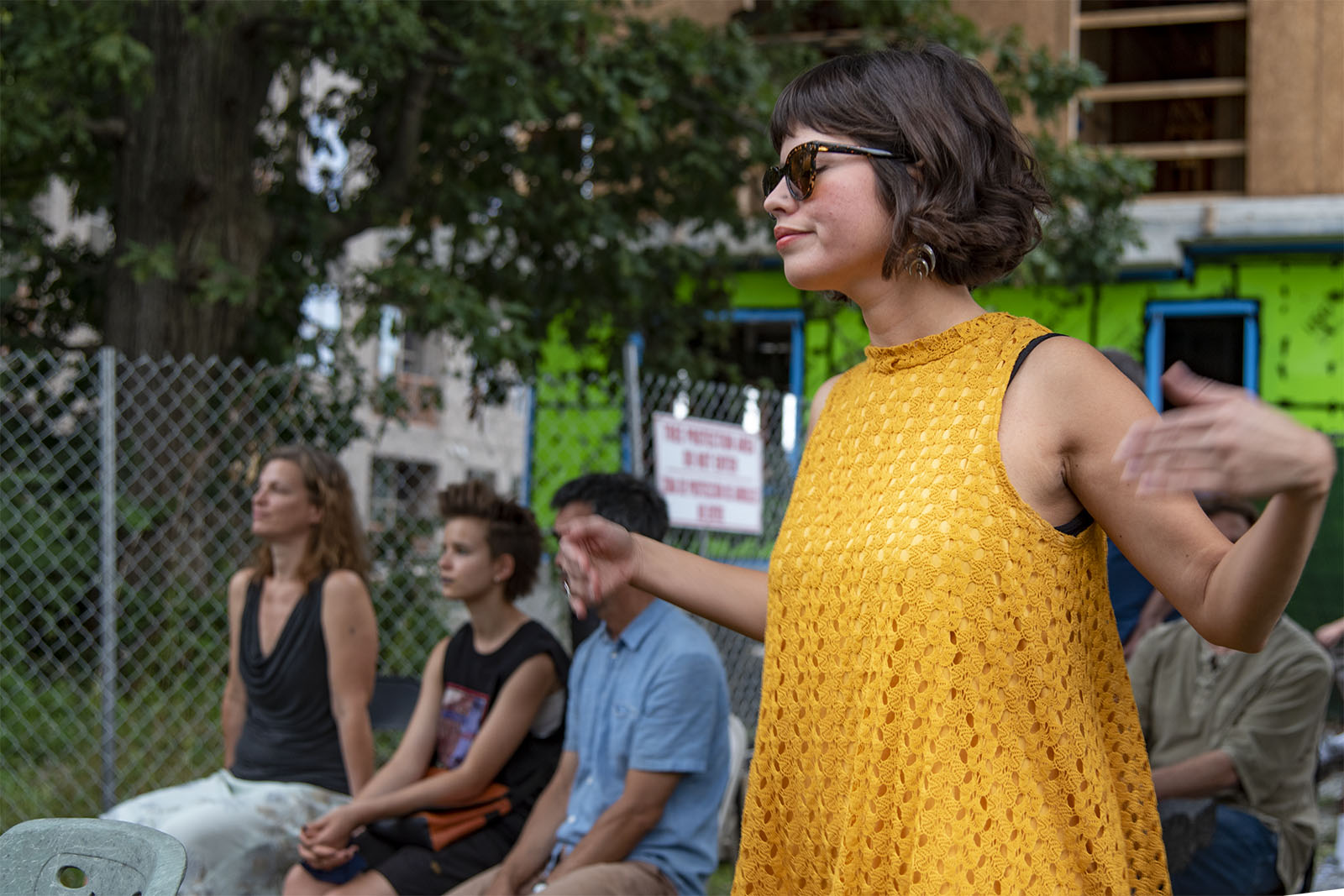
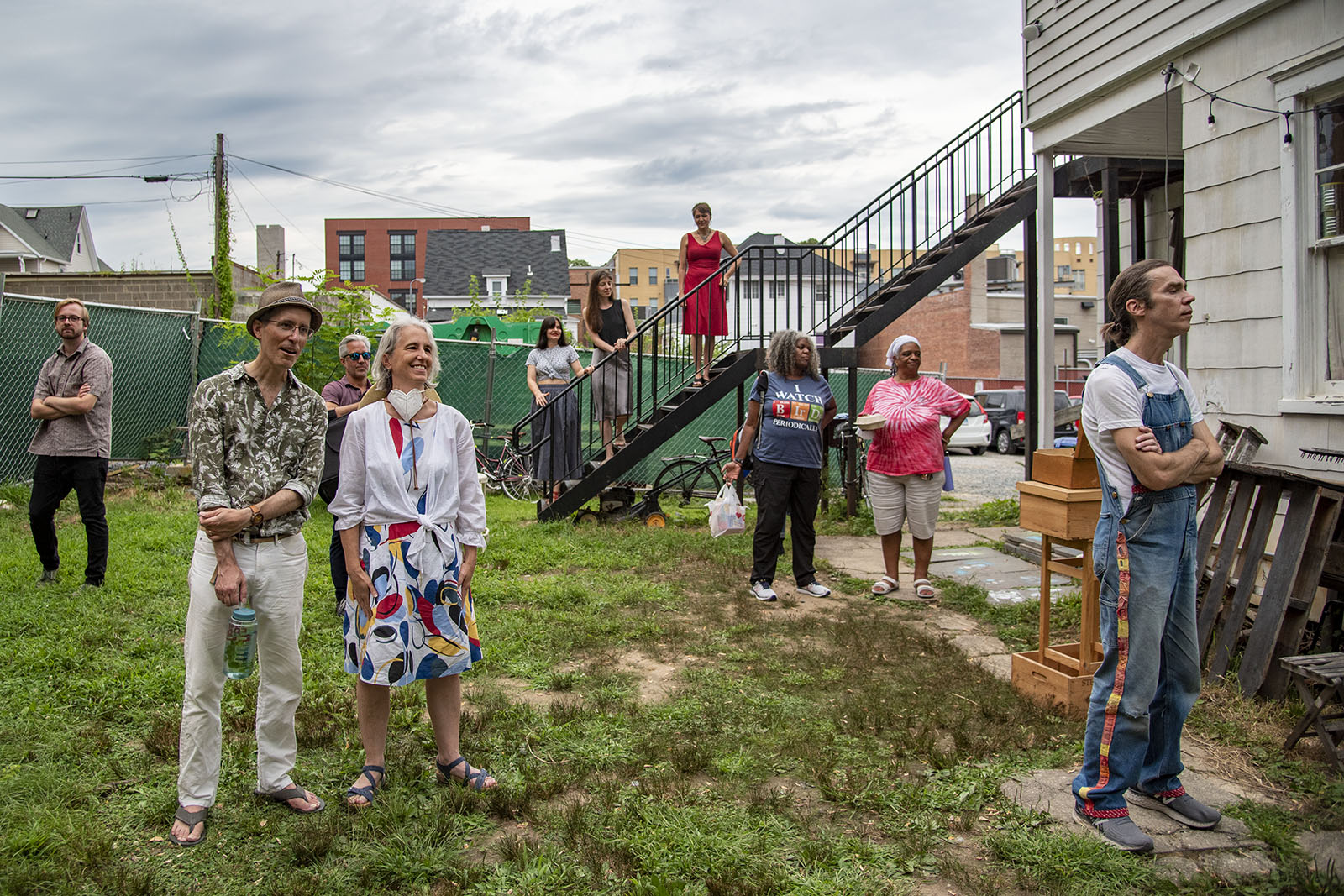
Nine of the artists performed Sunday in a free, all-day concert at the DIY arts space Rhizome DC in Takoma Park. The set kicked off with the Maryland Youth Pipe Band marching in wearing kilts and playing traditional Celtic bagpipe music. Onlookers from across the street stopped to film with their smartphones.
For funk singer Ronald Scott, the recording experience was a dream come true. Scott formed his group, The Raw Band, about three years ago as a tribute to the 70s funk-rock band, War. Back then, he didn’t know that he’d be mostly immobile for two years — due, in part, to the pandemic, but also because he was undergoing treatment for colon cancer.
Then, last year, Scott saw a post about the Out of Our Shells project on Facebook and submitted a demo. Before he knew it, Sinnreich had reached out to set up a recording session.
The Raw Band had already laid down a few tracks, but they needed some mixing help and hoped to add saxophone and lead guitar tracks. The project provided the perfect person to help: AU doctoral student Neil Perry, a former sound engineer at The Hit Factory, the New York studio where an unbelievable list of music legends have recorded.
“That’s the beauty of it, man,” says Scott, who lives in Hyattsville. “I mean, they brought this thing to my little quiet neighborhood. My neighbors were probably like, ‘What the heck is this?’ You know, a studio, right in front of my house.”
The group recorded their song, “I Like It Raw,” for the compilation. They also performed it Sunday on Rhizome’s outdoor stage to a dancing audience made up of their family and friends, Rhizome regulars, and some community members who heard the music playing and walked over to find out what was going on.

Scott wasn’t the only one who relished the experience.
Composer and violist Megan DiGeorgio says she shared the link for the Out of Our Shells application among her peers in the District New Music Coalition, a group for local ensembles to share resources. She also applied herself — and was chosen as one of the artists.
Together with cellist Erin Murphy Snedecor, DiGeorgio composed and recorded postmodern chamber music for the album in February. Sinnreich and his team brought their equipment to the First Baptist Church of the City of Washington, D.C. near Dupont Circle, where DiGeorgio is a section leader in the choir — they figured the acoustics in the building would lend themselves to a string recording.
During Sunday’s concert, DiGeorgio said she appreciated the rare opportunity to perform chamber music outdoors among an incredibly diverse group of musicians — and without having to wear formal attire.
“I think that this is kind of the way forward for music, and I really hope that this type of project continues and becomes the new standard rather than having all of these sequestered little areas of music,” DiGeorgio said.
During the recording process, it was nice to just focus on playing the music while someone else handled the technical side of things, Snedecor added.
“It was a really beautiful thing to do,” Snedecor said. “Especially after two years of doing a lot of self recording … we didn’t want to do that. I’d much rather leave that to the professionals.”
Sinnreich hopes the project won’t end here — he and his collaborators plan to start a nonprofit to continue bringing the studio to local musicians and hosting more concerts like the one at Rhizome.
“These are not people who would normally share a stage at a club or even at a festival,” he says. “The idea is that if we bring all of these different musicians together in one place, then maybe we can also bring all their fans together. We can bring the people of Washington, D.C. who tend to live within their own shells, in their own neighborhoods, in their own comfort zones, all into one place and let them interact through their shared love of music.”