Margaret Barthel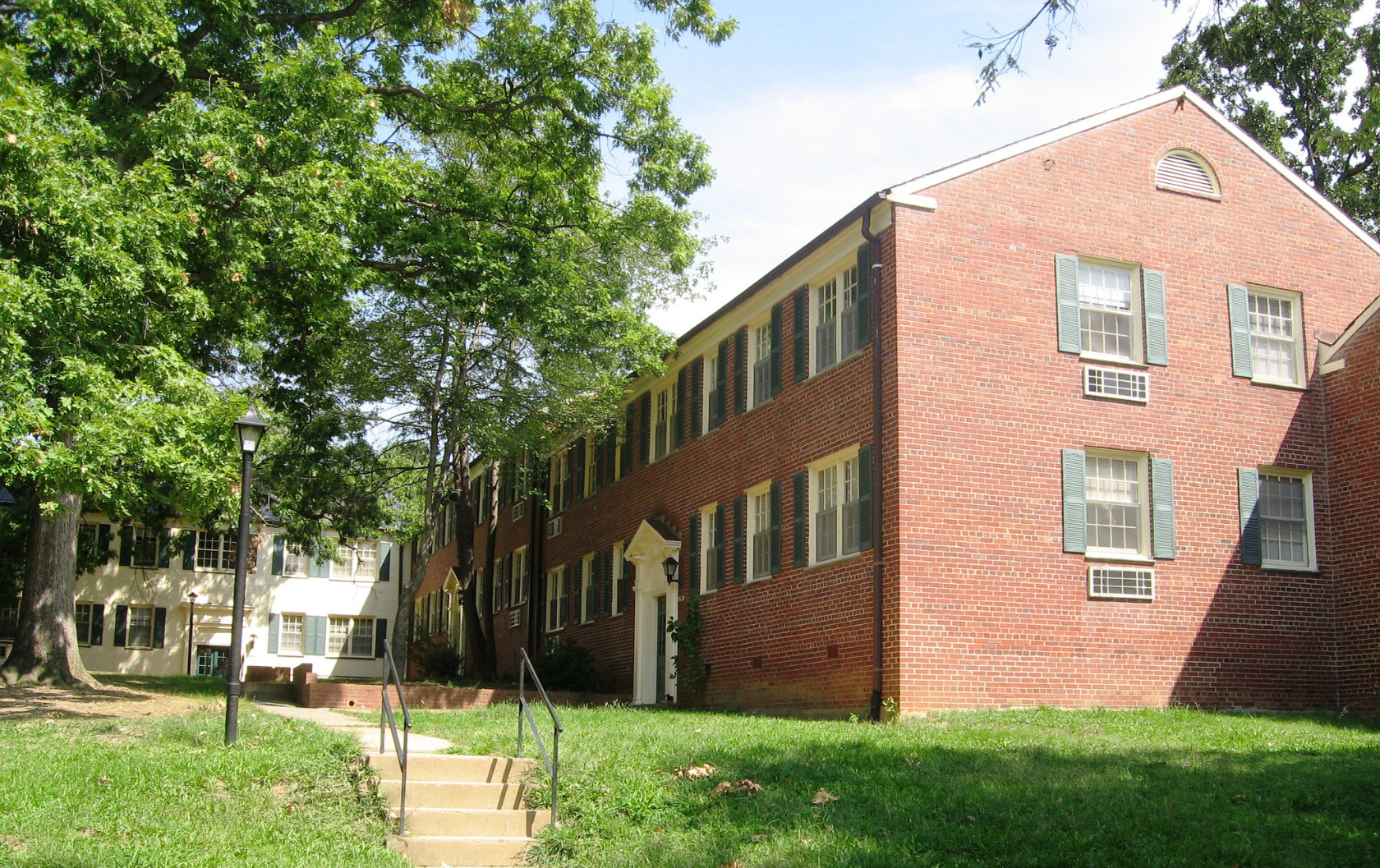
Residents and elected officials across Northern Virginia routinely express concern about the scarcity of affordable housing. And they’re right to do so: while some areas of the region are currently meeting housing targets, the region has an uphill battle to build new affordable housing units — particularly for people at the lowest incomes — at the pace they’re needed, and even sometimes to preserve existing ones.
Jurisdictions in the area have made some notable investments in housing, including using federal pandemic relief money, and put in place policies designed to spur affordable housing development in the new budgets that went into effect in July. Some, including Arlington County, Alexandria, and Loudoun County, have for the past several years managed to maintain the pace of production they need in order to meet projections of future need. 2021 saw particular gains in housing construction.
Some housing experts are expecting the increase in production in 2021 to continue into the next few years as a result of the new investments in this budget cycle.
But the road ahead is uncertain. Skyrocketing housing values and high inflation will likely continue to complicate local efforts to build more affordable units in the new fiscal year. One Fairfax County estimate says costs on multiple construction projects around the county have increased by about 20%.
“With the costs increasing the way they were this spring, if they were to continue at that rate, it definitely would make our housing even more expensive to build,” says Anne Venezia, the housing director for Arlington County. “Housing in this area is already very expensive, largely because of land costs. And so when those construction material costs go up as well, it adds even more burden to an already really expensive project.”
In 2019, the Metropolitan Washington Council of Governments [COG] studied current and future local housing needs and concluded that the D.C. region overall needs to build at least 320,000 units between 2020 and 2030, with 75% of them being affordable to low and middle-income families, and many built near activity centers and transit hubs. An Urban Institute report from the same year projected a similar need, finding that the region would need to build at least 374,000 more units by 2030.
So far, early progress toward that goal is mixed, with the region already falling behind in some areas, says Michelle Krocker, the executive director of the Northern Virginia Affordable Housing Alliance.
“Northern Virginia is off on the COG targets,” she says. “The entire region is off on the COG targets. So Northern Virginia is not unique.”
Housing for the poorest lagging
But while housing production in general is trending up, the region is seriously lagging when it comes to building homes for those with very low incomes — residents whose households earn 30% or less of the area median income, or about $42,000 per year for a family of four. And existing housing that serves people on the lowest incomes is also disappearing: the Urban Institute estimated that the D.C. region could lose a quarter of its lowest-income housing between 2020 and 2030, if previous trends from 2010 to 2017 continue. That trend impacts residents in the region considered most vulnerable to housing instability and displacement.
Having a mix of affordability in housing — including for low income people working jobs at or near minimum wage — is critical for the region to be able to thrive.
“Inaction on the challenges of housing affordability could ultimately undermine the region’s future economic growth and prosperity,” a 2019 Urban Institute report on housing needs in the D.C. region puts it.
Arlington County, which has done well with hitting overall housing targets, hasn’t built any affordable housing for people making under 30% of area median income in the last three years. Venezia, the county housing director, says financing those projects is extremely difficult — and often becomes a trade-off.
“Because those units are more expensive to subsidize, it’s balancing supply,” she says. “Do we want more units that serve possibly a higher income level, or do we go deeper in affordability and serve the deepest needs of our residents in Arlington?”
So far, Venezia says the county has chosen to essentially split the difference: they’ve focused on building housing that serves people with somewhat higher incomes, and tried to make up the difference with county-sponsored grants to people with very low incomes.
“If we have committed affordability at 60% of the area median income, and the household only earns 30% of our median income, we can pair them up with one of our local housing grants so that they can help basically fill that gap in between,” she explains. “That is historically how we’ve addressed those needs in Arlington.”
Krocker says many jurisdictions try to incentivize affordable housing developments at around 60% of area median income, the level she calls “the sweet spot” for projects relying on federal tax credits to help finance the development. Within those developments, she says, it may be possible for the developer to find financing for some even more affordable units.
“One of the things that we see in Northern Virginia is you don’t build a building that serves people with extremely low incomes, but you try to incorporate some of those units into a building… so it is actually a mixed income building,” she says. “You will have some units that serve people at extremely low incomes and then the majority of your units may serve people at 60% of the area median income.”
So where do we stand now?
Things are going … okay. In 2021, housing production increased across the board in the D.C. region. According to an analysis from the Housing Association of Nonprofit Developers (HAND), which tracks annual housing production compared to the COG and Urban Institute projections, the D.C. region as a whole fell just shy of its 25,000-unit yearly target in 2021, building just over 24,000 units — the closest jurisdictions have come to hitting the goal.
Arlington, Alexandria, and Loudoun County have all exceeded the overall numbers of new units they’ve needed to produce in the last three years, since HAND began tracking. Arlington County housing director Anne Venezia sees that trend continuing into 2022 and beyond.
“We can confidently say we do have enough capacity within our current plans to enable the production that COG has for Arlington targets,” she says.
But Venezia admits that Arlington — like the rest of the region — is struggling to build housing that serves people with very low incomes. That housing, she notes, is more expensive to subsidize, which can lead to a trade-off.
Venezia notes that the county has usually tried to meet the needs of its lowest-income residents using a local housing voucher program, not through construction. But there are other possibilities — including grants from the Virginia Housing Trust Fund — that may help the county create highly affordable housing in new projects, she says.
Elsewhere in Northern Virginia, Prince William County and Fairfax County — the D.C. region’s most populous jurisdiction — lagged behind the COG targets in 2021. Fairfax has produced just shy of 7,500 units in the last three years, putting it nearly 5,000 units behind. And the share of affordable units has been even smaller: just 5% of all the units produced in 2021.
In the spring, the Fairfax Board of Supervisors committed to a new goal: creating a minimum of 10,000 new affordable housing units by 2034, for people making 60% or less of area median income. The benchmark is double what the county originally had planned.
HAND plans to release new housing data for 2022 in the spring. In the meantime, there are useful clues in local budgets that just went into effect in July that point to how jurisdictions may perform in the year ahead.
LaToya Thomas, who works on the HAND housing tool, says many jurisdictions have chosen to put pandemic relief money towards affordable housing.
“Some of that money has gone towards more emergency services, some of that’s gone towards supportive. Some of that’s going towards preservation. Some of it has gone towards more intentional production for 50% and below or 30% below [area median income],” she says. “And so I think we’ll be seeing, if not in the 2023 tool then in 2024, where that falls out in terms of units.”
In Fairfax County, for instance, the Board of Supervisors just approved a $33 million financing package for a 450-unit affordable housing development in Tysons. $19 million of the funding came from pandemic relief funds.
But pandemic relief funds will run out, Thomas notes. For a sense of longer-term commitments to affordable housing, she looks at contributions to local housing trust funds, which help provide low-cost loans to developers who are planning to build affordable housing.
Arlington committed $18.7 million to its housing trust fund, which Venezia, the county housing director, sees as the main means the county has of incentivizing affordable housing construction (Arlington, like most Northern Virginia localities, does not have a public housing authority). The FY 2023 commitment was the largest chunk of general funds the county has ever put into the trust fund.
Thomas looks for housing trust fund support — particularly, dedicated sources of revenue, not piecemeal contributions. In its new budget, Fairfax increased its contribution to its affordable housing fund, upping it to the equivalent of about one cent of the real estate tax rate (nearly $30 million in total this year). That increase puts the county rate back to where it was in 2009 (the Board cut funding in order to balance the budget in the financial crisis).
Back up. Why do we have an affordable housing shortage to begin with?
The most basic answer to that question, according to Krocker, is that for decades, rising housing costs have outpaced (more slowly) rising wages, creating a worsening mismatch between what they need to pay for market-rate housing and what they can afford.
That broad dynamic means more and more residents are cost-burdened, or paying more than 30% of their household income on housing costs. As of 2019, about 29% of households across Virginia were cost-burdened, and half of those paid more than 50%of their income towards housing costs, according to a report to the General Assembly. The problem affects renters more than homeowners.
All that drives up demand for more affordable housing — but in Northern Virginia especially, there’s a serious shortage of supply. The 2019 report says Virginia is short 200,000 affordable units for low income and very low income families, with Northern Virginia accounting for nearly a third of those needed units. Fairfax County alone needed 26,300 units.
Some of that supply shortage is due to booming economic development and overall housing demand, Krocker says, which incentivizes tearing down older market-rate affordable complexes in favor of new luxury ones.
“The affordable housing that we’re building is not keeping up with the rate of loss of affordability that we have,” she says. “And so it is both a supply issue and a demand issue.”
There’s some variation, Krocker acknowledges, in the affordable housing situation across the different jurisdictions in Northern Virginia. Closer-in urban jurisdictions like Arlington and Alexandria felt the squeeze early, and had to develop approaches to the problem sooner than the outer suburbs.
“The further west, you go into Fairfax County, outside of the Beltway and certainly Loudoun and Prince William — these are more evolving communities that are growing at an extremely fast rate, but in a way that we realize is not necessarily sustainable, more kind of sprawling, traditional suburban development,” Krocker says.
The state of the local housing market hasn’t been helped by a suite of segregationist policies which have had a lingering impact on the region today. Those policies include exclusionary zoning, redlining, and disinvestment in public housing and workforce housing. A report from Virginia Commonwealth University identified current census tracts in Northern Virginia experiencing high poverty rates and housing unaffordability as a result of the region’s history of racial discrimination.
“We’ve had decades and decades and decades of different policy decisions, de facto and de jure, that have led us to this place where we’ve got very, very strong economic divides,” says LaToya Thomas, a consultant who works on the HAND housing indicator tool. “And a lot of those divides are along lines of race.”
Where does the money come from to build affordable housing, anyway?
It’s complicated. And expensive, of course.
Krocker and other housing experts estimate that a single unit in a local high-rise apartment building costs around $400,000 to build — and if the goal is to make that unit affordable, much of that cost has to come from public subsidies from federal, state and local sources.
The commonwealth and several local jurisdictions have housing trust funds, which they can use to help finance those costs, often providing low-cost loans to developers (or, in the case of the Virginia Housing Trust Fund, grants to support building more affordable units for families on the lowest incomes). The money in local housing funds comes from a variety of sources, which can include a set percentage of local tax revenues, contributions from residential or commercial developers, returned payments from previous loans, and one-time budget allocations.
There are other sources of funding available to help subsidize affordable housing development, too. One of the biggest is the low-income housing tax credit, a federal tax incentive program that issues credits to state housing authorities, which then award them to developers for projects.
“It is not unusual for these projects to have five, six, seven sources of debt and equity, because that’s what it takes to build quality affordable housing for people with restricted incomes in a high cost area like Northern Virginia,” Krocker says.
Are there other policies that can change the affordable housing landscape?
One of the most powerful levers local jurisdictions can use to make it easier to build affordable housing is zoning and land use policies.
Most jurisdictions in Northern Virginia have a zoning ordinance that requires a certain number of affordable units in exchange for additional density — for bigger projects with more units that will ultimately serve more people. In some jurisdictions, developers are able to forgo creating affordable units in a project by paying into the local housing trust fund, money which is then used for other projects.
More broadly, there’s a lot local governments can do to incentivize building housing in general, according to Krocker. That might look like minimizing the number of parking spaces required to come with a development near transit, which cuts down on project costs, or expanding the density limits on a particular project.
One of the most ambitious local attempts at zoning reform is currently underway in Arlington County, where officials are working on a policy proposal to allow smaller multi-unit buildings (potentially up to eight units) on all county land, the vast majority of which is currently set aside for single-family homes only. The move is meant to shore up an ever-dwindling supply of “missing middle” housing types — duplexes, town homes, and small apartment buildings — which are by their nature more affordable.
Some county residents, many of them single-family homeowners, have decried the possible change in policy, claiming it will harm the county’s tree canopy and create congestion. Others are excited about the idea as a way to stop displacement of people of color and make it easier for young adults to build lives and families in the county.
“Housing is a right. We want folks who want to buy here in Arlington and live here in Arlington to be able to do so,” says JD Spain, the president of the Arlington NAACP, which supports the proposed zoning changes as one way to begin to push back against historic restrictions in housing that have their roots in systemic racism and segregation.
There are even more direct tools available to local jurisdictions looking to ease the housing cost burden. Some offer direct rental subsidies — housing vouchers or payments to help people with modest or low incomes afford their homes.
Krocker points to Fairfax County’s emerging practice of locating new affordable housing developments on county-owned land — slashing the cost of building a unit by tens of thousands of dollars by providing the land for free.
“We have a few examples of affordable housing that sits on top of fire stations or affordable housing that has been co-located with community centers,” Krocker says. “It would be wonderful to see affordable housing with libraries or with schools.”
She hopes to see more jurisdictions take similar creative approaches, particularly in more populated areas where land is harder to come by.
Why is preserving existing affordable housing units also a challenge?
Older properties have long formed the backbone of the market-rate affordable housing stock in Northern Virginia, says Michelle Krocker, with the Northern Virginia Affordable Housing Alliance.
But it’s hard to keep those properties affordable, because the incentive to tear them down and build something new and more profitable is strong. Newer, luxury developments can charge ever-higher rents.
“These are older apartment buildings that are not subsidized. They have been our principal housing stock for many low and moderate income families,” Krocker explains. “And those buildings are either being demolished and new expensive market-rate housing is being built, or they’re being renovated. And rents have increased so much that people who live there currently can no longer afford it.”
That means the race is on for local governments and their nonprofit and philanthropic partners to acquire and preserve those older complexes, which are then turned over to nonprofit or for-profit housing providers to run, often with stipulations about how long rents will be kept at certain thresholds of affordability.
For example, in December 2021, Arlington County officials worked out a deal with Amazon to put together the funding — a $150 million loan from the county, plus a $160 million loan from Amazon’s Housing Equity Fund — to purchase and preserve the Barcroft Apartment complex in South Arlington. The terms of the project stipulate that rents for the 1,300 apartments will be limited to 3% increases each year, and will be kept affordable for people making 60% of area median income for the next 99 years.
“We [the public sector] could not do this kind of preservation work of these important properties without partnerships like that,” Krocker says.
But even with support to keep buildings like the Barcroft complex affordable, older buildings can present challenges. Maintenance and renovations can be costly and sometimes slow. In Arlington, organizing from tenants and advocacy groups surfaced poor conditions at the Serrano apartments in South Arlington, including mold, rodent infestation, and chronically deferred maintenance. The revelations, first reported by the website ARLnow, led to extensive county inspections of the property and of other affordable complexes — and reports from county staff and from the housing commission on aging properties.
Venezia, the county’s housing director, notes that many especially low-income residents live in Barcroft and other aging properties, and the county is working on increasing oversight protections and taking an inventory of infrastructure issues at affordable properties the county has loaned money to. And, as with all affordable housing work, Venezia notes that it’s expensive — and one of many expensive things the county is trying to put money towards.
“We really have tried to do a balance between bringing in new housing stock and preserving what’s already either in the portfolio or at least already in the community,” she says. “The resource needs for both are really huge and they sometimes unfortunately can compete with each other.”