 Jordan Pascale
Seven years ago, the District of Columbia made an ambitious commitment: It would aim to eliminate traffic deaths in the city by 2024. Christened Vision Zero, the program prompted other cities and jurisdictions in the region to follow, instituting several projects, like reducing speed limits, adding more protected bike lanes, and other safety infrastructure.
But all over the D.C. area, the project has failed. Not only have traffic deaths persisted — they’ve reached their highest numbers in nearly 15 years.
At DCist and WAMU, we’ve covered this problem via maps and statistics, charting the growing death tolls at the end of each year. We’ve covered vigils, rallies, and calls for action. We’ve reported that the deaths don’t affect us all equally: the city’s low-income, majority Black wards face a higher number of car-related deaths than wealthy white ones, and majority-Black Prince George’s County faces three times the fatalities of the region’s largest county, Fairfax County.
Yet, we don’t often hear directly from the people who’ve experienced the worst effects of traffic crashes about how those violent moments changed their lives.
We spoke with three people who survived being hit by a vehicle and continue to live with the effects. We also spoke with people who have lost loved ones at the hands of a driver.
In many ways, their stories echoed one another: the phone call that changed their world forever. The memory loss, confusion, and anger after waking up in a hospital. The slow and agonizing recovery. The loss of some essential part of themselves, their liveliness and joy. And the therapies and coping mechanisms that brought them back – journaling, yoga, dance, family support, and more.
Their stories highlight the potential toll of one careless moment — or one intentional bad action — from a driver. They all have similar pleas, too: for drivers to be more responsible and for cities to design roads that limit speeding and reckless driving.
These are their stories in their own words. The following interviews have been lightly edited for length and clarity. They may contain details that are upsetting to some readers.
You can also hear their voices from the audio piece on WAMU.org.
Dana Williams lost her daughter Jamya in a hit-and-run crash
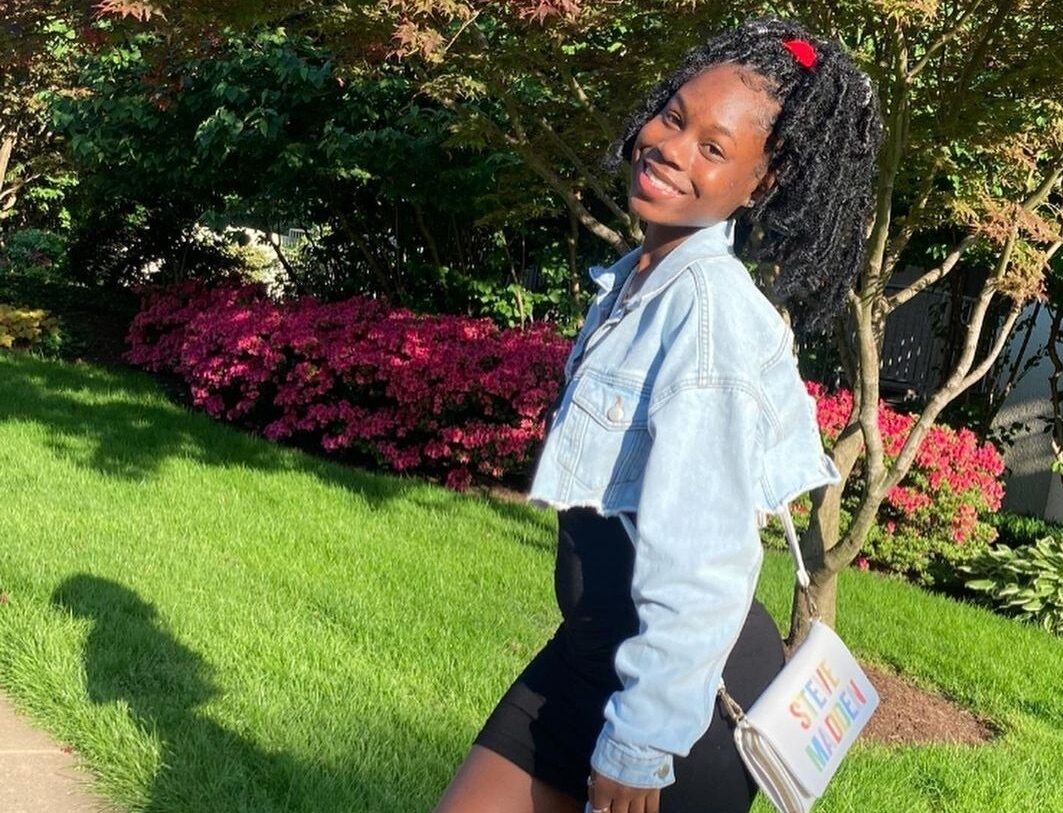
Twenty-year-old Jamya Williams of Greenbelt died on July 4, 2021, after someone ran a red light and hit her car at 14th and K streets NW. The driver left the scene. No one has been arrested. Jamya’s mother, Dana Williams of Beltsville, shares what she remembers about that night, and about her daughter.
It was pretty late that night. I went to sleep and then my phone rang. It was Jamya’s phone [on the other line] … But when I answered it was an EMT or a police officer, and they tell me Jamya was in a car accident. They were taking her to GW Hospital. And I just remember throwing on anything and going to the emergency room as fast as I could.
You’re not able to process it. It’s like you’re there, but you’re not there. It’s like you’re in a dream or something like that. I don’t know how to explain it. Even now, sometimes. I don’t know. It just doesn’t seem real.
She was the typical young girl. We had our moments as mothers and daughters do. When they start getting older, they think they’re grown and know everything. She was a cashier at Home Goods and liked buying things for her friends and family. She enjoyed playing with babies. She liked dogs. She had plans to go back to school… she always talked about being a heart surgeon. She watched a lot of Grey’s Anatomy. I think she actually would have at some point become a doctor because that’s all she talked about.
My main problem was that they got out the car and just left. Like did you see that she was hurt? How can you just leave someone like that?
Her favorite color was yellow… so I put yellow in my hair because I don’t want her to fade in my mind if that makes sense. I keep her pictures and stuff around just so we always remember that she existed.
I don’t like driving at night anymore. I get like panic attacks, especially if someone zooms past me. I guess I would just want people to be more cautious when they drive and try to pay attention to the street lights and just other drivers on the road.
Honestly, I know things happen, as far as accidents and stuff. I think my main problem was that they got out of the car and just left. Did you see that she was hurt? How can you just leave someone like that? [It’s so hard] not having justice or at least knowing who the person is [that hit and killed her]… at least getting some type of reasons or explanation for what happened. But I don’t think I would ever have closure even if that person is arrested.
As a mother I just… I can’t.
Rebekah Young was hit by an SUV while she was in a residential crosswalk
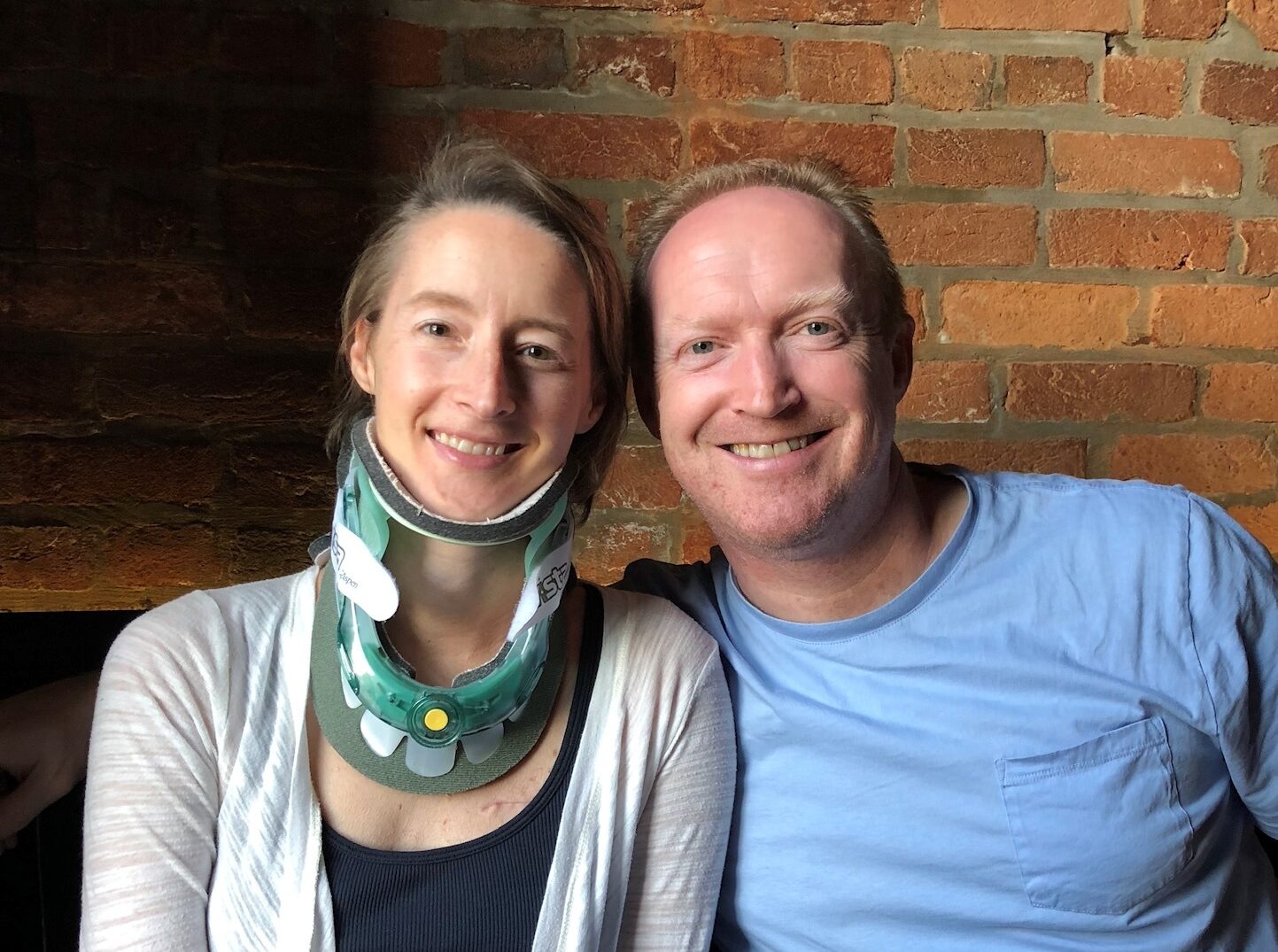
Young was hit by a car just after 7 a.m. on a Tuesday in July 2018. She was walking her dog at the intersection of Duke and Pitt Street in Alexandria, Virginia. Rebekah made eye contact with the driver and walked into the crosswalk. The next thing she remembers is waking up with blood in her eyes. After that, her memory is spotty.
I remember seeing the car coming and then I don’t remember being hit, but I know from the people who saw, that I was hit and pulled underneath the vehicle, and then rolled out the backside. I remember being on the ground and not being able to see clearly because there was blood in my eyes. And I remember hearing a voice. And it was a neighbor that I don’t know well. And she said, “Rebekah, honey, I’m here.” I remember that voice and then I think I passed out.
I remember being in the ambulance, and being — in the words of the report that I read later — “uncooperative with care.” I was in so much shock, I was insistent that I didn’t want pain medication. Even in my state of shock, I was terrified that I would become an addict to pain medication.
And I remember being really frustrated that they kept asking me for my name. And everything came out in a whisper. My lungs had collapsed, and I just didn’t even have air to speak. And I kept telling them my name, and I only realized later that they were just trying to keep me conscious.
I do have some memory loss, which I’m very grateful for. Very grateful for my brain protecting me from some of what happened. If I was hit on a Tuesday, my memories don’t become clear until Sunday. In that time, I’d had a number of diagnostic tests of X-rays and scans. I’d had surgery. I had several of my ribs titanium-plated together so that I could breathe. I was in a lot of intense pain… what I’m sure anyone would only describe as unimaginable pain, the kind that I could never really convey.
I remember Sunday and waking up… and I literally had woken up from a dream in which I was dreaming that I had been hit by a vehicle. And you know, you come out of a dream and you’re kind of groggy, and you realize, “oh my God, thank goodness, this was just a dream.” But it wasn’t.
[After my recovery] when I saw cars come up to the intersection, I still would look to see how much space was available underneath the vehicle. I would try to decide if I were to go underneath, what that experience would be like… if I would make it out or not.
My husband was there and had to tell me five days afterward what had happened to me.
So my husband … actually wasn’t here that day. He got a phone call from the EMTs saying that I was in the ambulance on the way to the hospital, and they could not tell him what my injuries were, but they just knew that they were significant. The impact on him was by far the worst day of his life. I couldn’t have done this without his support… his advocacy. He knew me and he knew how to communicate for me when I couldn’t talk for myself. The poor guy wore himself out. He stayed up at night to push my pain pump button for me. It shows real love. He was amazing.
I didn’t do anything wrong. There was nothing I did that brought this on me. It was just pure, random chance. And one person who made a bad decision. I think it’s easy to get into a habit of not paying appropriate attention or of driving recklessly. That person was never able to really explain what happened.
This was something that could have been prevented. I’ve more recently met with groups and with people, where I’ve heard the phrase “traffic violence.” And I feel like it is more encompassing of people, not just in my situation who maybe have been hit by a car. But people who are in collisions, vehicle-on-vehicle collisions. It sort of implies the accountability, the significance of the decisions that we make.
Meredith Tomason-Taylor’s mom was visiting the District when she was killed in a downtown crosswalk
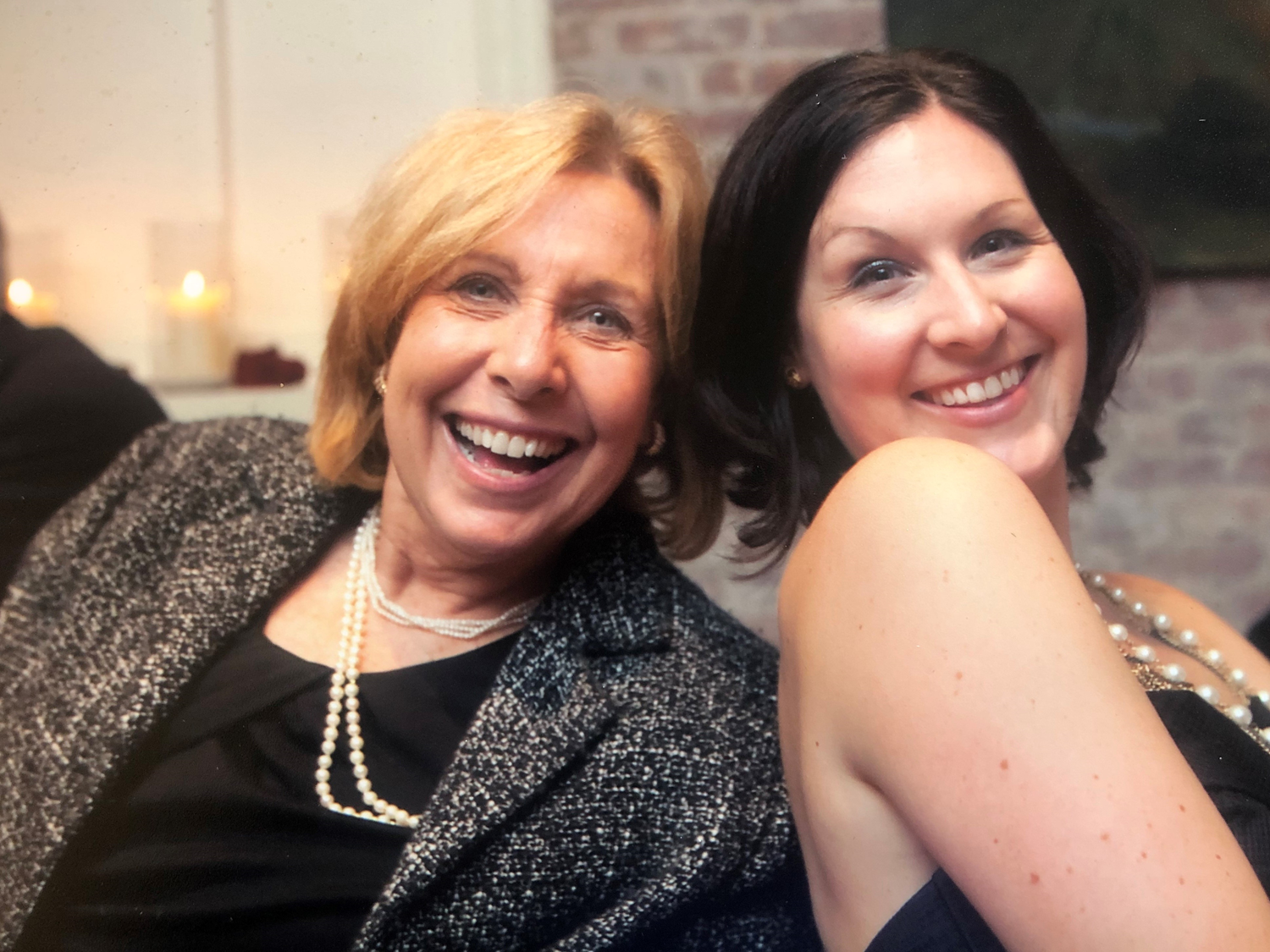
Carol Tomason was visiting D.C. from Chapel Hill, North Carolina in October 2018. Meredith Tomason-Taylor says that her mother was in a crosswalk at 15th and H Streets NW when a truck driver hit her. Tomason-Taylor remembers the day her family rushed to see her mother at George Washington University Hospital.
She was in the neuro ICU, and that’s when my heart sank. Because, you know, up until that point, I think we were all like, ‘Okay, so she broke a leg or she punctured a lung,’ or — I mean, these are awful things, but there was no thought of the impending doom that was about to come upon us.
She had been in surgery and the surgeon essentially told us that she’s not coming back. The injuries that she sustained are not something that anyone would be able to survive.
I’ve never heard my father scream before. He’s not someone who does that. And it will always stick with me when he just screamed, “That’s my wife!” And it was just — I think about that moment. A lot.
When we walked into the room where she was, she was on a ventilator, and her entire head was covered. She had a few small bruises on her face. But aside from that, she looked totally normal. And I think that was the strange thing… when you think about a car crash you think mostly physical, and this was head trauma.
Throughout the rest of the day, it was clear that things were getting worse. Bruises started to appear on her body. Her systems did start to fail. We all stood in the room with her and they turned off the ventilator and took all the tubes out. And we held hands and were just there with her. Everyone else had their eyes closed but I was staring at her and eventually, as the numbers are coming down and the heartbeat is stopping, there was blood coming out of her mouth and it just… it was just another weird moment of like, “Dear God what’s going on in there?” I hope she’s not feeling this. I hope she’s not in pain.
In the initial days [after losing someone] … that is some heavy stuff. And it is painful in a way that is indescribable. Part of you is gone. I believe in the idea that grief is love. It is a sign of love and true admiration. And so to me, I will never stop grieving my mother, because I will never stop loving my mother.
I’m a chef, so cooking is the through-line for me. She was a cook. She was a baker. I learned a lot of my baking from her. I found it strangely painful to cook her recipes at first. The smell of something that she specifically would make… I made it because it reminded me of her. These weird sense memories are powerful. And as painful as it was, I think it was helpful at that time. And it’s still a way that we as a family connect to her, is to make her recipes.
I go over to that intersection every year on the anniversary. There are big signs now about turning left, and I believe that they made an actual left turning lane. But have they done much else? No. Is the crosswalk raised? No.
Just because you think that you’re a great driver or that “this won’t happen to you,” that doesn’t mean that’s the case. You can hurt someone, kill someone. You need to be aware of what’s around you, even to the point where it might seem extra. I find myself fearful a lot of the time when I am making a turn now. And people honk at me because I take my time. Be present. That sounds so silly, but especially in today’s age, we’re always looking at our phones, listening to the radio, doing whatever, but be present in what you’re doing.
My mom was someone who also believed wholeheartedly that good must come from bad, and that you have to make everything that is unexplainable into the best positive experience. So I took that energy, and I was like, I need to do something so that this doesn’t happen again. And so that her death is not something that people are going to forget or that she died in vain. People need to hear about this. They need to know she was a person just like all these other people who this has happened to. If me telling my story is going to help someone cross the street safer or drive their car a little bit better, I will happily do that.
Dan Winston was celebrating a high school band concert when a drunk driver T-boned his parent’s vehicle
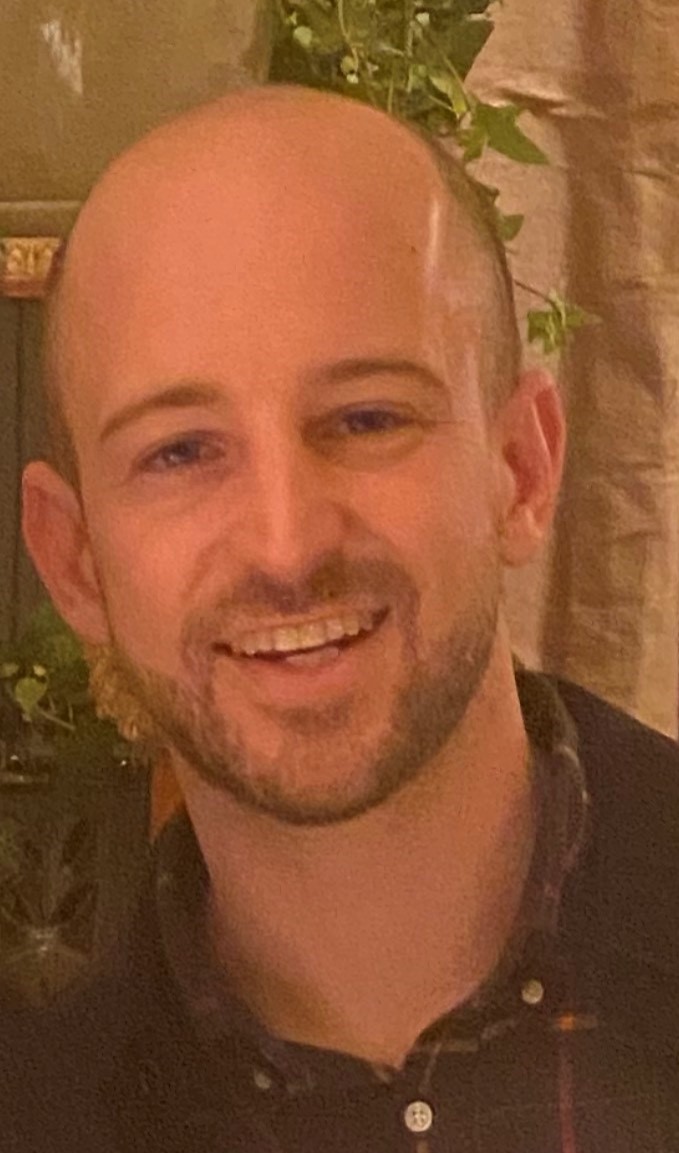
Twenty years ago when Dan Winston was a high school student, the car he was riding in was struck by a drunk driver speeding down a city road. He was in a coma and left with a traumatic brain injury. Years later in D.C., Winston advocated for safe streets when he was a Neighborhood Advisory Commissioner for two years. He also dedicated his career to alternative transportation and providing other methods of getting around instead of a car.
It was one stupid action – one man being careless – literally trying to impress some underage people in his car.
We only really ever interacted once, which was actually at his sentencing and he turned to apologize to all of us. I remember seeing what really was a genuine apology, I’m sure. He made a very, very stupid choice. [But in the eyes of the court] he was just driving, he didn’t kill me. So it’s okay. That’s kind of how our legal system works. He actually received a landmark sentence of a couple of years in jail because this was not the first thing that he had done.
What I feel more deeply now – almost 20 years later – is basically anger at a system that allows crashes like that to happen. It lets one person’s bad decision nearly kill someone and often actually kill someone.
The worst part about this… and it’s a strange thing to have a brain injury… I don’t really remember the crash. I don’t really remember what it was like to not be brain injured. I can kind of reflect on it and think, “Gosh, that was a sad time.” But living through it, I was very injured. I didn’t really understand.
In cities, it just doesn’t really make sense to have the predominant mode of transportation be this highly individualized and often very, very dangerous machine.
School was always really fun, something I enjoyed, and [after the accident] I was just … I was failing. I didn’t realize that I was just so brain injured. And I worked through it with a lot of help from my parents. And a lot of kind of trying and failing, and I made my way through the rest of school. But the most tragic part about it was some reflections I had with my parents years later who said, “you know, it seemed like you kind of lost your spark.”
I was always a kid with a lot of personality. I was such a small kid, but I was always pretty fearless and tried to be outgoing. And I really think that I lost that for a couple of years. I think I have it back now… being so happily married and in a wonderful community that I love, doing work that I really care about.
I think what my lived experience shows is that, fundamentally, it’s hard to understand why you can have vehicles traveling at high speeds through areas where people live. A car becomes a missile.
And there’s a variety of ways to address it. From better transit, more bike lanes, speed bumps, and red-light cameras. More important, I think we have to start with acknowledging that in urban areas — dense places where many different kinds of people are trying to do many different kinds of things — those kinds of places just don’t really make sense to have like the predominant mode of transportation be this highly individualized and often very, very dangerous machine.
Nikki Mammano was in the backseat of a car when it was hit. Her boyfriend didn’t survive.
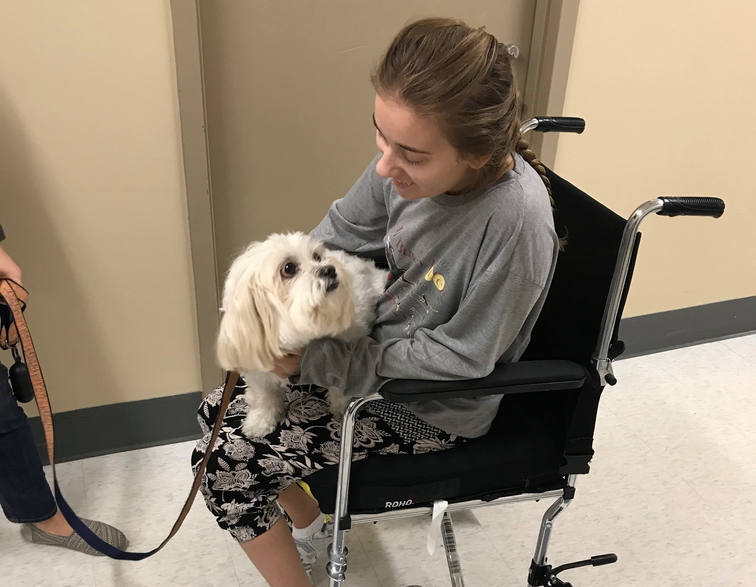
On October 13, 2019, Nikki Mammano was heading to a camping trip on Assateague Island with friends. It was a stormy day when the vehicle she was riding in was hit by a truck. Some of her friends survived, being life-flighted to surgery, but her boyfriend, David, died in the crash.
We were hit by a truck carrying — of all things — an amusement park ride.
I don’t remember really any of the accident. I have very brief memories of that morning. My two friends came over. And we were packing up the car with camping gear. We were on our way to Assateague Island through Delaware. We were going to have a fun weekend… see the wild ponies.
It was three of my friends and my boyfriend. He was sitting to the left of me, I was sitting in the middle in the backseat. He got the most impact from the truck. We were T-boned. And then I woke up in a hospital three weeks later.
I’d ask everyone… I’d be like, please like, please tell me how David is. And no one would tell me. It was a day before I was discharged that they told me that my boyfriend passed away.
Yoga is a way to move the grief through my body. It’s the same for dance. Dance and yoga. It’s an expression for me that when I can’t find the right words to write to process, I dance. I move it out of my body. In 2020 I got my first yoga certification now I have another certification in yoga for grief.
Everyone was in critical condition. We were all supposed to be airlifted, but the storm only allowed for one person to be airlifted. My friend got brain surgery right away, and he’s alive and well. I’m grateful he’s still here. The other three passengers are alive. David was the only death.
Physically, I just remember being in a lot of pain. I couldn’t sit up in bed for a while by myself. I got to experience how challenging it can be trying to get around a city, especially a city like D.C., with a disability, like having to get around places with a walker or a wheelchair. I was in occupational speech and physical therapy. Therapy wasn’t fun. But to fill up my time and get my mind off of the trauma of what had happened and start to think about moving myself forward — that I wasn’t going to be in a wheelchair or use a walker forever — it was important.
I just woke up one morning and decided I wanted to start writing my gratitude. So every morning for like six months straight I’d get up and I’d write three things I was grateful for. My first entry I wrote: “I’m grateful to be alive. I’m grateful for my doctors and for medicine. I’m grateful for my family and my friends.”
I finally got into grad school and felt like it was time to come home [to Chicago]. And so it’s not like I’m leaving that chapter of my life behind. It’s always going to be with me. But I was ready to move on… start new adventures.
Thank you to D.C. Families for Safe Streets and the George Washington University Hospital Trauma Survivors Group for putting us in touch with the people we interviewed.