Margaret Barthel
 Tyrone Turner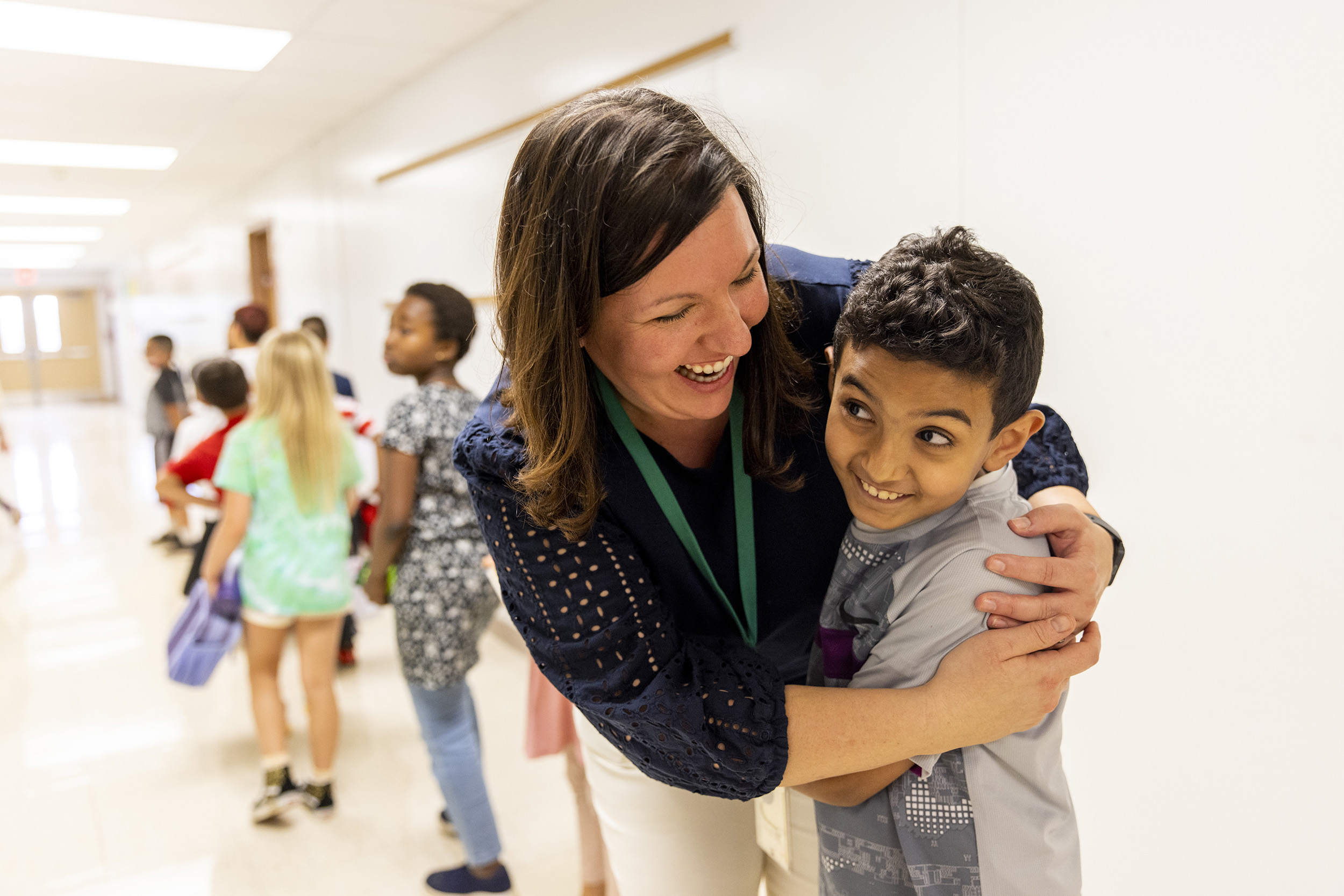
What’s Omar Hajeh’s favorite thing about fifth grade?
“Everything,” he says. “It’s like a higher level. I’ve done a lot of things in fifth grade, and I like how it is.”
Omar’s sweeping endorsement came just four days into the school year at Forestdale Elementary School in Springfield, Va. Fairfax County Public Schools returned to class on Monday.
But what exactly is “everything”?
Omar takes inventory: he’s read some books on his own, played some math games with his friends and his new teacher, and written some stories. And: he’s also talked about his feelings, in our interview and seemingly with other people at school, too.
“Your feelings means, like, if you’re mad, happy, exciting, sad, frustrated, [shocked] and all that stuff,” he elaborates.
Omar’s not alone. Everyone at Forestdale seems to be having plenty of feelings this week. The prevailing one is joy at being back together again, and hope that this year — the second one back full time after pandemic lockdowns — will be even less disrupted by COVID-19 than the last one.
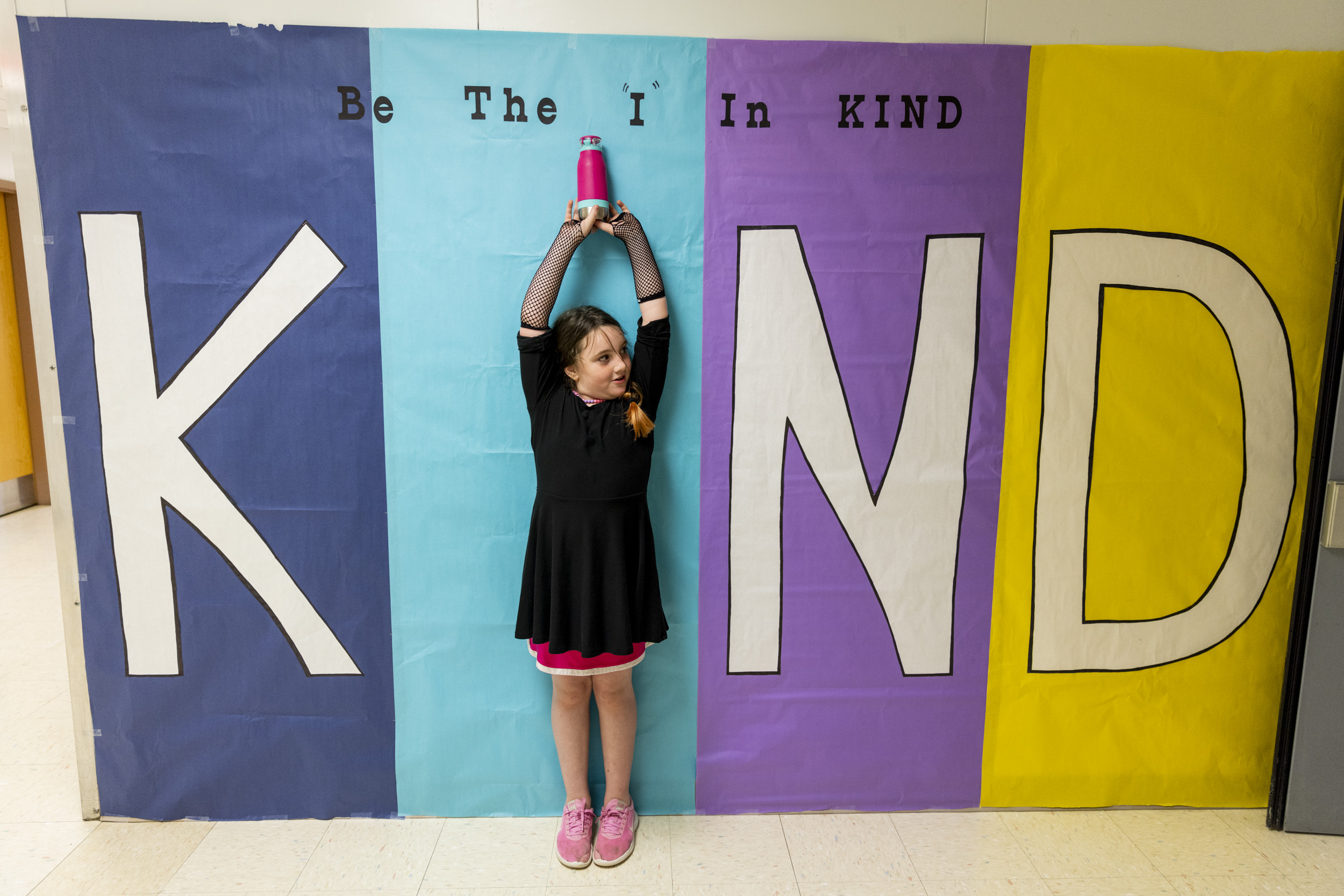
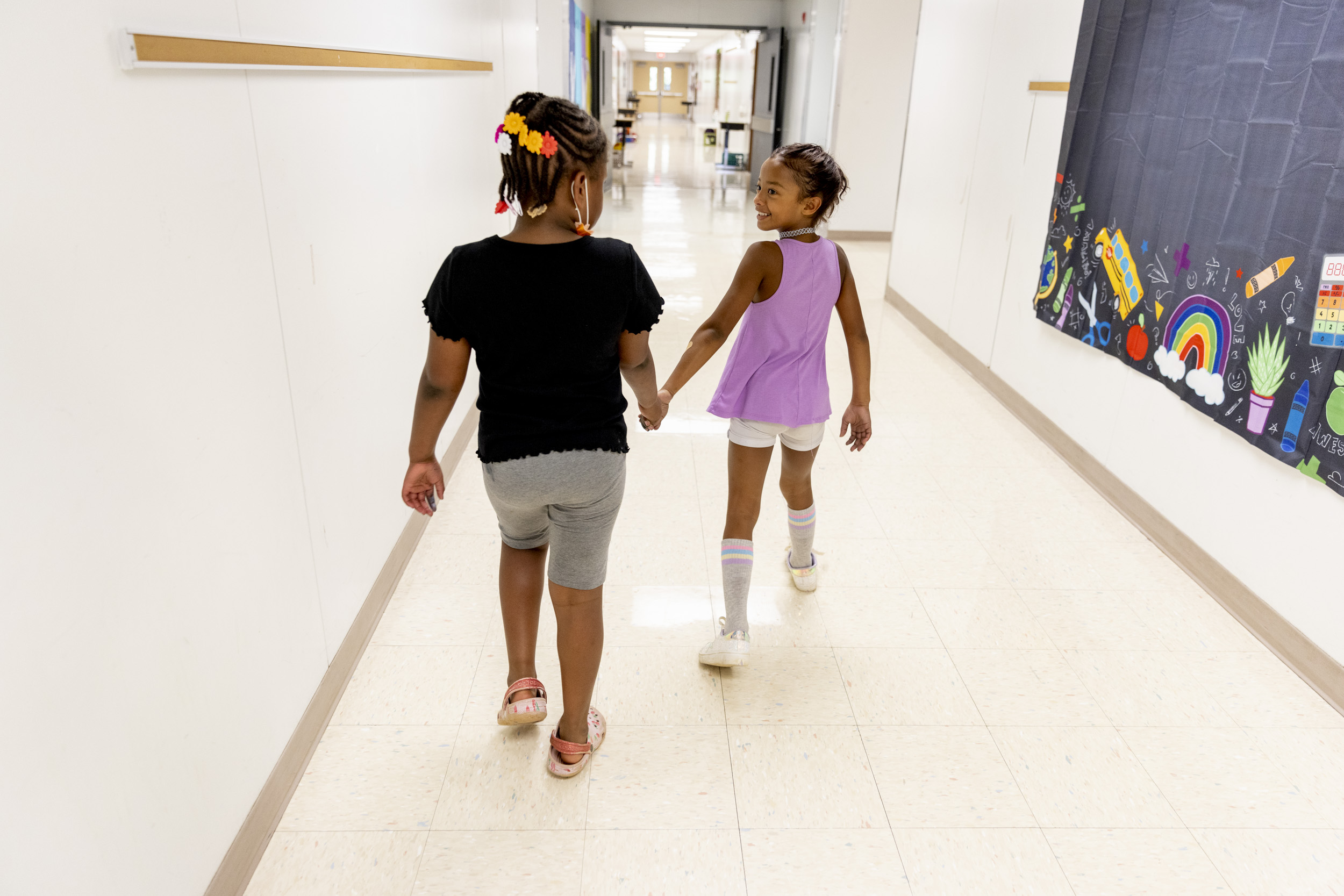
Forestdale is a noticeably affectionate place, and students and staff there are already taking full advantage of the lifting of COVID-19 restrictions to express care. Principal Jenny Cunneen flashes the “I love you” sign in sign language to kids as they pass her in the hallways, and she enthusiastically accepts a steady parade of hugs from her students. The halls are covered in brightly-colored positive messages — one invites students to “be the ‘I’ in KIND” by standing in the space where the ‘i’ goes in the word — and the word that seems to come to everyone’s mind when they’re asked to describe Forestdale is “love.”
But for all the happiness this week, Cunneen and her staff are acutely aware of how everyone’s well-being suffered in the pandemic — and how impossible it will be to teach students academic content without addressing their social and emotional needs. For kids early in development, that means things like learning to empathize with other people, developing teamwork skills, and understanding how to carry on a conversation.
‘That’s not fluff’
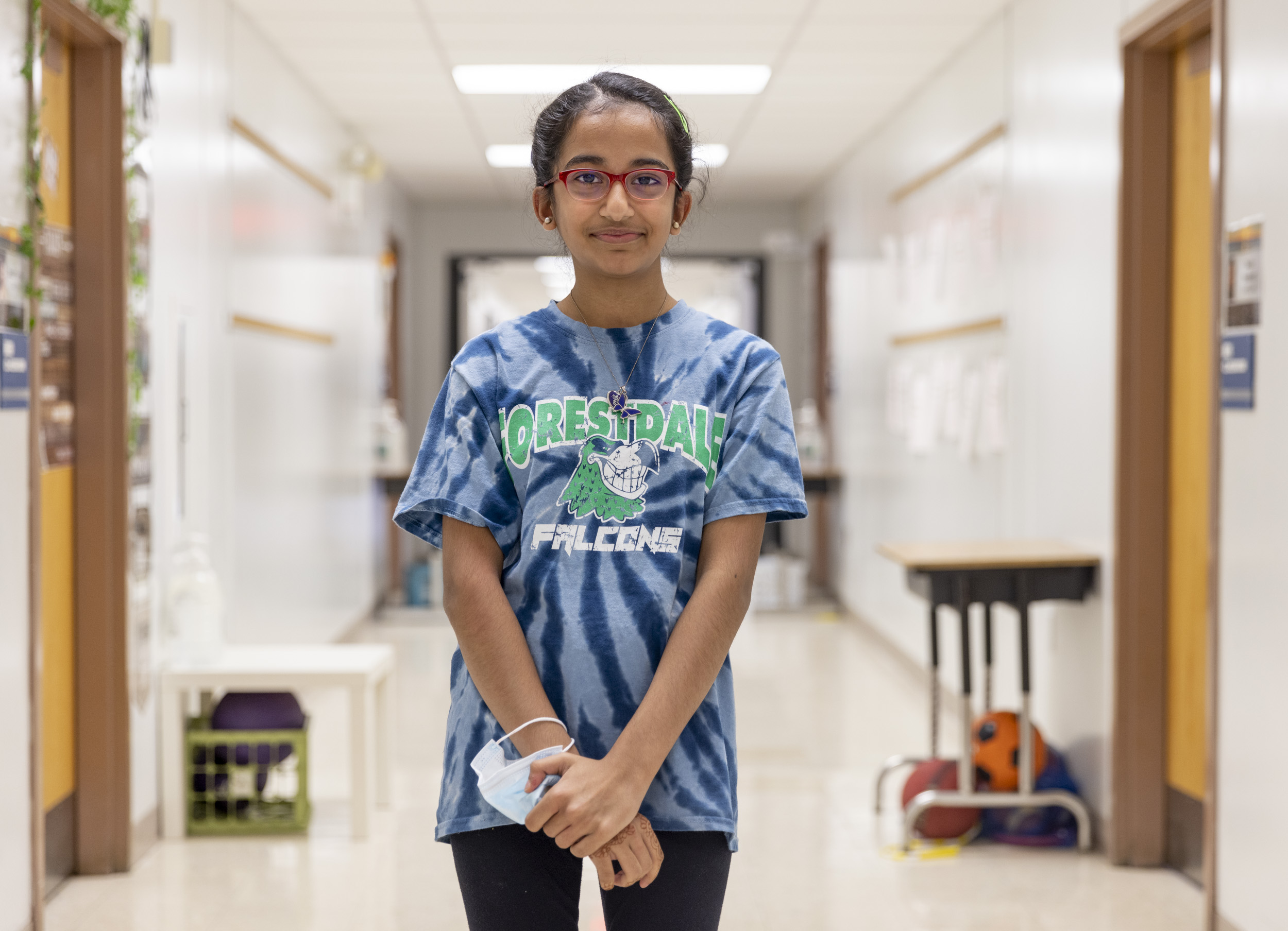
Sixth-grader Tazmeen Ayub has had some changes of heart this year. She’s still wearing a mask in school — COVID-19 is very much still circulating in Fairfax — but, in keeping with the relaxed restrictions at school and in the world, she’s also letting herself relax.
“I used to stay away from everybody and try to eat quickly and put my mask back on,” she says. “But now I’m starting to get, like, chill.” She used to refuse hugs from her friends entirely; now she’ll compromise with a quick side-hug. She relishes her new classmate Alex’s penchant for high-fives.
Cunneen and the teachers at Forestdale have seen firsthand how the pandemic impacted children by cutting off their opportunities to socialize at school, outside of home and family. Cunneen remembers one particular moment, meeting the mother of a two-year-old student about to enroll in one of Forestdale’s early childhood special education programs. “When the mom said, ‘But she’s never interacted with another kid,’ it just took the breath out of my lungs,” she remembers.
Forestdale has always focused on being responsive to the social skills and emotional wellbeing of its students, including training teachers in trauma-informed practices, but now the school is trying even harder to find overt ways to incorporate social and emotional learning into the school day.
For anyone who doubts that focus, Cunneen has a ready answer.
“That’s not fluff, to teach kids and adults how to work together, how to communicate,” she says. “That was really intentional work last year everywhere, and continues to be this year, so that we can build up the mental health and the social emotional wellness of kids.”
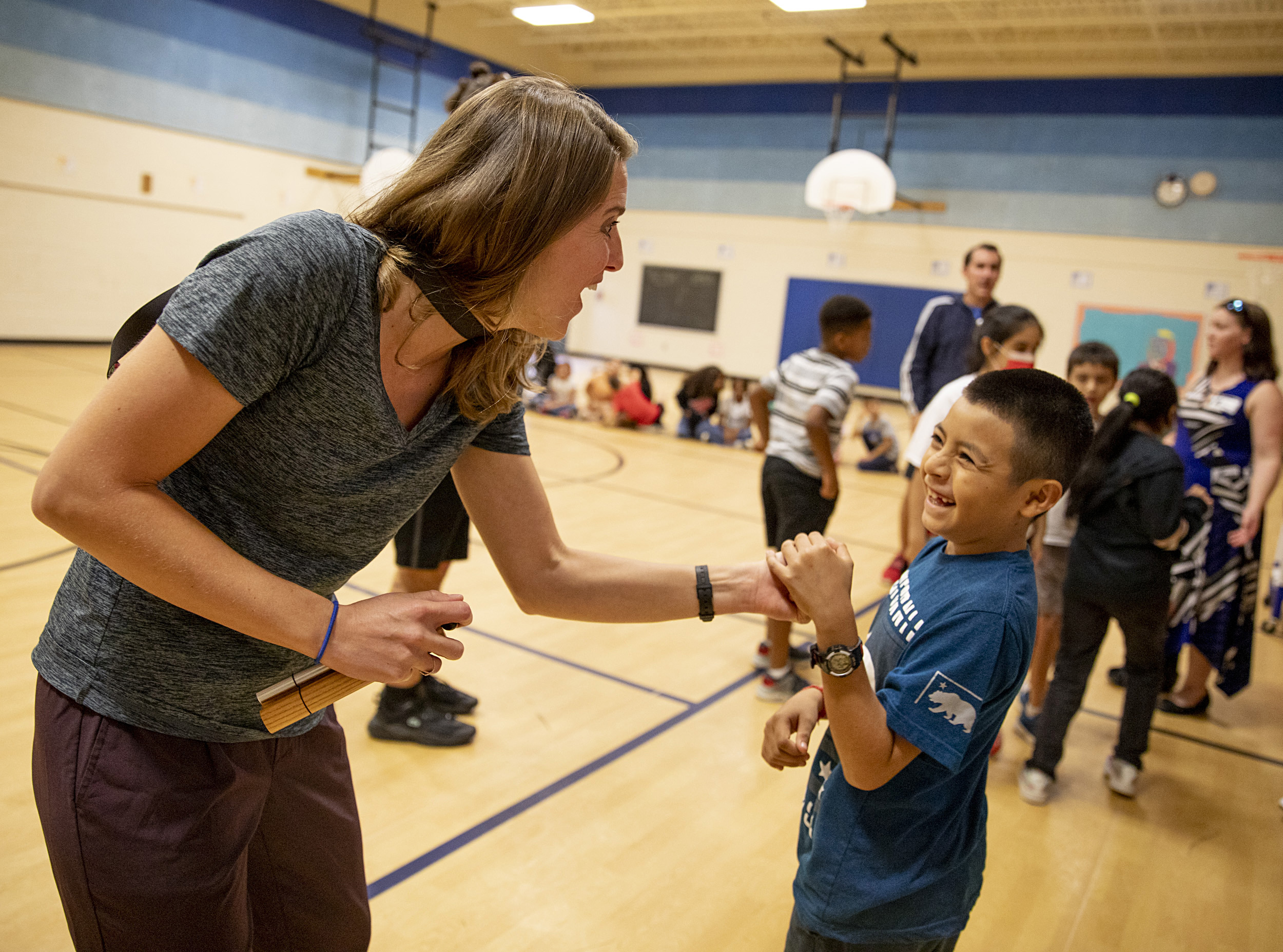
Kenan Brod, one of Forestdale’s physical education teachers, is excited to tackle the problem — and as someone who spends her days in a school gym with dozens of small children, she sees how necessary teaching social awareness is, “because of the nature of the class: using equipment, things going through the air, using our bodies, moving quickly.”
“It was so apparent that problem solving skills for kids were low, coping with emotions were low, identifying emotions were low, proper communication skills were lower than we had seen,” she says.
Brod is working on slowing down to try to get kids back on track. Sometimes literally: at the end of each class period, she has them all practice a moment of (mostly) quiet mindfulness, cross-legged on the floor.
“At this time, we are about to ring the bell,” she tells them. “This is for you to reflect, for you to prepare, for you to transition. Perhaps practice gratitude.”
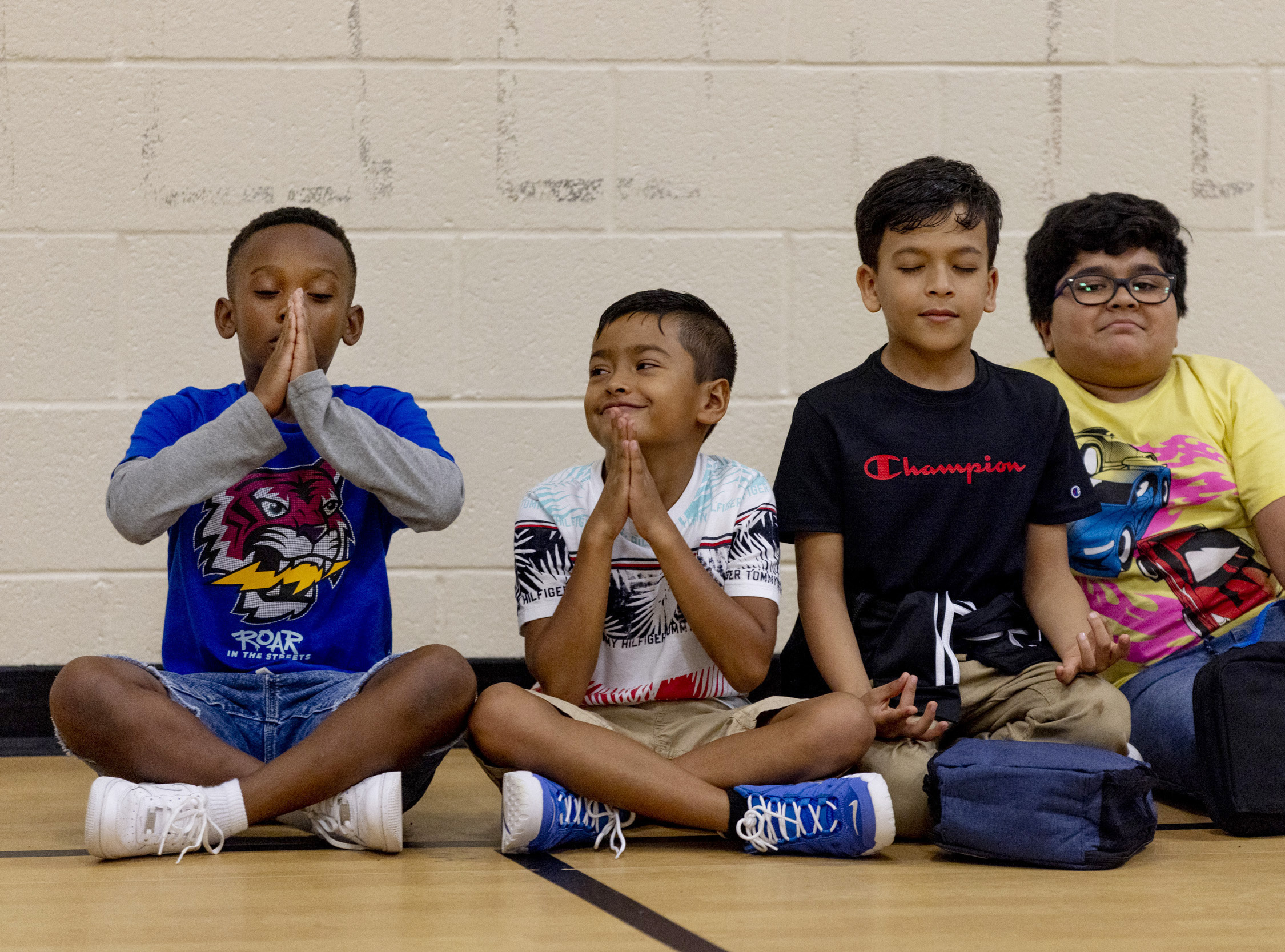
When the chime goes off, the kids wriggle a bit, and when Brod leads them in an inhale and an exhale, some of them make funny mouth noises. But the moment largely seems to land.
Cunneen says the school is leaning on rituals and routines — particularly at the opening and closing of each day — to offer the space for kids to practice regulating their emotions and sharing with other people.
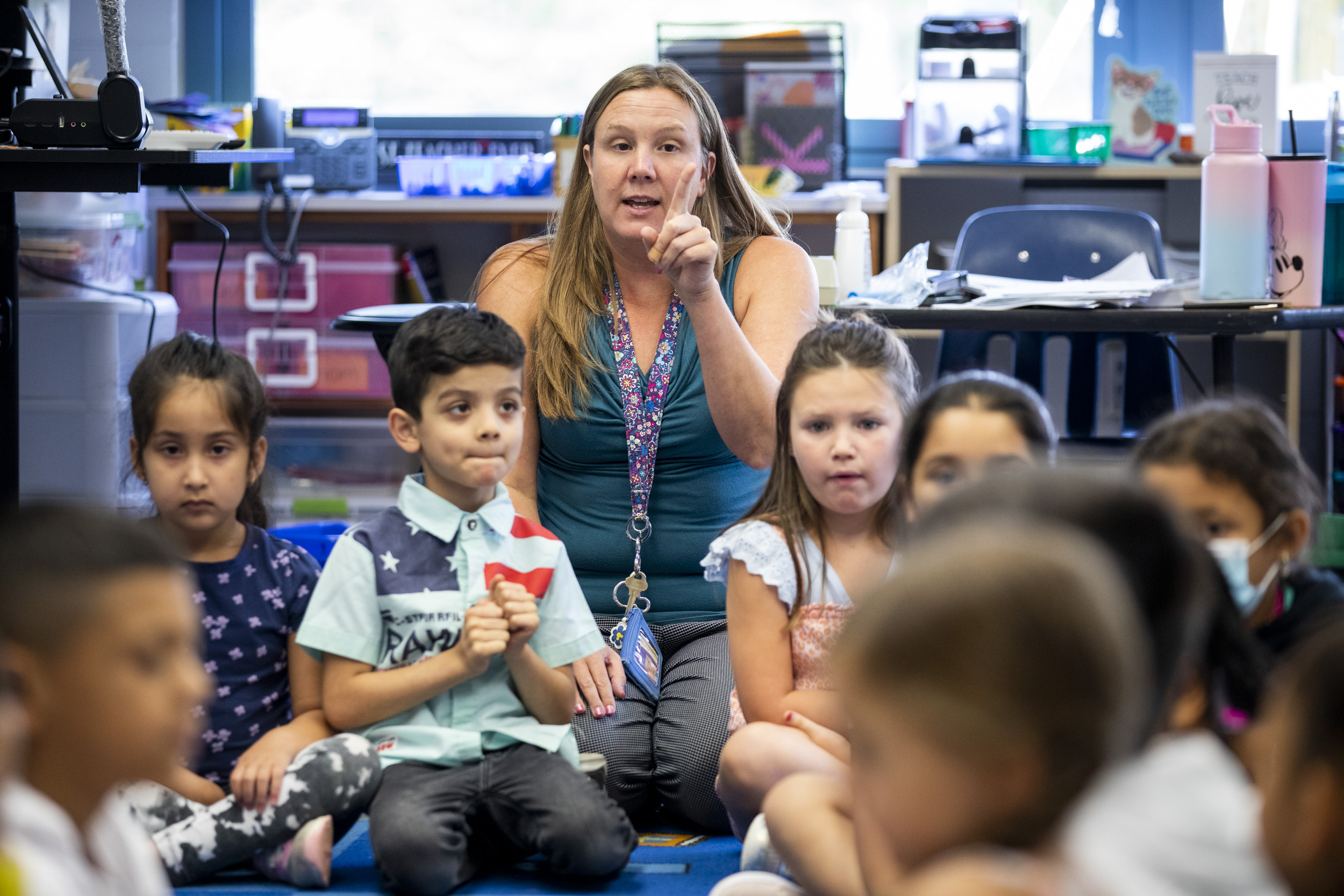
Classroom teachers are incorporating those moments into their lessons, too. In another part of the school, veteran fifth grade teacher Alfreda Jackson gathers her students around her to read a book: Bryan Smith’s “What Were You Thinking?” a story about impulse control and emotional equilibrium.
Jackson solicits guesses from the room about what the story is about, based on context from the cover and the title. One student has one — maybe it’s about a stressful situation? — and Jackson takes a minute to relate.
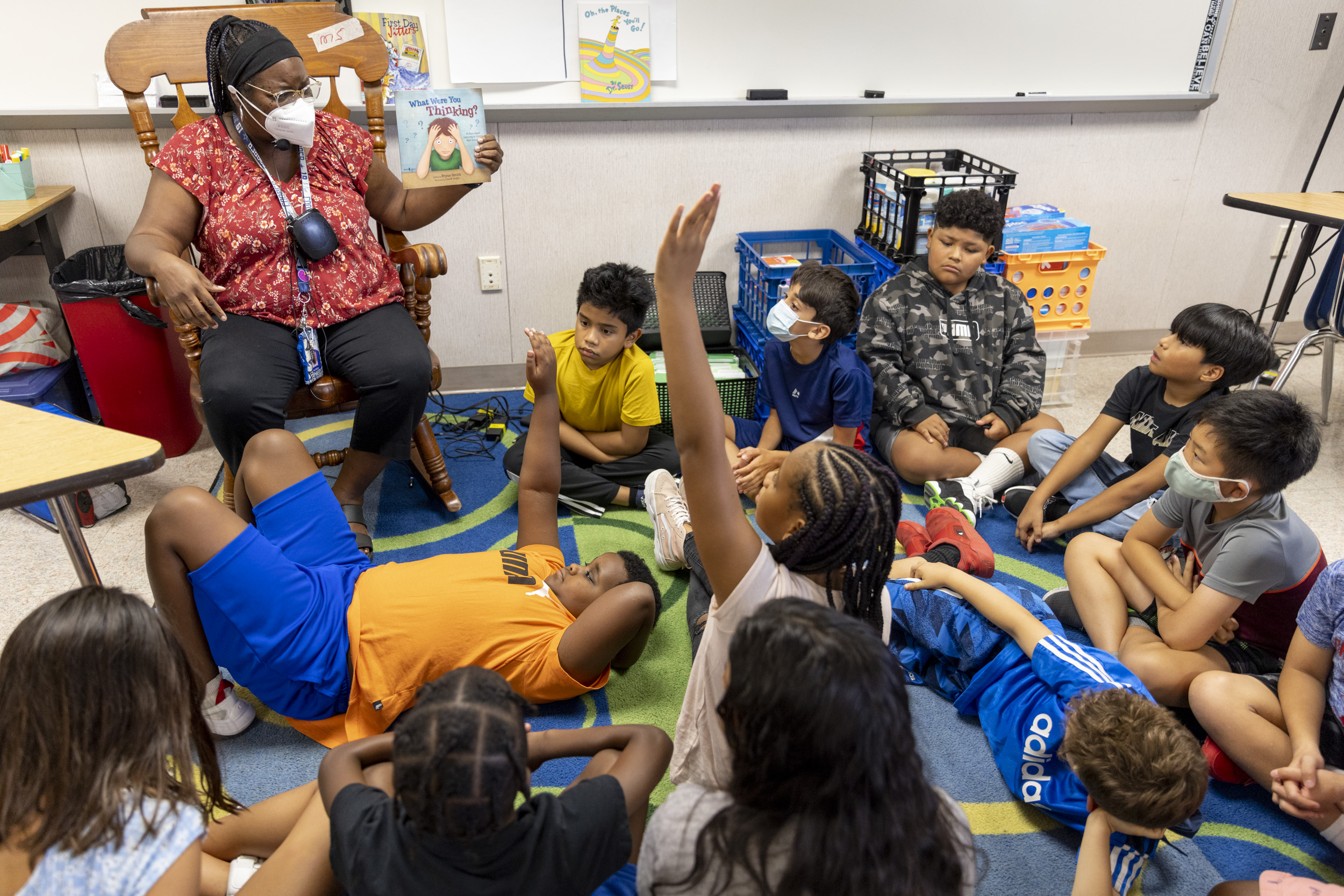
“Okay,” she says. “How many people have experienced that, like stress? If you’ve had a hard test, and you weren’t prepared for it.”
“I experience it all the time,” one boy chimes in.
“All the time,” Jackson echoes. “Oh, wow. That’s something we have to talk about.”
Being a safe person for kids to talk to is one of Jackson’s primary goals for the year.
“I want them to be able to feel comfortable that anything that goes on, whether it’s here in the school or even outside of the school, that they feel comfortable that they have someone that they can come and talk to,” she says.
So when Principal Cunneen suggested starting a new tradition — “Welcome Walks,” where Forestdale teachers go door-to-door to meet students and families a few nights before school starts — Jackson was thrilled. She’d done something similar at a previous school. She felt the idea helped her connect with parents and gave her invaluable insight into how her students’ lives outside of school might affect their learning at Forestdale.
“A lot of times parents are intimidated to come into the school and so going to their home base and being able to speak to them at their home, that makes them feel more comfortable,” she says.
‘You have to know what they need to know’
Cunneen and her staff feel that nurturing social and emotional development goes hand-in-hand with academic learning — another area where students suffered during the pandemic.
Standardized test scores are beginning to rebound in Fairfax County and in Virginia as a whole, but they’re not back to their pre-pandemic levels quite yet. The impact of the pandemic, according to the school division’s analysis, was most severe among Hispanic students, low-income students, and English language learners — all groups that Forestdale serves. Cunneen says students at the school speak 25 different languages, and about half of the student body relies on two free or reduced-cost meals per day at school.
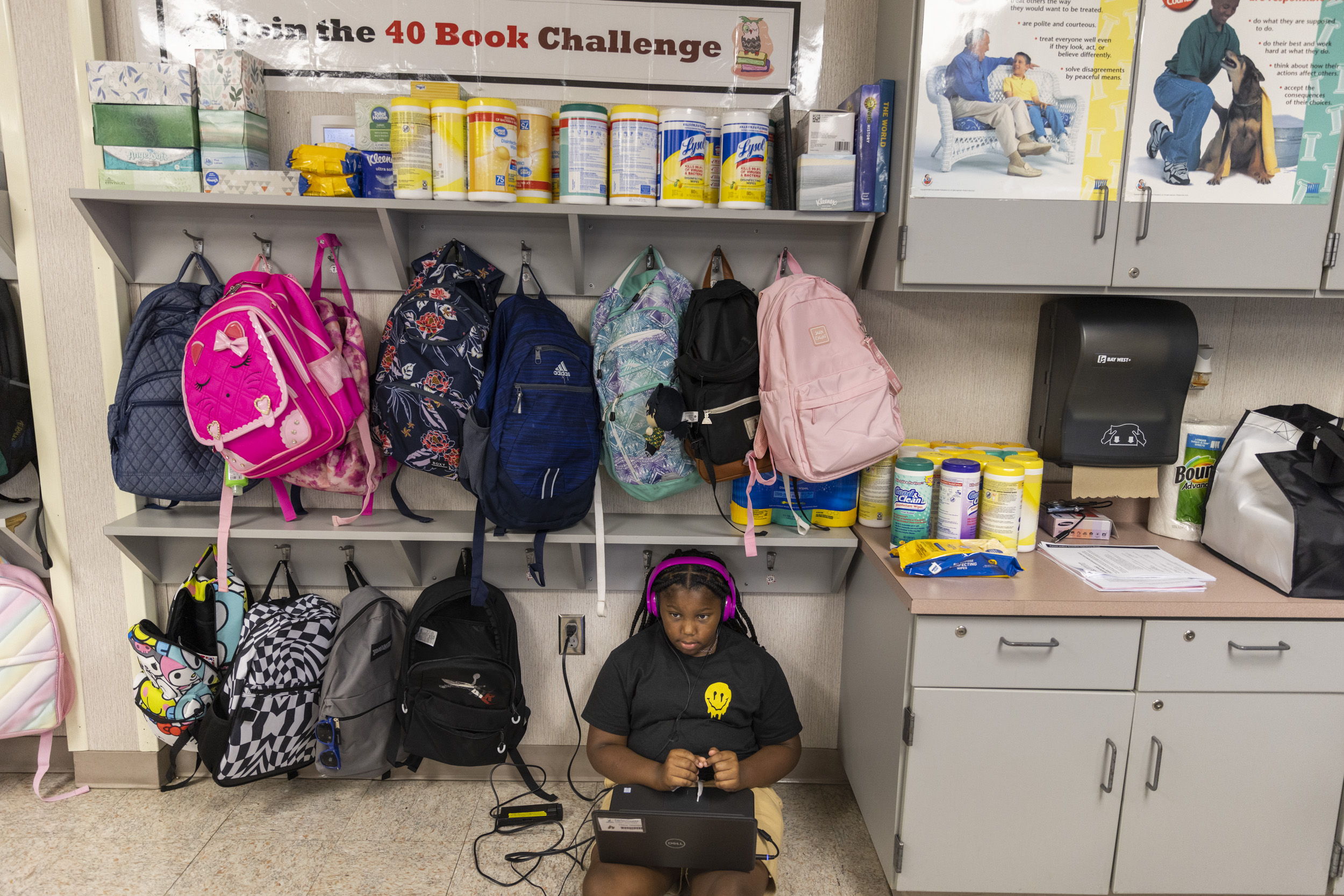
Cunneen says she’s paying attention to the test scores, but she’s also eager to measure her students’ growth over time.
Measuring school performance based on proficiency (whether or not students are meeting a particular benchmark) versus growth (the progress students make over time at a particular school) is a longstanding debate in education, and one the Youngkin administration entered last spring, proposing in a report that the commonwealth should focus more attention on overall test scores instead of improvements in test scores in school accreditation decisions.
“It’s like a GPS analogy. You have to know where you’re going, right? You have to know what they need to know,” Cunneen says. “But you can’t just hit the road and start driving if you don’t know where you are because you’re starting in one place.”
“I’m saying our place and our routes to get there, just like with the GPS, are different,” she continues. “And so being able to look at where they are and then — there was so much to celebrate with the growth that students made.”
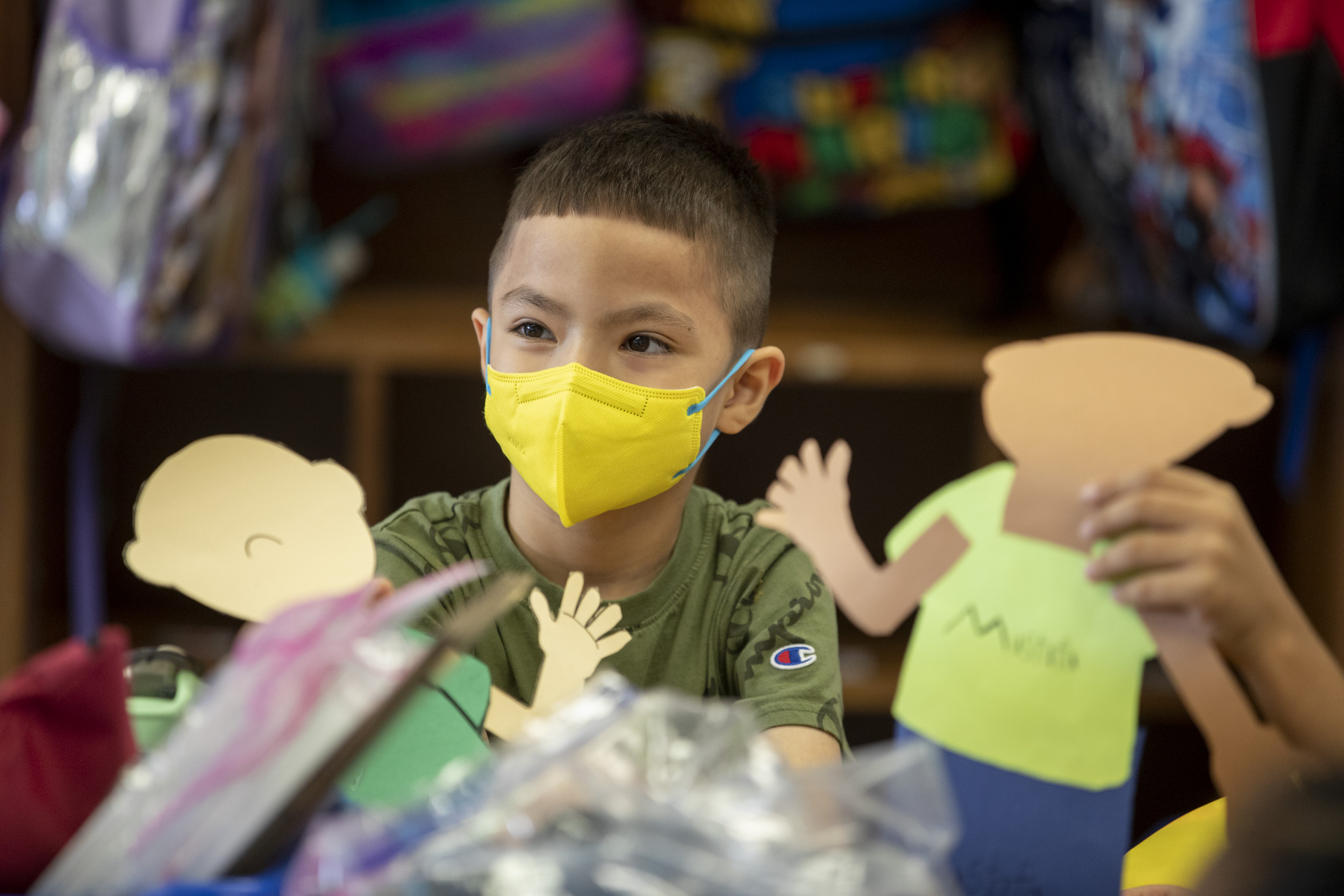
One particular area of academic focus this year, per Cunneen, is literacy education, part of a division-wide push to close literacy gaps for students of color, English language learners, and low-income students.
That means a focus on phonics for young children, and word study for older learners, she says.
“We are doing a lot of shifts in building shared understanding around literacy, how the brain learns to read — that you need that, but you also need oral comprehension,” she explains. “We learn to speak as humans before we learn to read.”
First-grade teacher Katie McWilliams says that work will be much easier this year, with pandemic restrictions mostly eased (some students and teachers at Forestdale are still wearing masks, but most are not).
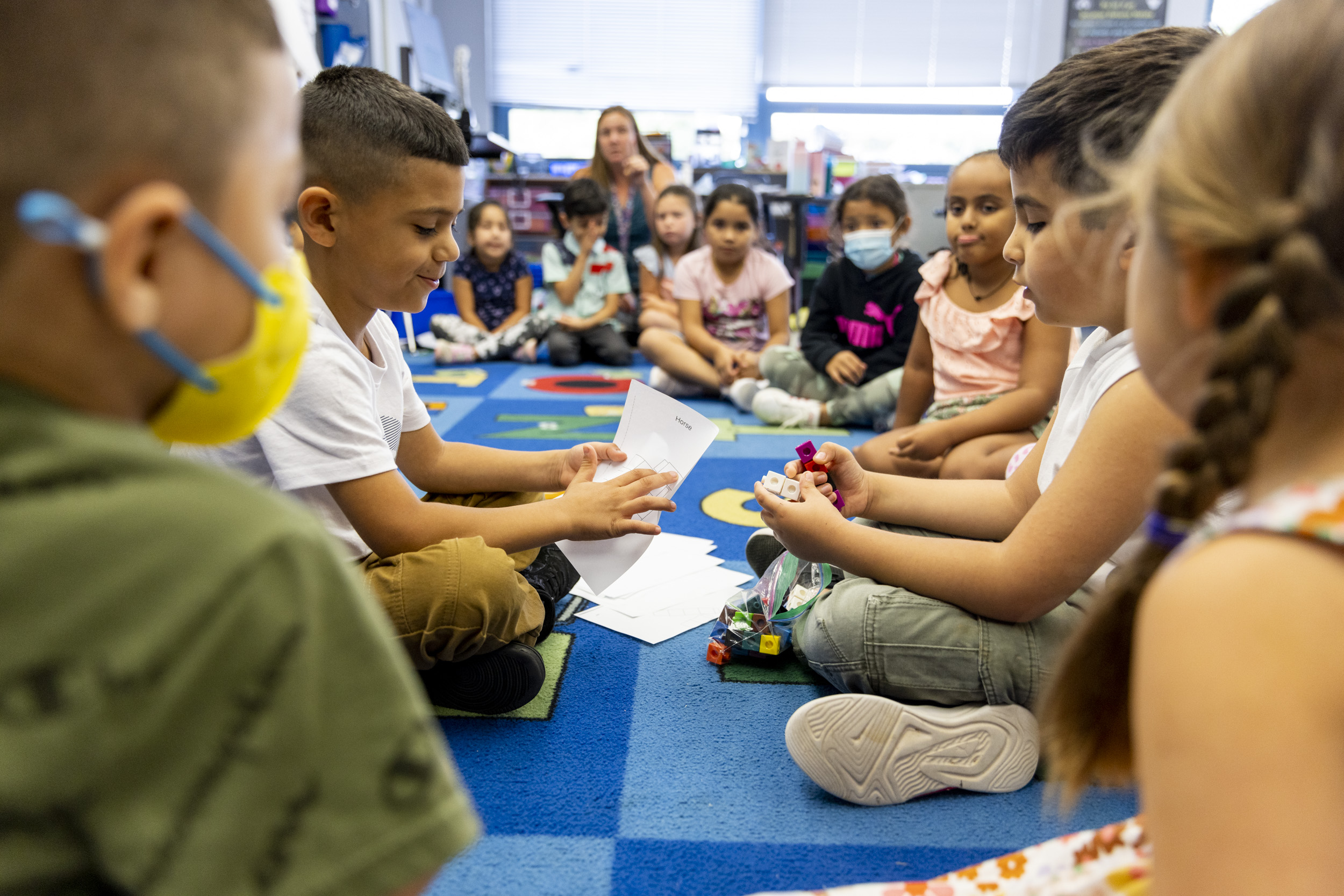
“Last year, most of the time, the teachers were in the mask,” McWilliams says. “And so now this year, getting them to be able to see the way my mouth forms with those sounds — I’m really excited that we are able to do that again.”
“I can’t sleep because I worry about the people”
Forestdale has one thing going for it that some schools in the D.C. region do not: the building is fully staffed. FCPS as a whole says it has filled 99% of its classroom positions, either with licensed teachers or with teachers currently in the licensure process. Other local school districts, however, have struggled to hire educators, amid a national teacher shortage.
But Cunneen isn’t resting easy, even if Forestdale is fully staffed. She’s highly aware of what she’s asked her “rock stars,” as she calls them, to do in the past two years: leave school to go in to pandemic lockdowns in the spring of 2020; figure out how to teach virtual school; return to school to support struggling kids; and find their way through changing health and safety restrictions last year. That takes energy, Cunneen knows, energy that teachers sometimes diverted away from their own families.
“It was really hard,” she says. “It was really hard shoving my kid out and saying, ‘I’m talking to the whole set of parents right now about what health implications look like.’ My kids need my attention, too.”
Add on top of that the dramatic see-saw of public opinion about educators in the past few years.
“They were praised for it in the beginning, right, ‘I don’t know how you do it…I’m home with my kids,’” Cunneen explains. “And how quickly the pendulum shifted [to] ‘I can’t believe they don’t want to go to work and be in a class of thirty kids who may or may not have masks on.’”
She hopes being back in person this year will help support teachers through the exhaustion they may be feeling.
“People would say, ‘what keeps you up at night?’ And I would say, ‘The people, I can’t sleep because I worry about the people,’” she says. “So I’m really excited to hopefully come back and continue to be able to take care of each other.”
Forestdale staff and students seem to agree: on some level, whether it was bringing childhood pets to Zoom school or the beginning of Welcome Walks, the pandemic knit the school community together in ways it hadn’t been before.
“It was not just a disruption in kids’ lives. It was a disruption in all humans lives,” Cunneen says. “Collectively going through that trauma together both had individual and collective impacts on the whole world, but it also brought us closer together.”