Margaret Barthel
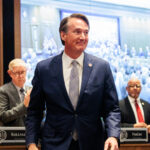
Virginia Gov. Glenn Youngkin has announced a set of measures designed to ease teacher shortages across the commonwealth, amid nationwide problems with hiring and retaining workers in the profession.
“We all know that when a student is in the classroom with the teacher in person, that’s where the magic happens,” Youngkin said at a public event on Thursday afternoon. “So when we have a shortage of teachers … we’ve got to work extra hard in order to close the gap.”
Broadly, the announcement seeks to make teacher licensure in Virginia more flexible to accommodate teachers licensed out of state, retirees and people making a career change. Those things could be helpful, but do not strike at the heart of the teacher shortage problem, according to the state’s largest union.
“We’re just not given the resources that our students need to succeed,” said James Fedderman, the president of the Virginia Education Association, which represents 40,000 teachers across the commonwealth. Fedderman said low teacher pay and poor working conditions
Most Northern Virginia divisions say they are close to fully staffed for this school year, though some are using long-term substitutes or apprenticeship programs to fill positions.
Under the new executive directive, the Youngkin administration will work to ease teacher licensure requirements, particularly for people with out-of-state teaching licenses or lapsed Virginia licenses. Officials will also work on legislative proposals to streamline the teacher hiring process for out-of-state or retired teachers, retired military personnel or other professionals changing careers. The commonwealth will create a teacher apprenticeship program, and it will take steps to help child care providers operate inside of public schools.
Youngkin also directed state education officials to fund grants for teacher recruitment and retention efforts in especially hard-hit school divisions, though he did not specify how much money the commonwealth would put behind that effort.
Fedderman criticized that vagueness.
“There are a lot of unfunded mandates and there is not any funds that accompany all of the list of items that he says needs to be done,” he said.
“Youngkin will show us if he truly values education and solving the teacher shortage based on how he decides to allocate this budget surplus in the coming year,” he added.
Fedderman called for further scrutiny of the speed of the state teacher licensure application process, but mostly focused on teacher pay and school funding as primary issues fueling retention problems and reluctance to enter the profession in the first place. Even with raises included in the state’s two-year budget, he said, inflation has cut teacher earning power, and overall teacher pay in Virginia lags behind other states with similar wealth.
The Virginia Education Association put forth its own list of actions that it believes could solve the teacher shortage, including additional state support for high-poverty schools, providing state funding for support roles, and fully funding Virginia’s standards of quality for public schools.
Youngkin introduced a new program called “Bridging the Gap,” which will work with a group of 15 school divisions to create data-driven, individualized learning plans to get students back on track after the pandemic school closures.
Youngkin’s directive also requires that school divisions institute teacher surveys for current and departing staff, in an attempt to create data on the reasons for the shortage. Several local divisions already collect similar data.
The exact number of unfilled classroom positions in Virginia is unknown — and fluctuating daily, as schools hire new staff at the beginning of the school year. In 2021, data from the Virginia Department of Education showed nearly 2,600 open teaching positions out of about 92,000 total positions. Northern Virginia school divisions accounted for about 650 of those vacant positions last fall.
A recent report from the Virginia Education Association found that struggling schools not fully accredited by the state had double the teacher vacancy rates of fully accredited schools in 2021. Those not fully accredited schools, the report indicated, disproportionately serve Black students.
For this school year, the state education department identified particular shortages in elementary education, special education, middle school, and career technical education roles.
This year, most school divisions in Northern Virginia say they are almost fully staffed. Fairfax County Public Schools, the largest system in the commonwealth, has filled 99% of its classroom positions, as has Arlington Public Schools and Loudoun County Public Schools. Falls Church City Public Schools are fully staffed. In Prince William County, 98% of classroom teaching positions are filled.
“Currently, we have 145 school-based instructional positions open, which is similar to the number of openings we had during the 2021-2022 school year,” PWCS spokesperson Diane Gulotta wrote in an email.
While the vacancy numbers in Northern Virginia are relatively modest, even small shortages of trained teachers can have a significant impact on student experiences in individual classrooms.
To fill the final gaps, Gulotta said PWCS is hiring temporary teaching personnel, called Teaching Professionals on Temporary Assignment. People with a bachelor’s degree and one year of experience working with students are eligible for the program, which is currently filling 100 positions in Prince William County schools.
Fairfax County is taking a similar approach, advertising a new residency program for people with bachelor’s degrees interested in a fast-tracked teacher certification process, or for licensed teachers interested in changing subjects or age groups.
Some school divisions are also scrambling to fill other support staff roles. Several say they are working on hiring and training bus drivers. Prince William County Schools are missing 102 bus drivers, with 44 currently in training.
Youngkin has directed significant political focus to education issues in office, after an emphasis on parental rights, school choice, and criticism of racial equity policies helped him take the governor’s mansion.
In June, Youngkin signed a bipartisan budget that included a 10% raise for teachers over two years, teacher bonuses, and significant state spending on school infrastructure. He has also been a vocal advocate of school choice, and while his desire to add new charter schools to the commonwealth was stymied by the divided General Assembly, he did succeed in a push to create a laboratory schools program (lab schools are run in partnership with universities).
“We need to continue to work on this. We know it. We know it,” Youngkin said of the teacher raises at the announcement on Thursday.
But Youngkin has also been highly critical of Virginia public schools, often painting a dark picture of declining test scores and poor performance returning from the pandemic. Scores on Virginia’s standards of learning have not returned to pre-pandemic levels, but they did improve nearly across the board between school year 2020-2021 and school year 2021-2022. Fairfax County and Loudoun County schools, which Youngkin has specifically criticized for overemphasis on inclusive policies over and above academics, saw the same rebound and outperformed state averages.
Politically, Youngkin has stoked cultural controversies over critical race theory and LGBTQ-inclusive policies. He attempted to ban the teaching of “inherently divisive concepts like Critical Race Theory” from the classroom in an early executive order, and he directed state education officials to retract racial equity-focused resources from state education reference materials. He set up a ‘tip line’ for parents and students to report teachers for addressing ‘divisive’ subjects in class. In a recent campaign event, he suggested that teachers should report students’ preferred pronouns and gender identities to their parents. Advocates say outing LGBTQ students to parents who may or may not be supportive of their identities is a safety issue, one that can lead to student homelessness or serious mental health risks.
Critics believe that rhetorical focus runs counter to Youngkin’s stated goal of shoring up the profession and solving the personnel shortage. Instead, they feel the governor has created distrust in public education and directed anger towards the teaching profession, already beleaguered by comparatively low pay and exhaustion from pandemic learning disruptions.
“All of Glenn Youngkin’s rhetoric has been divisive in nature,” Fedderman said. “His total approach has been to pit parents against educators. Educators are not the enemy.”
Some local teachers say they’ve chosen to quit instead of weathering what they see as attacks on their professionalism and their personal lives. Robert Rigby, an LGBTQ advocate and longtime classroom teacher in Fairfax County, retired this spring rather than continue to face public anger.
“It’s part of a larger picture to make work in public schools so unpleasant that the public schools become dysfunctional,” he told DCist/WAMU at the time. “And it’s succeeding.”