


A new permanent exhibit is opening this month at the Kennedy Center to honor John F. Kennedy — the building’s namesake — with an in-depth look at the Kennedys’ commitment to the arts. The opening of “Art and Ideals: President John F. Kennedy” is the culmination of the performing arts center’s 50th anniversary season.
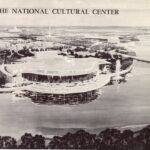
Kennedy served just over 1,000 days as President, but during that short window he and his wife Jacqueline left a lasting impact on American arts culture. President Dwight D. Eisenhower commissioned what was originally to be named the National Culture Center in 1958, but fundraising was still lagging by the time Kennedy took office in 1961.
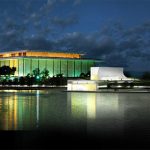
Kennedy was deeply invested in the idea of a national performing arts center, however, and Jackie became its honorary chair in 1962, helping to cement interest and financial support in the project. Following Kennedy’s assassination, the yet-to-open facility was renamed the John F. Kennedy Center for the Performing Arts to honor his memory.
But today, many visitors to the Kennedy Center lack an immediate connection to or frame of reference for the 35th president. “Two-thirds of the people in this country were not alive during JFK’s presidency,” Kennedy Center chairman David Rubenstein pointed out at a preview of the exhibit Thursday.
That’s why, when the Kennedy Center contemplated its latest expansion with the addition of the REACH, planners incorporated the idea for a larger exhibit around JFK’s cultural legacy.
The intention is to “bring his ideals further into a physical space,” Kennedy Center President Deborah Rutter explains.
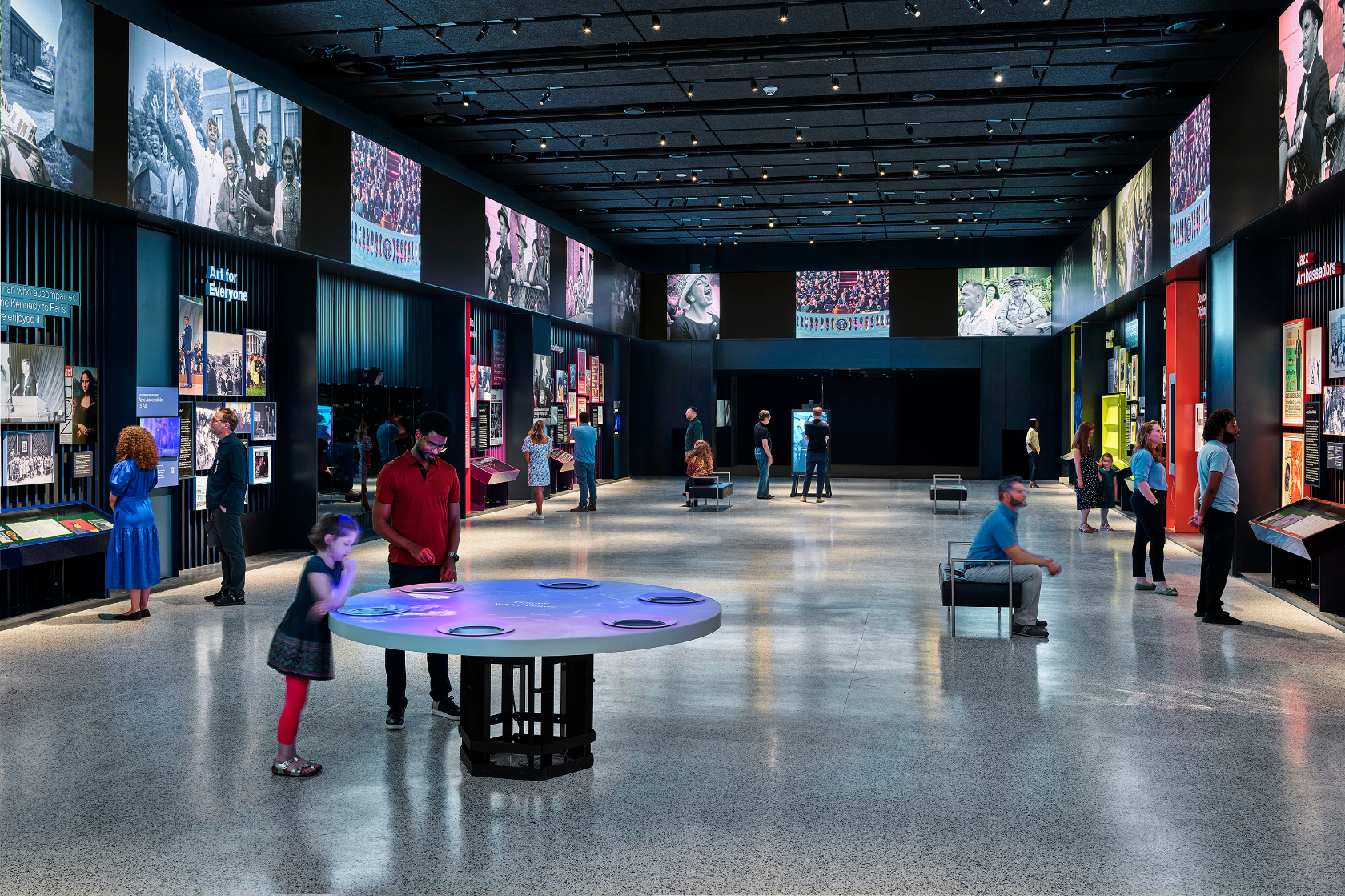
That intention has been realized. The former atrium of the Kennedy Center’s roof level has been totally redesigned for “Art and Ideals,” and the exhibit is divided into four sections, demonstrating how art was a throughline across culture, democracy, social change, and the White House during the Kennedy administration.
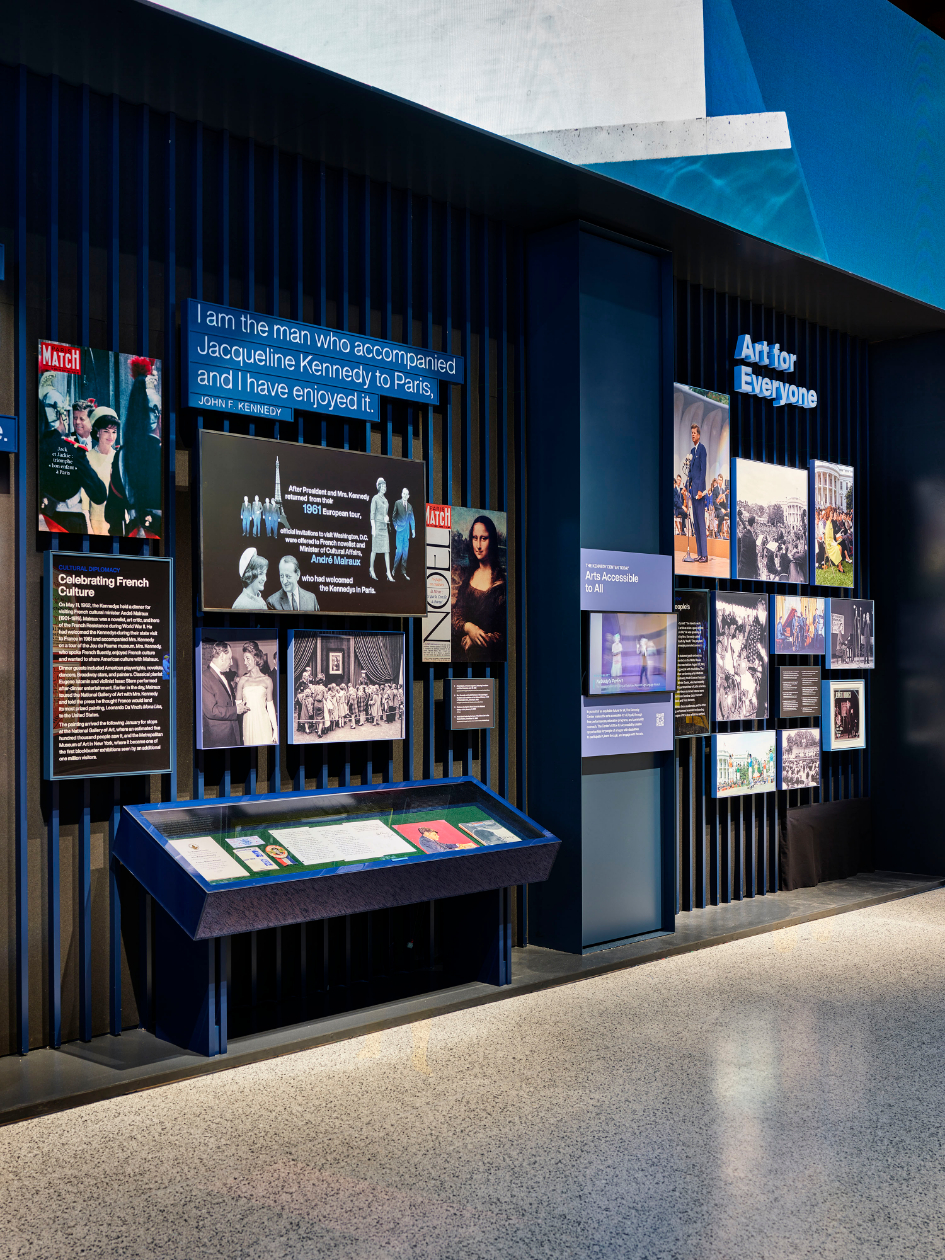
“Art and Ideals” collects a massive array of historic artifacts, pop culture memorabilia, video, sound, and text to tell the story of JFK’s support for the arts. Books from Kennedy’s childhood library fill cases in a vestibule at the entrance and offer an insight into his early thinking and interests. Videos of artists and writers who advised him on civil rights issues, like Harry Belafonte and James Baldwin, show how he utilized star power in pursuit of creating change. Posters and magazine covers from around the world spotlight the Kennedys’ global popularity and reach.
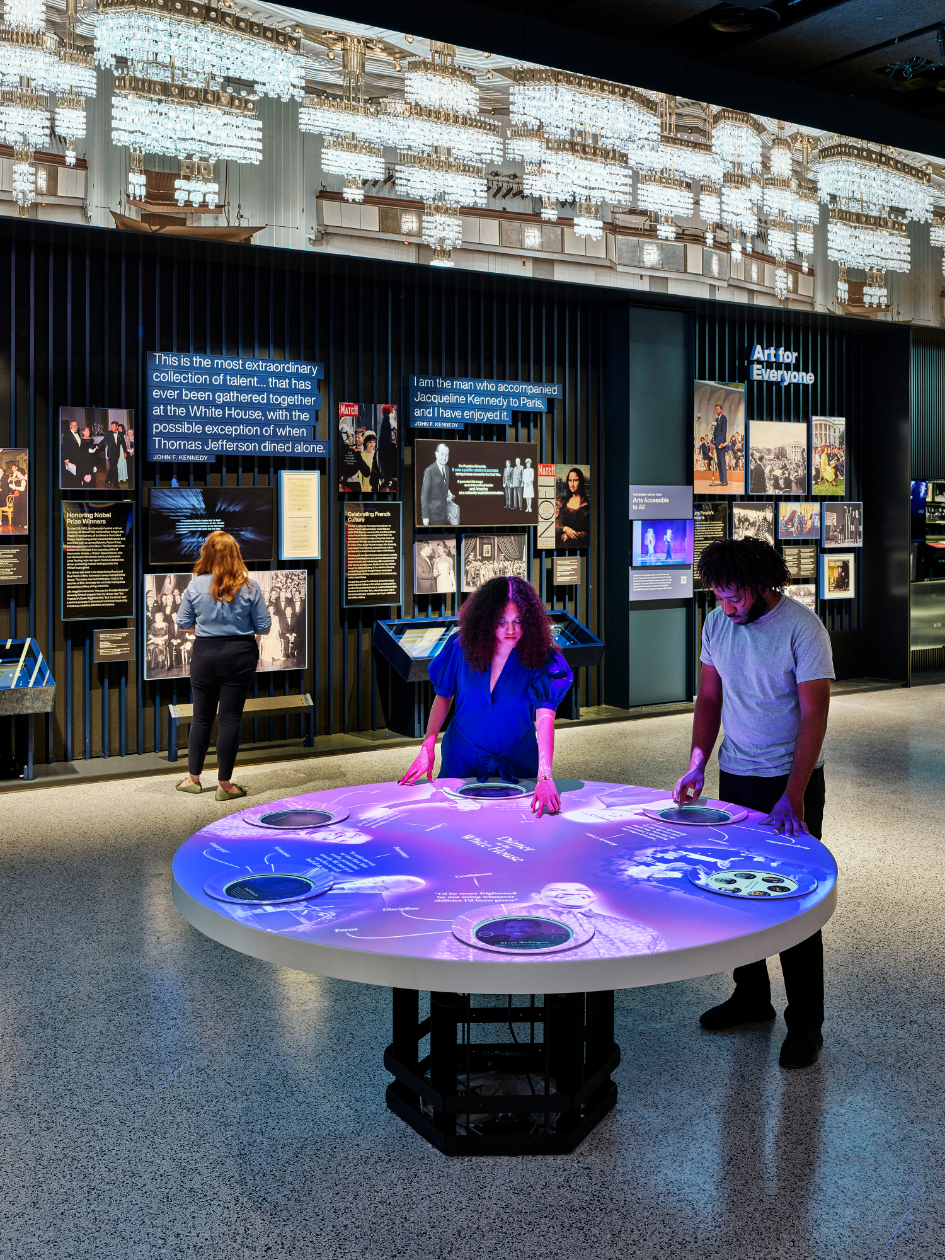
Kennedy was widely considered to be the first president to understand and harness the power of television and mass media, and the exhibit leverages documentary footage and interactives in a way that reflects that. A large round “dinner table” display nods to the fascinating figures the Kennedy’s invited to dine at the White House. Tapping on “place settings,” visitors can uncover quotes and facts from the artists, writers, and thinkers that actually attended, as well as put together a guest list of contemporary figures that might be invited now.
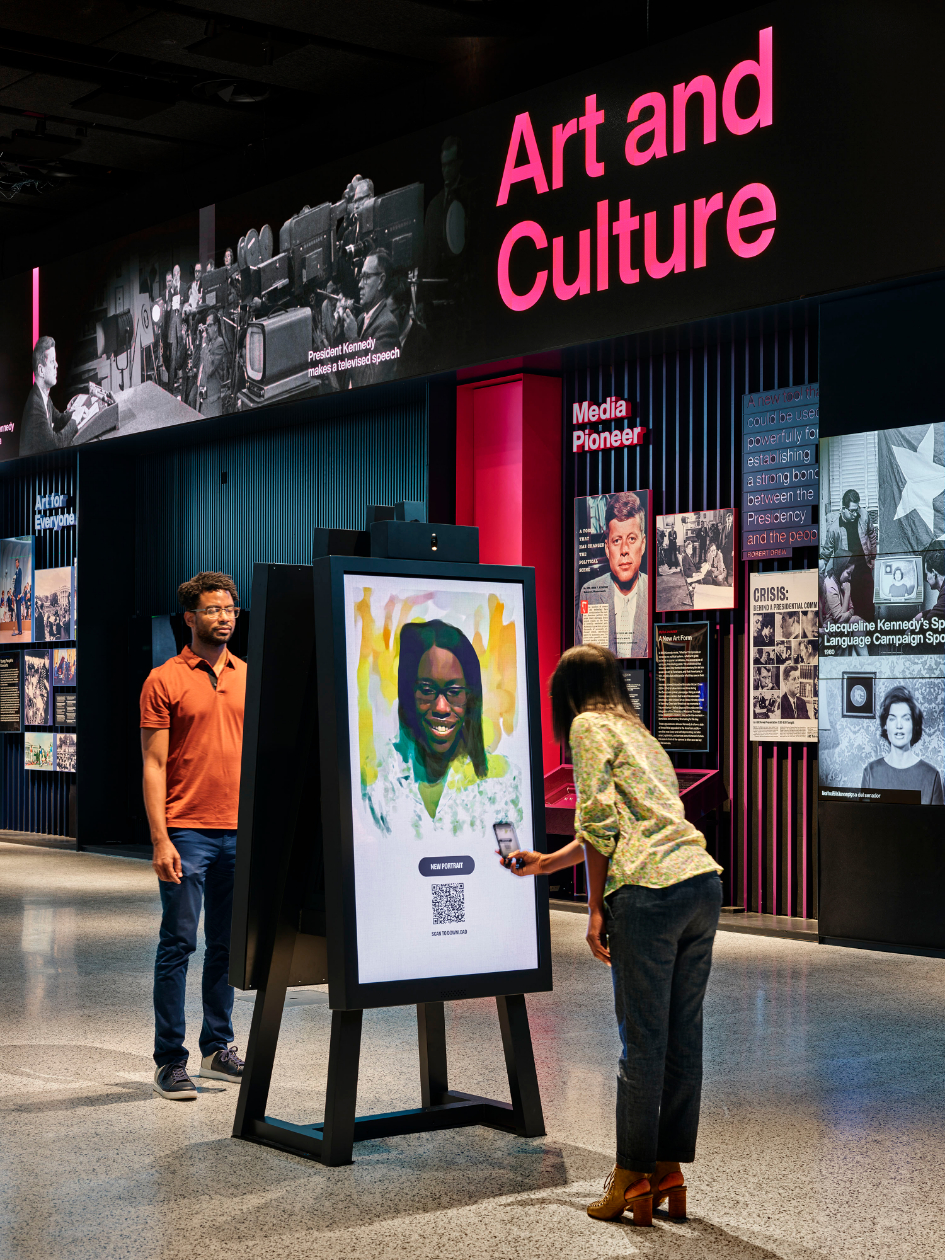
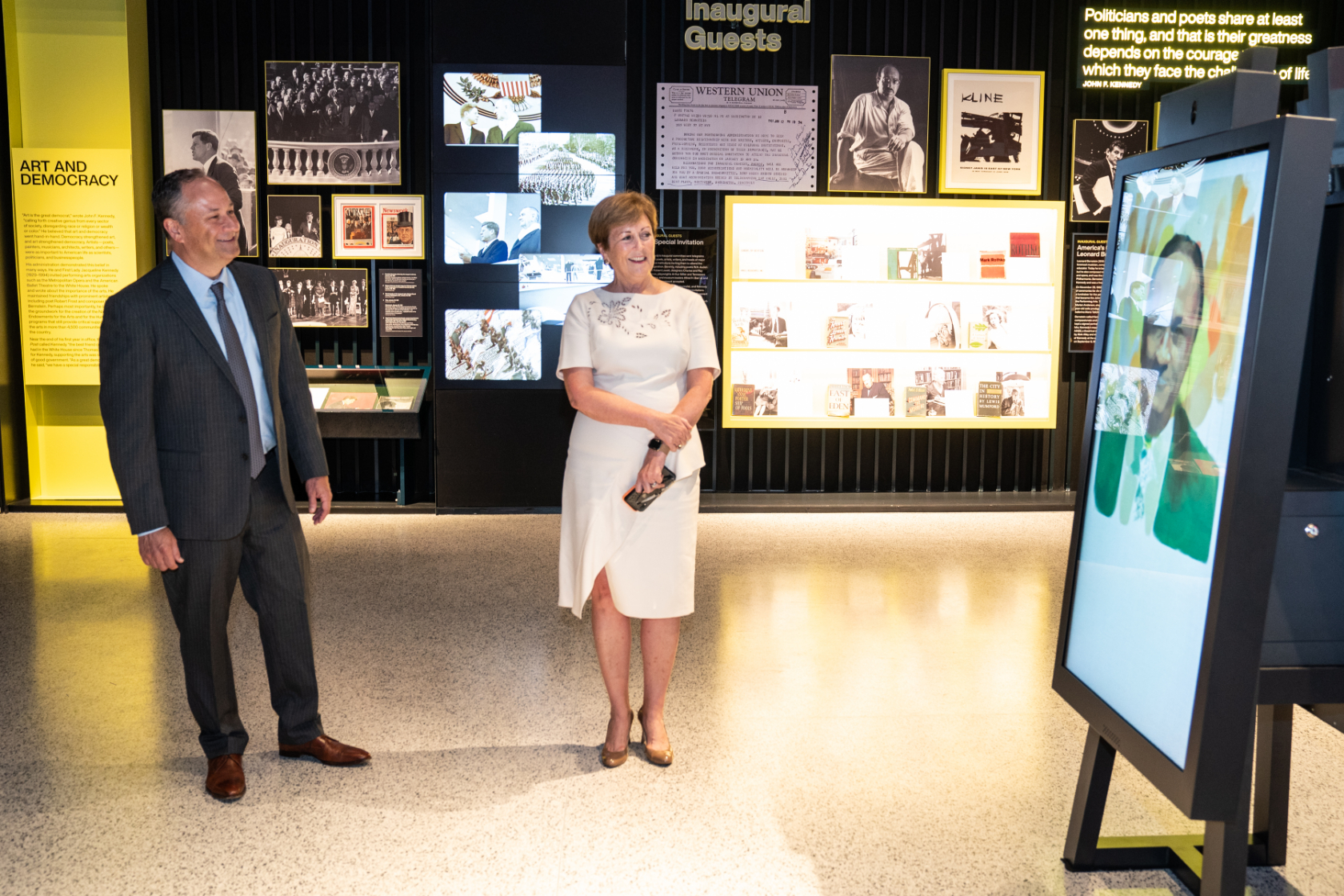
In another section, visitors can snap a selfie in front of a full-length display camera and digitally paint over it in the colorful, loose style of Elaine de Kooning’s famous portrait of JFK.
The room is tied together with a wraparound frieze video screen that runs across the top of the walls and displays explanatory signage, quotes, and panoramic videos. The showstopper is the periodic “takeovers” of the frieze screen. At intervals, the gallery lights dim, and video or photo collages accompany voiceovers of some of Kennedy’s most famous remarks, creating a mini immersive experience that stops the audience in their tracks.
“We wanted this to feel like it was connected to the world of theatrical performance,” says exhibit designer Abbott Miller, adding that part of what makes Kennedy an enduring figure today is his distinctive and passionate voice.
Rutter notes that “we’re a performing arts center, not a museum,” but the dramatic use of video and sound, in addition to the eye-popping color and rich detail of the room makes the exhibit feel like an event, rather than a collection of artifacts. “Art and Ideals” illustrates how the Kennedys imbued the White House with a vibrant and creative energy, and preserves that legacy while making it feel as fresh and crucial as ever.
Art and Ideals: President John F. Kennedy opens to the public Sept. 17 and will be on view for free from noon to midnight daily.