Elliot C. Williams

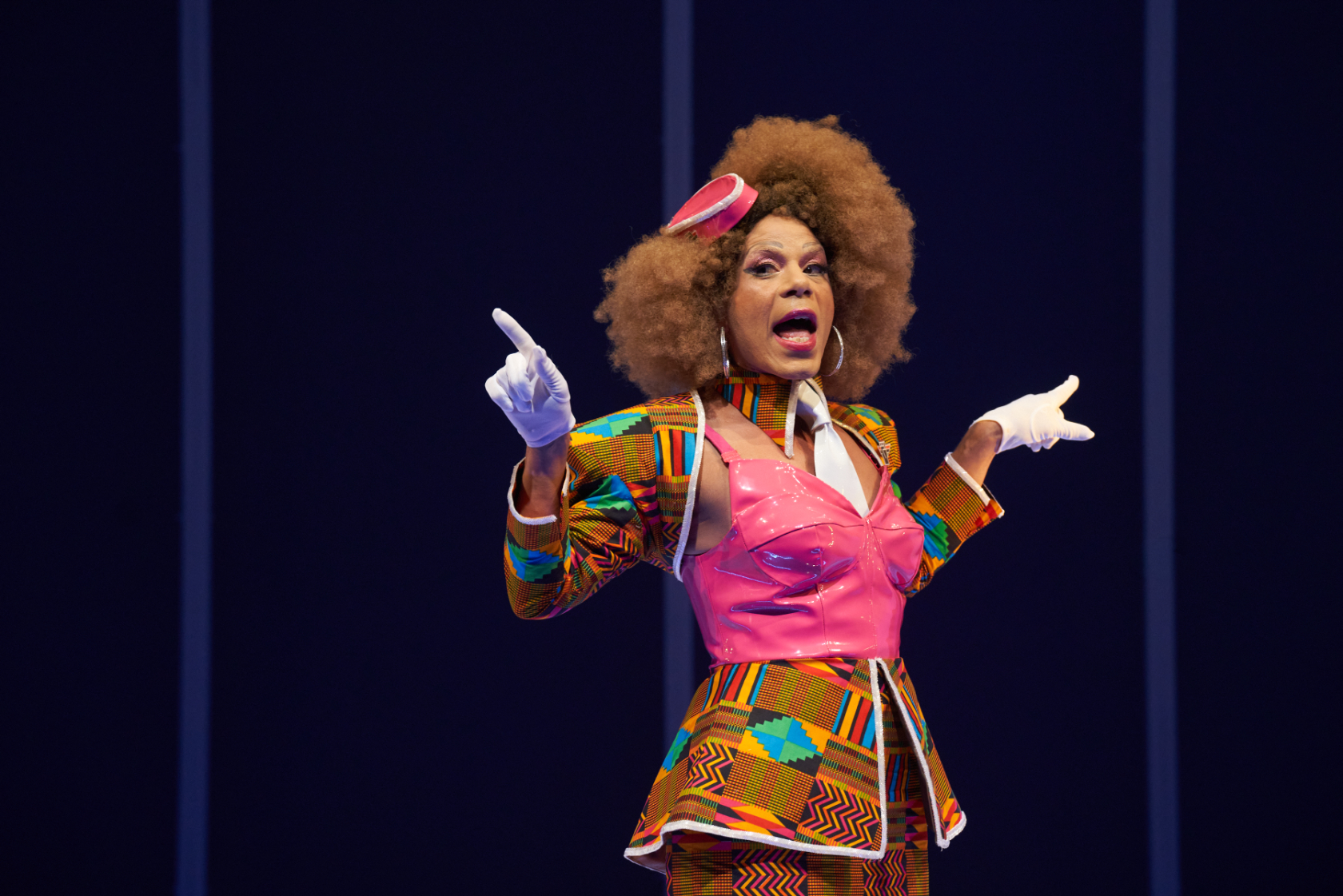
On Friday, as the house lights dimmed ahead of Woolly Mammoth Theatre Company’s staging of Jordan Cooper’s Ain’t No Mo’, actor Jon Hudson Odom, who plays a take-no-mess drag queen named Peaches, came out on stage in character. “This is your church,” Odom said. “Think of this as your Black church!”
Odom’s ad-lib kicked off a show in which Woolly was doing something unique compared to other nights of this show’s run: The 265-seat theater hosted its first “blackout” performance, inviting an all-Black-identifying audience to come see the show, which also features an all-Black cast.
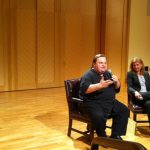
The experience was euphoric, as described by the audience and cast members, who stuck around for a talkback following the show. Throughout the night, patrons shouted out during particularly riveting moments and sang along to Beyoncé and Erykah Badu hits that played during scene transitions, at one point prompting an audience member to tell the person next to her, “I love us so much.”
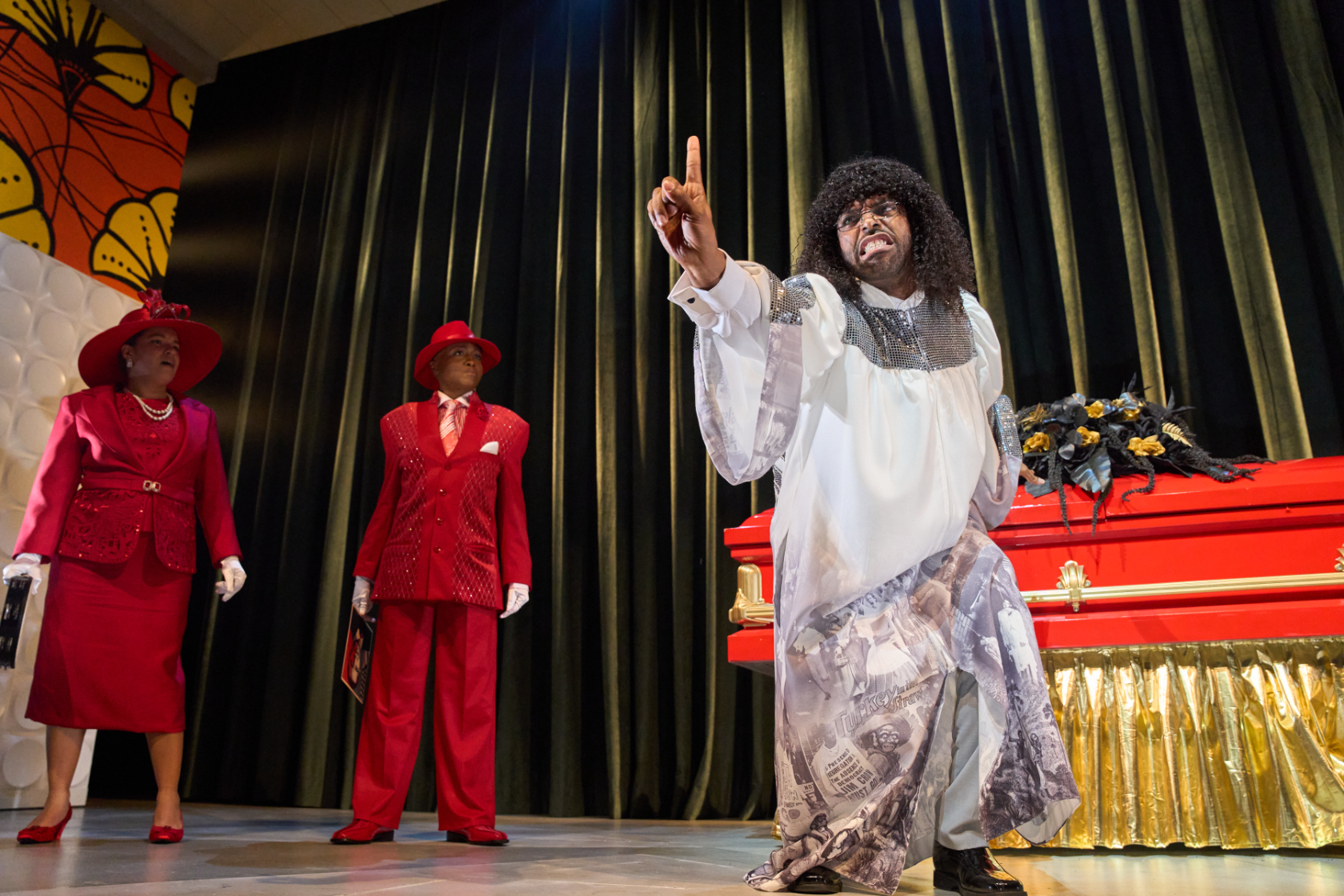
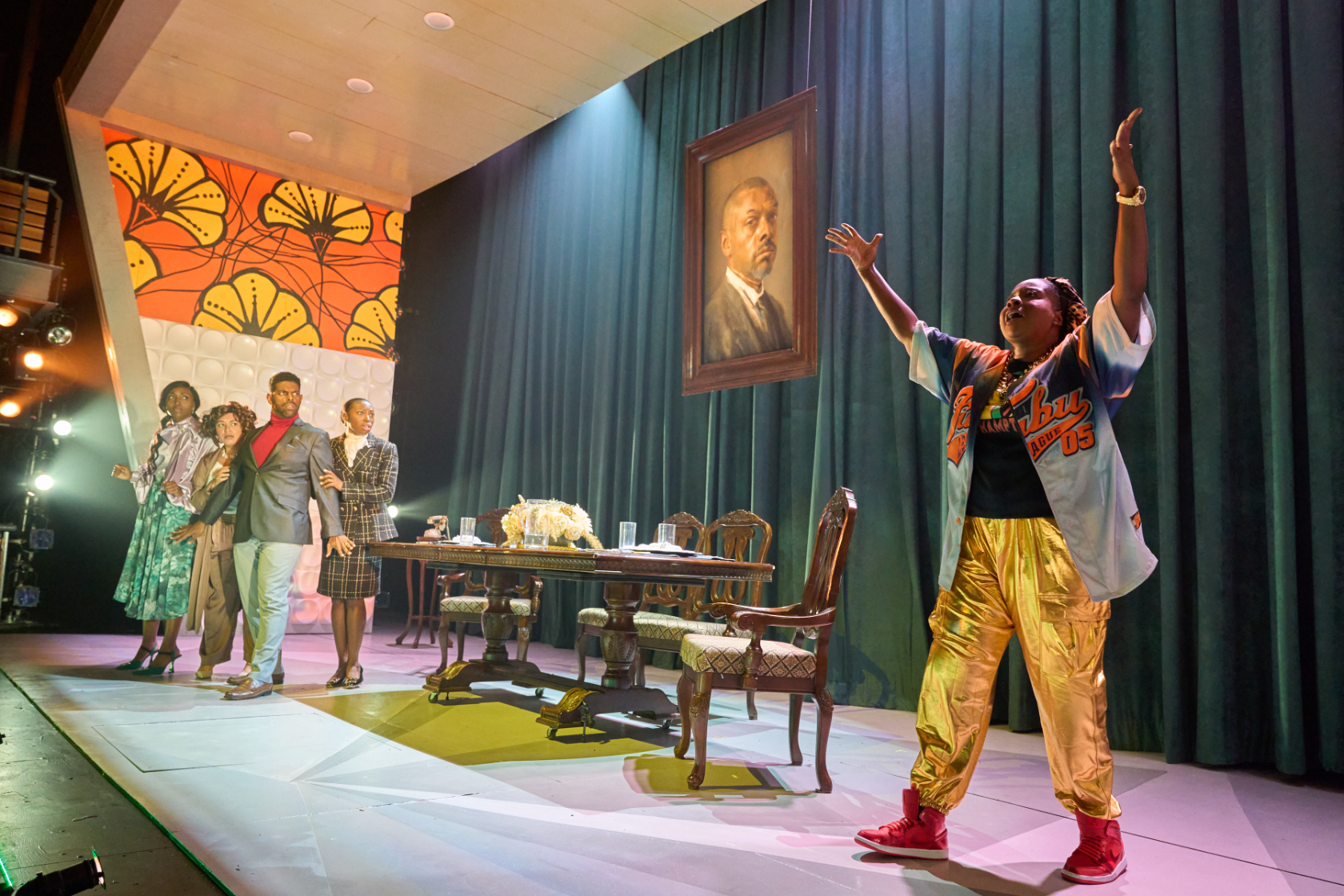
Cooper’s absurdist play kicks off on Election Day 2008, in a funeral parlor where a preacher (played by Breon Arzell) wearing a Jheri curl delivers a raucous eulogy for “Brother Right-to-Complain.” The sermon turns into a jubilant celebration of Barack Obama’s taking office, with churchgoers dancing around the casket. The pastor invites the audience to join in the chanting — specifically, he tells audience members to look to their neighbor and proudly announce that the president is their N-word.
And, on Friday, because everyone in the crowd was Black, no one felt the need to look around to make sure white audience members weren’t joining in the call-and-response, as they sometimes do at rap concerts, for example. (The actors shared during the Q&A that this is something they’ve dealt with during performances; Cooper himself has reflected at length about the use of the slur in theater.)
From there, the play never lets off the gas, barreling forward in a series of vignettes as it becomes clear that things have not gotten better for Black citizens under a Black president. In fact, they may have gotten worse: Chaos ensues as every Black person in the United States learns the government is offering them a free, one-way ticket for African American Airlines’ Flight 1619 to Africa.
Many characters are less than inclined to accept the passage “back” to their land of ancestry, but a sharply worded email warns that they’ll face “racial transmogrification” if they remain stateside. Peaches the drag queen serves as the gate agent, making sure passengers board on time for the last flight out — sometimes with the kick of her pink high-heeled boot.
The Broadway-bound play is a stunning analysis of America’s deepest racial wounds, breaking down issues like cultural appropriation, police violence, and mass incarceration, all through satire.
Blackout performances, which originated in 2019 with Jeremy O. Harris’ Broadway hit Slave Play, have since spread to theaters in Boston, London, and now, D.C. No one is turned away at the door — that would be quite the legal headache. However, these are invitation-only events in which tickets are only available for purchase using a special code sent to artists, student groups from local universities, Black-owned businesses, and civil rights organizations. “Non-Black allies” are invited to attend another performance during the run, according to Woolly’s Artistic Director Maria Manuela Goyanes.
“It prioritizes the needs of Black audience members to see and celebrate themselves in theater spaces, and process complex and timely questions about race and belonging; while in community and fellowship with each other, free from from the white gaze,” Goyanes says. “It also normalizes seeing Black people on stage and in the audience, because that’s not often the case in mainstream American theater. And, when I say ‘mainstream American theater,’ I’m speaking about predominantly-white institutions, of which Woolly is one.”
Goyanes first met Cooper in 2017 when she was working at The Public Theater in Manhattan, and Cooper was a 22-year-old college student working on an early version of Ain’t No Mo’. The show then premiered at Public in 2019, but by that time, Goyanes was already at Woolly. Later, she wrote to Cooper and told him how the District’s rich Black history makes it the perfect setting to continue staging his work. Woolly’s associate artistic director/connectivity director Kristen Jackson, a Black woman, was one of the main organizers of the blackout show.
In a statement, Jackson called the evening a success and said Woolly will consider doing blackout performances in the future, particularly for plays written by Black playwrights: “The nearly-sold-out crowd was responsive, enthusiastic, and connected to the show,” Jackson says. “The actors absolutely fed off of the energy, which gave them such a great start to the run.”
Goyanes is known for taking these types of daring leaps into the theatrical unknown. When she started at Woolly, one of her board members cursed her out and resigned over her push to add people’s preferred pronouns on the theater’s website. So, she says it’s simply part of her job to deal with patrons who push back against new initiatives.
“There’s always someone who says I’m violating their civil rights by segregating, or whatever,” Goyanes says. “And what I want to say is, this is an invite-only audience just like our opening night is an invite-only audience. This is not one of those moments where we’re carding people at the door. That’s not what we’re doing.”
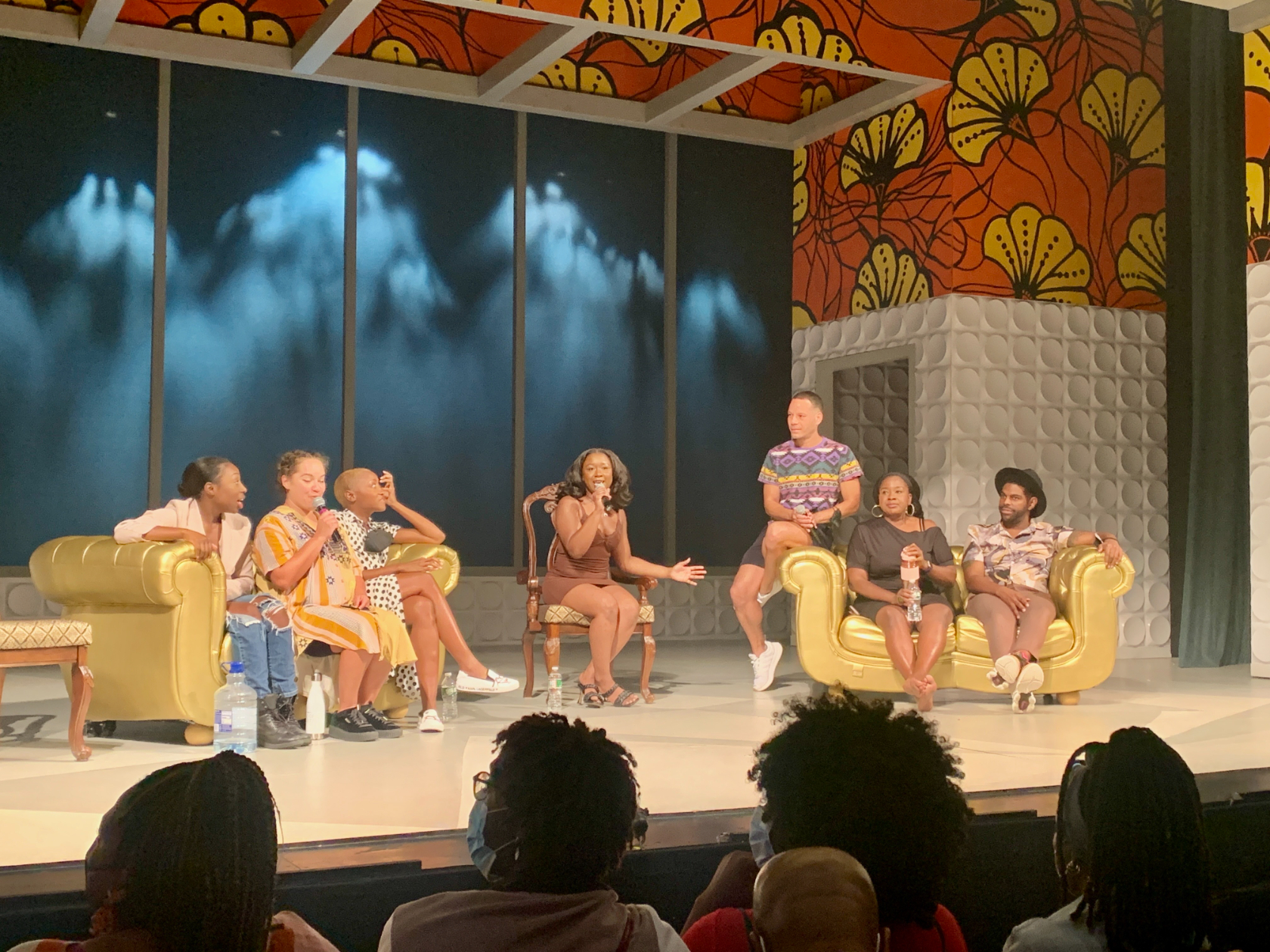
Goyanes equates blackout shows with racial caucusing — when people work within their own racial or ethnic groups to advance equity — and says they have the potential to provide healing spaces for Black audiences.
Grace O. Gyamfi, a 23-year-old actress from Northern Virginia who attended the show after being invited by a friend who interns at Woolly, says the show was refreshing.
“I think a lot of the difficult work of being a Black actress is finding work that doesn’t leave you feeling like you’re either code switching constantly, or makes you feel like you’re playing a caricature or stereotype. And so I really appreciated this production,” Gyamfi says. “This is something that I not only want to be in, but I want to see more of — things that take stereotypes and throw it in the faces of people that like to use it to hurt us.”
Dimitrius Webb, a Howard University alum who studied TV and film production, says he’s looking to get deeper into the D.C. theater scene, especially after sitting in the house on Friday.
“There’s just that familiarity, that common understanding and vocabulary where we don’t have to explain anything,” Webb says of the blackout audience. “I think that added a lot to the show and to the entire experience.”
The process can be transformative for the performers as well. Odom, who stars in Woolly’s production as Peaches (played by Cooper in the original production which debuted at The Public Theater in New York in 2019), says that even the cast’s vocal tones felt more natural on Friday.
“Every single rhythm, every single line — there was a reaction, there was a backup choir, so to speak. You’re not trying to reach and explain everything that you’re doing, putting everything into context,” Odom continues. “You can kind of just be, and that, in itself, is the art.”
Odom points out it is “very, very, very rare” to see that many Black faces in the audience in most theaters. “To have the entire audience full of Black people was literally like church for us,” he says.