Margaret Barthel
 Amanda Michelle Gomez
 Tyrone Turner
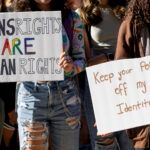
Thousands of students at nearly 100 Virginia public and independent schools walked out of class on Tuesday to protest a proposed policy from Gov. Glenn Youngkin’s administration that would restrict the rights of transgender and nonbinary students.
Roughly 50 students at Annandale High School in Fairfax County participated in the state-wide walk out, chanting “Trans rights are human rights” and warning of dangers posed to young people by the policy. They also encouraged school staff to join them in protesting.
“This new policy can put students in danger at home and in school settings,” says one student who helped lead Annandale’s protest. “If they’re outed to their parents, their community, they can be put in danger, be kicked out, they might have suicidal ideation. And, all in all, this policy will harm everyone.”
The high schoolers – many of them Black, brown or first generation immigrants – reflected on the rights they will lose if their school division accepts Youngkin’s policy. (When the policy was announced, Fairfax County Public Schools Superintendent Michelle Reid told families the division would “thoroughly review” the proposal and emphasized that FCPS “would remain an inclusive learning environment.”)
“As someone who comes from an already homophobic Christian environment,” says another student. “I do not need to, like, feel unsafe at school.”
A third student shouted: “Our government cares more about gun rights than trans rights — and that just shows they don’t give a fuck about their students.”
The protests were organized by student-led LGBTQ advocacy group Pride Liberation Project, which said more than 1,000 students had walked out of classes across Virginia by 11 a.m. on Tuesday. The group estimated the total tally of student protesters at more than 10,000 across the commonwealth after the walkouts concluded.
One of the Annandale organizers, Tanya Dubey, joined the cause with friends in mind. “I have friends who are transgender and who are in households that will never support them … That’s heartbreaking,” she said. “I want to be there for them. I want to be able to help them.”
Later in the day, about 100 students at the HB Woodlawn Secondary Program in Arlington also walked out.
“We all kind of took this as a punch to the gut when we first read the model policy,” said Naya Chopra, a sophomore and one of the organizers of that walkout. “We all kind of had the same flicker of a light bulb in our minds: We need to do something about this.”
“There have been a lot of threats made by a lot of political people for a long time to slowly take away marriage rights and trans rights in schools and the bathroom stuff,” said fellow student organizer Clare Brown. “But I had no idea that it would really happen this soon, you know, [this] feels like a big step back.”
Virginia is one of several states targeting trans youth. The Youngkin administration proposal would strike down the ability of transgender and nonbinary students in Virginia public schools to use names, pronouns, and school facilities that reflect their gender identity. It would require school staff to refer to and categorize students according to their sex assigned at birth — as reflected in their educational records — unless a parent produces a legal document requesting otherwise on behalf of their child. And it would make it mandatory for schools to report to parents before a student receives counseling services at school related to gender.
The goal, according to the Youngkin administration, is to promote “parental rights,” a political talking point the governor used to great success in his election campaign in 2021, and one that has caught on among Republican politicians across the country since.
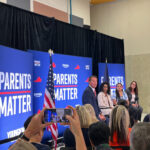
“Parents must have a role in their children’s lives,” said Youngkin last Tuesday at an election event in Loudoun County.
But advocates — including many students — say the policy could put young people who are LGBTQ and from unsupportive homes at risk. Advocates have also criticized “parental rights” policies more broadly as treating children as property instead of as people.
I’d guess more than a hundred students have walked out of HB Woodlawn in Arlington in protest of a proposed state policy restricting trans rights. These students join the 1000+ who’ve walked out across Virginia so far today. pic.twitter.com/Y9tfAZqJqD
— Margaret Barthel (@margaretbarthel) September 27, 2022
Transgender youth already attempt suicide at higher rates than their cisgender counterparts, a recent study published in the flagship journal of the American Academy of Pediatrics found. A separate survey of transgender people says respondents who experienced discrimination or were a victim of violence were more likely to report suicidal thoughts and attempts.
Of the more than 250 students who shared their opinion of the policy to the Washington Post, most are trans who expressed feeling angry, depressed, and even suicidal. “Because of it, I’ll probably have multiple breakdowns a day, my grades will drop,” a 16-year-old told the Post.
There are roughly 6,200 Virginians between the ages of 13 and 17 who are transgender, according to research from UCLA’s Williams Institute on Sexual Orientation and Gender Identity Law and Public Policy.
When asked to defend his policy to a youth whose family rejects their gender identity, Youngkin said: “Trust your parents… Parents have known these children from before they were born, and they understand them and they love them,” he continued. “This is a moment for families to come together, not to be excluded.”
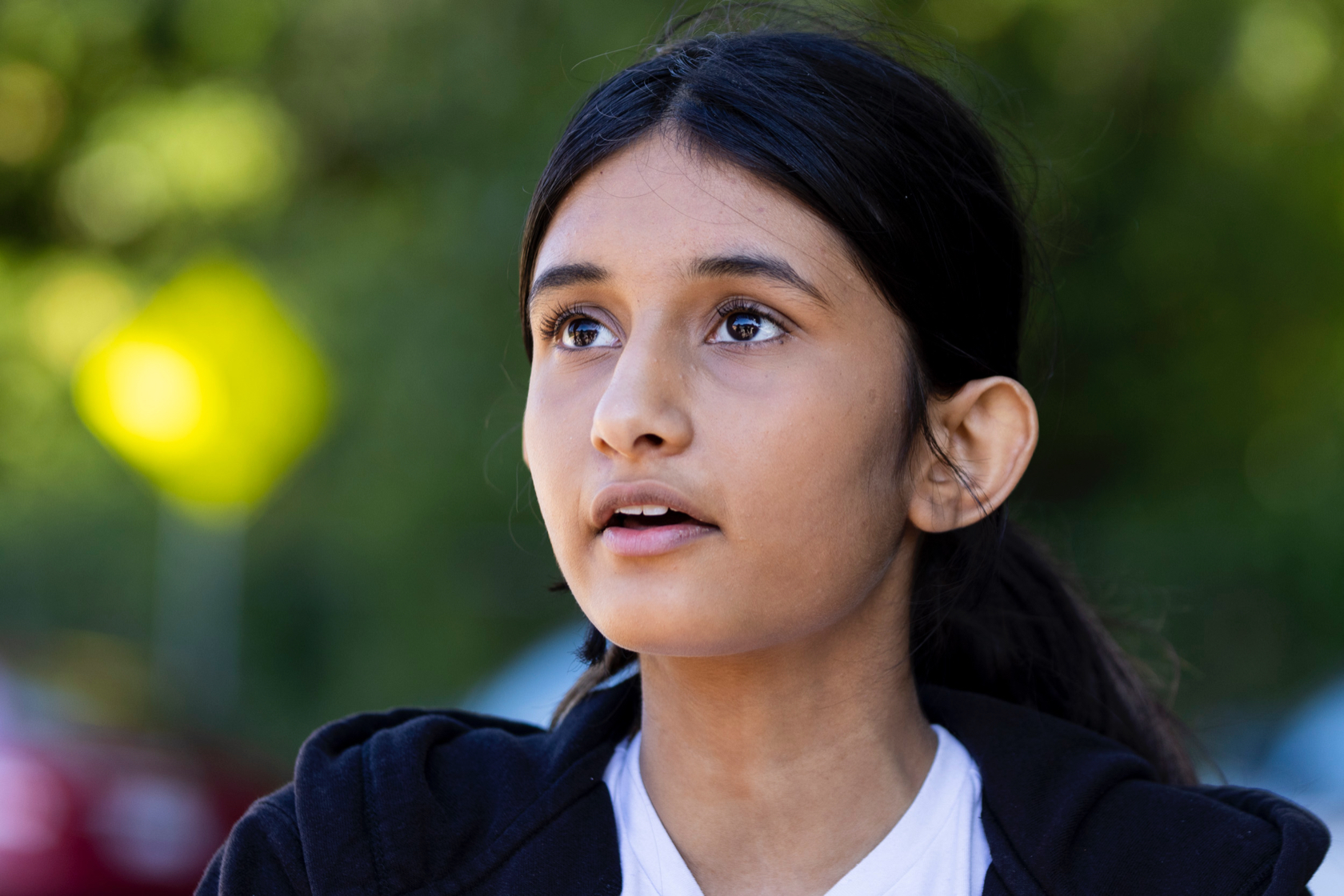
Multiple students at Annandale, including Dubey, said they believe the new model policy is a political ploy by Youngkin to play to the conservative Republican base. They pointed to Youngkin’s extensive travel out-of-state this election cycle, particularly to early presidential primary states, to campaign for fellow Republican candidates. Youngkin spent some of Tuesday out of state, campaigning for Georgia Republican Gov. Brian Kemp.
“This is only about gaining conservative voters,” Dubey said. “It has nothing to do with protecting parental rights or protecting anyone, for that matter of fact. It’s another hateful way of discriminating against the LGBTQ community.”
Later on Tuesday, as the scale of the student walkouts became clear, some conservative groups took to social media to question whether students had organized the protest, or if it was in some way driven by school staff or “Democrat-backed donors and groups,” as Nicole Neily, the president of conservative parent advocacy group Parents Defending Education, suggested on Twitter.
While Democratic politicians in Virginia celebrated the walkout online, there was little direct evidence that the protest was somehow staged by adults. A story from right-leaning outlet The Daily Caller pointed to a request for donations for the Pride Liberation Project posted on left-leaning crowdfunding site ActBlue, which helps Democratic candidates and nonprofit organizations with progressive values raise money from small-dollar individual contributions. On Twitter, Pride Liberation Project said all money raised would go “directly to our grassroots organizing work,” and said the group’s operating budget was about $3,000. They also said the group is “completely independent and student-led.”
At the walkouts themselves, students asserted that they were responsible for the whole protest operation.
“It was a completely student led protest, which I think is something that’s really important to give a lot of credit to,” said Brown, at HB Woodlawn in Arlington. “We didn’t have any teachers advertise it. We did all the advertising on Instagram.”
If adopted, the model policy would be a significant about-face from the Department of Education’s 2021 model policy — developed during the Northam administration, and mandated by legislation passed by the Democratic majority in the General Assembly at the time — which required schools to refer to students by their gender identities, and suggested that schools should prioritize student confidentiality over parent notification, especially in situations where a student’s safety was at risk.
Dubey said she thought the old guidelines were “very minimal.” She’d like to see better enforcement of the original standards, which are supposed to protect transgender and nonbinary students from being “deadnamed” (called by a birth name they no longer use) or misgendered in school.
Currently, the Department of Education proposal is just that: a proposal. But, in a political moment when LGBTQ rights, particularly in schools, are increasingly the centerpiece of conservative culture wars, that proposal sparked a firestorm of debate, including sharp words between members of Virginia’s congressional delegation over the causes of high rates of suicide among LGBTQ youth.
On Monday, the policy’s 30-day public comment period opened — and drew over 14,000 responses to the online portal, more comments in a single day than were posted in the entire month-long open process for the previous policy. A majority of the responses appeared to oppose the policy. Hundreds of comments are added each hour.
“Children have bodily autonomy and should be able to use whatever toilet they choose to,” says one commenter, who identifies as an Alexandria parent and opposes the Youngkin policy. “Schools need to figure out how to stop fights and vaping, not police what bathrooms they use.”
After the public comment period ends, the policy may be adopted by the Virginia Department of Education. If the policy is put in place, after that, local school boards would be expected to create and approve their own policies in compliance with the model. But if that happens, it’s unclear whether schools will comply and whether the policy is legal under Virginia code and human rights law.
Most Northern Virginia school divisions said in response to the draft policy announcement that their current policies — meant to be inclusive of transgender and nonbinary students — are unchanged.
“Students are very clearly against this, and very clearly just trying to be happy, just trying to be in class and do their homework,” Dubey said.
This story was updated to include comments from students at HB Woodlawn, total participation estimates, and additional context on the student organizing.