Elliot C. Williams
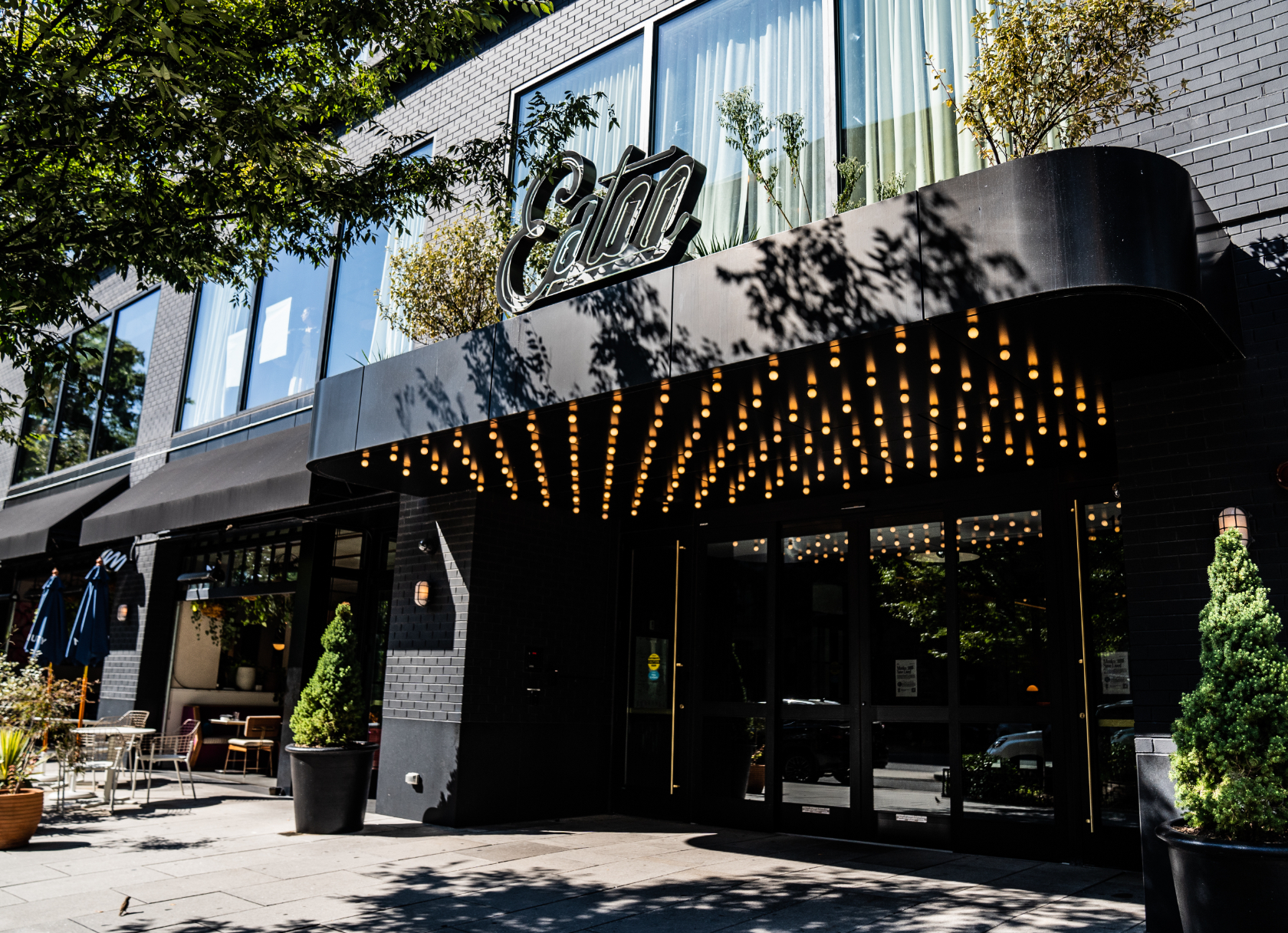
Back in June, when the Supreme Court overturned Roe v. Wade, all attention was on the area surrounding the court, where protesters immediately flooded the streets. But about a 10-minute drive away, Eaton D.C. was already fielding requests from activist groups looking to book its meeting spaces for organizing.
“They want to be here,” Sheldon Scott said that day, “because this is a place that they feel safe.”
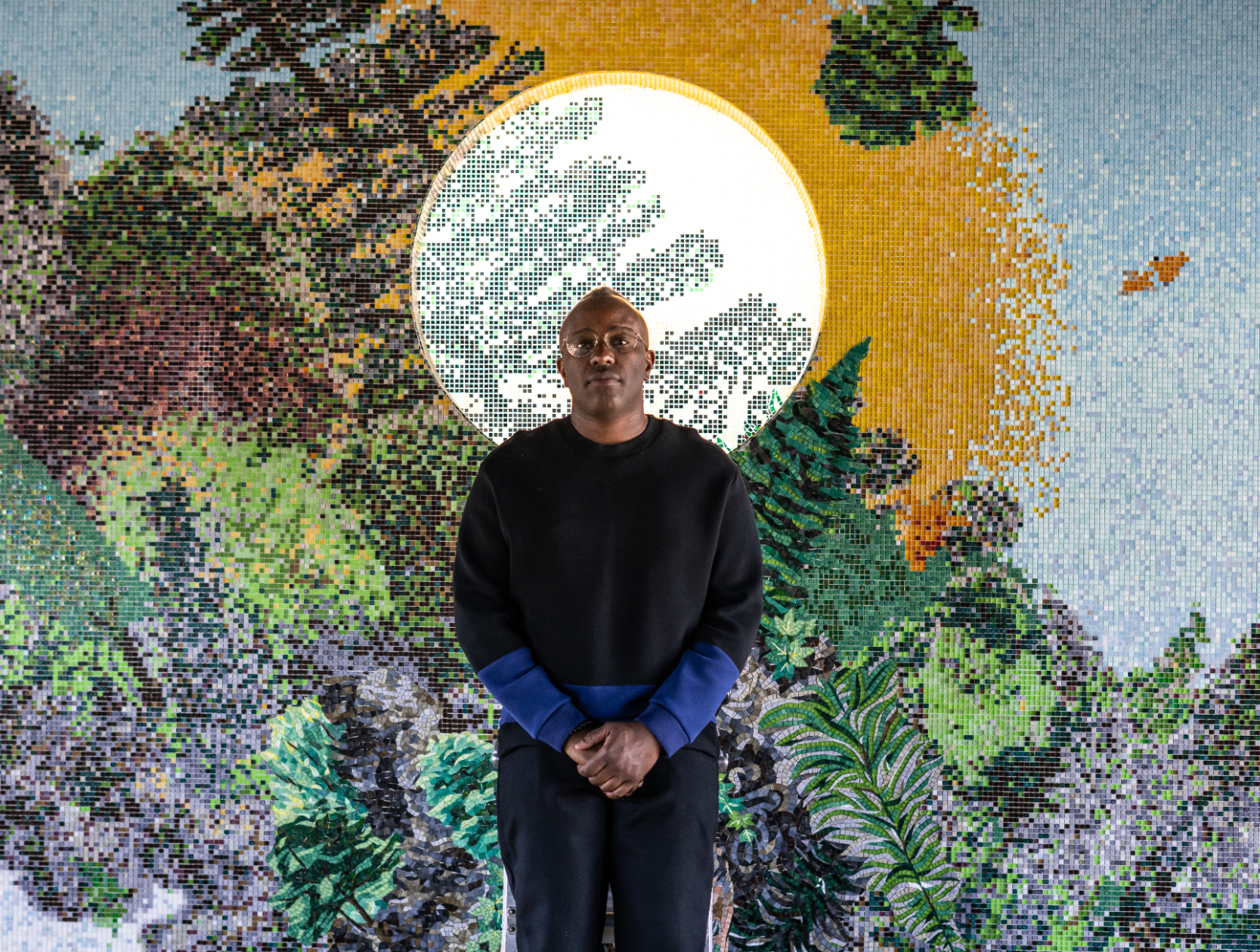
We were standing in the lobby, where Scott was about to begin a tour of the property and tell me about the culture of the downtown hotel, part of the Eaton Workshop brand that also has a location in Hong Kong. He was wearing an all-black sweatsuit and sneakers, and chowing down on a bag of chips, which he called lunch that day. He didn’t have much time to eat, and yet, nothing felt rushed about the tour. He strolled through the building as if showing off his apartment, stopping mid-interview to chat with a member of the hotel’s cleaning crew about how their day was going, and to check in on a group working from one of the upstairs meeting rooms.
There’s an unspoken understanding among most hotel operators that lobbies are basically public space — but at Eaton, the idea applies to the whole building, Scott says.
The first floor feels more like an art gallery than a lobby, perhaps a bit too cool for the lobbyist-populated K Street: Enter the sliding doors and directly to the right sits a recording studio where local DJs stream mixes and conduct interviews for Eaton Radio. Nearby, an installation by documentary filmmaker AJ Schnack displays looping campaign footage from recent elections on vintage TV sets. Further back, a man types away on his laptop in the “radical library” while his dog takes a nap by his feet.
I’d been to the Eaton hotel before — usually for a cocktail at the speakeasy-themed Allegory, where a mural by D.C. artist Erik Thor Sandberg depicts 6-year-old Ruby Bridges slaying the Jabberwocky from Alice in Wonderland. (In real life, she completed the equally harrowing task of being the first Black student to integrate an elementary school in Louisiana.)
I went to the hotel that day, however, to learn more about how Scott, a celebrated performance artist from the deep South, fits into the company’s mold. In other words, why does someone of Scott’s artistic caliber have anything to do with a boutique hotel in one of the least artsy sections of the city?
Scott was hired in 2017 as Eaton’s first director of culture and promoted last year to become the brand’s first global head of purpose — a position in which he focuses on the company’s “triple bottom line:” its financial, social, and environmental impact on a larger scale. In his five years with Eaton, Scott has helped make the hotel a cultural beacon, complete with art shows, film screenings, and spaces where activist groups “feel safe,” as he puts it.
Scott, 46, was raised in the coastal Gullah Geechee region of South Carolina, specifically, on Pawleys Island. The nearby Brookgreen Gardens and Myrtle Beach draw millions of visitors annually. But the picturesque area was historically home to rice plantations owned by Joshua John Ward, once America’s largest slaveholder. The history is personal for Scott, whose great grandparents — and grandparents after them, post emancipation — worked the land.
“We literally grew up in the footprint of the former enslaved village where our ancestors grew up,” Scott says.
In a sense, Scott was also born into hospitality. He was raised primarily by his mother and aunt, both of whom worked housekeeping jobs at Myrtle Beach hotels for decades. As a teen, he worked as a house boy at a hotel during tourist season. Even on family trips, when they would stay at hotels as guests, Scott’s mother made sure they cleaned their rooms and made the beds before they checked out, he says.
He received a BS in philosophy from Francis Marion University in Florence, South Carolina, and worked with youth at the Boys & Girls Clubs of America. He did two years in a master’s program with Webster University in human resources management, but didn’t finish. In June of 2000, when he was in his mid 20s, Scott moved from Myrtle Beach to D.C. to work as a psychotherapist in Northern Virginia. It was then that he started visiting art museums for the first time in his life, he says.
He left the counseling job in 2004 and waited tables part-time at a handful of D.C. restaurants, including Busboys & Poets. Eventually, he became the manager at Marvin, the now-closed 14th and U Street bar with a popular rooftop and regular DJ events. At Marvin, Scott learned how to create an authentic space where everyone feels welcome. In these pre-Obama and Obama-adjacent years, as Scott refers to them, D.C.’s activism culture thrived.
“There was an energy in the city that was building,” says Scott, who’s lived in Shaw for nearly two decades now. “You definitely felt the impacts of the political swells in the city.”
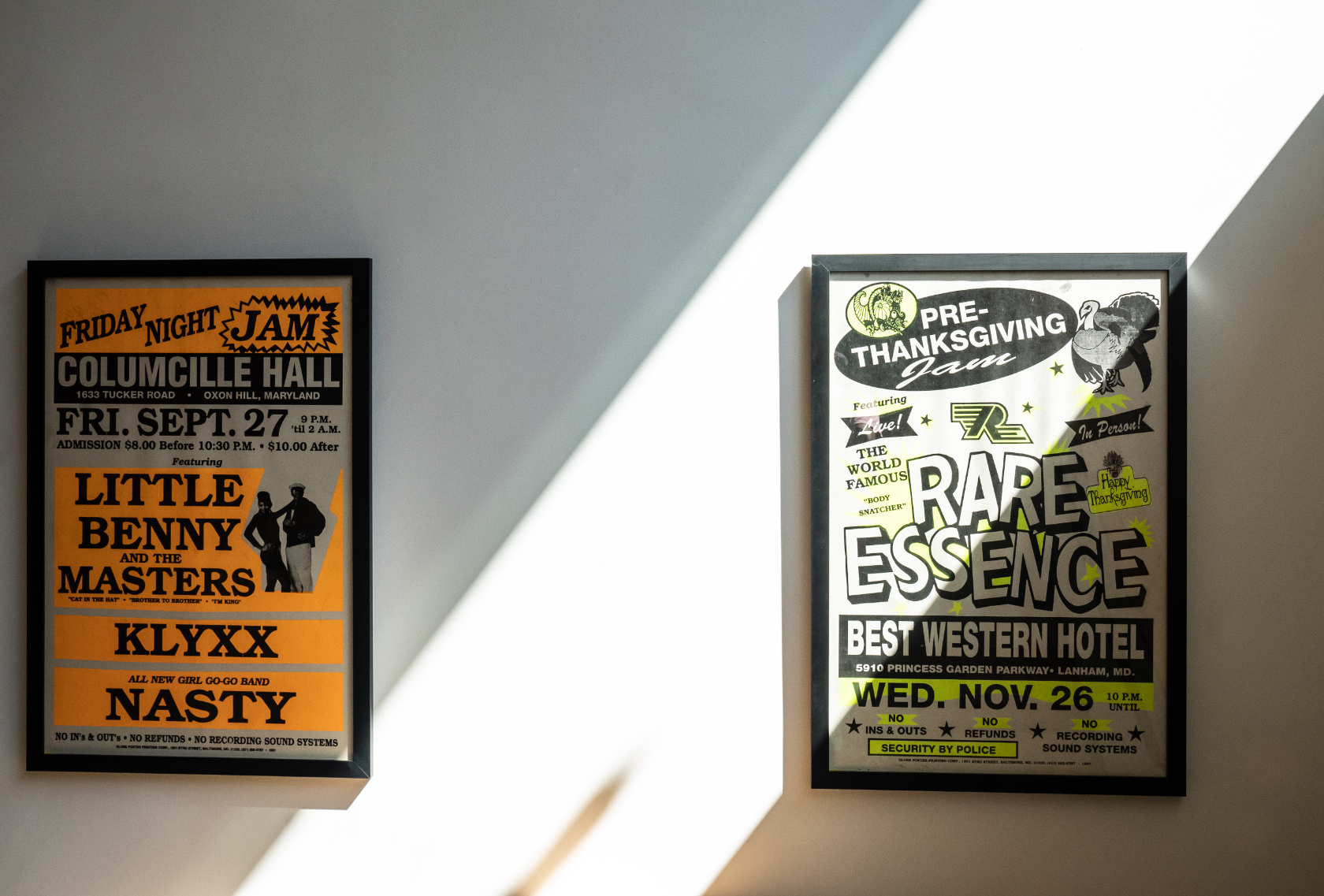
All the while, he was developing an artistic vision of his own. Scott began taking drama classes and sharing his life’s narrative through events hosted by Story District, then called The Speakeasy.
In the years that followed, Scott evolved his practice to create abstract works that tested his physical limits. His work has been featured at the National Portrait Gallery, including a live performance piece titled “Portrait, number 1 man (day clean ta sun down),” in which he hulled rice by hand for six days straight to honor his enslaved ancestors. To literally put himself in their footsteps, for an accompanying video, Scott stood in a South Carolina rice field for 12 hours straight.
He once enlisted nine performers to join him in a conceptual portrait, “Precious in Da Wadah: A Portrait of the Geechee,” that saw him weighed down with a giant rock and tied to ropes and chains, all while wearing a suit.
In his most recent installation, a solo exhibit at the ConnerSmith gallery in D.C., Scott laid in a braided hammock for a full work day. The show was dedicated to his aunt Tiney, who recently passed away, to honor her “legacy of laboring for the leisure of others,” Scott says.
Scott, a gay man, has also used his art to express complex ideas on race and sexuality. One of his prints includes the reclaiming of a homophobic slur. It’s a powerful message when you consider the times we’re living in: A 2020 study showed that one in three Black LGBTQ Southerners has experienced some form of physical violence. I ask him how he reflects on this identity.
“On a day-to-day basis, I don’t think of it,” Scott says. “But in those moments where I do a little bit of reflection, I do honor the history of people who came before me and actually created an opportunity for someone like me to step into a position like this. I do think that it is remarkable that someone with this particular identity has found such a position of influence within his work and within his community.”
Eaton Workshop launched in 2014, but the hotel didn’t officially open until four years later, smack in the middle of Donald Trump’s presidency. The hotel positioned itself as a liberal bastion, and some dubbed it the “anti-Trump hotel,” the “resistance-chic” antithesis of the former MAGA hive — Trump’s own branded hotel — just a few blocks away. Eaton boasted gender-neutral bathrooms in public areas, artworks from international artists in its rooms, and a certified environmentally friendly design and operating model.
But even before it opened, Scott was hesitant to help with any new hotel — he says he’d witnessed other development projects exploit and displace local residents and their culture. In fact, he planned to stay far away from Eaton until he met its founder, Katherine Lo.
She told Scott that she planned to center D.C. culture at the hotel, and confirmed that he would be able to continue his creative passions alongside the hotel work.
“I was certainly under no circumstances going to let that go,” Scott says. “I really interpret this job to be an extension of my practice.”
Lo, the filmmaking daughter of Hong Kong billionaire and Langham hotel mogul Ka Shui Lo, says Scott, with his artistic mind and contacts across D.C., fit perfectly into her vision for the hotel and brand. She founded Eaton on the principle that hotels can be modeled after community centers — gathering places where people eat, drink, learn, play, rest, and build movements.
“Our mission has always been more timeless,” says Lo. “I wanted to create this place of belonging, this community center, and a place for hospitality to be turned into this force for creativity and social and environmental impact.”
Two-thirds of Eaton’s global employees are people of color and/or women, and that number is even higher on the D.C.-specific team, says Lo, who is now the chair of Eaton Workshop after taking a step back from day-to-day hotel operations.
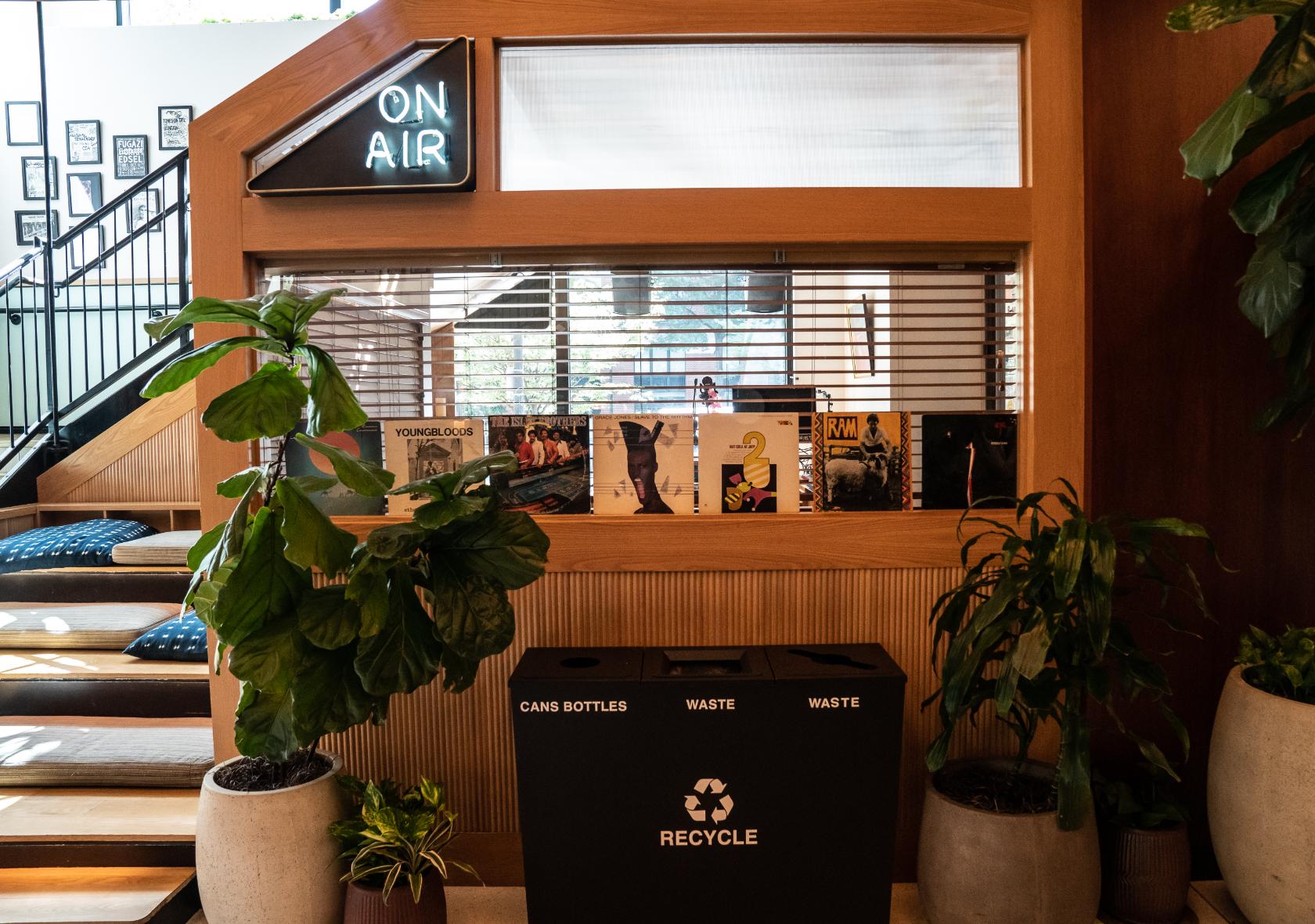
Meanwhile, Scott has focused on pushing Eaton’s reputation beyond its initial splashiness and into a lasting place in D.C. culture. He hosts regular film screenings, talks with local artists and big-name rappers like Common, and has a hand in most of the art installations around the building.
While groups and individuals can book slots at Eaton House — the hotel’s member-based coworking space and cafe — under certain circumstances, they offer the space for free, Scott says. For example, Eaton became a home base for a Ward 2 mutual aid group in the wake of George Floyd’s murder. Around the same time, a colleague asked Scott why the hotel hadn’t draped a Black Lives Matter flag on the building’s facade, as many other local businesses did, Scott says.
“I said, ‘Well, I don’t have to put Black Lives Matter on the building because Black Lives Matter is in the building.’ They literally were in here organizing,” Scott says. “It would be irresponsible for us to advertise that because they saw this as a safe space.”
As we walk through the meeting rooms, named after notable Black D.C. residents from throughout history, a young woman approaches, asking where to donate blood. Scott assures her she’s in the right place and guides her down the hall, where the Red Cross has stationed a blood drive throughout the pandemic. We stop by the wellness room, where instructors lead daily experimental yoga and meditation classes.
D.C.’s Eaton hotel has been a welcoming place for the Black community, providing a platform for up-and-coming artists of color like Lindsay Adams and hosting a rotation of hip-hop and R&B sets at its rooftop bar Wild Days. (The Adams show was curated by Claudia Watts, who took on the director of culture role after Scott was promoted.)
This all sounds great. But I have to ask Scott, given his artistic lens, which often looks at labor and capitalism with a critical eye, how does he reconcile Eaton’s business model? Sure, Eaton may be a radical cultural center disguised as a hotel, as the company has so seamlessly advertised, but it’s still a business.
How does Scott respond to the criticism that Eaton simply uses progressive marketing to lure customers to its rooms that range from about $240 to $400 a night?
Scott pauses and takes me back to fall of 2019, when Eaton was staging a one-man show in Allegory — yes, the 30-seat cocktail bar hidden behind one of the bookshelves in that radical library.
D.C.-based Irish arts organization Solas Nua’s The Smuggler told the story of an Irish immigrant who struggles to make his way as a writer and slips into the criminal underworld. The immersive production required actor and director Rex Daugherty to learn how to actually make cocktails, which he proceeded to do in real time for audience members during each performance. After each show, Eaton hosted a discussion with the ICE Out of D.C. Coalition to discuss the immigrant experience in D.C.
“Like, where else would you be able to go to a bar, see a play, drink some real cocktails, and then go talk about immigration afterwards, and figure out some of the ways that you can contribute to dismantling the issues?” Scott asks. “It was a very pure Eaton kind of experience.”
Perhaps Scott could tell I was still skeptical — the way he was when Lo first approached him about working at Eaton.
“We’re far from perfect … we are certainly learning as we go,” he tells me matter-of-factly. “But, you know, it’s hard for people to just kind of shit on what Eaton’s been doing, because the work is definitely there.
“It’s kind of hard to go up against real,” he continues. “And, you know, we keep it real.”
This story previously referenced two forthcoming Eaton hotel locations in Seattle and San Francisco. Those projects have since been canceled.