Héctor Alejandro Arzate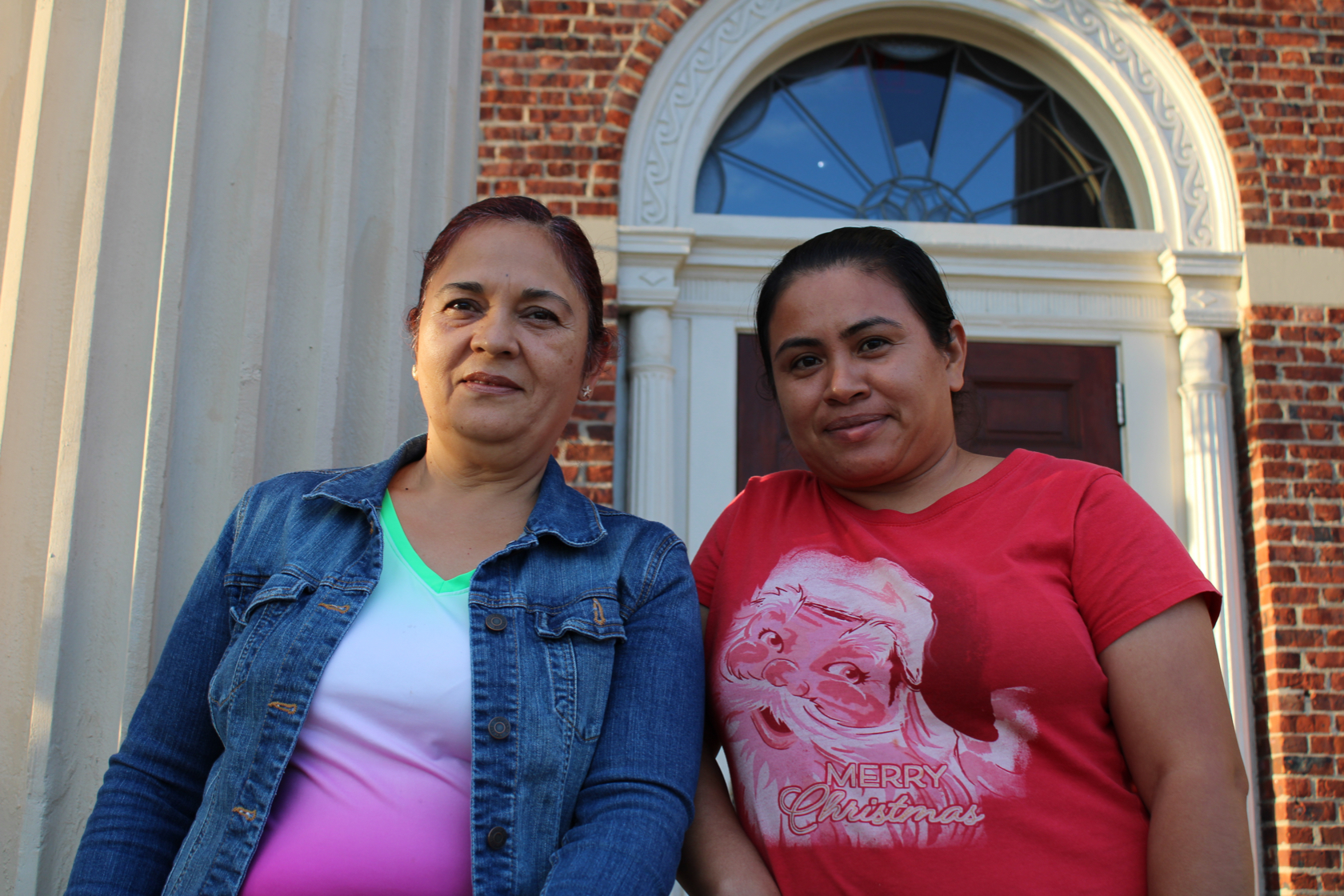
Midterm elections are just around the corner, and voters in Maryland will decide on a new governor, a referendum on cannabis legalization, and a number of races throughout the state. In Prince George’s County, 24% of the population was born outside of the U.S., and the number is even higher, 33%, in Montgomery County. Some immigrants say now is the time for their voices to be heard.
“I want to vote because I want my community to be fair, to pick the right person,” says Ana Rodriguez, who was born in Honduras and has lived in Maryland for the last 15 years.
Like many immigrants, Rodriguez has planted roots in the U.S. since leaving her home country. She says she cares deeply for her neighborhood in Laurel, where she has four daughters and four grandchildren.
“Laurel [has] so many beautiful people,” says Rodriguez. “I want to be more involved, help the community.”
Rodriguez is an organizer with CASA, an immigrant advocacy group that promotes civic engagement throughout the region. Some elected officials, like Laurel’s At-Large Councilman Martin Mitchell, say Rodriguez has helped strengthen engagement between them and the Latino community by pushing for more translation services, cultural events, and other forms of outreach.
Considering her experience, Mitchell thinks Rodriguez should think about a role in politics herself. “We love her in Laurel and we hope she runs for office,” says Mitchell.
But Rodriguez can’t run for office or even register to vote in Laurel because she’s not a U.S. citizen. She currently holds a T-Visa, which is a temporary immigration benefit for victims of human trafficking. Rodriguez says she’s in the process of applying for legal permanent residency – also known as a green card – which would put her on track to become a naturalized citizen.
Rodriguez says extending local voting rights in Laurel, and throughout the region, would go a long way to promote engagement among its underserved communities regardless of their immigration status.
“Everyone should be able to vote,” says Rodriguez. “That can give you a lot of faith.”
Maria Enriquez, who’s lived in Montgomery County for 26 years, says not having the right to vote in local elections means some residents are discouraged from engaging with their community.
“That’s why so many people don’t want to participate,” says Enriquez, who was born in Mexico. “They say they don’t have a voice, it doesn’t count.”
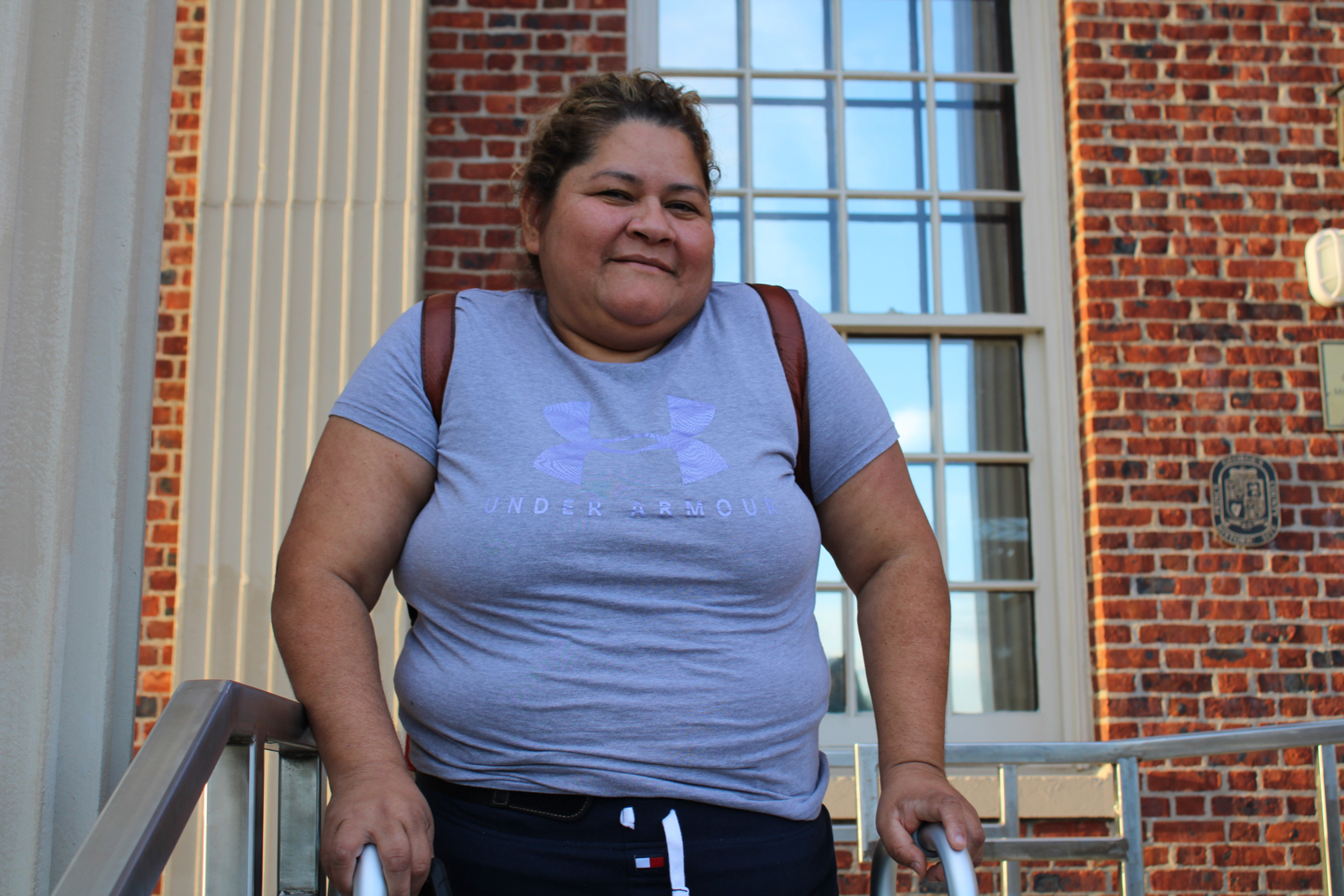
Enriquez says many of her friends and family are dissuaded from caring about specific ballot initiatives – such as the cannabis referendum. While she understands it can be complicated, she feels they have bigger issues to worry about as immigrants.
“Why do they need to approve something that doesn’t really help the community?” says Enriquez.
It’s a sentiment that Claudia Sacramento, a community organizer with CASA, agrees with. She says most immigrants in Maryland are concerned with broader issues, which she wants registered voters to prioritize.
“It’s one of the least important points to take to a vote. There are more important things, like education, health insurance,” says Sacramento.
For Carlo Sanchez, a former member of the Maryland House of Delegates for the 47B district, cannabis legalization is a prime example of the complexity when it comes to voting issues among immigrants. He says he wants to see greater efforts to inform immigrants on drug laws and mass incarceration while also hearing out their concerns on other issues.
“They’re coming here and they want to protect their children,” says Sanchez, whose parents left El Salvador in the 1970s.
“I’ve seen the impact of our drug laws, the impact that they’ve had on communities of color,” says Sanchez, who lives in Takoma Park. “At the same time, it’s interesting because I’ll talk to folks in the Latino immigrant community, and they’re coming from countries in which drugs to them mean gangs, mean violence, mean horrible crime.”
People like Rina Blanco, a mother of five, says rent increases is the issue most of concern to her because of its impact on her day-to-day life. As a non-citizen, though, she says her experiences feel invalidated and she has no idea if they follow standard rates, or are even legal.
“I don’t know if it’s normal or I just don’t understand,” says Blanco, who was born in El Salvador and has lived in Montgomery County for six years. “We have to go without eating because we can’t do it.”
It’s a similar issue for Susana Barrientos, who is undocumented. She has three kids, and says a recent rent increase of $80 has left her family scraping to get by.
“We came to this country in search of a better life,” says Barrientos, who immigrated to Prince George’s County from Guatemala about 17 years ago. “But a lot of the time it’s impossible because we barely complete the rent.”
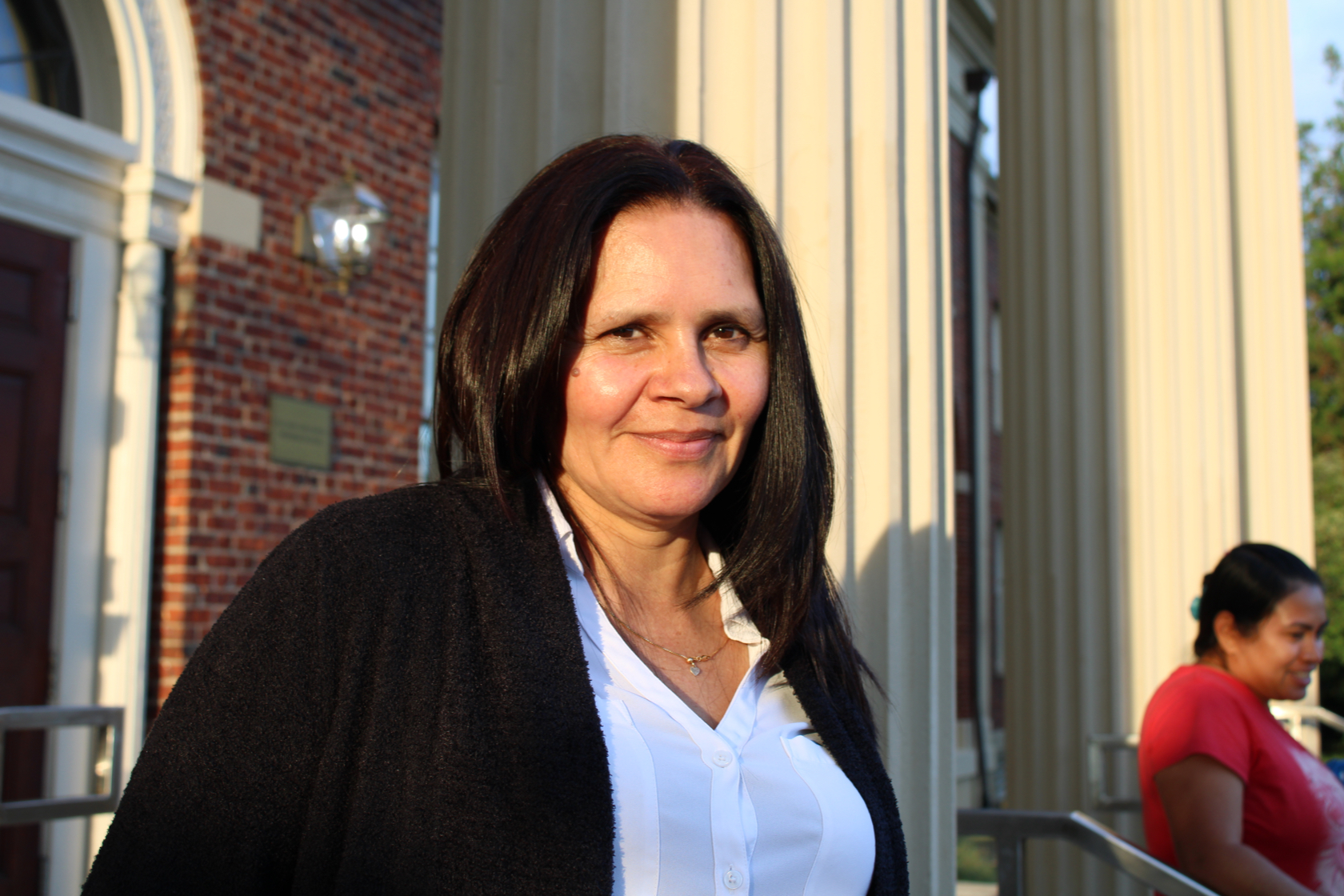
Emma Orellana is also undocumented and supports local bills that would extend rent control in the wake of the pandemic. She says it would be a game-changer to vote for candidates that support low-income tenants like her.
“[Elected officials] could pass a law that would stop landlords from increasing rent,” says Orellana, who was born in El Salvador and has lived in Prince George’s County for the last 14 years. “We too have rights and we need to fight for our rights.”
Although she’s not a citizen and doesn’t have the right to vote, Sara Martinez says she does everything she can to contribute to her community, like paying taxes every year. She says that alone should be reason enough for her to have a say in local elections.
“I count because I pay taxes to the government,” says Martinez, who was born in Mexico and lives in Montgomery County with her two daughters. “But the government doesn’t want to count me.”
For At-Large Councilman Mitchell, who’s previously come out against rent increases in Laurel, it makes sense to extend the right to vote for non-citizens in his city, where about 29% of the population is foreign-born.
“There’s a lot of Caribbean and African-born immigrants. And then, of course, there’s a lot of Latino immigrants,” says Mitchell. “The next thing is non-citizen voting.”
Laurel would not be the first in the region to give non-citizens the right to vote in local elections.
Hyattsville, Riverdale Park, and Mount Rainier are among the cities in Prince George’s County that already allow non-citizens to cast their ballot in local elections. A handful of municipalities in Montgomery County, including Takoma Park, also do the same. And this week, D.C. Council advanced a bill that would include undocumented immigrants in its own extension of voting rights.
In Hyattsville, non-citizen voting has become a normalized part of each election cycle. According to Zach Peters, the Chair of the Hyattsville Board of Supervisors of Elections, multiple voter registration events are held ahead of each election in convenient locations and with Spanish-language support on-site.
“Residents of Hyattsville, regardless of citizenship status, live in this community, use and support local resources, pay taxes in various ways, and should therefore have a say in who represents their needs and interests,” said Peters in an email to DCist.
With the exception of some cities in both counties, most non-citizens can’t have a direct say in this upcoming election. However, that doesn’t mean they don’t have an opinion or two to share, according to Carlo Sanchez. He says families are often multi-generational and of mixed immigration statuses, and voting can be a shared experience when the vote of one or two people represents the opinion of many.
“You have an opportunity to carry the voice of your entire family,” says Sanchez. “You might be the only one in your household that can vote. You have an opportunity to speak for your mother, your grandmother, your father, your uncles, your cousins.”
“Despite being raised in the U.S. his entire life, Jose Coronado-Flores can’t vote. But that experience has changed his life. He was born in Guatemala and is now working with CASA to help people like himself.
“I never thought that politics were important to me because I can’t vote,” says Coronado, a DACA recipient. “Although I can’t vote, I can do something. I can fight so that one day, we can have the right to vote.”
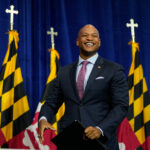
While Orellana can’t actually cast a ballot this November, she says she’ll settle for telling her daughter and husband – who are citizens – to vote for candidates that support her issues. She recently attended a rally with Wes Moore, the Democratic nominee for governor. She says she was touched by Moore’s promise of housing and healthcare reform after losing his dad at a young age.
“I told my daughter, ‘When it’s time to vote for this person, you go vote,’” says Orellana. “This person seems to me like someone who will keep his promises.”
Not every immigrant shares the same feelings of want or obligation when it comes to voting, though. Amyra Hasan’s parents were born in Indonesia before moving to Wheaton more than 25 years ago. While she is actively involved in civic engagement, she says her parents – who have green cards – don’t really have an interest in politics, voting, or even plan to apply for citizenship.
“I wish they were [interested] but I understand,” says Hasan. “For better or for worse, [my dad] is a very, very hard worker. And he doesn’t really have the time to think about things that are not related to work so that he can provide for the people in his life.”
Still, Hasan says she feels obligated to be involved in the decisions that are made for her community, including immigrants. She’s the secretary for Young People for Progress, an advocacy group in Montgomery County that works on police reform, civic action, and campaigning for young people to win seats on the Montgomery County Policing Advisory Commission.
“I think that I have a responsibility to be civically engaged with my community,” says Hasan. “I want to make things better for people in that place, especially for immigrants who are often disenfranchised.”
Here’s How to Vote
- This is how you register online: https://voterservices.elections.maryland.gov/VoterSearch.
- Paper registration sheets are available on the Montgomery county Board of Elections website in multiple languages