Martin Austermuhle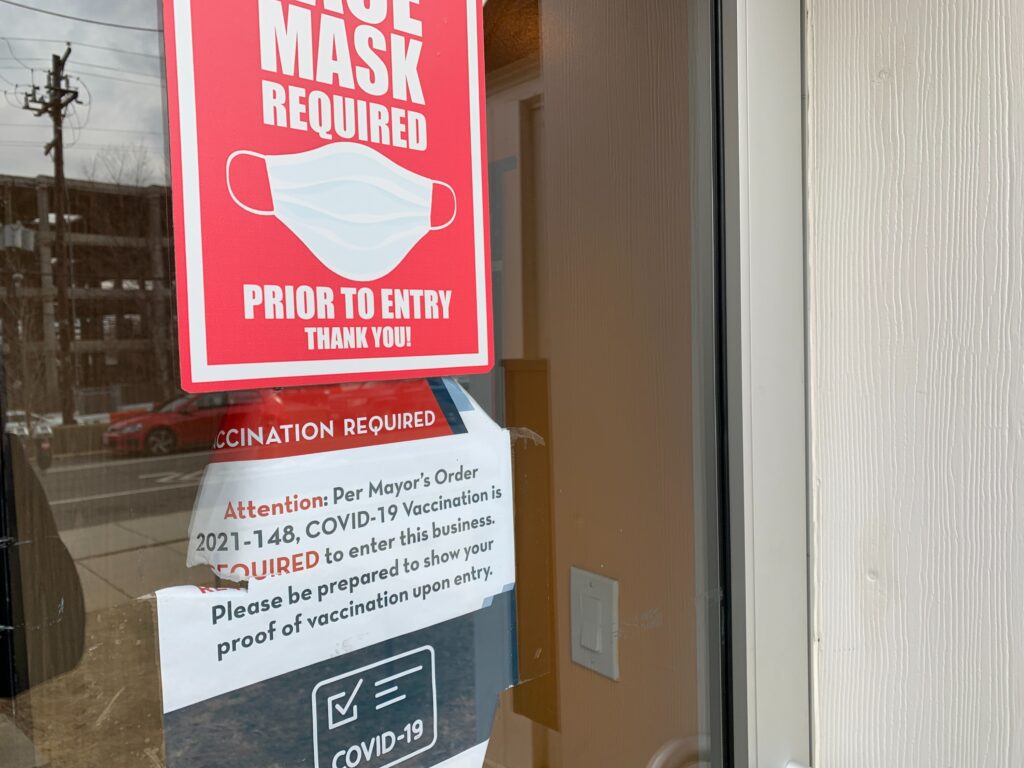
An H Street NE bar that became a cause célèbre amongst conservatives for resisting a vaccine mandate earlier this year is now suing D.C. over the very public health emergency declarations that allowed Mayor Muriel Bowser to impose the mandate in the first place.
In a lawsuit filed in federal court this week, the Big Board argues that the D.C. Council unlawfully extended Bowser’s public health emergency powers for 90-day increments over the course of two years, thus avoiding the usual requirement that most legislation passed by the council undergo a 30-day congressional review period. While the council can pass emergency bills that do not need congressional review, they can only remain in effect for 90 days and cannot be renewed.
“The mayor’s rolling ’emergency’ orders authorized by the D.C. Council’s successive emergency amendments make a mockery of this constitutional requirement,” reads the lawsuit, which was filed by the conservative-leaning Buckeye Institute. “The repeated extension of emergency orders for months on end, authorized by the D.C. Council’s emergency legislation — which was not approved by Congress — have thwarted Congress’s reserved constitutional power [over D.C.]. As a result, the mayor’s orders upon which the D.C. Health suspension and fines relied are [unlawful], and the suspension and the fines themselves [are]… null and void.”
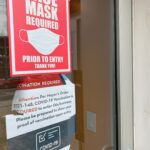
It was under those emergency orders that in late 2021 Bowser ordered many businesses — including bars and restaurants — to check that customers had gotten a COVID-19 vaccine before allowing them in. The Big Board refused to follow the mandate, and briefly lost its liquor license in the process. (The mandate was lifted in Feb. 2022, and the bar got its license back in March.)
In its lawsuit, the Big Board asks D.C. to pay $100 to cover the fee the bar had to pay to recover its liquor license, plus punitive damages. More broadly, the bar is asking a federal judge to declare that D.C. unlawfully extended the public health emergency powers upon which Bowser’s pandemic mandates and powers relied.
“The District of Columbia is unique among American cities. Not only is it our nation’s capital, but its laws are subject to congressional review under the Home Rule Act,” said Robert Alt, president of the Buckeye Institute, in a statement. “By stacking emergency acts and orders for two years, the District evaded congressional review and closed the courthouse doors to [Big Board owner Eric] Flannery and thousands of other D.C. residents. This end run around the Home Rule Act made a mockery of congressional review and simultaneously denied Americans their constitutional rights and due process.”
The office of D.C. Attorney General Karl Racine, which will defend the city in the legal battle, did not immediately respond to a request for comment.
Many of D.C.’s pandemic restrictions and mandates were similar to those imposed in the region and in other cities, but the culture war around them took on additional weight because of the city’s fraught and subservient relationship with Congress. While D.C. has broad latitude to govern itself, Congress retains the power to interfere at any moment — and Republicans on Capitol Hill often take the opportunity.
A number of Republicans introduced bills earlier this year to overturn Bowser’s vaccine mandate for businesses, and they have similarly targeted the city’s vaccine requirement for school kids. Early in the pandemic they expressed opposition to Bowser’s ban on indoor church gatherings; a federal court ultimately overturned the city’s ban. Some Republicans have recently gone as far as to say that they’d be willing to repeal the city’s home rule if the GOP takes Congress back after the midterm elections.
In August, a D.C. judge tossed out the city’s vaccine mandate for government workers, saying that Bowser improperly used her emergency powers to impose it, when it should have been passed into law by the council.