Martin Austermuhle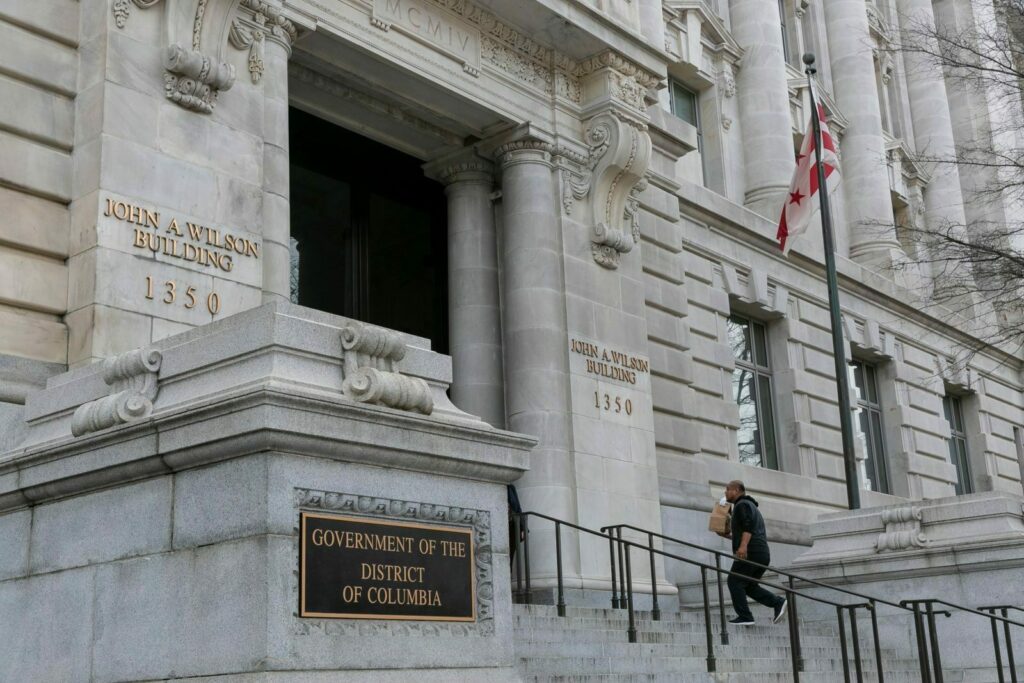
On Tuesday the D.C. Council will cast votes on controversial and complicated multi-billion dollar contracts to three companies to provide health insurance to low-income residents, again putting lawmakers in the middle of a pitched fight over the city’s procurement practices.
The three contracts up for approval would give MedStar, Amerigroup, and AmeriHealth the responsibility of offering health insurance and services to the more than 250,000 residents who are on Medicaid at a combined cost to the city of $8.8 billion through 2028.
But the entire process leading up to the vote has been mired in disputes, with the losing bidder and current contract holder CareFirst mounting a recent campaign to urge lawmakers to reject the contracts and start from scratch — a move supported by one prominent councilmember, Vincent Gray (D-Ward 7).
The current saga dates back to at least 2017 when a D.C. judge criticized the city’s management of the Medicaid contracts, citing “errors and impropriety.” In 2020, a separate judge ruled that D.C. broke the law in bidding out the lucrative Medicaid contracts, setting off a scramble that ended with last summer’s decision by the council to push Mayor Muriel Bowser to re-bid the contracts altogether.
The ultimate winners were MedStar, Amerigroup, and AmeriHealth — leaving out CareFirst. (In past iterations of these contract fights, CareFirst won out over Amerigroup.) But CareFirst and its advocates say they lost out because of minor technical errors in their bid and a flawed review process — and to a company (Amerigroup) that critics say will provide worse care to low-income residents.
“We are poised to bring back an [insurer] with a checkered history in the District and a well-known reputation for denying care to vulnerable Medicaid members,” wrote Gray, who chairs the council’s health committee, in a letter to City Administrator Kevin Donahue earlier this month. “We cannot stick our low-income residents with underperforming health plans for the next five years and pretend that our hands are tied and we have done our best for these residents.”
Gray and lobbyists for CareFirst say that Amerigroup — which last held a part of the city’s Medicaid contract between 2017 and 2020 — has been caught overcharging the city for services and paid fines in other states (including Illinois and Florida) for fraud and denying medical services.
But Amerigroup disputes those claims, saying in a letter to lawmakers that some of the issues the company dealt with occurred under prior ownership and that the accusations in Gray’s letter are the “product of a broader campaign of disinformation that is being waged by an unsuccessful offeror,” referring to CareFirst.
CareFirst’s campaign urging the council to reject the Medicaid contracts has included ads on local radio stations, social media, and even a mobile billboard that was parked outside the Wilson Building on Monday. The company hired former councilmember David Catania and former council staffer Ben Young as its lobbyists. Amerigroup D.C. is led by Adrian Jordan, a former staffer for Councilmember Kenyan McDuffie (D-Ward 5).
“The recent process for selecting managed care organizations to serve The District was inconsistent in its treatment of health plans and failed to prioritize the best health outcomes for District Medicaid beneficiaries. CareFirst’s Medicaid program is critical to connecting vulnerable residents of the District to the care they need. If the D.C. Council approves the contracts, over 70,000 DC Medicaid Enrollees would be moved from a proven, high-quality health plan to a plan with a demonstrated history of overcharging and denying care to patients, including expectant mothers and children, in the District and across the United States,” said CareFirst in a statement. “We are optimistic that the D.C. Council will act to preserve access to high-quality coverage for 70,000 District residents who this flawed procurement process could impact.”
But a number of lawmakers say that while the procurement process for the Medicaid contracts has been “not pretty” and “arduous,” the council — which has the power to review and approve all city contracts worth more than $1 million — shouldn’t step in at this point.
“One of my colleagues on the council wants to say, ‘No, we don’t like the end result so we want the council to get involved in a procurement.’ It would be so wrong for us to get involved. There is a very good reason why the council doesn’t select contract awardees, because that’s not our expertise,” Councilmember Robert White (D-At Large) told WAMU/DCist; last week he wrote a letter to his colleagues urging them to approve the contracts.
“Councilmember Gray is saying one of these awardees is a bad actor. Well, quite frankly, most of them are bad actors. The city just got a $95 million settlement against CareFirst. MedStar almost single-handedly broke our managed care system. So to say, ‘Oh, let’s not award the contracts to this one company’ doesn’t make any sense. We don’t have the expertise to evaluate these companies, and we shouldn’t be involved in the procurement,” he added.
D.C. Council Chairman Phil Mendelson agrees, and worries that any move by the council to disapprove the Medicaid contracts would highlight longstanding concerns that the council’s distinct power to review contracts could be swayed by politics.
“Without the ability to review contracts we would have more bad decisions. Our ability to approve them creates a lot of sunlight on the process,” he said in an interview with DCist/WAMU. “But the downside is it does create an opportunity for mischief. What I have said in the past to my colleagues is that it’s on us to be responsible about it. Being responsible about it is recognizing that we have to be clear about when it’s appropriate to second-guess. Here we have a losing bidder with a lot of money at stake throwing everything they can against the wall to sow seeds of doubt.”
Still, Gray is pressing on with his opposition to the Medicaid contracts. In a letter Monday to his colleagues, he pointed out that in 2015 the council rejected a contract for health care for inmates at the D.C. Jail because of the winner’s past performance and reputation.
“The council can’t throw its hands up in the air and say it does not matter who is awarded the [Medicaid] contracts. We have a responsibility that supersedes politics and perception,” he wrote. “It is clear to me that the facts have been masterfully muddled by lobbyists.”
Mendelson says he’s not sure what the fate of the Medicaid contracts will be come Tuesday. He’s confident a majority of lawmakers would vote to approve them but, since Bowser submitted them as emergency legislation, nine votes will be needed instead of the usual seven.