Jacob Fenston
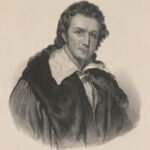
The word “Audubon” has long connoted birds, nature, and conservation. But in recent years, there’s been more attention to the man behind the name – John James Audubon – and his racist views and actions.
Now, the local nonprofit formerly known as the Audubon Naturalist Society has a new name: Nature Forward. Lisa Alexander, the group’s executive director, says Audubon, a lauded 19th century ornithologist and artist, was also an enslaver and a published white supremacist.
“That just didn’t seem like the kind of welcome we wanted to give to all people in our region,” Alexander says.
The organization, based in Chevy Chase, Maryland, announced a year ago it would change its name, though discussions about the problematic aspects of the name started more than a decade ago. The new name was revealed late last week.
The name change is part of a national conversation about Audubon’s past, and more generally, the legacy of racism in the conservation and environmental movements. Audubon groups around the country are grappling with the name, but the Audubon Naturalist Society was the first to commit to dropping it. In July, the Seattle chapter of the National Audubon Society followed suit, saying the legacy of John James Audubon is “antithetical to the mission of this organization and its values.”
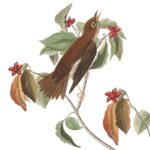
In the 1820s Audubon traveled the continent, aiming to catalogue and draw all the native birds of North America. The detailed, realistic illustrations he produced were unprecedented at the time. In the late 1800s, decades after Audubon’s death, the emerging conservation movement took up his name, waging war against a fashion industry that slaughtered millions of birds every year to make hats.

Audubon groups formed all over the country, starting in Massachusetts. Some were chapters affiliated with the national group, while others, like D.C.’s Audubon Naturalist Society, founded in 1897, were independent. The campaign to save birds was successful, leading to the 1918 Migratory Bird Treaty Act, which ended the feather trade and kept many species from extinction.
While Audubon was celebrated as a founding father among birders, his racist past was usually ignored. Throughout the early 1800s, Audubon bought and sold numerous enslaved people, and wrote against emancipation.
At the Audubon Naturalist Society, the process to pick a new name was a lengthy one; it involved 1,000 stakeholders and included surveys, focus groups, interviews, and branding workshops.
“We learned all kinds of things, primarily that the word that unites everyone is nature,” says Alexander. “You can be somebody who loves nature just by walking your dog in a city park. Or you can be, you know, a very serious geologist, and nature is the word that unites us all.”
The group considered and researched 100 different name options before landing on Nature Forward. One runner up was Nature For All.
“We all loved that name,” Alexander says. But, when they researched the name, it popped up a lot of other places.
“We’ve been confused with other organizations for 125 years – people have thought we’re the National Audubon and we’re not,” says Alexander. “We really wanted a name that could be all ours.”
Nature Forward’s new logo is the leaf of a redbud, a tree native to the D.C. region, whose shocking pink blossoms rival the beloved, nonnative cherry tree for spring showiness. The heart-shaped leaf of the logo is multicolored, representing the region’s diversity, and pointing upward, symbolizing forward motion, Alexander says.
The organization has a long history of conservation in the D.C. area, including fighting to preserve the C&O Canal, Dyke Marsh, Huntley Meadows, and Ten Mile Creek. Current programs include environmental education for kids and adults and work to improve the health of local waterways.