Jacob Fenston
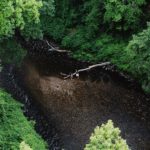
Piney Branch is one of those lovely urban streams in D.C., where if you tune out the sound of car traffic and ignore the smell, you can easily imagine you’re deep in the wilds of Appalachia.
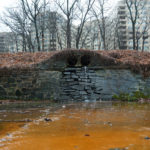
Don’t be fooled. The creek, at least for now, is a glorified sewer. Whenever there’s a significant rainfall — about 25 times a year on average — three massive, garage-door-sized gates open up and discharge untreated sewage into the waterway. A total of 39 million gallons of sewage mixed with stormwater overflow into the creek each year.
Now, DC Water is beginning the initial exploratory work on a project that is expected to reduce the volume of sewage overflow by 96%. Instead of more than two dozen overflows a year, there will be an average of just one after the project is finished.
This will make Piney Branch and Rock Creek a lot cleaner — clean enough to meet water quality standards set by the Environmental Protection Agency. The Piney Branch project is one of the last phases of a major, $2.6 billion sewer upgrade aimed at cleaning up the Potomac and Anacostia rivers in D.C. — the result of a lawsuit filed more than 20 years ago.
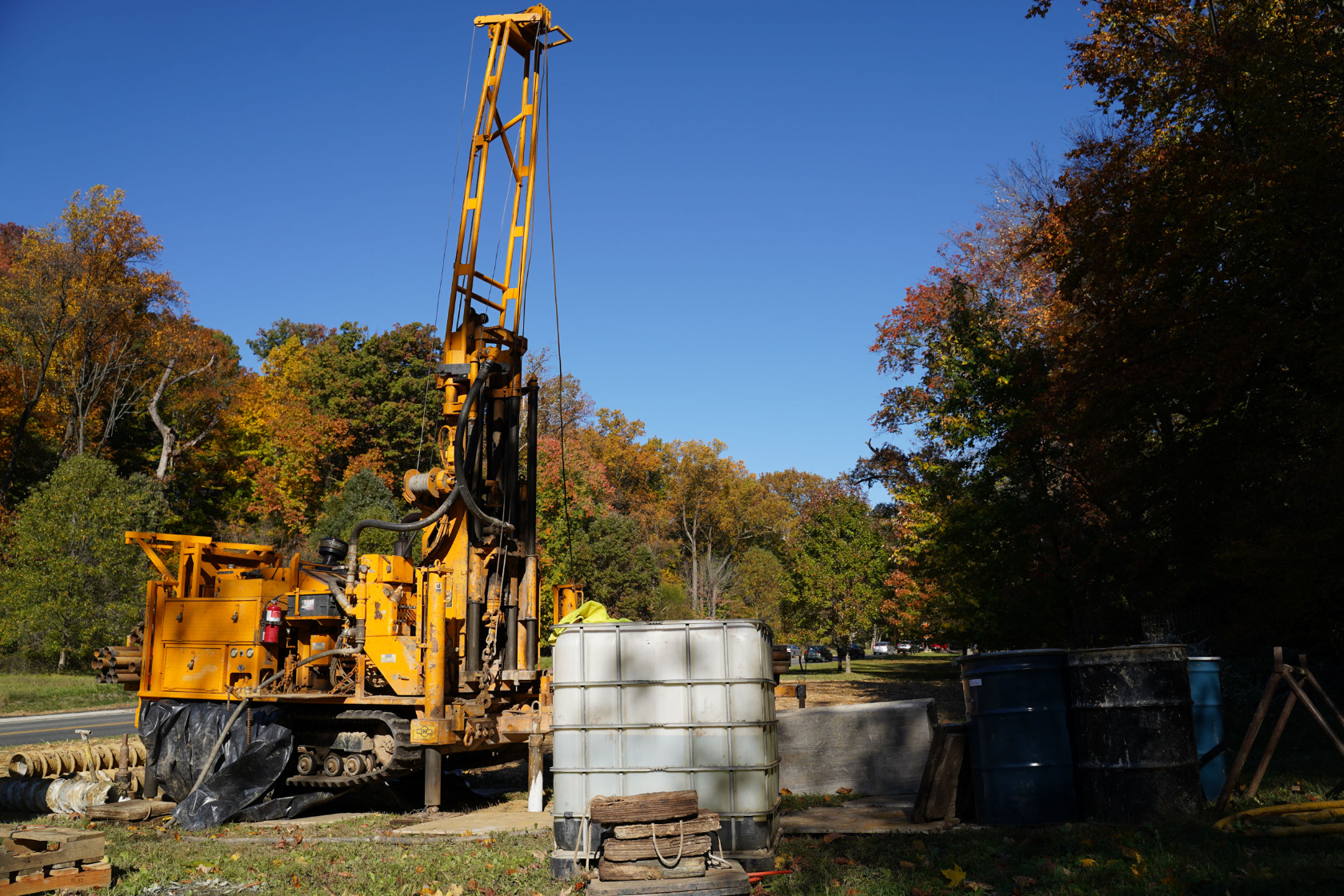
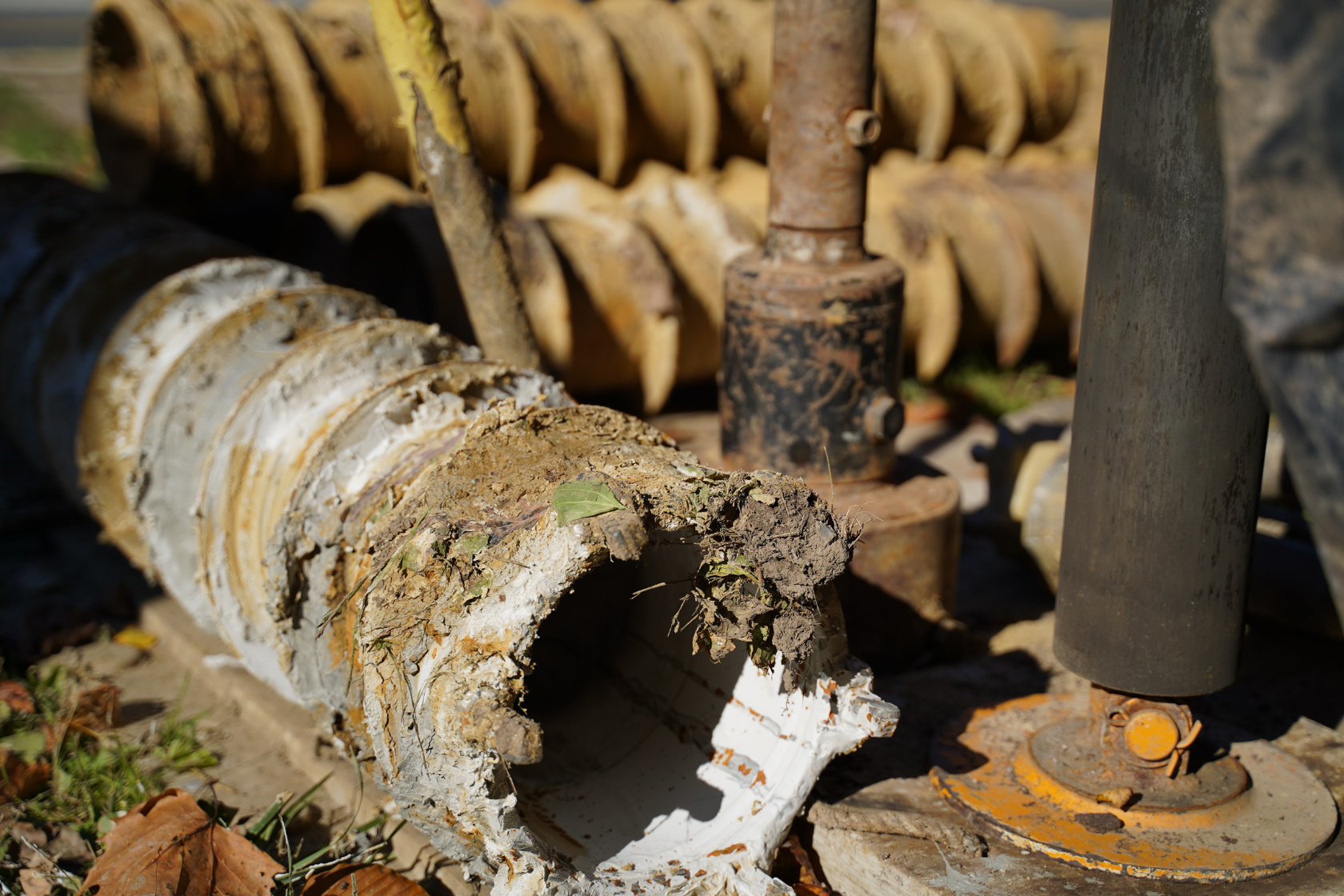
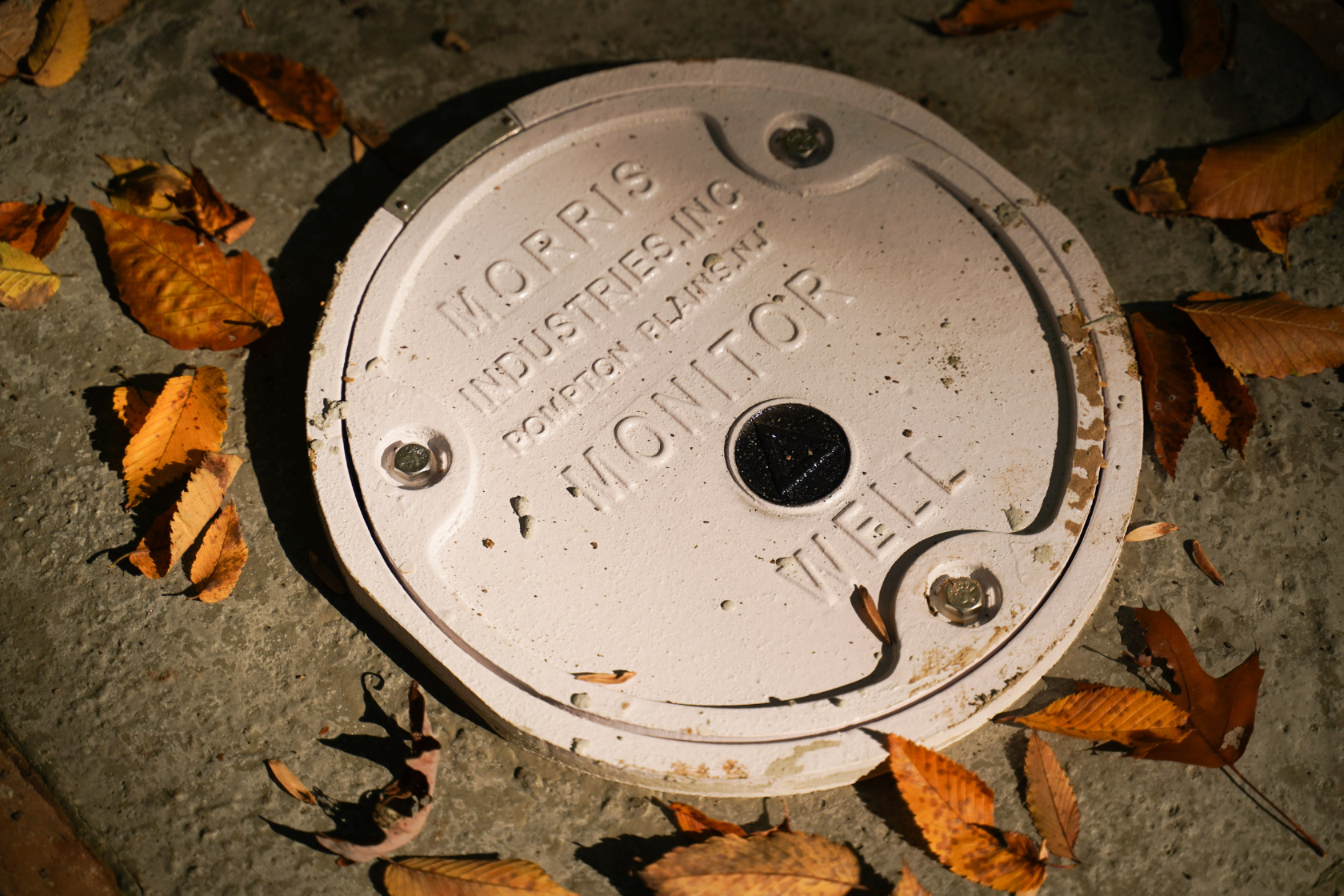
Crews are currently in Rock Creek Park in Mount Pleasant conducting subsurface exploration, drilling 6-inch-diameter holes at four locations on the south side of Piney Branch Parkway. They’ll then collect samples of soil, rock and groundwater and install underground monitoring equipment.
The goal of the sampling is to confirm the feasibility of the sewer project and assess underground conditions. The drilling is expected to wrap up by Nov. 7, according to DC Water. This work is part of preparing an environmental assessment to be reviewed by the National Park Service, before coming up with a final design for the project.
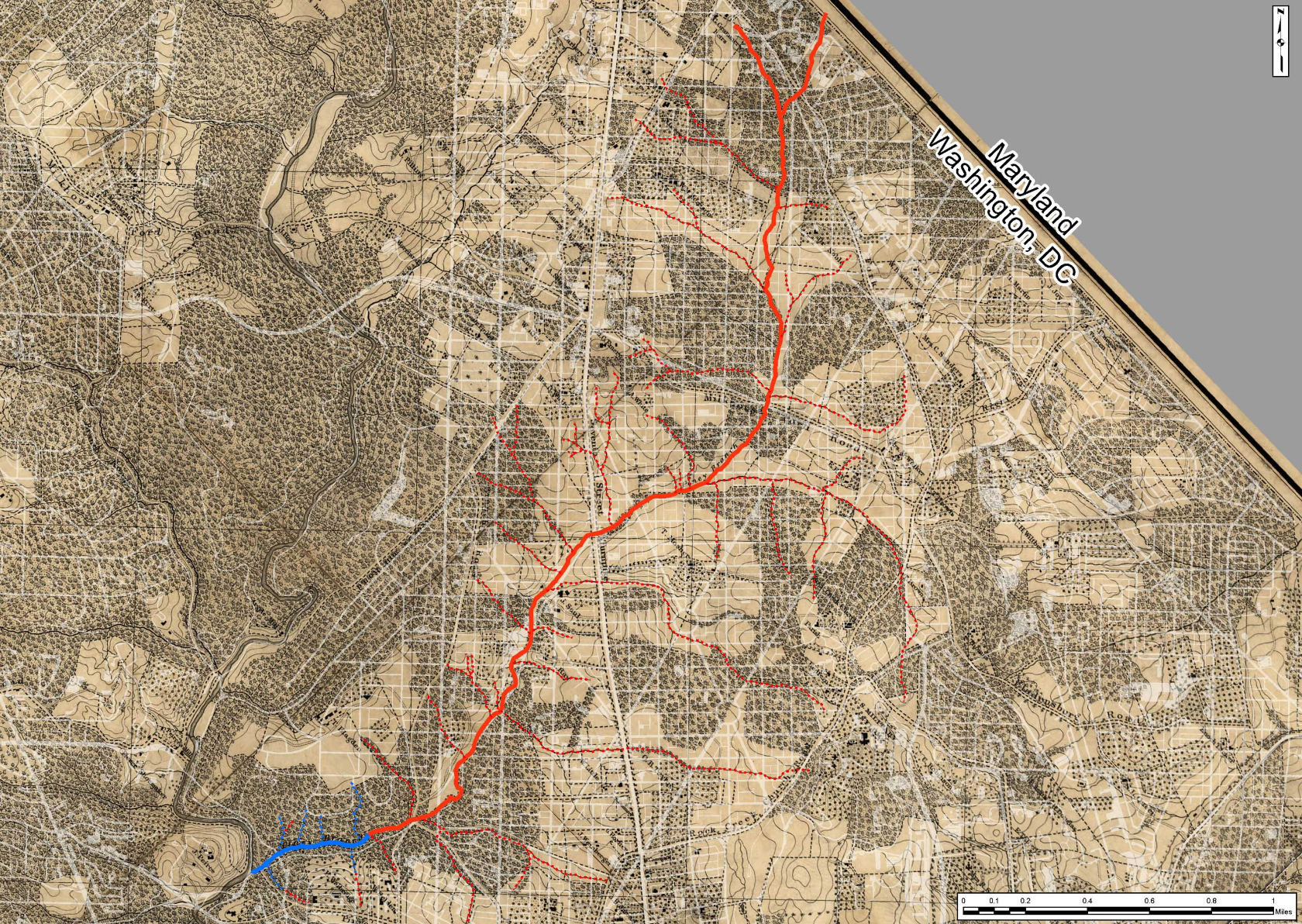
The twisting, rocky stream is a tiny fragment of what it once was. The modern-day Piney Branch runs from near 16th St. NW down to Rock Creek, only about a half mile. Historically, before the construction of neighborhoods like 16th St. Heights, Petworth, and Brightwood Park, the creek drained a large section of D.C., running more than three miles up to the Maryland border near the Takoma Park Metro Station.
Nowadays, much of the land that used to drain into Piney Branch is covered with impervious surfaces — roads, roofs, and parking lots — and when it rains, the runoff dumps down storm drains into underground pipes. In the older parts of D.C., and about 800 other U.S., cities, stormwater shares the same pipes as sewage from toilets and showers. Anytime there’s a significant rainfall, those combined sewer pipes fill up and overflow into waterways. In D.C., there are dozens of combined sewer outfalls on the Anacostia, Potomac and Rock Creek. In the Rock Creek watershed, Piney Branch’s CSO 49 is the largest outfall, draining stormwater and sewage from 2,400 acres of urban neighborhoods.
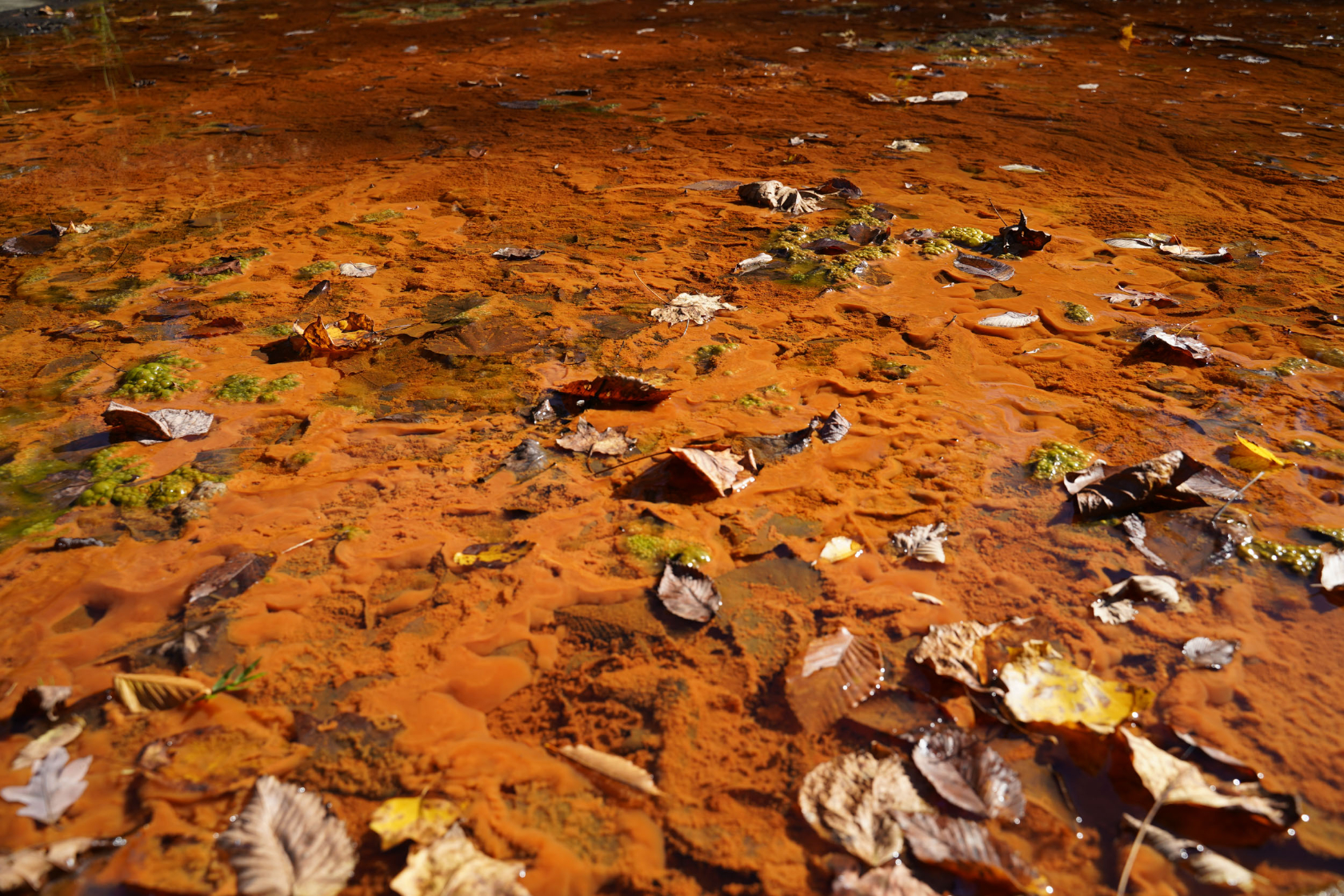
The sewer project will capture and store contaminated overflow, before it spills into Piney Branch, and then send the bacteria-laden mix to DC Water’s Blue Plains treatment plant.
Exactly how and where the overflow will be stored is still TBD.
“We are evaluating storage facilities. It could be a tunnel. It could be a tank,” explains Moussa Wone, director of the Clean Rivers Project.
The environmental assessment will be released late next summer, followed by a 30-day public comment period. DC Water is legally obligated to award a design contract for the project by May 2024, and a construction contract by May 2026. The project must be in operation by March, 2030.
DC Water has gone back and forth on the Piney Branch project. Initially, in a 2005 plan, the water and sewer authority proposed using “grey infrastructure,” i.e., a concrete tunnel or other storage facility, to capture overflow. Then, in 2015, DC Water modified the plan, announcing it would use “green infrastructure” instead — putting in rain gardens and permeable pavers throughout the Piney Branch watershed. The idea was to absorb rainwater in the neighborhoods, before it entered the sewer system, preventing the pipes from filling up in the first place.
In 2020, DC Water announced a new, hybrid plan — part green and part grey. The agency would build a storage facility, smaller than originally planned, and also install green infrastructure, but less than planned in the 2015 update. According to DC Water, the all-green plan was too expensive: it would cost about the same to install as the grey, but would require constant maintenance, doubling the cost over 30 years.
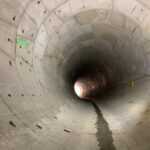
The work on Piney Branch is part of DC Water’s Clean River Project, which will include a total of 18 miles of huge new tunnels, 100 ft. underground. The first phases of the project, keeping sewage out of the Anacostia River, opened in 2018. Another Anacostia section, the Northeast Boundary Tunnel, is slated to begin operating next year. The tunnel system will also help alleviate flooding in some areas.
A tunnel to prevent sewer overflows into the Potomac River is scheduled to begin construction next year, and be complete by 2030.
Overall the project will reduce the volume of sewage overflow by 96% into the three waterways.